Loading...
Agim Ceku vs Yitzhak Rabin
Yitzhak Rabin leads by 19.1 pts · 2 figures compared
…

Agim Ceku
General · Modern
47.3Total
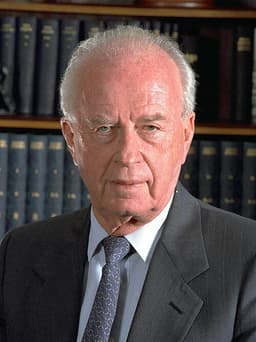
Yitzhak Rabin
General · Modern
66.4Total
Basic Information
Born
1960
1922
Died
—
—
Era
Modern
Modern
Nationality
Kosovo
Israel
Occupation
General
General
Civilization
Western
Middle Eastern
Score Comparison
Military (10%)
38.3
61.7
Political (20%)
43.7
82.0
Influence (20%)
51.8
68.0
Legacy (20%)
41.7
55.0
Leadership (15%)
61.1
78.0
Strategy (15%)
43.3
55.0
TOTAL
47.3
66.4
Agim Ceku — Complete Timeline
1999 AD
KLA Chief of StaffWar◆ Major
Ceku served as the Chief of Staff of the Kosovo Liberation Army during the final phase of the Kosovo War. He was a key military strategist and commander.
Kosovo WarMilitary Command
Impact: regional
2006 AD
Elected Prime Minister of KosovoPolitical Action◆ Major
Ceku became Prime Minister of Kosovo under UN administration, succeeding Bajram Kosumi. He led the government during the final status negotiations and the run-up to independence.
Kosovo StatusGovernment
Impact: regional
2008 AD
Resigned as Prime MinisterPolitical Action
Ceku resigned after failing to form a coalition government following the 2007 elections. He was succeeded by Hashim Thaci.
Kosovo PoliticsTransition
Impact: regional
Yitzhak Rabin — Complete Timeline
1967 AD
Chief of Staff during the Six-Day WarWar
As Chief of Staff of the Israel Defense Forces, Rabin commanded the Israeli military during the Six-Day War against Egypt, Jordan, and Syria. Israel captured the Sinai Peninsula, Gaza Strip, West Bank, East Jerusalem, and Golan Heights, reshaping the region.
Six-Day WarTerritorial ExpansionMilitary Victory
Impact: global
1993 AD
Signing of the Oslo AccordsPolitical Action
As prime minister, Rabin signed the Oslo Accords with PLO Chairman Yasser Arafat on the White House lawn. The agreement established the Palestinian Authority and set a framework for Palestinian self-governance in the West Bank and Gaza Strip.
Peace ProcessPalestiniansOslo
Impact: globalconstructive
1995 AD
Assassination at Peace RallyPolitical Action
Rabin was assassinated by Israeli extremist Yigal Amir after a peace rally in Tel Aviv. The assassination shocked Israel and the world, derailing the Oslo peace process and leading to a period of political instability.
AssassinationPeace ProcessPolitical Violence
Impact: globaltragic
Expert Analysis
Yitzhak Rabin vs Agim Ceku
# The General’s Dilemma: Two Paths from Battlefield to Peace
On a warm November evening in 1995, Yitzhak Rabin stood before a crowd of 100,000 people in Tel Aviv’s Kings of Israel Square, singing “Shir LaShalom” — a song for peace. Moments later, three bullets from an Israeli extremist’s pistol ended his life. Half a world away, in the rugged hills of Kosovo, another general, Agim Ceku, would also attempt the journey from military commander to political leader, but his story would end not in martyrdom, but in the quiet disappointment of political failure. What made these two men, both soldiers turned statesmen, meet such different fates?
Origins
Yitzhak Rabin was born in Jerusalem in 1922 to a family of Labor Zionist pioneers. His father, Nehemiah, had emigrated from Ukraine; his mother, Rosa, from Russia. Growing up in Tel Aviv, Rabin absorbed the secular, socialist ethos of the Yishuv — the Jewish community in Palestine. He was shaped by an era when survival meant fighting, when the establishment of a Jewish state was a dream pursued with both plow and rifle.
Agim Ceku was born in 1960 in the village of Čuša, near Peć, in what was then Yugoslavia. His world was that of Kosovo’s ethnic Albanians — a people who had lived for centuries under Ottoman rule, then Serbian domination. By the time Ceku came of age, the Yugoslav federation was cracking, and Albanian nationalism was rising. While Rabin grew up building a state, Ceku grew up dreaming of liberation from one.
The difference in their eras is crucial. Rabin came of age when Israel was being forged; Ceku came of age when Kosovo was being reclaimed. One built, the other fought.
Rise to Power
Rabin’s military ascent was methodical. He joined the Palmach, the elite strike force of the Jewish underground, in 1941. By 1948, he was a brigade commander in the War of Independence. His defining moment came in 1967, when as Chief of Staff of the Israel Defense Forces, he commanded the Six-Day War — a lightning campaign that captured the Sinai, Gaza, the West Bank, and the Golan Heights. That victory, achieved in just six days, made Rabin a national hero. His score for military leadership, 83.4, reflects a general who delivered a decisive, historic triumph.
Ceku’s rise was more fractured. He served in the Yugoslav People’s Army, then joined the Croatian forces during the Yugoslav Wars of the 1990s. By 1998, he had returned to Kosovo and become Chief of Staff of the Kosovo Liberation Army (KLA). Unlike Rabin’s conventional, state-backed army, Ceku commanded a guerrilla force fighting Serbian paramilitaries. His military score of 46.7 reflects not incompetence, but the nature of his war — a brutal, asymmetric conflict where victory meant survival, not conquest.
Leadership & Governance
As prime minister, Rabin governed with a paradoxical blend of military discipline and political pragmatism. He had seen war up close — the bodies, the cost, the futility. In 1993, he shook hands with Yasser Arafat on the White House lawn, signing the Oslo Accords. It was a moment of staggering courage for a man who had spent his life fighting Palestinians. His political score of 77.7 reflects a leader who understood that the greatest victory is sometimes peace.
Ceku became Prime Minister of Kosovo in 2006, under UN administration. His task was less dramatic but equally difficult: building a functional state from the rubble of war. He oversaw negotiations toward Kosovo’s eventual independence, declared in 2008. But his tenure was short — just two years — and he resigned after failing to form a coalition government. His political score of 63.5 reflects the unglamorous reality of post-war governance: compromises, coalitions, and half-successes.
Triumph & Tragedy
Rabin’s greatest triumph was the Oslo Accords — a handshake that redefined the Middle East. His greatest tragedy was his assassination on November 4, 1995, by Yigal Amir, a Jewish extremist who believed Rabin was betraying Israel. That bullet ended not just a life, but a moment. The peace process collapsed into the Second Intifada.
Ceku’s greatest triumph was leading the KLA through the Kosovo War, culminating in NATO’s intervention and the withdrawal of Serbian forces. His greatest tragedy was never fully achieving the political stability he had fought for. He left office in 2008, not with a bullet, but with a whimper — a resignation after political deadlock.
Character & Destiny
Rabin was a reluctant peacemaker. He was not a charismatic visionary like Martin Luther King Jr. or a fiery revolutionary like Mandela. He was a gruff, chain-smoking general who came to believe that war had no winners. His famous quote to the Knesset in 1995 captures this: “We have found a partner for peace, although it is a difficult partner. There is no such thing as a perfect partner.” His personality — pragmatic, unsentimental, stubborn — drove him to take risks that a more ideological leader might have avoided.
Ceku was a soldier-politician of a different stripe. He was more comfortable in uniform than in a suit, more adept at commanding troops than managing bureaucrats. His career reflects the tension between military decisiveness and political compromise. He could win a war, but he could not win a coalition.
Legacy
Rabin is remembered as a martyr for peace. His legacy is preserved in the square where he was shot, now called Rabin Square, and in the Oslo Accords, which, though flawed, remain a framework for Israeli-Palestinian peace. His total score of 70.6 reflects a figure whose influence transcends his achievements.
Ceku is remembered as a competent but transitional figure. He helped steer Kosovo toward independence, but he did not become its founding father. His total score of 63.2 reflects a man who was necessary but not transformative.
Conclusion
The difference between Rabin and Ceku is not one of talent or courage. Both were brave soldiers; both tried to become statesmen. But Rabin had the fortune — or curse — to lead a nation that already existed, while Ceku led one that was still being born. Rabin’s peace was a choice; Ceku’s peace was a necessity. One died for his convictions; the other lived to see his limitations.
In the end, the general’s dilemma is eternal: how to lay down the sword without losing the war. Rabin found the answer, and it cost him everything. Ceku found a different answer, and it cost him nothing — but gave him less.
Rankings
🥇
Yitzhak RabinLeader
Mil: 61.7Pol: 82.0Inf: 68.0
66.4
🥈
Agim Ceku
Mil: 38.3Pol: 43.7Inf: 51.8
47.3
+19.1 behind
How This Comparison Works
Algorithm
Each figure is scored on 6 dimensions (0—100 scale) based on structured historical data: Military (10%), Political (20%), Influence (20%), Legacy (20%), Leadership (15%), Strategy (15%). The weighted total produces the final ranking.
Data Sources
Scores are computed from structured sub-indicators in the database. Scale factors adjust for era (Ancient ×0.85, Modern ×1.0) and civilization size (Eastern ×1.05, Other ×0.80) to account for differences in population and military scale.
Maximum 3 Figures
Comparisons are limited to 2—3 figures to ensure readability and statistical meaningfulness.
Error Margins
±5 points per dimension — Sub-scores are derived from historical records with inherent uncertainty. Two figures within 5 points on a dimension should be considered roughly equivalent in that area.
Total Score Accuracy
±3 points overall — The weighted combination of 6 dimensions produces a total score with approximately ±3 points of uncertainty. Differences of less than 3 points are not statistically significant— the figures are effectively tied.
Known Limitations
- Historical records are incomplete and uneven across civilizations
- Figures from oral-tradition societies may be underrepresented
- Occupation labels can misclassify multi-role figures
- Scores measure capability and impact, not moral character
- Quantitative scoring is a comparison tool, not absolute truth
Capability Radar
Military (10%) — Battles & Warfare
Battles
35
65
Win Rate
40
70
Expansion
15
50
Political (20%) — Governance & Reform
Reform
25
65
Diplomacy
30
85
Economy
20
60
Influence (20%) — Cultural & Global Reach
Cultural
20
55
Global
20
70
Legacy (20%) — Historical Impact
Historical
25
75
Longevity
15
60
Leadership (15%) — Power & Stability
Tenure
30
70
Stability
15
40
Strategy (15%) — Tactics & Innovation
Strategy
40
75
Tactics
45
60
Reform
20
55
Similar Comparisons
Comments & Discussion
OldSwordScribe6/16/2026
Rabin and Ceku? The difference isn’t in their military pedigree but in their strategic endgame. Rabin understood that a general’s highest duty is to make his own sword obsolete. He fought the 1948 war, commanded in ’67, then had the guts to shake Arafat’s hand. Ceku? He remained the KLA commander in civilian clothes—never fully disarmed his own mentality. Rabin’s tragedy was being murdered for peace; Ceku’s was being ignored because he never truly left the battlefield behind. That’s the real div
数据猎手6/16/2026
把拉宾和切库对比?先看看数字。拉宾遇刺后,巴以和谈直接崩盘,1996年内塔尼亚胡上台,和平进程倒退十年。切库当年在科索沃当总理,在位才一百天,GDP增长连1%都没到,失业率还是崩溃的40%以上。一个是改变了整个地区走向的悲剧,一个是连自己国家经济都没能触动的过客。数据不说话,但差距摆在台面上。
PhilhelleneSkeptic6/16/2026
Let’s be honest: comparing a commander who built a state from the ground up with one who led a guerrilla uprising is like comparing Caesar to a local warlord. Rabin shaped the IDF from its inception, led it to victory in 1967, and later had the gravitas to negotiate with enemies. Ceku was a Kosovo Albanian officer in the Yugoslav army who defected—his military experience was fragmentation, not foundation. One was a statesman forged in war; the other, a rebel who never quite governed.
红墙下的老参谋6/16/2026
切库这人怎么说呢?1999年科索沃战争打完,他当过一阵科索沃保护团司令,算是北约扶持的代理人。但你看看拉宾,1950年代就是以色列总参谋长,打了六日战争,后来当总理还签了奥斯陆协议。差了就不是一代人的事,而是整个政治格局的区别。切库的战场是民族冲突和游击战,拉宾打的是国家战争。放在一起比,根本不在一个段位。
NarrativeWrecker6/16/2026
Everyone romanticizes Rabin as the peace martyr, but let’s not forget he was the defense minister who broke the First Intifada’s bones. “Break their bones” wasn’t just a metaphor—he literally ordered soldiers to beat Palestinian protesters. Ceku at least never hid that he was a guerrilla commander fighting for liberation. Rabin’s transformation is real, but it’s also convenient that we remember the peace singer and forget the bone-breaker. History loves a clean arc, but it rarely gives us one.