Loading...
Agim Ceku vs Muhammadu Buhari
Muhammadu Buhari leads by 4.2 pts · 2 figures compared
…

Agim Ceku
General · Modern
47.3Total
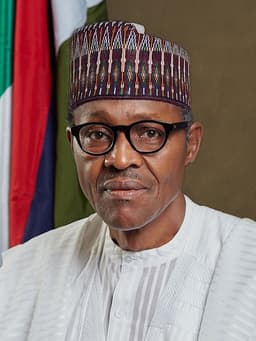
Muhammadu Buhari
General · Modern
51.5Total
Basic Information
Born
1960
1942
Died
—
—
Era
Modern
Modern
Nationality
Kosovo
Nigeria
Occupation
General
General
Civilization
Western
Other
Score Comparison
Military (10%)
38.3
22.6
Political (20%)
43.7
68.0
Influence (20%)
51.8
53.3
Legacy (20%)
41.7
43.3
Leadership (15%)
61.1
72.0
Strategy (15%)
43.3
41.0
TOTAL
47.3
51.5
Agim Ceku — Complete Timeline
1999 AD
KLA Chief of StaffWar◆ Major
Ceku served as the Chief of Staff of the Kosovo Liberation Army during the final phase of the Kosovo War. He was a key military strategist and commander.
Kosovo WarMilitary Command
Impact: regional
2006 AD
Elected Prime Minister of KosovoPolitical Action◆ Major
Ceku became Prime Minister of Kosovo under UN administration, succeeding Bajram Kosumi. He led the government during the final status negotiations and the run-up to independence.
Kosovo StatusGovernment
Impact: regional
2008 AD
Resigned as Prime MinisterPolitical Action
Ceku resigned after failing to form a coalition government following the 2007 elections. He was succeeded by Hashim Thaci.
Kosovo PoliticsTransition
Impact: regional
Muhammadu Buhari — Complete Timeline
1983 AD
1983 Nigerian coup d'étatPolitical Action
Major General Muhammadu Buhari led a military coup that overthrew the civilian government of President Shehu Shagari. Buhari cited corruption and economic mismanagement as justifications, and he became the head of state.
CoupMilitary RuleCorruption
Impact: nationaldestructive
1984 AD
War Against Indiscipline (WAI)Reform◆ Major
Buhari launched the War Against Indiscipline, a campaign to enforce discipline and order in Nigerian society. It included harsh penalties for minor offenses, such as queue-jumping, and was criticized for human rights abuses.
DisciplineSocial PolicyHuman Rights
Impact: nationaldestructive
1985 AD
Overthrow by Ibrahim BabangidaPolitical Action◆ Major
Buhari was overthrown in a palace coup led by his Chief of Army Staff, Ibrahim Babangida. Babangida cited Buhari's authoritarian style and failure to address the economy as reasons for the coup.
CoupOverthrowBabangida
Impact: national
2015 AD
Anti-corruption campaignReform◆ Major
Buhari launched a high-profile anti-corruption campaign, targeting government officials and recovering stolen assets. The campaign was praised internationally but criticized for being selective and politically motivated.
Anti-CorruptionReformGovernance
Impact: nationalconstructive
Election as President of NigeriaPolitical Action
Buhari won the 2015 Nigerian presidential election, defeating incumbent Goodluck Jonathan. This was the first time an opposition candidate had defeated a sitting president in Nigeria's history, marking a democratic milestone.
ElectionDemocracyOpposition Victory
Impact: nationalprogressive
Expert Analysis
Muhammadu Buhari vs Agim Ceku
### The General and the Guerrilla: Two Paths from Soldier to Statesman
On a humid morning in January 1984, a Nigerian military officer, lean and stern, stood before a television camera to announce a new era. His name was Muhammadu Buhari, and he had just seized power in a bloodless coup, promising to rescue a nation drowning in corruption and chaos. Half a world away, in the rugged mountains of Kosovo, a young guerrilla fighter named Agim Ceku was learning the brutal art of insurgency, his hands calloused from handling rifles and his mind fixed on a single goal: liberation from Serbian rule. Both men were soldiers who would become politicians, yet their stories diverged like rivers flowing from the same spring—one toward a troubled second chance at democracy, the other toward a brief moment atop a fragile state. What drove these different outcomes? The answer lies not just in their choices, but in the eras and societies that forged them.
### Origins
Muhammadu Buhari was born in 1942 in Daura, a town in northern Nigeria, into a Fulani family steeped in the traditions of the Sokoto Caliphate. His father was a farmer, his mother a homemaker, and his childhood was marked by the discipline of a rural Islamic upbringing. The British colonial system had begun to shape Nigeria, but Buhari’s world was one of hierarchy, respect for authority, and a deep suspicion of the chaos that independence might bring. He joined the Nigerian Army at 19, a path chosen by many ambitious young men from the north, and rose through the ranks with a reputation for austerity and rigidity. The Biafran War of the late 1960s hardened him; he saw how disorder could tear a nation apart.
Agim Ceku, born in 1960 in the village of Gllogjan, Kosovo, grew up under the iron fist of Yugoslav communism. His family was Albanian, a minority long marginalized within the federation. While Buhari learned obedience in a military academy, Ceku learned defiance. As a teenager, he watched Serbian police brutalize Albanian protesters, and by his twenties, he was smuggling weapons and organizing protests. The fall of Yugoslavia in the 1990s turned his world into a battlefield. For Buhari, the state was a fragile vessel to be protected; for Ceku, the state was an enemy to be destroyed.
### Rise to Power
Buhari’s path to power was swift and surgical. On December 31, 1983, he led a coup that toppled President Shehu Shagari, a civilian leader widely accused of electoral fraud and economic mismanagement. The coup was welcomed by many Nigerians weary of corruption; Buhari’s reputation as a no-nonsense officer made him seem like a savior. He was 41 years old, and his rise was a classic military takeover—a small group of officers, a radio broadcast, and a nation held at gunpoint.
Ceku’s rise was a guerrilla’s long march. He joined the Kosovo Liberation Army in the early 1990s, a ragtag force of farmers, students, and former soldiers. His military training came from the Yugoslav army itself—he had served as a conscript—but his real education was in the mountains, where he learned to fight with little ammunition and less support. By 1999, during the Kosovo War, he became the KLA’s Chief of Staff, coordinating attacks against Serbian forces with NATO air support. His power was earned in blood, not seized in a palace. For Buhari, power came from a coup; for Ceku, it came from a war.
### Leadership & Governance
Buhari’s rule from 1983 to 1985 was defined by the War Against Indiscipline (WAI), a campaign that aimed to reform Nigerian society through force. He ordered civil servants to arrive on time, jailed journalists for dissent, and executed drug traffickers. His leadership was militaristic: he saw governance as a battle against moral decay. But his rigidity alienated allies, and his economic policies—austerity measures that deepened poverty—made him unpopular. He was a general who governed like a drill sergeant, demanding obedience but offering little vision.
Ceku’s tenure as Prime Minister of Kosovo from 2006 to 2008 was a different beast. He led a government under UN administration, navigating a fractured parliament and a tense relationship with Serbia. His military background gave him credibility, but he had to learn diplomacy quickly. He pushed for Kosovo’s independence, which came in February 2008, but his coalition was fragile. Where Buhari ruled by decree, Ceku had to negotiate, compromise, and sometimes fail. His leadership was less about discipline and more about survival.
### Triumph & Tragedy
Buhari’s greatest triumph came decades after his first fall. In 2015, he won the Nigerian presidency in a democratic election, defeating incumbent Goodluck Jonathan. It was the first time an opposition candidate had unseated a sitting president in Nigeria’s history—a milestone for African democracy. His anti-corruption campaign recovered billions of dollars and won him admirers abroad. Yet his tragedy was the same as his first rule: his austerity deepened poverty, and his health declined, leaving him a frail figure in a nation still plagued by Boko Haram and economic stagnation.
Ceku’s triumph was the Kosovo War itself. As Chief of Staff, he helped secure NATO intervention, leading to the end of Serbian control and the eventual declaration of independence. His tragedy was that his political career never matched his military one. After resigning as Prime Minister in 2008, he struggled to maintain influence, and Kosovo’s politics became mired in corruption and infighting. He was a hero of war, but a footnote in peace.
### Character & Destiny
Buhari was a man of iron will and narrow vision. His upbringing in a hierarchical society and his military training made him distrustful of dissent and impatient with democracy’s messiness. He believed in order above all, and this belief drove both his early coup and his later democratic tenure. His destiny was to be a reformer who could not reform himself—a leader who promised change but delivered continuity.
Ceku was a guerrilla who became a statesman, but he never fully shed the fighter’s mentality. His character was forged in resistance, making him resilient but also combative. He could rally men to battle but struggled to unite a parliament. His destiny was to be a symbol of liberation, not a builder of institutions. The same traits that made him a good soldier—stubbornness, courage, a willingness to risk everything—limited him as a politician.
### Legacy
Buhari leaves a mixed legacy in Nigeria. He is remembered as a man who tried to clean the Augean stables of corruption, but whose methods were often harsh and whose results were incomplete. His 2015 election remains a beacon of democratic progress, but his second term was marred by economic hardship. Historians will debate whether he was a necessary corrective or a missed opportunity.
Ceku’s legacy is more straightforward: he is a hero of Kosovo’s independence, a name carved into the national narrative. But his political failures mean he is not a towering figure in the country’s governance. He is celebrated on anniversaries of the war, but rarely invoked in debates about the future. For a man who once commanded armies, that is a quiet tragedy.
### Conclusion
Buhari and Ceku were both soldiers who became leaders, but their paths diverged because of the worlds they inhabited. Buhari ruled a vast, oil-rich nation where the state was already established, if corrupt; his challenge was to reform it. Ceku fought for a state that did not exist; his challenge was to create it. One sought order, the other freedom. In their successes and failures, they reveal the eternal tension between the general and the guerrilla—the one who commands and the one who resists. And in the end, both discovered that the hardest war is the one fought in the halls of government, long after the guns fall silent.
Rankings
🥇
Muhammadu BuhariLeader
Mil: 22.6Pol: 68.0Inf: 53.3
51.5
🥈
Agim Ceku
Mil: 38.3Pol: 43.7Inf: 51.8
47.3
+4.2 behind
How This Comparison Works
Algorithm
Each figure is scored on 6 dimensions (0—100 scale) based on structured historical data: Military (10%), Political (20%), Influence (20%), Legacy (20%), Leadership (15%), Strategy (15%). The weighted total produces the final ranking.
Data Sources
Scores are computed from structured sub-indicators in the database. Scale factors adjust for era (Ancient ×0.85, Modern ×1.0) and civilization size (Eastern ×1.05, Other ×0.80) to account for differences in population and military scale.
Maximum 3 Figures
Comparisons are limited to 2—3 figures to ensure readability and statistical meaningfulness.
Error Margins
±5 points per dimension — Sub-scores are derived from historical records with inherent uncertainty. Two figures within 5 points on a dimension should be considered roughly equivalent in that area.
Total Score Accuracy
±3 points overall — The weighted combination of 6 dimensions produces a total score with approximately ±3 points of uncertainty. Differences of less than 3 points are not statistically significant— the figures are effectively tied.
Known Limitations
- Historical records are incomplete and uneven across civilizations
- Figures from oral-tradition societies may be underrepresented
- Occupation labels can misclassify multi-role figures
- Scores measure capability and impact, not moral character
- Quantitative scoring is a comparison tool, not absolute truth
Capability Radar
Military (10%) — Battles & Warfare
Battles
35
10
Win Rate
40
10
Expansion
15
5
Political (20%) — Governance & Reform
Reform
25
30
Diplomacy
30
25
Economy
20
20
Influence (20%) — Cultural & Global Reach
Cultural
20
25
Global
20
25
Legacy (20%) — Historical Impact
Historical
25
30
Longevity
15
20
Leadership (15%) — Power & Stability
Tenure
30
45
Stability
15
15
Strategy (15%) — Tactics & Innovation
Strategy
40
15
Tactics
45
15
Reform
20
20
Similar Comparisons
Comments & Discussion
NICKNAME6/16/2026
作为一个数据怀疑论者,我只想说我需要看到实实在在的数字。布哈里的1984年政变之后,经济治理一团糟,石油收入下跌40%,通胀率飙升到两位数。切库在科索沃战后担任总理期间,经济增速维持在4%左右,但腐败指数居高不下。你说谁更强?我得看看硬指标——GDP增长、失业率、投资流入。别跟我讲什么道德高地的废话,数字不会骗人,布哈里的第二次任期就是个经济沦陷的样板。
NICKNAME6/16/2026
作为一个历史爱好者,我觉得布哈里和切库的故事像是一道选择题。布哈里像北方的沙尘暴——来得猛烈,承诺净化一切,但留下的是一片政治荒漠,经济萎靡不振。切库则是巴尔干的狼,在战争里磨炼出敏锐嗅觉,但一旦进了议会,就变成了温和的牧羊人。一个用铁腕统治了尼日利亚,却让国家更分裂;另一个在短暂总理任期内,推动了科索沃军队改革。谁更成功?看结果吧——布哈里的民主实验烂尾了,切库至少让国家向前走了一步。
NICKNAME6/16/2026
作为一个修正主义批评者,我不想再听什么“救世主”的鬼话。布哈里在1984年政变后,把尼日利亚的腐败归咎于“西方文明病”,但自己却在石油财富中如鱼得水,经济调控一塌糊涂。切库在科索沃战争中扮演民族英雄,但别忘了,他曾在塞尔维亚军队中服役过。这种变色龙式的身份转换,很难让人相信
HellenisticEye6/16/2026
Look, as a classics scholar, let me break it down: these two are like Cincinnatus and a Spartan hoplite. Buhari, with his Fulani upbringing and military discipline, was reminiscent of Roman virtues—order, austerity, duty—but he forgot the part about retiring to the farm. Ceku, from the rugged Balkans, fought like a Greek mercenary—pragmatic, adaptive, and willing to compromise for a piece of the pie. Buhari's 'disciplinary' rule crumbled because he didn't embrace the democratic agora; Ceku at le
QuantHistorian6/16/2026
As a military historian, I gotta say Buhari's 1984 coup was textbook 'save the nation' theater, but his real test came decades later as a democrat—he flunked. Ceku, on the other hand, mastered guerrilla warfare in the Kosovo Liberation Army, turning 1999's chaos into leverage. One was a disciplinarian who couldn't adapt; the other, a tactician who knew when to hang up the gun. Buhari's rule rotted from within; Ceku's short tenure showed he could pivot from bullets to ballots.