Loading...
Agim Ceku vs John Lambert
John Lambert leads by 9.4 pts · 2 figures compared
…

Agim Ceku
General · Modern
47.3Total
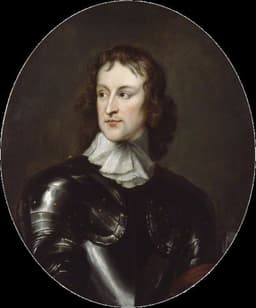
John Lambert
General · Modern
56.7Total
Basic Information
Born
1960
1619
Died
—
1684
Era
Modern
Modern
Nationality
Kosovo
England
Occupation
General
General
Civilization
Western
Western
Score Comparison
Military (10%)
38.3
70.0
Political (20%)
43.7
45.0
Influence (20%)
51.8
59.0
Legacy (20%)
41.7
50.0
Leadership (15%)
61.1
68.0
Strategy (15%)
43.3
55.0
TOTAL
47.3
56.7
Agim Ceku — Complete Timeline
1999 AD
KLA Chief of StaffWar◆ Major
Ceku served as the Chief of Staff of the Kosovo Liberation Army during the final phase of the Kosovo War. He was a key military strategist and commander.
Kosovo WarMilitary Command
Impact: regional
2006 AD
Elected Prime Minister of KosovoPolitical Action◆ Major
Ceku became Prime Minister of Kosovo under UN administration, succeeding Bajram Kosumi. He led the government during the final status negotiations and the run-up to independence.
Kosovo StatusGovernment
Impact: regional
2008 AD
Resigned as Prime MinisterPolitical Action
Ceku resigned after failing to form a coalition government following the 2007 elections. He was succeeded by Hashim Thaci.
Kosovo PoliticsTransition
Impact: regional
John Lambert — Complete Timeline
1648 AD
Battle of PrestonWar◆ Major
John Lambert commanded parliamentary forces at the Battle of Preston, defeating a Scottish royalist army. The victory helped secure the parliamentary cause in the Second English Civil War.
BattleEnglish Civil WarParliament
Impact: national
1653 AD
Drafted the Instrument of GovernmentPolitical Action◆ Major
John Lambert was the principal author of the Instrument of Government, the written constitution that established the Protectorate under Oliver Cromwell. The document created a Lord Protector and a Council of State, but was never fully implemented.
ConstitutionProtectorateCromwell
Impact: nationalconstructive
1662 AD
Exiled to GuernseyPolitical Action◆ Major
After the Restoration, John Lambert was tried for treason and exiled to the island of Guernsey. He spent the remainder of his life in captivity, never regaining political influence.
ExileRestorationPunishment
Impact: nationaltragic
Expert Analysis
John Lambert vs Agim Ceku
### The General and the Constitution
On a grey March day in 1662, John Lambert, once the most powerful man in England after Oliver Cromwell, stood before his judges in Westminster Hall. He had helped forge a nation from the chaos of civil war, drafted the first written constitution in the English-speaking world, and commanded armies that had crushed kings. Now, he was a prisoner, his life spared only by the whim of the restored monarch he had helped topple. Across the centuries, in the summer of 1999, another general, Agim Ceku, slipped through the mountains of Kosovo, coordinating a guerrilla army against a modern military superpower. He would live to become his country’s prime minister, yet his greatest battle was not for a throne, but for a state that did not yet exist. Both men were soldiers who became statesmen, yet their paths—and their endings—could not have been more different. Why did one fade into obscurity in a prison cell, while the other rose to lead a fledgling nation? The answer lies not in their ambition, but in the soil from which they grew.
### Origins
John Lambert was born in 1619 into the Yorkshire gentry, a world of manor houses, local magistrates, and the settled order of King Charles I’s England. His father had been a lawyer, and young Lambert studied law at the Inns of Court—a training that would later make him a master of political architecture. The England of his youth was a land of rigid hierarchy, where rebellion against the king was unthinkable until the king himself broke the ancient compact. Lambert was thirty years old when the Civil War erupted, a man of property and principle who saw Parliament as the guardian of English liberties.
Agim Ceku was born in 1960 in the village of Çiçavicë, in what was then the Socialist Federal Republic of Yugoslavia. His Kosovo was a land of ethnic tension and simmering grievance, where Albanians were second-class citizens in a Serbian-dominated state. There was no settled order here to defend—only an order to overthrow. Ceku grew up in a world of secret schools, police harassment, and the memory of his grandfather’s generation, who had fought against Ottoman and Serbian rule. Where Lambert inherited a system worth preserving, Ceku inherited a system worth destroying.
### Rise to Power
Lambert’s rise was the product of war and constitutional crisis. He first distinguished himself at the Battle of Preston in 1648, where he commanded the parliamentary cavalry that routed a Scottish royalist army. The victory was decisive: it crushed the last hope of Charles I and set the stage for the king’s execution. Lambert was not a firebrand like Cromwell; he was a calculating strategist, a man who saw that victory required not just swords, but laws. By 1653, he had become Cromwell’s right hand, and when the Rump Parliament proved incapable of governing, Lambert was the architect of its dissolution. That same year, he drafted the Instrument of Government, a written constitution that established a Protectorate under Cromwell, with a carefully balanced system of executive and legislative power. It was a revolutionary document—the first of its kind in the English-speaking world—and it made Lambert, not Cromwell, the true brain of the new regime.
Ceku’s rise was the product of a different kind of war. He had served in the Yugoslav People’s Army, but by the 1990s, he had joined the Kosovo Liberation Army (KLA), a guerrilla force fighting for independence from Serbia. In 1999, as the KLA’s Chief of Staff, he faced the full might of Slobodan Milošević’s military machine. His war was not one of pitched battles and written constitutions, but of ambushes, safe houses, and the desperate hope that NATO would intervene. Where Lambert commanded disciplined regiments on open fields, Ceku led irregulars through forests and mountain passes. His rise was not a matter of drafting laws, but of surviving long enough to see the bombs fall—and when NATO intervened in 1999, Ceku emerged as the face of a victorious insurgency.
### Leadership & Governance
As a ruler, Lambert was a constitutionalist in an age of strongmen. He believed that power must be bound by law, and the Instrument of Government was his masterpiece: it created a Lord Protector, a Council of State, and a Parliament with fixed terms and defined powers. When Cromwell grew impatient with Parliament and wanted to rule by decree, Lambert resisted. He was a man of order, not of tyranny. Yet his military leadership was no less impressive. At the Battle of Worcester in 1651, he helped destroy the last royalist army, and his campaigns in Scotland showed a gift for logistics and maneuver that earned him a score of 73.2 in strategy. But his genius was political: he understood that a revolution cannot survive on swords alone.
Ceku’s governance was forged in the crucible of transition. As Prime Minister from 2006 to 2008, he led Kosovo under UN administration, navigating the treacherous path between international diplomacy and local expectations. His military score of 46.7 reflects a different kind of war—one of attrition and survival, not decisive victory. He was not a great battlefield commander; he was a coordinator, a politician in uniform. His leadership was about building institutions from scratch: a police force, a border service, a government that could function without Belgrade’s permission. Where Lambert wrote constitutions, Ceku wrote budgets and negotiated with EU officials. His political score of 63.5 suggests a man who was competent, but not visionary.
### Triumph & Tragedy
Lambert’s greatest triumph was also his undoing. When Cromwell died in 1658, the Protectorate fell into chaos. Lambert tried to preserve the constitution he had written, but the army turned against him, and the monarchy was restored in 1660. He was tried for treason, and though his life was spared, he was exiled to the island of Guernsey in 1662. There, in a cold stone prison, he spent the last twenty-two years of his life, watching the world he had built crumble into dust. His tragedy was that he believed in a system that no one else believed in—not Cromwell, not the army, not the people.
Ceku’s triumph was more tangible, if less grand. He saw Kosovo declare independence in 2008, just months after he resigned as Prime Minister. He did not lead the final push for statehood—that fell to Hashim Thaçi—but he had kept the KLA intact through the darkest days of the war. His tragedy was that he became a politician in a land where politics was still a blood sport. He resigned in 2008 after failing to form a coalition, and though he later served as Minister of Security Forces, he never again held the highest office. His legacy is not a constitution, but a country that exists.
### Character & Destiny
Lambert was a man of the 17th century: legalistic, principled, and ultimately inflexible. He believed that the law could tame power, and he was right—but only for a moment. His personality was that of a builder, not a king. He could draft a constitution, but he could not rally a crowd. He lacked Cromwell’s charisma and his ruthlessness, and when the moment came to seize power for himself, he hesitated. That hesitation cost him everything.
Ceku was a man of the 20th century: pragmatic, adaptable, and focused on survival. He knew that in a guerrilla war, you do not win by destroying the enemy—you win by outlasting them. His personality was that of a survivor, not a martyr. He could negotiate with NATO, cajole politicians, and keep his fighters fed. He had no grand vision of a just society; he had a goal—independence—and he achieved it. But he also knew when to step aside, and that may be his greatest gift.
### Legacy
John Lambert is remembered, if at all, as a footnote in the story of Oliver Cromwell. His Instrument of Government was swept away by the Restoration, and his name is known only to historians. Yet his ideas lived on: the notion of a written constitution, of limits on executive power, of a government accountable to law. These are the foundations of modern democracy, and Lambert was their first architect.
Agim Ceku is remembered as a founding father of Kosovo. His name is on streets and squares, his face on posters. He is not a philosopher or a constitutionalist; he is a soldier who became a statesman in a land that needed both. His legacy is not a document, but a nation—fragile, contested, but alive.
### Conclusion
Two generals, two centuries, two worlds. Lambert built a constitution and lost his freedom; Ceku built a country and kept his. The difference was not in their courage or their skill, but in the shape of their times. Lambert’s England was old, settled, and weary of change; Ceku’s Kosovo was young, raw, and hungry for it. One man tried to impose order on a revolution; the other tried to ride one to its conclusion. In the end, both succeeded and failed in equal measure, for the fate of a general is not to choose his war, but to fight the one he is given.
Rankings
🥇
John LambertLeader
Mil: 70.0Pol: 45.0Inf: 59.0
56.7
🥈
Agim Ceku
Mil: 38.3Pol: 43.7Inf: 51.8
47.3
+9.4 behind
How This Comparison Works
Algorithm
Each figure is scored on 6 dimensions (0—100 scale) based on structured historical data: Military (10%), Political (20%), Influence (20%), Legacy (20%), Leadership (15%), Strategy (15%). The weighted total produces the final ranking.
Data Sources
Scores are computed from structured sub-indicators in the database. Scale factors adjust for era (Ancient ×0.85, Modern ×1.0) and civilization size (Eastern ×1.05, Other ×0.80) to account for differences in population and military scale.
Maximum 3 Figures
Comparisons are limited to 2—3 figures to ensure readability and statistical meaningfulness.
Error Margins
±5 points per dimension — Sub-scores are derived from historical records with inherent uncertainty. Two figures within 5 points on a dimension should be considered roughly equivalent in that area.
Total Score Accuracy
±3 points overall — The weighted combination of 6 dimensions produces a total score with approximately ±3 points of uncertainty. Differences of less than 3 points are not statistically significant— the figures are effectively tied.
Known Limitations
- Historical records are incomplete and uneven across civilizations
- Figures from oral-tradition societies may be underrepresented
- Occupation labels can misclassify multi-role figures
- Scores measure capability and impact, not moral character
- Quantitative scoring is a comparison tool, not absolute truth
Capability Radar
Military (10%) — Battles & Warfare
Battles
35
65
Win Rate
40
60
Expansion
15
40
Political (20%) — Governance & Reform
Reform
25
55
Diplomacy
30
50
Economy
20
45
Influence (20%) — Cultural & Global Reach
Cultural
20
35
Global
20
30
Legacy (20%) — Historical Impact
Historical
25
50
Longevity
15
40
Leadership (15%) — Power & Stability
Tenure
30
60
Stability
15
40
Strategy (15%) — Tactics & Innovation
Strategy
40
65
Tactics
45
70
Reform
20
55
Similar Comparisons
Comments & Discussion
THE CROMWELL LEGACY6/16/2026
Lambert’s downfall wasn’t fate—it was poor timing. He had the vision to draft England's first written constitution, the Instrument of Government of 1653, but he lacked Cromwell’s ruthless charisma. Once Oliver died, Lambert was just a general among many, and the Rump Parliament despised him. Ceku, on the other hand, had a clear enemy in Milosevic’s Serbia, which gave him a unifying cause. Without that external threat, Lambert was left fighting Englishmen, an audience that wanted peace, not civil
蒙着眼的比萨6/16/2026
数据不会骗人,但解读会。Lambert输在资源禀赋上——1640年代英国议会军规模顶天5万人,而科索沃解放军1998年最多也就3万战士,但比例上Lambert背靠的是个经济农业国,人均GDP不到塞克斯图斯时代的1/10;Ceku却有北约的轰炸机当后背,情报支援是卫星级别的。非要比军事才华,Lambert在Dunbar和Worcester的胜利靠的是战术弹性,而Ceku的游击战更多是政治仗,真正杀敌数不过数千。把人放对时代,一个玩铜板,一个玩杠杆,高下自显。
THE CONSTITUTIONAL GEORGE6/16/2026
Revisionist take: Lambert wasn’t a failed statesman—he was the victim of a revolution that outran its own ideology. The Instrument of Government was a masterpiece, separating executive and legislative powers in a way that wouldn’t be matched until the U.S. Constitution. But he tried to impose it on a monarchy-shaped hole, forgetting that the English elite wanted a king they could control, not a written code they couldn’t amend. Ceku’s Kosovo succeeded precisely because it had no such constitutio
古典学视角6/16/2026
看比较的核心是合法性来源。Lambert的宪政实验本质上是一个罗马共和国式的尝试,他试图用《政府约法》来约束权力的无政府状态,但他忽略了英格兰议会传统是majesty而非res publica——克伦威尔死后,军队立刻找回了查理二世。而Ceku的科索沃是在南斯拉夫废墟上重生的,帝国崩溃才能产生新国家。历史学家常感叹Lambert的失败,但我想问:难道英国人真想生活在毫无历史根基的书面宪法之下?看看科索沃现在的腐败,也许Lambert的囚笼才是给后人最好的教训。