Loading...
Agim Ceku vs J. B. M. Hertzog
J. B. M. Hertzog leads by 8.8 pts · 2 figures compared
…
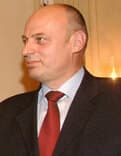
Agim Ceku
General · Modern
47.3Total
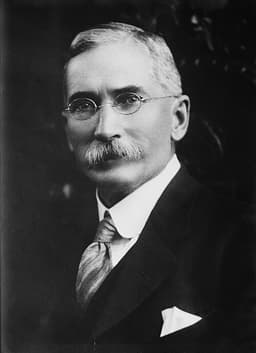
J. B. M. Hertzog
General · Modern
56.1Total
Basic Information
Born
1960
1866
Died
—
1942
Era
Modern
Modern
Nationality
Kosovo
South Africa
Occupation
General
General
Civilization
Western
Other
Score Comparison
Military (10%)
38.3
25.0
Political (20%)
43.7
60.0
Influence (20%)
51.8
56.7
Legacy (20%)
41.7
50.0
Leadership (15%)
61.1
79.8
Strategy (15%)
43.3
60.0
TOTAL
47.3
56.1
Agim Ceku — Complete Timeline
1999 AD
KLA Chief of StaffWar◆ Major
Ceku served as the Chief of Staff of the Kosovo Liberation Army during the final phase of the Kosovo War. He was a key military strategist and commander.
Kosovo WarMilitary Command
Impact: regional
2006 AD
Elected Prime Minister of KosovoPolitical Action◆ Major
Ceku became Prime Minister of Kosovo under UN administration, succeeding Bajram Kosumi. He led the government during the final status negotiations and the run-up to independence.
Kosovo StatusGovernment
Impact: regional
2008 AD
Resigned as Prime MinisterPolitical Action
Ceku resigned after failing to form a coalition government following the 2007 elections. He was succeeded by Hashim Thaci.
Kosovo PoliticsTransition
Impact: regional
J. B. M. Hertzog — Complete Timeline
1899 AD
Boer War GeneralWar◆ Major
Hertzog served as a Boer general in the Second Boer War, commanding forces in the Orange Free State. He participated in several battles and became a prominent Afrikaner military leader.
Second Boer WarGeneralMilitary
Impact: regional
1914 AD
Founded the National PartyPolitical Action
Hertzog broke away from the South African Party and founded the National Party, which championed Afrikaner nationalism and opposed British imperial influence. The party would later implement apartheid.
National PartyAfrikaner NationalismFounding
Impact: nationalconstructive
1924 AD
Prime Minister of South AfricaPolitical Action◆ Major
Hertzog became Prime Minister after his National Party won the general election in coalition with the Labour Party. His government implemented policies to protect white workers and promote Afrikaner interests, including the 'civilized labour' policy.
Prime MinisterAfrikaner RightsLabour Policy
Impact: national
1934 AD
Merged with Smuts to Form United PartyPolitical Action◆ Major
Hertzog merged his National Party with Jan Smuts' South African Party to form the United Party. The coalition aimed to address the economic crisis of the Great Depression and promote national unity, but it alienated hardline Afrikaner nationalists.
United PartyCoalitionNational Unity
Impact: nationalconstructive
1936 AD
Passed the Representation of Natives ActReform◆ Major
Hertzog's government passed the Representation of Natives Act, which removed Black voters from the common voters' roll in the Cape Province and allowed them to elect white representatives instead. This further entrenched racial segregation.
SegregationDisenfranchisementLegislation
Impact: nationaldestructive
1939 AD
Resigned Over Neutrality in WWIIPolitical Action◆ Major
Hertzog advocated for South African neutrality in World War II, but his cabinet voted to enter the war on the Allied side. He resigned as Prime Minister and was succeeded by Jan Smuts, splitting the United Party.
World War IINeutralityResignation
Impact: national
Expert Analysis
J. B. M. Hertzog vs Agim Ceku
### The General as Statesman: Two Paths from Battlefield to Power
The contrast could not be starker. In 1899, J. B. M. Hertzog, a Boer general in the dusty veldt of the Orange Free State, was fighting a guerrilla war against the might of the British Empire, a conflict that would forge his identity as a champion of Afrikaner rights. Nearly a century later, in 1999, Agim Ceku, a Kosovan commander, was leading the Kosovo Liberation Army against Serbian forces, his own struggle for national liberation culminating in a war that would redraw the map of the Balkans. Both men were soldiers who became prime ministers. Both were defined by their nations’ fights for self-determination. Yet their journeys, their triumphs, and their ultimate legacies could not be more different. Why did one leave a deep, controversial mark on his country’s constitution, while the other faded into the background of a still-unfolding story? The answer lies not just in their eras, but in the very nature of the battles they chose to fight.
### Origins
Hertzog was born in 1866, a child of the South African frontier, raised in a world where the memory of the Great Trek and the trauma of British colonialism were still fresh. He studied law in the Cape Colony and the Netherlands, returning to become a judge in the Orange Free State. His was a world of established institutions, of farms and church communities, where Afrikaner identity was a matter of language, faith, and resistance to imperial encroachment. The Second Boer War (1899-1902) was his crucible, a brutal conflict that saw Boer women and children interned in British concentration camps—a wound that never healed. For Hertzog, this war was not a beginning but a confirmation of a pre-existing grievance.
Ceku, born in 1960 in a small village in Kosovo, came of age in a very different kind of oppression. As an ethnic Albanian under Serbian rule, his world was one of systematic discrimination, political exclusion, and the slow simmer of a nationalist awakening. Unlike Hertzog, he did not inherit a state or a defined political tradition. He was a product of a late-20th-century ethnic conflict, shaped by the collapse of Yugoslavia and the brutal wars that followed. His early military experience was not in a formal army but as a soldier in the Croatian War of Independence in the early 1990s, fighting against Serb forces—a schooling in modern guerrilla warfare and the politics of international intervention. His origins were less about a settled society fighting to preserve its rights than a stateless people fighting for existence.
### Rise to Power
Hertzog’s path to power was a political one, forged in the aftermath of military defeat. After the Boer War, he entered the new Union of South Africa’s parliament in 1910, but quickly grew disillusioned with the conciliatory policies of Prime Minister Louis Botha and his deputy, Jan Smuts. In 1914, he broke away to found the National Party, a platform for Afrikaner nationalism that appealed to the bitterness of the war’s losers. His rise was a slow, democratic grind through elections and coalition-building, culminating in his becoming Prime Minister in 1924. His power came from the ballot box, not the bullet.
Ceku’s rise was the reverse. He gained fame through the gun. By 1999, as Chief of Staff of the Kosovo Liberation Army, he was a key figure in a guerrilla war that forced NATO intervention. The war ended with Serbian withdrawal, but Kosovo remained a UN protectorate, not an independent state. Ceku’s military credentials made him a natural political leader in the aftermath. In 2006, he was elected Prime Minister under UN administration, a position that depended less on a popular mandate than on the delicate balance of post-war politics and international approval.
### Leadership & Governance
Hertzog’s governance was a masterclass in political strategy, but it was also tragically flawed. As Prime Minister from 1924 to 1939, he pursued a dual agenda: economic uplift for poor white Afrikaners and the entrenchment of racial segregation. He passed labor laws favoring white workers and, in 1934, merged his National Party with Jan Smuts’ South African Party to form the United Party, a grand coalition aimed at national unity. Yet the same pragmatism that allowed him to ally with his old enemy Smuts also led him to his most devastating act: the 1936 Representation of Natives Act, which removed Black voters from the common roll in the Cape Province. This was not the start of apartheid—that would come after 1948—but it was a foundational stone. Hertzog’s leadership was defined by a narrow vision of “the people” that excluded the majority.
Ceku’s time as Prime Minister (2006-2008) was brief and overshadowed by the immense task of state-building. He presided over a fragile, UN-supervised government, focusing on security, institution-building, and the delicate negotiations over Kosovo’s final status. His leadership was less about grand reform than about keeping the peace and preparing the ground for independence, which was declared in 2008, shortly after his resignation. He lacked the long tenure and legislative power of Hertzog, operating instead in a political limbo where his authority was constantly checked by international administrators and rival Kosovan factions.
### Triumph & Tragedy
Hertzog’s greatest triumph was the 1934 merger with Smuts, a moment of apparent national reconciliation that brought Afrikaners and English-speaking South Africans into a single government. His tragedy was that this unity was built on the exclusion of Black South Africans, a moral failure that would haunt the country for generations. His final act was also his most principled and most costly: in 1939, as World War II broke out, he argued passionately for South African neutrality, believing the war was a British imperial affair that would divide his people. When his cabinet voted to join the Allies, he resigned, ending his political career. He died in 1942, a man out of step with the global struggle against fascism, yet true to his own narrow vision.
Ceku’s triumph was surviving the war and leading Kosovo through its most critical post-conflict phase. His tragedy was that he never fully escaped the shadow of his military past. Accusations of war crimes by Serbian authorities, though never proven, dogged him, and his political career ended not with a grand resignation but with a quiet failure to form a coalition after the 2007 elections. He resigned in 2008, his legacy as a military commander secure but his political legacy fragile.
### Character & Destiny
Hertzog was a man of iron principle and narrow vision. He was stubborn, legalistic, and deeply rooted in the grievances of his people. His character drove him to fight for Afrikaner rights with a single-mindedness that left no room for the rights of others. His destiny was to be a founder of a system that would later be called apartheid, even if he did not live to see its full horror. Ceku was a pragmatist, a soldier who learned to navigate the treacherous waters of international diplomacy. His destiny was to be a transitional figure, necessary but not transformative.
### Legacy
Hertzog’s legacy is monumental and contested. He is remembered as a father of Afrikaner nationalism, but also as an architect of racial segregation. His name remains on streets and universities in South Africa, but also on the wrong side of history. Ceku’s legacy is quieter. He is a hero to many Kosovans for his role in the liberation war, but his political record is overshadowed by the more dominant figure of Hashim Thaçi. He represents the difficult transition from guerrilla commander to democratic statesman, a path that few have walked successfully.
### Conclusion
These two generals-turned-prime ministers reveal the profound influence of context on leadership. Hertzog, shaped by a century of colonial conflict and a settled society, used the machinery of democracy to build a nation on exclusion. Ceku, forged in the chaos of a collapsing federation and a war for survival, used the tools of international diplomacy to build a state from the ashes. One created a system that would have to be torn down; the other helped build a state that still struggles to stand. In the end, both were prisoners of their times, but also makers of them—a reminder that the general who becomes a statesman must choose not just how to win a war, but what kind of peace to build.
Rankings
🥇
J. B. M. HertzogLeader
Mil: 25.0Pol: 60.0Inf: 56.7
56.1
🥈
Agim Ceku
Mil: 38.3Pol: 43.7Inf: 51.8
47.3
+8.8 behind
How This Comparison Works
Algorithm
Each figure is scored on 6 dimensions (0—100 scale) based on structured historical data: Military (10%), Political (20%), Influence (20%), Legacy (20%), Leadership (15%), Strategy (15%). The weighted total produces the final ranking.
Data Sources
Scores are computed from structured sub-indicators in the database. Scale factors adjust for era (Ancient ×0.85, Modern ×1.0) and civilization size (Eastern ×1.05, Other ×0.80) to account for differences in population and military scale.
Maximum 3 Figures
Comparisons are limited to 2—3 figures to ensure readability and statistical meaningfulness.
Error Margins
±5 points per dimension — Sub-scores are derived from historical records with inherent uncertainty. Two figures within 5 points on a dimension should be considered roughly equivalent in that area.
Total Score Accuracy
±3 points overall — The weighted combination of 6 dimensions produces a total score with approximately ±3 points of uncertainty. Differences of less than 3 points are not statistically significant— the figures are effectively tied.
Known Limitations
- Historical records are incomplete and uneven across civilizations
- Figures from oral-tradition societies may be underrepresented
- Occupation labels can misclassify multi-role figures
- Scores measure capability and impact, not moral character
- Quantitative scoring is a comparison tool, not absolute truth
Capability Radar
Military (10%) — Battles & Warfare
Battles
35
45
Win Rate
40
40
Expansion
15
20
Political (20%) — Governance & Reform
Reform
25
60
Diplomacy
30
55
Economy
20
50
Influence (20%) — Cultural & Global Reach
Cultural
20
50
Global
20
45
Legacy (20%) — Historical Impact
Historical
25
55
Longevity
15
40
Leadership (15%) — Power & Stability
Tenure
30
65
Stability
15
45
Strategy (15%) — Tactics & Innovation
Strategy
40
50
Tactics
45
45
Reform
20
30
Similar Comparisons
Comments & Discussion
VeldtFirebrand6/16/2026
Hertzog was a strategic genius who forced the British to the negotiating table at Vereeniging—don't let anyone tell you the Boers lost that war. Ceku? He was a glorified guerrilla with a NATO air force doing the heavy lifting. Hertzog commanded real respect from his people for decades; Ceku couldn’t even win a majority without a coalition. One built a constitution; the other barely held a ministry. Case closed.
数据猎手6/16/2026
别被“民族英雄”的滤镜骗了。Ceku的KLA在1998年只有几百支AK-47,全靠1999年北约78天轰炸才没被塞族部队碾碎。对比之下,Hertzog在英帝国鼎盛时期打了三年游击战,战损比更接近1:3。一个靠盟友天降正义,一个真刀真枪硬扛——数据不会说谎,谁的含金量高,一目了然。
DoricSpartan6/16/2026
Classics teaches us that Ceku is Epaminondas without the staying power—briefly brilliant, soon forgotten. Hertzog, though, is our Cato the Elder: a conservative force who reshaped his nation's legal bedrock. Ceku won a war but lost the peace; Hertzog fought a war and won a language clause in the Union's constitution. That's the difference between a ripple and a tide. Which legacy would you rather bequeath?
史海沉钩6/16/2026
有意思的对比,但你们忽略了最关键的一点:Hertzog的“斗争”本质上是白人殖民者之间的权力争夺,他的《隔离法案》和《土著土地法》直接奠定了种族隔离制度的基础。而Ceku虽然手段粗糙,目标却是对抗塞尔维亚的民族压迫,为科索沃阿尔巴尼亚人争取生存权。一个是压迫者内部的权力洗牌,一个是被压迫者的解放抗争——历史语境不同,道德坐标系能一样吗?
FlintAndSteel6/16/2026
You revisionists love sanitizing Ceku, but the man was a child soldier in Croatia, then a KLA commander with ties to arms trafficking rings. Hertzog? A jurist who led a guerrilla campaign, then governed with a coalition. Ceku's CV reads like a war crimes tribunal intake form; Hertzog's looks like a statesman's. One wrote laws; the other broke them. I'll take the Boer general every time.