Loading...
Agim Ceku vs Huang Xing
Huang Xing leads by 10.2 pts · 2 figures compared
…
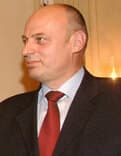
Agim Ceku
General · Modern
47.3Total
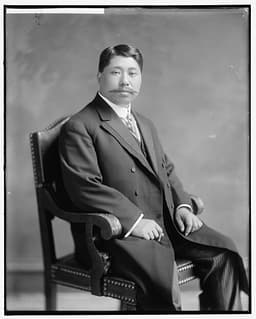
Huang Xing
General · Modern
57.5Total
Basic Information
Born
1960
1874
Died
—
1916
Era
Modern
Modern
Nationality
Kosovo
China
Occupation
General
General
Civilization
Western
Eastern
Score Comparison
Military (10%)
38.3
46.7
Political (20%)
43.7
53.8
Influence (20%)
51.8
62.0
Legacy (20%)
41.7
56.0
Leadership (15%)
61.1
62.0
Strategy (15%)
43.3
60.0
TOTAL
47.3
57.5
Agim Ceku — Complete Timeline
1999 AD
KLA Chief of StaffWar◆ Major
Ceku served as the Chief of Staff of the Kosovo Liberation Army during the final phase of the Kosovo War. He was a key military strategist and commander.
Kosovo WarMilitary Command
Impact: regional
2006 AD
Elected Prime Minister of KosovoPolitical Action◆ Major
Ceku became Prime Minister of Kosovo under UN administration, succeeding Bajram Kosumi. He led the government during the final status negotiations and the run-up to independence.
Kosovo StatusGovernment
Impact: regional
2008 AD
Resigned as Prime MinisterPolitical Action
Ceku resigned after failing to form a coalition government following the 2007 elections. He was succeeded by Hashim Thaci.
Kosovo PoliticsTransition
Impact: regional
Huang Xing — Complete Timeline
1905 AD
Co-founded the TongmenghuiPolitical Action◆ Major
Huang Xing co-founded the Tongmenghui (Revolutionary Alliance) in Tokyo with Sun Yat-sen. He became its military leader, organizing armed uprisings against the Qing dynasty.
TongmenghuiRevolutionMilitary
Impact: nationalconstructive
1911 AD
Led the Wuchang UprisingWar
Huang Xing led the Wuchang Uprising, which sparked the Xinhai Revolution. He commanded revolutionary forces against Qing troops, securing initial victories that led to the dynasty's collapse.
Xinhai RevolutionUprisingMilitary
Impact: nationalconstructive
1912 AD
Served as Minister of War in the RepublicPolitical Action◆ Major
Huang Xing served as Minister of War in the provisional government of the Republic of China. He worked to organize a national army and defend the republic against counter-revolutionary forces.
GovernmentMilitaryRepublic
Impact: nationalconstructive
1913 AD
Led the Second Revolution Against Yuan ShikaiWar◆ Major
Huang Xing led the Second Revolution, an armed uprising against President Yuan Shikai's authoritarian rule. The rebellion failed due to lack of coordination and military inferiority, forcing Huang into exile.
Second RevolutionYuan ShikaiExile
Impact: nationaltragic
1916 AD
Died in Exile in ShanghaiPolitical Action
Huang Xing died in Shanghai after returning from exile in Japan and the United States. His death marked the loss of a key military leader of the Chinese revolution, though his legacy endured.
DeathExileRevolution
Impact: nationaltragic
Expert Analysis
Huang Xing vs Agim Ceku
# The General as Statesman: Agim Ceku and Huang Xing
On a spring morning in 1999, Agim Ceku stood in a command post in the mountains of Kosovo, coordinating artillery strikes against Serbian forces with a radio crackling in his ear. Half a world away and nearly a century earlier, Huang Xing galloped through the streets of Wuchang, leading revolutionary soldiers against the Qing dynasty’s crumbling forts. Both men were generals who became politicians, warriors who tried to build nations. But one would live to see his country achieve independence; the other would die in exile, his revolution betrayed. Why did their paths diverge so sharply?
Origins
Agim Ceku was born in 1960 in the village of Crnoljevo, part of Yugoslavia’s Socialist Federal Republic. He grew up in a Kosovo where ethnic Albanians were second-class citizens, their language suppressed, their political rights curtailed. The young Ceku joined the Yugoslav People’s Army, rising through the ranks as a professional soldier. When Yugoslavia collapsed in the 1990s, he found himself fighting first in Croatia’s war of independence, then in the Kosovo Liberation Army—a guerrilla force that had no uniforms, no heavy weapons, and no formal chain of command. Ceku brought discipline to chaos.
Huang Xing was born in 1874 in Hunan province, at the twilight of China’s last imperial dynasty. His family had seen the Opium Wars, the Taiping Rebellion, and the humiliating carve-up of their civilization by foreign powers. Huang studied in Japan, where he absorbed Western military science and revolutionary ideas. He was a man of action in an age of collapse—a time when China’s ancient system was dying and nothing had yet been born to replace it.
Rise to Power
Ceku’s rise came through competence. In 1999, during the final phase of the Kosovo War, he was appointed Chief of Staff of the KLA. He transformed a ragtag insurgency into a fighting force capable of coordinating with NATO airpower. The war ended with Serbian withdrawal, but Kosovo remained under United Nations administration—not yet independent, not truly free. Ceku had won the battle but not yet the war.
Huang Xing rose through charisma and sacrifice. In 1905, he co-founded the Tongmenghui (Revolutionary Alliance) in Tokyo with Sun Yat-sen, becoming the organization’s military leader. When the Wuchang Uprising erupted in October 1911, Huang rushed to command it. The revolutionaries toppled the Qing dynasty in weeks, and Huang was hailed as a hero. He became Minister of War in the provisional government of the new Republic of China. The empire had fallen; the republic had risen. But the foundations were sand.
Leadership & Governance
Ceku governed as he commanded: pragmatically, with an eye on the possible. As Prime Minister from 2006 to 2008, he led Kosovo under UN supervision, navigating between international diplomats who wanted stability and Kosovan nationalists who wanted immediate independence. He pushed for decentralization and minority rights, knowing that Kosovo’s future depended on NATO and EU support. His military score of 46.7 and political score of 63.5 reflect a man who was a better administrator than a warrior, but who understood that in the modern world, politics is the continuation of war by other means.
Huang Xing governed with the fire of a revolutionary. As Minister of War, he tried to build a national army from scratch—a force loyal to the republic, not to regional warlords. But the new republic was fracturing before it had even been cemented. President Yuan Shikai, a former Qing general, began consolidating personal power. In 1913, Huang led the Second Revolution—an armed uprising against Yuan’s authoritarian rule. It failed. Huang fled into exile in Japan and the United States, a general without an army.
Triumph & Tragedy
Ceku’s greatest moment was not a battle but a transition. In February 2008, Kosovo declared independence. Ceku had prepared the ground—building institutions, negotiating with international powers, keeping the peace. But he did not lead the independence government. After the 2007 elections, he failed to form a coalition and resigned in 2008, succeeded by Hashim Thaçi. He had shepherded Kosovo to the threshold of statehood, but he would not cross it as its leader.
Huang Xing’s tragedy was deeper. He had helped create a republic that was dying before his eyes. After the Second Revolution’s failure, Yuan Shikai dissolved parliament and declared himself emperor. Huang returned to Shanghai in 1916, a broken man. He died that same year at age 42, reportedly from stomach cancer. His body was buried with military honors, but the republic he had fought for was already a ghost.
Character & Destiny
Ceku was a survivor. He adapted from Yugoslav officer to Croatian commander to KLA chief to prime minister—each transformation requiring him to shed old loyalties and embrace new realities. His leadership score of 72.6 and strategy score of 61.2 suggest a man who could manage complexity but not always master it. He was not a visionary; he was a fixer. And in the messy world of Balkan politics, that was enough to keep him alive and relevant.
Huang Xing was a martyr in waiting. His leadership score of 75.5 was higher than Ceku’s, but his strategy score of 57.6 was lower—a revolutionary who could inspire but not outmaneuver. He died believing he had failed. But his co-founder Sun Yat-sen would later be revered as the father of modern China, and Huang’s name would be carved alongside his in the history books. His tragedy was that he lived in a time when China was too large, too fractured, and too poor to be saved by any single man.
Legacy
Agim Ceku is remembered in Kosovo as a transitional figure—not the face of independence, but the hand that steadied the ship. His legacy score of 57.1 reflects a leader who was necessary but not immortalized. He lives quietly today, a footnote in Kosovo’s story.
Huang Xing’s legacy is more complex. In mainland China, he is honored as a revolutionary hero, one of the architects of the 1911 Revolution. In Taiwan, he is remembered as a co-founder of the republic. His legacy score of 66.6 places him above Ceku, but still in the shadow of Sun Yat-sen. He was the sword to Sun’s pen—essential, but not the author.
Conclusion
What separates these two generals is not ability but timing. Ceku fought for a small nation in a world of great powers, where independence was possible with the right allies. Huang Xing fought for a civilization in collapse, where revolution was easier than reconstruction. Ceku’s war ended with a flag-raising; Huang’s ended with a funeral. The difference between a successful general and a tragic one is often not courage or skill, but whether history is ready to receive what they have built.
Rankings
🥇
Huang XingLeader
Mil: 46.7Pol: 53.8Inf: 62.0
57.5
🥈
Agim Ceku
Mil: 38.3Pol: 43.7Inf: 51.8
47.3
+10.2 behind
How This Comparison Works
Algorithm
Each figure is scored on 6 dimensions (0—100 scale) based on structured historical data: Military (10%), Political (20%), Influence (20%), Legacy (20%), Leadership (15%), Strategy (15%). The weighted total produces the final ranking.
Data Sources
Scores are computed from structured sub-indicators in the database. Scale factors adjust for era (Ancient ×0.85, Modern ×1.0) and civilization size (Eastern ×1.05, Other ×0.80) to account for differences in population and military scale.
Maximum 3 Figures
Comparisons are limited to 2—3 figures to ensure readability and statistical meaningfulness.
Error Margins
±5 points per dimension — Sub-scores are derived from historical records with inherent uncertainty. Two figures within 5 points on a dimension should be considered roughly equivalent in that area.
Total Score Accuracy
±3 points overall — The weighted combination of 6 dimensions produces a total score with approximately ±3 points of uncertainty. Differences of less than 3 points are not statistically significant— the figures are effectively tied.
Known Limitations
- Historical records are incomplete and uneven across civilizations
- Figures from oral-tradition societies may be underrepresented
- Occupation labels can misclassify multi-role figures
- Scores measure capability and impact, not moral character
- Quantitative scoring is a comparison tool, not absolute truth
Capability Radar
Military (10%) — Battles & Warfare
Battles
35
35
Win Rate
40
30
Expansion
15
20
Political (20%) — Governance & Reform
Reform
25
60
Diplomacy
30
55
Economy
20
30
Influence (20%) — Cultural & Global Reach
Cultural
20
40
Global
20
40
Legacy (20%) — Historical Impact
Historical
25
55
Longevity
15
45
Leadership (15%) — Power & Stability
Tenure
30
40
Stability
15
25
Strategy (15%) — Tactics & Innovation
Strategy
40
45
Tactics
45
40
Reform
20
50
Similar Comparisons
Comments & Discussion
Tank Commander Zhuge6/16/2026
Ceku actually learned combined arms warfare in the Croatian Army in 1991—this is where he got real operational experience, not theoretical. Huang Xing's Wuchang Uprising leadership was more symbolic than strategic; his forces were quickly scattered. Ceku took a ragtag KLA and transformed them into a corps that could coordinate with NATO airpower. That’s not just nation-building, that’s force transformation.
数据铁匠6/16/2026
看数据,黄兴领导的二次革命1913年两个月就溃败了,但他的军队规模是十万级别。切库领导的科索沃解放军1999年才两万人,靠着北约轰炸才逼退塞尔维亚。黄兴输在没有外部空军支援,切库赢在押对了地缘政治的牌。数据不撒谎,战争胜负往往不取决于个人才能,而取决于谁的大哥更硬。
Ilium Quibbler6/16/2026
Classicists will note that Huang Xing studied in Japan and absorbed Western military reforms secondhand—much like how Roman generals borrowed from Hellenistic phalanx tactics but never quite mastered them. Ceku had the advantage of fighting in the actual Western way of war: light infantry, precision fires, and political integration with a superpower. Huang was an earnest revolutionary; Ceku was a modern coalition partner in everything but rank.
红墙考据迷6/16/2026
别把切库捧太高。黄兴1911年领导黄花岗起义时亲自持枪冲锋,七十二烈士埋骨黄花。切库呢?1998年科索沃战争期间,他大部分时间在阿尔巴尼亚遥控指挥,前线伤亡主力的反而是未经训练的农民。黄兴是真正"与士卒同甘苦",切库更像现代董事会CEO,安全室里做决策。
Hoplite Intellectual6/16/2026
Let’s not oversimplify: Ceku‘s post-war politics were a mess too—he could never win a popular mandate after 1999, ending up as a minister without portfolio in a coalition government. Huang Xing actually co-founded the KMT and became China’s first interior minister under the Republic. Both failed as peacetime leaders, but Huang’s vision of constitutional democracy had a real chance before Yuan Shikai sabotaged it. Ceku just managed a delicate ethnic balance under international supervision. Differ