Loading...
Agim Ceku vs Hideki Tojo
Hideki Tojo leads by 6.6 pts · 2 figures compared
…

Agim Ceku
General · Modern
47.3Total
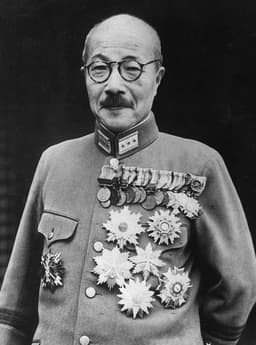
Hideki Tojo
General · Modern
53.9Total
Basic Information
Born
1960
1884
Died
—
1948
Era
Modern
Modern
Nationality
Kosovo
Japan
Occupation
General
General
Civilization
Western
Eastern
Score Comparison
Military (10%)
38.3
70.0
Political (20%)
43.7
48.0
Influence (20%)
51.8
55.0
Legacy (20%)
41.7
50.0
Leadership (15%)
61.1
53.2
Strategy (15%)
43.3
55.0
TOTAL
47.3
53.9
Agim Ceku — Complete Timeline
1999 AD
KLA Chief of StaffWar◆ Major
Ceku served as the Chief of Staff of the Kosovo Liberation Army during the final phase of the Kosovo War. He was a key military strategist and commander.
Kosovo WarMilitary Command
Impact: regional
2006 AD
Elected Prime Minister of KosovoPolitical Action◆ Major
Ceku became Prime Minister of Kosovo under UN administration, succeeding Bajram Kosumi. He led the government during the final status negotiations and the run-up to independence.
Kosovo StatusGovernment
Impact: regional
2008 AD
Resigned as Prime MinisterPolitical Action
Ceku resigned after failing to form a coalition government following the 2007 elections. He was succeeded by Hashim Thaci.
Kosovo PoliticsTransition
Impact: regional
Hideki Tojo — Complete Timeline
1941 AD
Attack on Pearl HarborWar
As Prime Minister, Hideki Tojo authorized the attack on the US naval base at Pearl Harbor, Hawaii. The surprise attack brought the United States into World War II. Tojo's decision was based on the belief that war with the US was inevitable due to resource embargoes and diplomatic failures.
World War IIPearl HarborUS-Japan War
Impact: globaldestructive
Appointment as Prime MinisterPolitical Action◆ Major
Hideki Tojo was appointed Prime Minister of Japan, replacing Fumimaro Konoe. He retained his position as Army Minister and later took on other portfolios, consolidating power. His appointment marked the ascendancy of the military faction in the Japanese government and the shift towards total war.
Prime MinisterMilitary GovernmentWorld War II
Impact: national
1942 AD
Fall of SingaporeWar◆ Major
Under Tojo's leadership, Japanese forces captured Singapore from the British in a swift campaign. The fall of Singapore was one of the worst British military defeats in history. It demonstrated Japanese military prowess and led to the occupation of a key strategic location in Southeast Asia.
World War IISingaporeJapanese Victory
Impact: global
1948 AD
Execution by the International Military Tribunal for the Far EastPolitical Action◆ Major
Hideki Tojo was found guilty of war crimes by the International Military Tribunal for the Far East and sentenced to death. He was executed by hanging on December 23, 1948. His trial and execution symbolized the Allied effort to hold Japanese leaders accountable for wartime atrocities.
War CrimesExecutionTokyo Trials
Impact: globaltragic
Expert Analysis
Hideki Tojo vs Agim Ceku
# The General Who Ruled, the General Who Served
On a December morning in 1941, Hideki Tojo stood before the Japanese Diet and declared war on the United States, setting in motion a conflict that would consume the Pacific and end with his own execution. Six decades later, in the spring of 1999, Agim Ceku commanded a ragtag army of Kosovan insurgents from a bunker in the mountains, fighting not to conquer an empire but to free a land smaller than Connecticut. Both were generals. Both became prime ministers. Yet one is remembered as a war criminal, the other as a founding father. The difference lies not in ambition but in the currents of history that swept them forward.
Origins
Tojo was born in 1884 into a samurai lineage, the son of a lieutenant general in the Imperial Japanese Army. His childhood was one of discipline, duty, and the unyielding code of *bushido*—loyalty to the emperor above all else. Japan itself was a rising power, humiliated by Western gunboats in the 1850s but now modernizing furiously, its military elite convinced that expansion was survival. Tojo absorbed this ethos: the army was not a career but a calling, and national honor was a razor’s edge.
Ceku was born in 1960 in a small village in what was then Yugoslavia, a country of ethnic tensions held together by Tito’s iron will. His family were ethnic Albanians in Kosovo, a province where they were second-class citizens. Unlike Tojo, Ceku did not inherit a warrior tradition—he chose one. He joined the Yugoslav People’s Army, then deserted to fight for Croatian independence in the 1990s, learning guerrilla warfare in the hills of the Balkans. Where Tojo was shaped by an ancient empire, Ceku was forged by its collapse.
Rise to Power
Tojo’s ascent was methodical, a ladder of staff positions and battlefield commands. He served as chief of the *Kempeitai*, Japan’s military police, in Manchuria, where he earned a reputation for ruthlessness and efficiency. By 1940, he was Army Minister, a hawk in a cabinet of doves. When Prime Minister Konoe resigned in October 1941, unable to resolve the deadlock with the United States, Tojo stepped into the vacuum. He was not the most brilliant strategist, but he was the most decisive—and in a militarist state, decisiveness was power.
Ceku’s rise was chaotic, a product of war and diaspora. He fought in Croatia, then returned to Kosovo in 1998 as the KLA’s chief of staff, a role he assumed not through political maneuvering but battlefield necessity. The KLA was a peasant army, short on guns and long on will. Ceku’s experience in Croatia gave him tactical credibility, but his authority was always tenuous. He became prime minister in 2006 not by coup but by coalition, a compromise candidate in a fractured parliament.
The difference is stark: Tojo seized power in a nation already mobilized for war; Ceku inherited a fragile peace under United Nations supervision.
Leadership & Governance
Tojo ruled Japan as a military dictator in all but name. He retained his army portfolio while serving as prime minister, centralizing control over the war effort. His leadership was efficient but brittle: he suppressed dissent, purged rivals, and micromanaged campaigns from Tokyo. The fall of Singapore in 1942 was his greatest triumph, a lightning campaign that humiliated the British Empire. But his strategic vision was narrow. He saw war as a series of battles, not a grand contest of industrial might. Japan’s navy warned him that attacking Pearl Harbor would awaken a sleeping giant; Tojo dismissed the caution as defeatism.
Ceku governed not as a dictator but as a transitional figure. As prime minister from 2006 to 2008, he focused on building institutions—a security force, a legal framework, the infrastructure of a state that did not yet exist. His military skills were tactical: he knew how to move fighters through mountains, how to ambush Serbian convoys. But as a politician, he was less adept, resigning in 2008 after failing to form a coalition. His governance was a holding action, not a revolution.
Tojo commanded through fear; Ceku through persuasion. Tojo’s Japan was a total war machine; Ceku’s Kosovo was a ward of the international community. One was a master of war but a failure at peace; the other was a competent soldier and a middling statesman.
Triumph & Tragedy
Tojo’s triumph was the fall of Singapore in February 1942, an operation that captured 80,000 British and Commonwealth troops. It was the largest surrender in British history, and for a moment, Japan seemed invincible. But the tragedy was already unfolding: the attack on Pearl Harbor, which he authorized in December 1941, had unified the United States in vengeance. Tojo’s greatest victory planted the seeds of his destruction. By 1944, Japan was losing; by 1945, it was ashes. Tojo attempted suicide in September 1945, but failed. He was hanged in 1948, convicted of war crimes, including the mistreatment of prisoners of war.
Ceku’s triumph was the Kosovo War itself. In 1999, after 78 days of NATO bombing, Serbian forces withdrew, and Kosovo became a UN protectorate. Ceku’s KLA had not won a conventional victory, but they had survived, and survival was enough. His tragedy was that he never fully escaped the war’s shadow. Accusations of war crimes—allegations of executions and ethnic cleansing by KLA fighters—dogged him, though he was never convicted. His resignation in 2008 was not a fall from grace but a quiet exit, a soldier leaving a stage he never fully mastered.
Character & Destiny
Tojo was a man of iron discipline and narrow vision. He believed in hierarchy, obedience, and the divine destiny of Japan. His personality—rigid, aggressive, intolerant of ambiguity—mirrored the militarism that consumed his country. He was not a monster in the private sense; he was a product of a system that deified the state and demonized compromise. When that system collapsed, he could not adapt. His execution was the final act of a tragedy he helped write.
Ceku was pragmatic, adaptive, and cautious. He fought for a cause that was just by most measures—self-determination for a persecuted people—but he understood that victory required allies, not just bullets. He courted NATO, accepted Western oversight, and stepped down when his political capital ran out. His character was not heroic but survivable. He lived to see Kosovo declare independence in 2008, a dream Tojo never entertained.
Legacy
Tojo is remembered as a symbol of Japanese imperialism, a figure of infamy in the West and ambivalence in Japan. His name is invoked as a cautionary tale: the general who became a dictator, the soldier who lost a nation. His legacy is a war that killed millions and a trial that defined international justice.
Ceku is remembered as a freedom fighter, a transitional figure in Kosovo’s long march to statehood. His legacy is incomplete: Kosovo is still a contested state, its independence recognized by some nations but not others. He is not a household name, but he is a footnote in the story of the Balkans’ violent rebirth.
Conclusion
Tojo and Ceku were both generals who became prime ministers, but their paths diverged like rivers from the same mountain. Tojo’s Japan was a rising empire that overreached and fell; Ceku’s Kosovo was a suppressed nation that clawed its way into existence. One fought for conquest, the other for liberation. One died on the gallows; the other lives in quiet retirement. Their stories remind us that leadership is not a fixed quality but a reflection of the age. Tojo was the product of a militarist culture that glorified war; Ceku was the product of a post-colonial world that demanded diplomacy. History did not judge them equally because history does not judge—it only records the consequences of choices made in impossible circumstances.
Rankings
🥇
Hideki TojoLeader
Mil: 70.0Pol: 48.0Inf: 55.0
53.9
🥈
Agim Ceku
Mil: 38.3Pol: 43.7Inf: 51.8
47.3
+6.6 behind
How This Comparison Works
Algorithm
Each figure is scored on 6 dimensions (0—100 scale) based on structured historical data: Military (10%), Political (20%), Influence (20%), Legacy (20%), Leadership (15%), Strategy (15%). The weighted total produces the final ranking.
Data Sources
Scores are computed from structured sub-indicators in the database. Scale factors adjust for era (Ancient ×0.85, Modern ×1.0) and civilization size (Eastern ×1.05, Other ×0.80) to account for differences in population and military scale.
Maximum 3 Figures
Comparisons are limited to 2—3 figures to ensure readability and statistical meaningfulness.
Error Margins
±5 points per dimension — Sub-scores are derived from historical records with inherent uncertainty. Two figures within 5 points on a dimension should be considered roughly equivalent in that area.
Total Score Accuracy
±3 points overall — The weighted combination of 6 dimensions produces a total score with approximately ±3 points of uncertainty. Differences of less than 3 points are not statistically significant— the figures are effectively tied.
Known Limitations
- Historical records are incomplete and uneven across civilizations
- Figures from oral-tradition societies may be underrepresented
- Occupation labels can misclassify multi-role figures
- Scores measure capability and impact, not moral character
- Quantitative scoring is a comparison tool, not absolute truth
Capability Radar
Military (10%) — Battles & Warfare
Battles
35
65
Win Rate
40
40
Expansion
15
70
Political (20%) — Governance & Reform
Reform
25
30
Diplomacy
30
35
Economy
20
25
Influence (20%) — Cultural & Global Reach
Cultural
20
30
Global
20
55
Legacy (20%) — Historical Impact
Historical
25
55
Longevity
15
40
Leadership (15%) — Power & Stability
Tenure
30
60
Stability
15
20
Strategy (15%) — Tactics & Innovation
Strategy
40
50
Tactics
45
55
Reform
20
45
Similar Comparisons
Comments & Discussion
SAMURAI'S SHADOW6/16/2026
Tojo was a product of empire's death spiral—a military bureaucrat who rose by saying "banzai" louder than his peers. The Pacific War wasn't his masterstroke; it was Japan's suicide pact, and Tojo was the enforcer who signed off on Unit 731's atrocities while micromanaging ration cards. Ceku, by contrast, led a desperate insurgency with captured rifles and NATO's prayers. Comparing them is like comparing a coroner to an executioner—one cleaned up a mess, the other made it.
血肉统计员6/16/2026
军事上,Tojo和Ceku简直是天壤之别。Tojo指挥的是亚洲最现代化的舰队和陆军,却在瓜岛和中途岛把自己的人头送进绞肉机——他根本不懂后勤,只懂“玉碎”!Ceku带着一帮拿猎枪的农民,在1999年用反坦克火箭和山地游击战拖住了南联盟正规军。一个是被神化了的官僚,一个是实战磨出的指挥官。别拿官阶当能力。
BRUTUS'S GHOST6/16/2026
Tojo was a classic case of "the empire strikes out"—a man so drunk on Yamato-damashii that he forgot Japan had no oil. Meanwhile, Ceku is Kosovo's George Washington with an AK-47: a freedom fighter who actually liberated territory. Tojo's legacy is a mushroom cloud over Nagasaki; Ceku's is a flag over Pristina. One was a tragic villain, the other a pragmatic hero. History judges by outcomes, not intentions, and Ceku won his war without firebombing civilians.
历史计量师6/16/2026
数据不会撒谎——Tojo指挥的日军在菲律宾和新加坡屠杀了至少20万平民,而Ceku的KLA据ICTY统计,在战争中的平民伤亡远小于塞尔维亚军队。这不是“英雄vs恶棍”的简单划分,而是史实差距!Tojo签发的战俘营命令让战俘死亡率高达27%,Ceku的部队没时间建集中营,他们在打仗。纸面上都是将军,实际上一个是职业杀人机器的头子,一个是民族自卫队的头目。
REVOLUTION'S ORPHAN6/16/2026
Look, Ceku wasn't a saint—his KLA had its share of thugs and drug-runners, but he fought for a nation-state, not an emperor's divine right to Asia. Tojo was a fascist technocrat who thought bombing Pearl Harbor was a "negotiation tactic." That's like using a flamethrower to light a candle. Ceku, for all his rough edges, represents the messy birth of a country; Tojo represents the sterile end of an empire where even victory meant decay. I'd take a flawed liberator over a clean war criminal any da