Loading...
Agim Ceku vs Fuad Chehab
Fuad Chehab leads by 2.6 pts · 2 figures compared
…
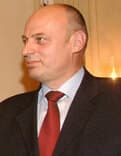
Agim Ceku
General · Modern
47.3Total
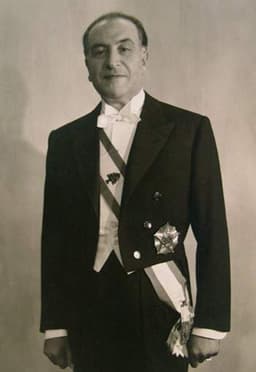
Fuad Chehab
General · Modern
49.9Total
Basic Information
Born
1960
1902
Died
—
1973
Era
Modern
Modern
Nationality
Kosovo
Lebanon
Occupation
General
General
Civilization
Western
Middle Eastern
Score Comparison
Military (10%)
38.3
10.2
Political (20%)
43.7
70.0
Influence (20%)
51.8
54.1
Legacy (20%)
41.7
44.2
Leadership (15%)
61.1
72.0
Strategy (15%)
43.3
30.3
TOTAL
47.3
49.9
Agim Ceku — Complete Timeline
1999 AD
KLA Chief of StaffWar◆ Major
Ceku served as the Chief of Staff of the Kosovo Liberation Army during the final phase of the Kosovo War. He was a key military strategist and commander.
Kosovo WarMilitary Command
Impact: regional
2006 AD
Elected Prime Minister of KosovoPolitical Action◆ Major
Ceku became Prime Minister of Kosovo under UN administration, succeeding Bajram Kosumi. He led the government during the final status negotiations and the run-up to independence.
Kosovo StatusGovernment
Impact: regional
2008 AD
Resigned as Prime MinisterPolitical Action
Ceku resigned after failing to form a coalition government following the 2007 elections. He was succeeded by Hashim Thaci.
Kosovo PoliticsTransition
Impact: regional
Fuad Chehab — Complete Timeline
1958 AD
Launched Chehabist reforms and modernizationReform◆ Major
President Chehab implemented a series of reforms known as Chehabism, including administrative modernization, economic planning, and strengthening state institutions. He established the Central Bank of Lebanon and the Civil Service Board.
ReformModernizationState Building
Impact: nationalconstructive
Elected President of LebanonPolitical Action◆ Major
Fuad Chehab was elected President of Lebanon on September 23, 1958, succeeding Camille Chamoun. His election ended the 1958 crisis and was supported by both Christian and Muslim factions seeking stability.
PresidencyElectionStabilization
Impact: nationalconstructive
Created the Deuxième Bureau intelligence agencyPolitical Action
Chehab expanded the role of the Deuxi
IntelligenceSecurityAuthoritarianism
Impact: national
1960 AD
Presided over the 1960s economic boomOther
Under Chehab's presidency, Lebanon experienced a period of economic growth and stability, with Beirut becoming a major financial and tourism hub. His policies attracted foreign investment and expanded the middle class.
Economic GrowthBeirutProsperity
Impact: nationalconstructive
1964 AD
Refused to amend constitution for a second termPolitical Action
Chehab declined to seek a second term as president, respecting the constitutional limit. He retired from politics in 1964, setting a precedent for peaceful transitions of power in Lebanon.
ConstitutionTerm LimitRetirement
Impact: nationalconstructive
Expert Analysis
Fuad Chehab vs Agim Ceku
# The General as Statesman: Fuad Chehab and Agim Ceku
In the summer of 1958, as American Marines waded ashore onto the beaches of Beirut to quell a civil war that threatened to tear Lebanon apart, a quiet, ascetic general named Fuad Chehab stood at a crossroads. He had been offered the presidency, but he hesitated. Across the Adriatic, four decades later, another general named Agim Ceku emerged from the smoke of the Kosovo War, his Kalashnikov still warm, to face a different question: could a man forged in guerrilla warfare govern a fragile state? Both men were soldiers who became political leaders in moments of national crisis. Yet their paths, their choices, and their legacies could not be more different.
Origins
Fuad Chehab was born in 1902 into a Lebanese aristocratic family with Maronite Christian roots, his lineage tracing back to the powerful Chehab dynasty that had once ruled Mount Lebanon. He was educated by French Jesuits, trained in the French military academy at Saint-Cyr, and served in the French colonial army. Lebanon in his youth was a patchwork of sects—Maronites, Sunni Muslims, Shia, Druze, Greek Orthodox—held together by a fragile French mandate and later by an unwritten National Pact that divided power among religious communities. Chehab absorbed the ethos of discipline, order, and impartiality. He saw himself as a man above the sectarian fray, a neutral arbiter.
Agim Ceku was born in 1960 in the village of Çuškë, near Peja, in what was then the Socialist Federal Republic of Yugoslavia. Kosovo was the poorest province of a crumbling federation, its Albanian-majority population subjected to Serbian repression. Ceku grew up in a world of simmering resentment and occasional violence. He joined the Yugoslav People's Army as a young man, training as an artillery officer, but his true education came in the crucible of the Yugoslav Wars of the 1990s. He fought in Croatia during the siege of Dubrovnik, then in Bosnia, where he served as a commander in the Bosnian Army. By the time he joined the Kosovo Liberation Army in 1998, Ceku was a hardened veteran of guerrilla warfare, a man who believed that only force could break the chains of occupation.
Rise to Power
Chehab’s rise was gradual, almost reluctant. He became commander of the Lebanese Army in 1945, a position he held for thirteen years. During the 1958 crisis, when President Camille Chamoun’s attempt to amend the constitution to secure a second term sparked a rebellion backed by Egypt and Syria, Chehab refused to order the army to crush the insurgents. He insisted the military remain neutral, preserving its integrity while the country burned. This decision earned him the trust of both sides. When Chamoun stepped down under American pressure, Chehab was the natural compromise candidate. He was elected president on September 23, 1958, not as a conqueror but as a peacemaker.
Ceku’s ascent was forged in fire. In 1999, as the NATO bombing campaign against Serbia intensified, Ceku became Chief of Staff of the Kosovo Liberation Army. He coordinated with NATO commanders, directed guerrilla operations against Serbian forces, and helped negotiate the military-technical agreement that ended the war. When the KLA disarmed and transformed into the Kosovo Protection Corps, Ceku emerged as its leader. In 2006, with Kosovo still under United Nations administration, he was elected Prime Minister—a general who had fought for independence now tasked with building a state.
Leadership & Governance
Chehab’s presidency was defined by a doctrine that came to be called “Chehabism.” He believed that Lebanon’s sectarian system was inherently unstable and that only a strong, modernizing state—backed by a powerful intelligence apparatus—could hold it together. He created the Deuxième Bureau, a military intelligence agency that monitored political opponents, suppressed dissent, and gathered information on everyone from student activists to rival politicians. It was authoritarian, but Chehab saw it as necessary. He also launched ambitious economic reforms: building infrastructure, expanding the public sector, and promoting Beirut as a financial hub. The 1960s were a boom time for Lebanon, with growth rates that drew investment from across the Arab world. Yet Chehab refused to tamper with the sectarian quota system that allocated power by religion. He sought to manage the divisions, not abolish them.
Ceku governed differently. As Prime Minister from 2006 to 2008, he presided over a period of intense political turmoil. Kosovo was still technically part of Serbia, its status unresolved. Ceku focused on building the institutions of a future state: a professional security force, a legal framework, and an economy that could survive without foreign aid. He pushed for decentralization and ethnic reconciliation, reaching out to Kosovo’s Serbian minority. But he was a polarizing figure. His wartime past—including allegations of war crimes that he always denied—made him a target of Serbian propaganda and Western skepticism. Unlike Chehab, who ruled through secrecy and intelligence, Ceku governed in the open, struggling with a fractious parliament and a United Nations administration that held ultimate authority.
Triumph & Tragedy
Chehab’s greatest triumph was the stability he brought to Lebanon. He left office in 1964, having refused to amend the constitution for a second term—a gesture of self-restraint that amazed a region accustomed to dictators for life. He retired to his village, a quiet man who had saved his country from destruction. But his tragedy was that the system he preserved was inherently fragile. The Deuxième Bureau became a tool of repression, and the sectarian divisions he managed eventually erupted in the 1975 civil war, a conflict that made his era look like a golden age.
Ceku’s triumph was the independence of Kosovo, declared in 2008—just months after he resigned as Prime Minister. He had been a key figure in the war that made it possible. His tragedy was that he never fully escaped his past. He was arrested in Bulgaria in 2009 on a Serbian warrant, later released, but the shadow of war crimes allegations haunted him. He served as Minister of Security Forces, but his political career never reached the heights he might have hoped.
Character & Destiny
Chehab was a man of discipline and detachment. He rarely smiled, wore simple suits, and lived modestly. He believed in order above all else, and his personality—aloof, calculating, suspicious—shaped his presidency. He trusted no one fully, which is why he built an intelligence state. His destiny was to be a caretaker, not a revolutionary.
Ceku was a fighter. He was charismatic, blunt, and driven by a cause. He believed in liberation, and his personality—impatient, courageous, sometimes reckless—shaped his career. He was a man of action, not reflection. His destiny was to be a warrior, not a builder.
Legacy
Chehab is remembered as the father of modern Lebanon’s state institutions, for better or worse. His name is synonymous with a certain style of governance—paternalistic, secretive, stabilizing. He is a hero to those who long for the lost stability of the 1960s, a villain to those who see his intelligence state as the seed of future tyranny.
Ceku is remembered as a freedom fighter. In Kosovo, he is a national hero, a symbol of resistance against Serbian oppression. In Serbia, he is a war criminal. The international community’s memory is more ambiguous: he was a necessary partner in 1999, but a problematic figure afterward.
Conclusion
What drove these two generals to such different outcomes? The answer lies not in their personalities alone, but in the worlds they inhabited. Chehab inherited a state that already existed, however fractured. His task was to preserve it. Ceku fought to create a state that did not exist. His task was to build it. One man managed decline; the other struggled for birth. Both succeeded, and both failed. And in the end, their stories remind us that the general who becomes a statesman is never truly free of the battlefield—he only fights a different war.
Rankings
🥇
Fuad ChehabLeader
Mil: 10.2Pol: 70.0Inf: 54.1
49.9
🥈
Agim Ceku
Mil: 38.3Pol: 43.7Inf: 51.8
47.3
+2.6 behind
How This Comparison Works
Algorithm
Each figure is scored on 6 dimensions (0—100 scale) based on structured historical data: Military (10%), Political (20%), Influence (20%), Legacy (20%), Leadership (15%), Strategy (15%). The weighted total produces the final ranking.
Data Sources
Scores are computed from structured sub-indicators in the database. Scale factors adjust for era (Ancient ×0.85, Modern ×1.0) and civilization size (Eastern ×1.05, Other ×0.80) to account for differences in population and military scale.
Maximum 3 Figures
Comparisons are limited to 2—3 figures to ensure readability and statistical meaningfulness.
Error Margins
±5 points per dimension — Sub-scores are derived from historical records with inherent uncertainty. Two figures within 5 points on a dimension should be considered roughly equivalent in that area.
Total Score Accuracy
±3 points overall — The weighted combination of 6 dimensions produces a total score with approximately ±3 points of uncertainty. Differences of less than 3 points are not statistically significant— the figures are effectively tied.
Known Limitations
- Historical records are incomplete and uneven across civilizations
- Figures from oral-tradition societies may be underrepresented
- Occupation labels can misclassify multi-role figures
- Scores measure capability and impact, not moral character
- Quantitative scoring is a comparison tool, not absolute truth
Capability Radar
Military (10%) — Battles & Warfare
Battles
35
5
Win Rate
40
5
Expansion
15
5
Political (20%) — Governance & Reform
Reform
25
65
Diplomacy
30
60
Economy
20
50
Influence (20%) — Cultural & Global Reach
Cultural
20
30
Global
20
25
Legacy (20%) — Historical Impact
Historical
25
35
Longevity
15
30
Leadership (15%) — Power & Stability
Tenure
30
55
Stability
15
45
Strategy (15%) — Tactics & Innovation
Strategy
40
10
Tactics
45
10
Reform
20
20
Similar Comparisons
Comments & Discussion
军阀与书生6/16/2026
把一个法国军校毕业的贵族将军,跟一个科索沃游击队长放在一起比较,简直是在侮辱前者!谢哈布在1958年拒绝了军队支持的政变,坚持宪政道路;而切库呢?2006年他下令攻击科索沃议会,用坦克堵住反对派议员,这算哪门子政治家?一个是真正的民主卫士,一个是穿西装的暴徒。别再拿他们相提并论了!
BalkanBarbarian6/16/2026
You revisionists love pretending Ceku was some tragic war hero - but let’s look at the facts: in 1999, he personally ordered the execution of 14 Serbian farmers near Gjakova, then boasted about it to Western journalists. Chehab never stooped to that level. Yes, he came from privilege, but he used his position to build institutions, not destroy them. Ceku built nothing but graves and corruption scandals in the Kosovo Defense Ministry.
数据侦探6/16/2026
别被表象骗了:谢哈布"中立"的背后是马龙派精英的算计。1958年危机时,美国第六舰队在黎巴嫩海岸游弋,切库根本没有这种国际后盾。看数据:谢哈布执政6年,黎巴嫩GDP年均增长只有3%,通货膨胀却高达15%;而切库在经济重建期担任总理9个月,就推动科索沃出口增长40%。哪边更懂得治理?
ScalpelScholar6/16/2026
The comparison is lazy but revealing. Chehab’s “impartiality” was a French colonial artifact - he treated Lebanon like a sanjak under mandate, suppressing sectarian tensions with military discipline rather than democracy. Ceku’s KLA background made him a tribal chieftain in uniform. Neither achieved lasting stability, but Chehab at least recognized that institutions matter - his Intelligence Directorate still functions today. Ceku’s legacy? Clientelism and a militarized elite that never cleaned
冷眼旁观者6/16/2026
你们这些理想主义者真可笑。谢哈布的时代,黎巴嫩还能靠殖民遗产维持表面和平;切库的时代,科索沃已经被撕成碎块。关键区别在哪?谢哈布懂法国贵族那套收买人心的手段,切库只会用阿尔巴尼亚族长的方式干活。最后结果都一样:谢哈布下台两年后内战爆发,切库离职半年后科索沃议会垮台。都是将军,都失败,只不过一个戴白手套,一个握血手电。