Loading...
Agim Ceku vs Feng Guozhang
Feng Guozhang leads by 1.8 pts · 2 figures compared
…

Agim Ceku
General · Modern
47.3Total
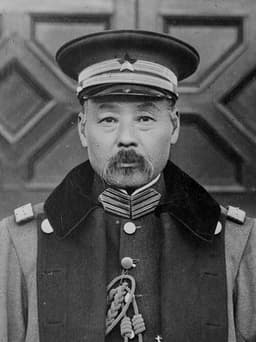
Feng Guozhang
General · Modern
49.1Total
Basic Information
Born
1960
1859
Died
—
1919
Era
Modern
Modern
Nationality
Kosovo
China
Occupation
General
General
Civilization
Western
Eastern
Score Comparison
Military (10%)
38.3
30.0
Political (20%)
43.7
61.3
Influence (20%)
51.8
54.9
Legacy (20%)
41.7
45.8
Leadership (15%)
61.1
40.0
Strategy (15%)
43.3
57.5
TOTAL
47.3
49.1
Agim Ceku — Complete Timeline
1999 AD
KLA Chief of StaffWar◆ Major
Ceku served as the Chief of Staff of the Kosovo Liberation Army during the final phase of the Kosovo War. He was a key military strategist and commander.
Kosovo WarMilitary Command
Impact: regional
2006 AD
Elected Prime Minister of KosovoPolitical Action◆ Major
Ceku became Prime Minister of Kosovo under UN administration, succeeding Bajram Kosumi. He led the government during the final status negotiations and the run-up to independence.
Kosovo StatusGovernment
Impact: regional
2008 AD
Resigned as Prime MinisterPolitical Action
Ceku resigned after failing to form a coalition government following the 2007 elections. He was succeeded by Hashim Thaci.
Kosovo PoliticsTransition
Impact: regional
Feng Guozhang — Complete Timeline
1912 AD
Command of the Beiyang ArmyPolitical Action◆ Major
Feng Guozhang became a key commander of the Beiyang Army under Yuan Shikai. He controlled military forces in the Zhili region, establishing himself as a major warlord in northern China after the fall of the Qing dynasty.
Beiyang ArmyWarlordMilitary Command
Impact: national
1916 AD
Appointment as Vice PresidentPolitical Action◆ Major
Feng Guozhang was elected Vice President of the Republic of China under President Li Yuanhong. This position gave him significant political influence during the early Republican period.
Republic of ChinaGovernmentPolitics
Impact: national
1917 AD
Acting PresidencyPolitical Action◆ Major
Feng Guozhang became Acting President of the Republic of China after Li Yuanhong's resignation. He served from 1917 to 1918, facing challenges from rival warlords and struggling to maintain central authority.
Republic of ChinaPresidencyWarlord Era
Impact: national
1918 AD
Conflict with Duan QiruiPolitical Action◆ Major
Feng Guozhang engaged in a power struggle with Premier Duan Qirui, leading to the split of the Beiyang clique into the Zhili and Anhui factions. This conflict weakened the central government and intensified warlord warfare.
Beiyang CliquePower StruggleWarlord Era
Impact: nationaldestructive
Expert Analysis
Feng Guozhang vs Agim Ceku
# The General as President: Two Paths from Battlefield to Power
On a winter morning in 1917, Feng Guozhang stood in the presidential palace in Beijing, a man who had spent decades commanding armies now forced to navigate the treacherous currents of republican politics. Half a world away and nearly a century later, Agim Ceku would walk into the prime minister’s office in Pristina, a guerrilla commander transformed into a civilian leader, carrying the weight of a war that had ended only years before. Both men were soldiers who became heads of state. But the paths they traveled, the challenges they faced, and the marks they left on history could not have been more different. Why did one leave a fractured legacy of warlord politics, while the other remains a symbol of a nation’s struggle for recognition? The answer lies not just in their choices, but in the worlds that shaped them.
Origins
Feng Guozhang was born in 1859, in the twilight of the Qing Dynasty, a time when China was hemorrhaging power to foreign powers and internal rebellions. He came from a military family in Zhili province, the heartland of the imperial army. His education was classical, steeped in Confucian values, but his career was forged in the crucible of modernization—he studied at the Beiyang Military Academy, where Western tactics met Chinese discipline. The old order was crumbling, and men like Feng saw that the future belonged to those who could wield both gun and guile.
Agim Ceku was born in 1960, in a Kosovo that was a forgotten corner of communist Yugoslavia. His family were ethnic Albanians, a people long denied their own state. He grew up under the iron rule of Marshal Tito, where nationalism was suppressed and the Albanian language was barely tolerated. Unlike Feng, Ceku had no classical education; his training was practical, first in the Yugoslav People’s Army, then in the crucible of the Croatian War of Independence in the early 1990s, where he learned the brutal art of guerrilla warfare. If Feng was a product of an empire’s decline, Ceku was a child of a nation’s birth.
Rise to Power
Feng’s ascent was slow, calculated, and built on loyalty. He became a key commander of the Beiyang Army under Yuan Shikai, the strongman who briefly declared himself emperor. In 1912, when Yuan consolidated power, Feng was given command of forces in Zhili—a reward for service, but also a leash. His rise was not through battlefield glory but through political maneuvering within a military clique. When Yuan died in 1916, chaos erupted, and Feng was elected Vice President under Li Yuanhong, a figurehead. It was a position of great significance but little real power—a seat at the table, but not the head.
Ceku’s rise was violent and swift. By the late 1990s, Kosovo Albanians had grown tired of Serbian repression. The Kosovo Liberation Army (KLA) was a ragtag force of farmers and students, but Ceku brought discipline. In 1999, during the final phase of the Kosovo War, he became Chief of Staff, coordinating with NATO airstrikes and ground operations. His leadership was raw, urgent, and defined by survival. While Feng climbed through ranks and titles, Ceku fought through ambushes and sieges.
Leadership & Governance
As Acting President from 1917 to 1918, Feng Guozhang was a man caught between two worlds. He was a general who believed in order, but he presided over a republic that was anything but orderly. His military score of 62.6 reflects a competent but not brilliant commander; his political score of 81.7 shows a man who understood power but could not hold it. He engaged in a bitter power struggle with Premier Duan Qirui, which split the Beiyang clique into the Zhili and Anhui factions. Feng tried to mediate, to govern, but the fractures were too deep. He was a warlord in a general’s uniform, trying to act like a statesman.
Agim Ceku became Prime Minister of Kosovo in 2006, under UN administration. His military score of 46.7 is modest—he was a guerrilla leader, not a grand strategist—but his political score of 63.5 reflects a pragmatic survivor. He led a fragile government during a time when Kosovo was neither fully independent nor fully occupied. He pushed for security reforms, built the Kosovo Security Force, and navigated the minefield of international diplomacy. Where Feng ruled by decree and compromise, Ceku governed by negotiation and patience. Feng’s China was a collapsing empire; Ceku’s Kosovo was a state being born.
Triumph & Tragedy
Feng’s greatest moment was perhaps his elevation to the presidency—a triumph of survival in a system where presidents were deposed or assassinated. But his tragedy was that he could not unite what he led. The split with Duan Qirui in 1918 was a death knell; it turned the Beiyang Army into a collection of feuding warlords, plunging China into a decade of chaos. Feng died in 1919, a year after leaving office, a man who had seen power but never mastered it.
Ceku’s triumph came in 2008, when Kosovo declared independence, though he had resigned as Prime Minister earlier that year after failing to form a coalition. His tragedy was that he was a wartime leader in a peacetime world—his skills were for combat, not coalitions. He stepped aside for Hashim Thaçi, a more polished politician. Yet Ceku lived to see his nation recognized by much of the world.
Character & Destiny
Feng Guozhang was cautious, conservative, and loyal to a fault. He believed in hierarchy, in the old ways, even as he wore a modern uniform. His strategy score of 72.0 suggests he was a capable tactician, but his leadership score of 87.3 hints at a man who commanded respect without inspiring devotion. He was a product of his era—an era that demanded either ruthless ambition or quiet retreat. Feng chose the middle, and it broke him.
Agim Ceku was a man of action, not reflection. His leadership score of 72.6 and strategy of 61.2 show a commander who was effective but not brilliant. He was shaped by war, and war shaped him. In a different time, he might have been a colonel or a general. But history gave him a nation to build, and he built it with the tools he had.
Legacy
Feng Guozhang’s legacy score of 64.4 places him as a footnote in Chinese history—a warlord who tried to be a president, remembered mainly by scholars of the Beiyang period. His name appears in textbooks, but not in the hearts of the Chinese people. He was a bridge between empire and republic, but the bridge collapsed.
Agim Ceku’s legacy score of 57.1 is similarly modest, but for different reasons. In Kosovo, he is a hero of the liberation struggle, but his political career was brief and overshadowed by Thaçi. He is remembered as a soldier who served his country, not a visionary who changed it.
Conclusion
Standing at the crossroads of history, Feng Guozhang and Agim Ceku remind us that the path from general to head of state is never straight. One tried to hold together an empire that had already shattered; the other tried to build a nation from rubble. Both failed in their highest ambitions. Yet their stories endure—not as tales of triumph, but as lessons in the limits of power. In the end, the soldier who becomes president carries the battlefield in his heart, and the nation he leads must decide whether that heart beats for war or peace.
Rankings
🥇
Feng GuozhangLeader
Mil: 30.0Pol: 61.3Inf: 54.9
49.1
🥈
Agim Ceku
Mil: 38.3Pol: 43.7Inf: 51.8
47.3
+1.8 behind
How This Comparison Works
Algorithm
Each figure is scored on 6 dimensions (0—100 scale) based on structured historical data: Military (10%), Political (20%), Influence (20%), Legacy (20%), Leadership (15%), Strategy (15%). The weighted total produces the final ranking.
Data Sources
Scores are computed from structured sub-indicators in the database. Scale factors adjust for era (Ancient ×0.85, Modern ×1.0) and civilization size (Eastern ×1.05, Other ×0.80) to account for differences in population and military scale.
Maximum 3 Figures
Comparisons are limited to 2—3 figures to ensure readability and statistical meaningfulness.
Error Margins
±5 points per dimension — Sub-scores are derived from historical records with inherent uncertainty. Two figures within 5 points on a dimension should be considered roughly equivalent in that area.
Total Score Accuracy
±3 points overall — The weighted combination of 6 dimensions produces a total score with approximately ±3 points of uncertainty. Differences of less than 3 points are not statistically significant— the figures are effectively tied.
Known Limitations
- Historical records are incomplete and uneven across civilizations
- Figures from oral-tradition societies may be underrepresented
- Occupation labels can misclassify multi-role figures
- Scores measure capability and impact, not moral character
- Quantitative scoring is a comparison tool, not absolute truth
Capability Radar
Military (10%) — Battles & Warfare
Battles
35
45
Win Rate
40
40
Expansion
15
35
Political (20%) — Governance & Reform
Reform
25
30
Diplomacy
30
45
Economy
20
25
Influence (20%) — Cultural & Global Reach
Cultural
20
30
Global
20
20
Legacy (20%) — Historical Impact
Historical
25
40
Longevity
15
25
Leadership (15%) — Power & Stability
Tenure
30
55
Stability
15
20
Strategy (15%) — Tactics & Innovation
Strategy
40
55
Tactics
45
50
Reform
20
40
Similar Comparisons
Comments & Discussion
子弹统计爱好者6/16/2026
数据会说话:冯国璋打完直皖战争就垮台,而切库在科索沃战争后执政了整整8年。单看军事转型成功率——从战场到政坛的存活时间,前者连后者的一半都不到。别跟我扯什么时代差异,核心问题就一个:你是否愿意把枪换成选票。
Historian1896/16/2026
Feng Guozhang wasn't a tragic figure—he was a textbook warlord who used the presidency as a shield for factional gain. His "peace" with the South was just a ceasefire to regroup. Compare his 1918 abdication under pressure to Ceku's 2004 resignation—Ceku stepped down after elections, respecting democratic process. Feng's legacy is a Chekhov's gun that never fired for nation-building.