Loading...
Agim Ceku vs Antonio Lopez de Santa Anna
Antonio Lopez de Santa Anna leads by 11.6 pts · 2 figures compared
…

Agim Ceku
General · Modern
47.3Total
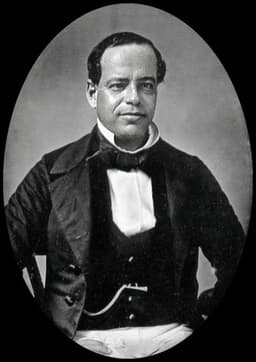
Antonio Lopez de Santa Anna
General · Modern
58.9Total
Basic Information
Born
1960
1794
Died
—
1876
Era
Modern
Modern
Nationality
Kosovo
Mexico
Occupation
General
General
Civilization
Western
Western
Score Comparison
Military (10%)
38.3
70.0
Political (20%)
43.7
46.6
Influence (20%)
51.8
56.7
Legacy (20%)
41.7
58.0
Leadership (15%)
61.1
68.0
Strategy (15%)
43.3
60.0
TOTAL
47.3
58.9
Agim Ceku — Complete Timeline
1999 AD
KLA Chief of StaffWar◆ Major
Ceku served as the Chief of Staff of the Kosovo Liberation Army during the final phase of the Kosovo War. He was a key military strategist and commander.
Kosovo WarMilitary Command
Impact: regional
2006 AD
Elected Prime Minister of KosovoPolitical Action◆ Major
Ceku became Prime Minister of Kosovo under UN administration, succeeding Bajram Kosumi. He led the government during the final status negotiations and the run-up to independence.
Kosovo StatusGovernment
Impact: regional
2008 AD
Resigned as Prime MinisterPolitical Action
Ceku resigned after failing to form a coalition government following the 2007 elections. He was succeeded by Hashim Thaci.
Kosovo PoliticsTransition
Impact: regional
Antonio Lopez de Santa Anna — Complete Timeline
1823 AD
Led the Plan of Casa Mata rebellionPolitical Action
Santa Anna, then a general, issued the Plan of Casa Mata on February 1, 1823, calling for the overthrow of Emperor Agust
RebellionOverthrowRepublic
Impact: nationalconstructive
1829 AD
Defended Mexico at the Battle of TampicoWar◆ Major
Santa Anna commanded Mexican forces that defeated a Spanish invasion force at Tampico on September 11, 1829. The victory ended Spain's last attempt to reconquer Mexico and made Santa Anna a national hero. He was hailed as the 'Hero of Tampico' and used this fame to advance politically.
VictorySpanish InvasionNational Hero
Impact: nationalconstructive
1833 AD
Became President of Mexico for the first timePolitical Action◆ Major
Santa Anna was elected President of Mexico in 1833. He quickly delegated power to Vice President Valent
PresidencyPolitical InstabilityPower
Impact: national
1836 AD
Commanded at the Siege of the AlamoWar◆ Major
Santa Anna personally led the Mexican army in the siege of the Alamo mission in San Antonio, Texas. After a 13-day siege, Mexican forces stormed the fort on March 6, 1836, killing all 180-250 Texan defenders. The battle became a symbol of Texan resistance and a rallying cry for independence.
BattleTexas RevolutionAlamo
Impact: regionaldestructive
Defeated and captured at the Battle of San JacintoWar
Santa Anna's army was surprised and routed by Texan forces under Sam Houston at the Battle of San Jacinto on April 21, 1836. Santa Anna was captured the next day. He was forced to sign the Treaties of Velasco, recognizing Texan independence, though Mexico later repudiated them.
DefeatCaptureTexas Independence
Impact: regionaltragic
1847 AD
Lost the Mexican-American WarWar
Santa Anna returned from exile to command Mexican forces during the Mexican-American War. Despite initial efforts, his army was defeated at the Battle of Cerro Gordo and later at the Battle of Chapultepec. US forces captured Mexico City on September 14, 1847, leading to the Treaty of Guadalupe Hidalgo and massive territorial losses.
Mexican-American WarDefeatTerritorial Loss
Impact: globaltragic
1853 AD
Sold La Mesilla to the United StatesPolitical Action◆ Major
During his final presidency, Santa Anna agreed to the Gadsden Purchase, selling 29,670 square miles of territory (La Mesilla) to the United States for $10 million. The sale was widely condemned in Mexico as a betrayal. This act further damaged his reputation and led to his overthrow.
Territorial CessionGadsden PurchaseBetrayal
Impact: nationaldestructive
1855 AD
Overthrown and exiled for the final timePolitical Action◆ Major
The Plan of Ayutla, led by Juan
OverthrowExileEnd of Career
Impact: nationaltragic
Expert Analysis
Antonio Lopez de Santa Anna vs Agim Ceku
# The General and the Guerrilla: Two Paths to Power in Divided Lands
On a dusty April morning in 1836, Antonio López de Santa Anna watched his army storm the Alamo mission, a victory that would burnish his reputation as the "Napoleon of the West." A century and a half later, in the spring of 1999, Agim Ceku sat in a bunker in the mountains of Kosovo, coordinating guerrilla strikes against Serbian forces with little more than satellite phones and sheer will. Both men were generals who became political leaders in times of national crisis. One would lose half his country and die in exile, remembered as a cautionary tale. The other would lead his people to independence and become a prime minister. Their divergent fates reveal how character, circumstance, and the nature of war itself shape the trajectories of men who rise from the battlefield to the seat of power.
Origins
Santa Anna was born in 1794 into a Spanish colonial family of modest means in Jalapa, Veracruz. The son of a minor bureaucrat, he grew up in a world where loyalty to the crown was the only path to advancement. He joined the army at sixteen, fighting for Spain against Mexican insurgents. This was a world of rigid hierarchies, where ambition meant playing by established rules. Ceku, born in 1960 in the small town of Cernica, Kosovo, came of age in a very different crucible. He was an ethnic Albanian in a Serbian-dominated Yugoslavia, a world where his people were second-class citizens. He joined the Yugoslav People's Army as a young man, but when the Cold War ended and Yugoslavia shattered, he found himself fighting not for a state, but for a people's right to exist.
Rise to Power
Santa Anna's rise was theatrical. In 1823, he issued the Plan of Casa Mata, a rebellion that overthrew Emperor Agustín de Iturbide. He was not a revolutionary in the ideological sense—he was a chameleon, switching sides between federalists and centralists as it suited him. The Battle of Tampico in 1829, where he defeated a Spanish invasion force, made him a national hero. He became president in 1833, but he quickly tired of governing and handed power to his vice president, retreating to his estate to play the role of a reluctant leader who could be called back to save the nation. Ceku's rise was more linear and desperate. He trained in Croatia during the Yugoslav Wars, learning guerrilla tactics from the Croatian army. By 1999, he was Chief of Staff of the Kosovo Liberation Army, a ragtag force that fought a vastly superior Serbian military. His authority came not from charisma but from competence—he was the man who could turn farmers and students into soldiers.
Leadership & Governance
Santa Anna governed like a caudillo—a personalist strongman who ruled through patronage, fear, and the army. He was a skilled politician in the sense that he could manipulate factions, but he had no vision for Mexico beyond his own power. His military strategy was aggressive but brittle: he won battles but lost wars. At the Alamo in 1836, he ordered no quarter, a decision that galvanized Texan resistance. Weeks later, at San Jacinto, his army was caught napping by Sam Houston. He was captured and signed away Texas. During the Mexican-American War in 1847, he returned from exile to command again, but his forces were outmaneuvered and outgunned. He sold La Mesilla to the United States in 1853, a final humiliation. Ceku, by contrast, led a guerrilla war where survival was victory. He understood that the KLA could not defeat Serbia in a conventional battle; instead, he used hit-and-run tactics to draw NATO into the conflict. As prime minister from 2006 to 2008, he focused on building institutions, not personal power. He resigned after failing to form a coalition, a quiet exit that Santa Anna would never have made.
Triumph & Tragedy
Santa Anna's greatest moment was Tampico, where he defended Mexico from a Spanish reconquest. His worst was San Jacinto, where he traded a nation for his own freedom. He was a man who could never accept responsibility—he blamed his generals, his soldiers, even the weather. Ceku's triumph was the end of the Kosovo War in 1999, when Serbian forces withdrew and Kosovo came under UN administration. His tragedy was the slow, grinding work of peace: accusations of war crimes (never proven), political infighting, and the realization that independence, when it came in 2008, was not the end of struggle but the beginning of a new one.
Character & Destiny
Santa Anna was driven by ego and a hunger for adulation. He called himself the "Napoleon of the West" and wore a prosthetic leg with full military honors after losing his real one in battle. He could not share power, could not delegate, and could not learn from defeat. Ceku was driven by duty and a sense of survival. He was a technocrat of war, not a showman. Where Santa Anna saw history as a stage for his performance, Ceku saw it as a problem to be solved. One man's personality led him to overreach and fall; the other's led him to endure and adapt.
Legacy
Santa Anna is remembered in Mexico as a traitor and a buffoon, the man who lost Texas and sold the country's land. His name is synonymous with corruption and failure. Ceku is remembered in Kosovo as a founding father, a man who led a liberation army and then tried to build a state. But his legacy is contested—some see him as a hero, others as a militant whose methods were too rough for peacetime. The difference is not just in their deeds but in the scale of their failures. Santa Anna lost half a country; Ceku helped create one.
Conclusion
Standing on the same continent, separated by 150 years, Santa Anna and Ceku represent two responses to the same question: what does a general owe his people? Santa Anna answered with himself—his glory, his power, his legacy. Ceku answered with his country—his service, his sacrifice, his people's freedom. One left a trail of ruins; the other left a flag. In the end, the difference between them is not talent or luck, but the choice between self and nation. History remembers the men who made the right choice, even if they did not make it perfectly.
Rankings
🥇
Antonio Lopez de Santa AnnaLeader
Mil: 70.0Pol: 46.6Inf: 56.7
58.9
🥈
Agim Ceku
Mil: 38.3Pol: 43.7Inf: 51.8
47.3
+11.6 behind
How This Comparison Works
Algorithm
Each figure is scored on 6 dimensions (0—100 scale) based on structured historical data: Military (10%), Political (20%), Influence (20%), Legacy (20%), Leadership (15%), Strategy (15%). The weighted total produces the final ranking.
Data Sources
Scores are computed from structured sub-indicators in the database. Scale factors adjust for era (Ancient ×0.85, Modern ×1.0) and civilization size (Eastern ×1.05, Other ×0.80) to account for differences in population and military scale.
Maximum 3 Figures
Comparisons are limited to 2—3 figures to ensure readability and statistical meaningfulness.
Error Margins
±5 points per dimension — Sub-scores are derived from historical records with inherent uncertainty. Two figures within 5 points on a dimension should be considered roughly equivalent in that area.
Total Score Accuracy
±3 points overall — The weighted combination of 6 dimensions produces a total score with approximately ±3 points of uncertainty. Differences of less than 3 points are not statistically significant— the figures are effectively tied.
Known Limitations
- Historical records are incomplete and uneven across civilizations
- Figures from oral-tradition societies may be underrepresented
- Occupation labels can misclassify multi-role figures
- Scores measure capability and impact, not moral character
- Quantitative scoring is a comparison tool, not absolute truth
Capability Radar
Military (10%) — Battles & Warfare
Battles
35
65
Win Rate
40
40
Expansion
15
50
Political (20%) — Governance & Reform
Reform
25
20
Diplomacy
30
35
Economy
20
15
Influence (20%) — Cultural & Global Reach
Cultural
20
55
Global
20
50
Legacy (20%) — Historical Impact
Historical
25
60
Longevity
15
55
Leadership (15%) — Power & Stability
Tenure
30
75
Stability
15
10
Strategy (15%) — Tactics & Innovation
Strategy
40
45
Tactics
45
60
Reform
20
30
Similar Comparisons
Comments & Discussion
数据拆解者6/16/2026
算算账吧:Santa Anna当政11次,掌控墨西哥近40年,把德克萨斯输给美国,还签了烂条约割让加州。Ceku从1998年指挥KLA到2006年当总理,勉强撑了8年,最后权力交接还算平稳。看数据,前者丢了55%国土,后者拿了科索沃独立——效率高下立判。别被“拿破仑”忽悠了,历史看结果。
历史迷热火朝天6/16/2026
老实说吧,Santa Anna这人设就是悲剧英雄翻车版:1838年“糕点战争”里丢条腿还举国哀悼,转头1847年美军打来时他跑得比谁都快。Ceku呢,1999年靠游击硬扛南联盟,仗打完直接当总理,还推动军队改革——这叫什么?乱世枭雄的升级版。一个靠勋章和假腿刷存在感,一个靠实干改写命运。别跟我提“拿破仑”,Ceku才是21世纪的实用派。
Chronicler99246/16/2026
Santa Anna’s tactical brilliance at the Alamo is overrated—he won against 200 poorly-supplied rebels, then fumbled at San Jacinto where Houston’s 900 men caught his nap-loving army sleeping. Compare Ceku’s 1999 Kosovo campaign: using hit-and-run tactics against 40,000 Serbian troops, he forced NATO’s hand without a single pitched battle. Santa Anna played Napoleon; Ceku played Sun Tzu. Different eras, same lesson: strategy beats pomp.
Chronicler62336/16/2026
Comparing Santa Anna and Ceku is like comparing Achilles to a village elder. Santa Anna styled himself a republican Bonaparte, but his "Alamo heroism" was built on the backs of conscripts who died for a cult of personality. Ceku, by contrast, led a guerrilla war that won independence not through battlefield glory but through Western diplomacy—NATO bombed, and he cashed in. One sought immortality through carnage; the other through pragmatism. Which legacy would Thucydides admire?
Chronicler84716/16/2026
Everyone romanticizes Ceku as Kosovo’s liberator, but let’s not whitewash his record. His KLA was accused of war crimes—executing Serbian civilians in the '99 campaign—then he rode NATO’s air power to power. Santa Anna at least fought for a unified Mexico, even if he bungled it; Ceku broke up a state and took the prize. Both are products of their times: one a colonial-era survivor, the other a Cold War opportunist. Which is worse: failure or hypocritical success?