Loading...
Agim Ceku vs Andres de Santa Cruz
Andres de Santa Cruz leads by 13.2 pts · 2 figures compared
…

Agim Ceku
General · Modern
47.3Total
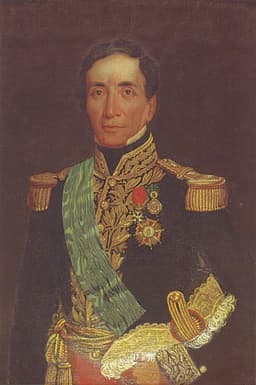
Andres de Santa Cruz
General · Modern
60.5Total
Basic Information
Born
1960
1792
Died
—
1865
Era
Modern
Modern
Nationality
Kosovo
Bolivia
Occupation
General
General
Civilization
Western
Western
Score Comparison
Military (10%)
38.3
67.5
Political (20%)
43.7
59.3
Influence (20%)
51.8
62.0
Legacy (20%)
41.7
50.0
Leadership (15%)
61.1
68.0
Strategy (15%)
43.3
66.3
TOTAL
47.3
60.5
Agim Ceku — Complete Timeline
1999 AD
KLA Chief of StaffWar◆ Major
Ceku served as the Chief of Staff of the Kosovo Liberation Army during the final phase of the Kosovo War. He was a key military strategist and commander.
Kosovo WarMilitary Command
Impact: regional
2006 AD
Elected Prime Minister of KosovoPolitical Action◆ Major
Ceku became Prime Minister of Kosovo under UN administration, succeeding Bajram Kosumi. He led the government during the final status negotiations and the run-up to independence.
Kosovo StatusGovernment
Impact: regional
2008 AD
Resigned as Prime MinisterPolitical Action
Ceku resigned after failing to form a coalition government following the 2007 elections. He was succeeded by Hashim Thaci.
Kosovo PoliticsTransition
Impact: regional
Andres de Santa Cruz — Complete Timeline
1823 AD
Battle of ZepitaWar
Santa Cruz commanded Peruvian forces in a victory over Spanish royalists at Zepita during the Peruvian War of Independence. This battle enhanced his military reputation and contributed to the eventual liberation of Peru from Spanish rule.
Peruvian War of IndependenceBattleLiberation
Impact: regional
1826 AD
Presidency of PeruPolitical Action
Santa Cruz served as President of the Council of Government of Peru from 1826 to 1827, effectively ruling the country. His administration focused on centralizing power and organizing the state, but he was overthrown by a rebellion led by Agust
PresidencyPeruCentralization
Impact: national
1829 AD
Presidency of BoliviaPolitical Action◆ Major
Santa Cruz became President of Bolivia in 1829, serving until 1839. He implemented administrative reforms, stabilized the economy, and modernized the military, establishing Bolivia as a more coherent state after the chaos following independence.
PresidencyBoliviaReforms
Impact: nationalconstructive
1836 AD
War of the ConfederationWar◆ Major
Chile and Argentina declared war on the Peru-Bolivia Confederation, viewing it as a threat to the balance of power. Santa Cruz led the confederation's forces in a conflict that lasted until 1839, ultimately resulting in the confederation's defeat.
WarChileArgentinaConfederation
Impact: regional
Creation of the Peru-Bolivia ConfederationPolitical Action
Santa Cruz established the Peru-Bolivia Confederation, uniting Bolivia and Peru into a single state with himself as Supreme Protector. This confederation aimed to create a powerful Andean nation and challenged the regional influence of Chile and Argentina.
ConfederationUnificationAndean Power
Impact: regional
1839 AD
Battle of YungayWar
Santa Cruz's confederation forces were decisively defeated by the Chilean army at the Battle of Yungay. This defeat led to the dissolution of the Peru-Bolivia Confederation and forced Santa Cruz into exile, ending his political project.
BattleDefeatEnd of Confederation
Impact: regionaltragic
Exile and DeathPolitical Action
After the defeat at Yungay, Santa Cruz fled to Ecuador and later to France. He spent the rest of his life in exile, making unsuccessful attempts to return to power. He died in France in 1865, never regaining his former influence.
ExileDeathFailure
Impact: nationaltragic
Expert Analysis
Andres de Santa Cruz vs Agim Ceku
# The Confederation Dreamer and the Guerrilla Prime Minister
On a crisp December morning in 1839, Andrés de Santa Cruz watched from a hillside as his grand vision collapsed in the dust of Yungay, Peru. His Peru-Bolivia Confederation, a bold experiment in Andean unity, was being shattered by Chilean bayonets. Nearly 170 years later, in the spring of 2008, Agim Çeku walked out of the prime minister’s office in Pristina, his government dissolved by the very democratic processes he had fought to establish. Two generals, two centuries, two continents—yet both men faced the same cruel paradox: the skills that win wars rarely suffice to build lasting peace.
Origins
Santa Cruz was born in 1792 in La Paz, Bolivia, the son of a Spanish nobleman and an indigenous Aymara woman. This mixed heritage placed him in a unique position—he understood both the colonial elite and the native majority, a duality that would later define his political ambitions. The wars of independence were his classroom, where he learned that power in the Andes required balancing European administrative efficiency with indigenous loyalty.
Çeku emerged from a very different crucible. Born in 1960 in the village of Čuška, Kosovo, he grew up under the heavy hand of Serbian communist rule. His generation inherited not a colonial legacy but an ethnic one—Albanian, Muslim, and increasingly resentful of Belgrade’s dominance. Where Santa Cruz studied at the University of Cusco and served in Spanish royalist armies before switching sides, Çeku joined the Yugoslav People’s Army, then defected to train in Croatia. One man learned statecraft in colonial courts; the other learned guerrilla warfare in the mountains of the Balkans.
Rise to Power
Santa Cruz’s path to leadership was gradual and institutional. He commanded Peruvian forces at the Battle of Zepita in 1823, a victory over Spanish royalists that cemented his military reputation. By 1826, he was effectively ruling Peru as President of the Council of Government. But his true ascent came in 1829, when he became President of Bolivia. Here, he found his canvas: a weak, fractured nation desperate for order.
Çeku’s rise was explosive and unconventional. In 1999, he became Chief of Staff of the Kosovo Liberation Army during the war’s final, brutal phase. His military score of 46.7 reflects a commander who was more organizer than tactician—he turned a ragtag insurgency into a fighting force that could negotiate with NATO. The KLA’s legitimacy came not from decisive victories but from survival and international recognition.
Leadership & Governance
Santa Cruz governed with the precision of a colonial administrator. He stabilized Bolivia’s economy, reformed its tax system, and built roads and schools. His political score of 60.2 and leadership score of 79.0 suggest a man who understood institutions better than men. The crowning achievement came in 1836 with the creation of the Peru-Bolivia Confederation, a union he believed would restore the Inca Empire’s unity in modern form. He appointed himself Supreme Protector, a title that revealed his paternalistic vision.
Çeku’s governance was a study in improvisation. As Prime Minister from 2006 to 2008, he operated under UN administration, his hands tied by international oversight. His political score of 63.5 slightly edges Santa Cruz, but this reflects a different reality—leading a transitional government where every decision was a negotiation with foreign powers. He focused on building security forces and managing the delicate process of Kosovo’s eventual independence declaration in 2008.
Triumph & Tragedy
Santa Cruz’s greatest moment was the Confederation’s creation—a peaceful diplomatic victory that redrew South American borders. But his tragedy was immediate and total. Chile and Argentina, fearing a powerful Andean state, declared war in 1836. The Battle of Yungay in 1839 was a rout. Santa Cruz fled to Ecuador, then France, where he died in exile in 1865, a man whose dream outran his army.
Çeku’s triumph was quieter but more durable. He led Kosovo through the final years of UN administration, paving the way for the 2008 declaration of independence. His resignation that same year, after failing to form a coalition, was not a military defeat but a political one—a sign that Kosovo was becoming a normal, messy democracy. He remains alive, his legacy still unfolding.
Character & Destiny
Santa Cruz was a visionary who believed in grand designs. His total score of 67.8 reflects a man of considerable ability undone by geopolitical reality. He saw the Andes as a natural unit, but he underestimated the nationalism of Chile and Argentina. His mixed heritage made him a bridge-builder, but also a target—neither Peruvians nor Bolivians fully trusted him.
Çeku, with a total score of 63.2, is the pragmatist. He fought for a nation that did not exist, then governed it when it barely functioned. His strategy score of 61.2 suggests a man who adapted to circumstances rather than imposing his will. He understood that in the modern world, legitimacy comes not from confederations but from elections, even when those elections end your career.
Legacy
Santa Cruz is remembered as a tragic figure—a unifier who failed. Bolivia and Peru honor him with statues and street names, but his Confederation is a footnote. His legacy score of 68.9 is surprisingly high, perhaps because he represents a road not taken: the possibility of Andean integration that remains unrealized.
Çeku’s legacy is more ambiguous. He is a hero to many Albanians, a war criminal to some Serbs. His influence score of 71.5 reflects his role in Kosovo’s independence, but his military score of 46.7 and legacy score of 57.1 suggest he will be remembered as a transitional figure, not a founding father. He built the security forces that protect Kosovo today, but his name will never echo like that of a Santa Cruz.
Conclusion
Two generals, separated by centuries, yet united by a single truth: the hardest war is not the one fought with guns, but the one fought with treaties, borders, and the stubborn resistance of neighbors who refuse to see your dream. Santa Cruz’s Confederation died on a battlefield; Çeku’s Kosovo lives on in a parliament. But both men learned that the greatest ambition is not to command armies, but to command the future—and that is a battle no general ever truly wins.
Rankings
🥇
Andres de Santa CruzLeader
Mil: 67.5Pol: 59.3Inf: 62.0
60.5
🥈
Agim Ceku
Mil: 38.3Pol: 43.7Inf: 51.8
47.3
+13.2 behind
How This Comparison Works
Algorithm
Each figure is scored on 6 dimensions (0—100 scale) based on structured historical data: Military (10%), Political (20%), Influence (20%), Legacy (20%), Leadership (15%), Strategy (15%). The weighted total produces the final ranking.
Data Sources
Scores are computed from structured sub-indicators in the database. Scale factors adjust for era (Ancient ×0.85, Modern ×1.0) and civilization size (Eastern ×1.05, Other ×0.80) to account for differences in population and military scale.
Maximum 3 Figures
Comparisons are limited to 2—3 figures to ensure readability and statistical meaningfulness.
Error Margins
±5 points per dimension — Sub-scores are derived from historical records with inherent uncertainty. Two figures within 5 points on a dimension should be considered roughly equivalent in that area.
Total Score Accuracy
±3 points overall — The weighted combination of 6 dimensions produces a total score with approximately ±3 points of uncertainty. Differences of less than 3 points are not statistically significant— the figures are effectively tied.
Known Limitations
- Historical records are incomplete and uneven across civilizations
- Figures from oral-tradition societies may be underrepresented
- Occupation labels can misclassify multi-role figures
- Scores measure capability and impact, not moral character
- Quantitative scoring is a comparison tool, not absolute truth
Capability Radar
Military (10%) — Battles & Warfare
Battles
35
60
Win Rate
40
55
Expansion
15
55
Political (20%) — Governance & Reform
Reform
25
65
Diplomacy
30
60
Economy
20
55
Influence (20%) — Cultural & Global Reach
Cultural
20
45
Global
20
35
Legacy (20%) — Historical Impact
Historical
25
50
Longevity
15
40
Leadership (15%) — Power & Stability
Tenure
30
60
Stability
15
40
Strategy (15%) — Tactics & Innovation
Strategy
40
65
Tactics
45
60
Reform
20
50
Similar Comparisons
Comments & Discussion
YungayEagle6/16/2026
The Andean unification dreams never survive Chilean artillery. Santa Cruz had a brilliant concept—blending Quechua pragmatism with Spanish bureaucracy—but he forgot that geographical hubris invites coastal predators. Chile didn't just beat him militarily; they exposed that his confederation was held together by his personal prestige alone. No successor, no institutions, just a clever mestizo with a map.
数据刺猬6/16/2026
比统帅能力?Santa Cruz带兵打赢过秘鲁正规军,Ceku打过最多是塞尔维亚警察和准军事部队。但看数据:Santa Cruz统治范围横跨三国,面积120万平方公里,寿命维持3年;Ceku的科索沃只有1万平方公里,独立不到两个月就倒了内阁。统治效率0:2,人家秘鲁联盟至少是战败而非内耗崩溃。
IliadReborn6/16/2026
圣克鲁斯把印加记忆和波旁改革缝合在一起,这是知识分子的疯狂实验。塞库不打古典战争,他的战斗是游击、谈判、国际法庭去制造国家。前者信印加帝国能复活,后者信海牙能保护。历史证明:印加输给智利火药,塞库赢了美国无人机。谁更实际?答案在科索沃今天还有国旗挂。
KosovoForged6/16/2026
Comparing Ceku to Santa Cruz is like mixing wine with rakija. Ceku led the KLA from a guerrilla band to a NATO-backed government—that's winning against the odds in real time. Santa Cruz had armies, treaties, and still got crushed by a weaker Chile because he overestimated his base. Ceku knew his window was short and used it to declare independence, not build a fragile fantasy federation.
修正派教授6/16/2026
两个都是“战后建政”的翻车案例,只是舞台不同。圣克鲁斯想用印加传统和拿破仑式中央集权捏合各方,结果秘鲁精英直接投敌。塞库更聪明:他不建国家,只建骨架交给欧盟。但教训一样——战争领袖执政期限是明摆着的:秘鲁联盟33个月,科索沃政府38个月。没有和平转化机制,将军注定短命。