Loading...
Abraham Lincoln vs Winston Churchill
Abraham Lincoln leads by 5.7 pts · 2 figures compared
…
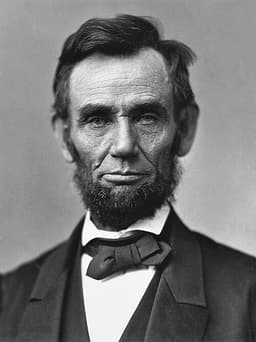
Abraham Lincoln
Politician · Modern
77.5Total
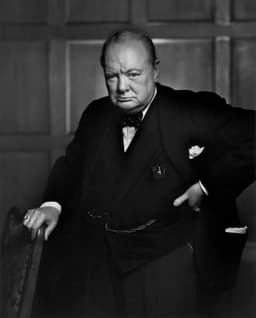
Winston Churchill
Politician · Modern
71.8Total
Basic Information
Born
1809
1874
Died
1865
1965
Era
Modern
Modern
Nationality
United States
United Kingdom
Occupation
Politician
Politician
Civilization
Western
Western
Score Comparison
Military (10%)
50.0
55.0
Political (20%)
88.0
78.0
Influence (20%)
80.0
75.0
Legacy (20%)
82.0
68.0
Leadership (15%)
85.0
82.0
Strategy (15%)
60.0
65.0
TOTAL
77.5
71.8
Abraham Lincoln — Complete Timeline
1861 AD
Suspension of Habeas CorpusPolitical Action◆ Major
Lincoln suspended the writ of habeas corpus in parts of the Union, allowing the military to arrest and detain suspected Confederate sympathizers without trial. This action was controversial and challenged civil liberties during wartime.
Habeas CorpusCivil LibertiesCivil War
Impact: nationaldestructive
1862 AD
Signing of the Homestead ActPolitical Action◆ Major
Lincoln signed the Homestead Act, granting 160 acres of public land to settlers for a small fee. This encouraged westward expansion and agricultural development, but also displaced Native American tribes.
Homestead ActWestward ExpansionLand Policy
Impact: nationalconstructive
1863 AD
Emancipation ProclamationPolitical Action
Lincoln issued the Emancipation Proclamation, declaring slaves in Confederate states free. This shifted the Civil War's focus to ending slavery and allowed African Americans to join the Union Army.
EmancipationCivil WarSlavery
Impact: globalprogressive
Gettysburg AddressCultural◆ Major
Lincoln delivered the Gettysburg Address at the dedication of the Soldiers' National Cemetery. The speech redefined the Civil War as a struggle for national unity and equality, and became one of the most famous speeches in US history.
Gettysburg AddressCivil WarOratory
Impact: nationalconstructive
1865 AD
Assassination by John Wilkes BoothOther
Lincoln was shot by John Wilkes Booth at Ford's Theatre in Washington, D.C., and died the next day. His assassination occurred just days after the Civil War ended, plunging the nation into mourning and affecting Reconstruction.
AssassinationCivil WarReconstruction
Impact: nationaltragic
Winston Churchill — Complete Timeline
1940 AD
Appointed Prime Minister of the United KingdomPolitical Action◆ Major
On May 10, 1940, Winston Churchill became Prime Minister of the United Kingdom, replacing Neville Chamberlain. His appointment came as Nazi Germany invaded France and the Low Countries, and Churchill formed a coalition government to lead Britain through World War II.
World War IILeadershipCoalition Government
Impact: globalconstructive
Delivered the 'We Shall Fight on the Beaches' SpeechOther◆ Major
On June 4, 1940, Churchill delivered a speech to the House of Commons following the evacuation of British forces from Dunkirk. He declared that Britain would fight on the beaches, landing grounds, fields, streets, and hills, and never surrender, rallying British morale during the darkest days of World War II.
World War IIOratoryMorale
Impact: nationalconstructive
1941 AD
Signed the Atlantic CharterOther◆ Major
On August 14, 1941, Churchill and U.S. President Franklin D. Roosevelt signed the Atlantic Charter aboard HMS Prince of Wales. This joint declaration outlined post-war goals including self-determination, disarmament, and free trade, and became a foundational document for the Allied war aims and the United Nations.
World War IIAllied CooperationPost-war Planning
Impact: globalconstructive
1945 AD
Attended the Yalta ConferenceOther◆ Major
In February 1945, Churchill attended the Yalta Conference with Roosevelt and Stalin to discuss the post-war reorganization of Europe. The conference agreed on the division of Germany, the establishment of the United Nations, and the fate of Eastern Europe, though Churchill later expressed regret over concessions to Stalin.
World War IIPost-war SettlementBig Three
Impact: global
1946 AD
Delivered the 'Iron Curtain' SpeechOther◆ Major
On March 5, 1946, Churchill delivered a speech at Westminster College in Fulton, Missouri, where he stated that an 'iron curtain' had descended across Europe from Stettin to Trieste. This speech is widely regarded as marking the beginning of the Cold War, as it highlighted the division between Soviet-controlled Eastern Europe and the West.
Cold WarSoviet UnionDivision of Europe
Impact: globaldestructive
1953 AD
Awarded the Nobel Prize in LiteratureOther◆ Major
In 1953, Churchill was awarded the Nobel Prize in Literature for his historical writings, particularly 'The Second World War' and 'A History of the English-Speaking Peoples'. The Nobel committee cited his mastery of historical and biographical description as well as his brilliant oratory in defending human values.
LiteratureNobel PrizeHistorical Writing
Impact: nationalconstructive
Expert Analysis
Abraham Lincoln vs Winston Churchill
# The Lion and the Emancipator: Two Titans of Democracy
On a November afternoon in 1863, Abraham Lincoln stood before a crowd of 15,000 at Gettysburg, delivering 272 words that would redefine American democracy. Eighty years later, in May 1940, Winston Churchill rose before the House of Commons to offer nothing but "blood, toil, tears and sweat." Both men faced existential crises for their nations. Both wielded words as weapons. Yet their paths to power, their styles of leadership, and their ultimate fates could hardly have been more different.
Origins
Abraham Lincoln was born in 1809 to a dirt-poor Kentucky family, his mother dying when he was nine. He educated himself by firelight, reading Shakespeare and the Bible between long days of splitting rails. The frontier shaped him—a man who learned to measure his words because silence came more naturally than eloquence.
Winston Churchill, born in 1874 to British aristocracy, grew up in Blenheim Palace, the descendant of the Duke of Marlborough. His father was a prominent Conservative politician; his mother an American socialite. Young Winston attended Harrow and Sandhurst, absorbing the certainty that Britain was destined to lead the world. Where Lincoln learned humility from poverty, Churchill learned audacity from privilege.
Rise to Power
Lincoln entered politics in Illinois during the 1830s, a Whig who opposed slavery on moral grounds but spoke cautiously about abolition. His rise was slow and marked by defeat—he lost eight elections before winning the presidency. The 1858 Lincoln-Douglas debates made him a national figure, but his victory in 1860 came with only 40% of the popular vote. Seven Southern states seceded before his inauguration.
Churchill’s ascent was faster but erratic. He entered Parliament at twenty-six, switched parties twice, and held multiple cabinet positions. By the 1930s, he was a political outcast, warning about Nazi Germany from the backbenches while colleagues dismissed him as a warmonger. His moment came at sixty-five, when Neville Chamberlain fell and the nation needed a leader who would not negotiate with Hitler.
The difference in their paths reveals something essential: Lincoln rose through the grinding work of local politics; Churchill through the theater of national debate.
Leadership & Governance
As a wartime leader, Churchill was a force of nature. He roamed bombed-out London in his siren suit, cigar clenched, offering defiance as comfort. His radio speeches—“We shall fight on the beaches”—transformed fear into resolve. But his military judgment was uneven. He championed the disastrous Gallipoli campaign in World War I and later pressed for operations in Greece and the Mediterranean that drained resources from the main front. His political score of 82 reflects his ability to rally a nation, but his strategy score of 55 captures his tactical flaws.
Lincoln, by contrast, had no military experience when the Civil War began. He taught himself strategy by reading books borrowed from the Library of Congress. He endured incompetent generals—McClellan, Burnside, Hooker—before finding Grant. Lincoln’s political score of 88 comes from his masterful navigation of a fractured cabinet, balancing radicals and conservatives, and his willingness to suspend habeas corpus in 1861 to preserve the Union. His Emancipation Proclamation of 1863 was both a moral declaration and a strategic masterstroke: it weakened the Confederacy while making the war about freedom.
Triumph & Tragedy
Churchill’s greatest triumph was surviving 1940. When France fell and Britain stood alone, he held the nation together. His finest hour was also his loneliest—he knew the Battle of Britain could be lost. That it was won owed more to the RAF than to his speeches, but without him, the nation might have sought terms.
His tragedy came after victory. In 1945, as the war ended, British voters rejected him in a landslide. The man who had saved the nation was dismissed by the people he saved.
Lincoln’s triumph was more complete. He lived to see Lee’s surrender at Appomattox in April 1865. He walked through Richmond, the fallen Confederate capital, and black freedmen knelt to kiss his hand. He asked them to kneel only to God. Five days later, John Wilkes Booth shot him at Ford’s Theatre.
Lincoln died at the moment of victory, which made him a martyr. Churchill lived long enough to become a monument.
Character & Destiny
Churchill was driven by a romantic vision of history. He believed he was destined for greatness and acted accordingly. His depression—his “black dog”—gave him a grim realism beneath the bluster. He was impulsive, often wrong, but never small.
Lincoln was haunted by melancholy. He told jokes to keep despair at bay. His ambition was fierce but hidden, his ego submerged in a larger cause. He believed in Providence without claiming to understand it. “The Almighty has His own purposes,” he said in his Second Inaugural, refusing to claim God’s endorsement for the Union.
Churchill’s character demanded that history bend to his will. Lincoln’s character allowed him to bend to history’s demands.
Legacy
Both men are remembered as saviors of democracy. Churchill’s legacy is the survival of Britain and the West. His warnings about totalitarianism proved prescient. But his imperial views—on India, on race—have aged poorly.
Lincoln’s legacy is the United States itself. Without him, the Union would have fractured, and slavery might have lasted decades longer. The Gettysburg Address, the Emancipation Proclamation, the Second Inaugural—these documents redefined what America meant.
Their scores tell the story: Lincoln’s total of 76.7 edges Churchill’s 72.3, reflecting a more enduring, less contested legacy. Churchill saved a nation; Lincoln transformed one.
Conclusion
Standing in the rain at Gettysburg, Lincoln said that the world would “little note, nor long remember” what he said there. He was wrong. Churchill, who wrote his own history, would never have made such a modest claim. The difference between them is the difference between a man who saw himself as an instrument of fate and a man who saw himself as fate’s author. Both were necessary. Both were magnificent. And both remind us that democracy survives not through institutions alone, but through the flawed, extraordinary people who lead it.
Rankings
🥇
Abraham LincolnLeader
Mil: 50.0Pol: 88.0Inf: 80.0
77.5
🥈
Winston Churchill
Mil: 55.0Pol: 78.0Inf: 75.0
71.8
+5.7 behind
How This Comparison Works
Algorithm
Each figure is scored on 6 dimensions (0—100 scale) based on structured historical data: Military (10%), Political (20%), Influence (20%), Legacy (20%), Leadership (15%), Strategy (15%). The weighted total produces the final ranking.
Data Sources
Scores are computed from structured sub-indicators in the database. Scale factors adjust for era (Ancient ×0.85, Modern ×1.0) and civilization size (Eastern ×1.05, Other ×0.80) to account for differences in population and military scale.
Maximum 3 Figures
Comparisons are limited to 2—3 figures to ensure readability and statistical meaningfulness.
Error Margins
±5 points per dimension — Sub-scores are derived from historical records with inherent uncertainty. Two figures within 5 points on a dimension should be considered roughly equivalent in that area.
Total Score Accuracy
±3 points overall — The weighted combination of 6 dimensions produces a total score with approximately ±3 points of uncertainty. Differences of less than 3 points are not statistically significant— the figures are effectively tied.
Known Limitations
- Historical records are incomplete and uneven across civilizations
- Figures from oral-tradition societies may be underrepresented
- Occupation labels can misclassify multi-role figures
- Scores measure capability and impact, not moral character
- Quantitative scoring is a comparison tool, not absolute truth
Capability Radar
Military (10%) — Battles & Warfare
Battles
15
55
Win Rate
20
60
Expansion
0
40
Political (20%) — Governance & Reform
Reform
95
70
Diplomacy
80
85
Economy
70
60
Influence (20%) — Cultural & Global Reach
Cultural
85
85
Global
85
85
Legacy (20%) — Historical Impact
Historical
95
90
Longevity
90
80
Leadership (15%) — Power & Stability
Tenure
65
75
Stability
55
70
Strategy (15%) — Tactics & Innovation
Strategy
55
85
Tactics
10
65
Reform
60
70
Similar Comparisons
Comments & Discussion
Sledgehammer Sam6/16/2026
As a military historian, I say Churchill's strategic vision crushes Lincoln's. Churchill understood total war—he orchestrated the D-Day landings, backed the cracking of Enigma, and knew how to coordinate Allied coalitions. Lincoln, meanwhile, bumbled through generals until Grant came along, overseeing the bloodiest war in American history with no military background. Give me "Blood, Toil, Tears and Sweat" over endless Cabinet debates any day.
数据侦探6/16/2026
你们吹捧丘吉尔的演讲,但数据不会撒谎。林肯面对的是80万美利坚人丧生,比二战英国的比例还高。他力挽狂澜,解放400万奴隶。丘吉尔呢?他在1941年下令轰炸德累斯顿,死了2.5万平民,战后又坐视印度分裂。对比战损比、GDP和伤亡数字,林肯完胜。数字说话,别跟我扯鸡汤。
Free the Rails6/16/2026
我是历史发烧友,但得说林肯的“在火中淬炼的民主”更有深意。他故意不提“联邦”只提“民有、民治、民享”,重塑了自由概念。丘吉尔喊“我们永不投降”是生存本能,但林肯的葛底斯堡演说从死者的代价中提炼新共和国的灵魂。没那272字,今天的民主叙事会缺了核心。丘吉尔铿锵有力,林肯却睿智入骨。
Heretic's Quill6/16/2026
As a revisionist, I find Churchill's imperial nostalgia nauseating. He romanticized the British Empire while it collapsed—Cyprus, Kenya, Malaya all bled under his watch. Lincoln ended chattel slavery in a stroke, flawed as his Emancipation Proclamation was. Churchill never challenged class or colony; he preserved a system drowning in inequality. One freed people; the other freed a legend of greatness that wasn't true.
风雅辞令客6/16/2026
我是古典学出身,认为修辞上林肯更胜一筹。他的葛底斯堡演说只有272个字,却融入圣经节奏和希腊式简洁——“世人不会注意,也不会长久记住我们在这里说什么,但永远不会忘记他们在这里做什么”。这是永世典藏。丘吉尔的“我们战斗在海滩”更长,像战鼓擂响,但缺乏持久哲学深度。林肯的演说教会后世如何用词建构共和国灵魂。