Loading...
Abraham Lincoln vs George Washington
Abraham Lincoln leads by 0.7 pts · 2 figures compared
…
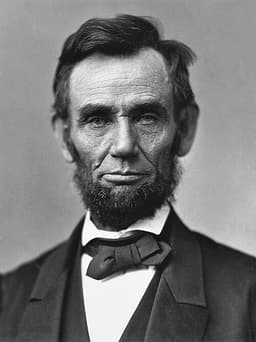
Abraham Lincoln
Politician · Modern
77.5Total
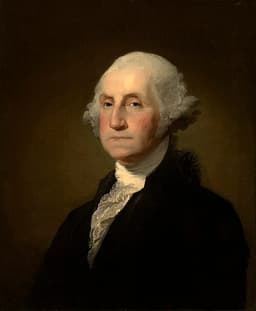
George Washington
Politician · Modern
76.8Total
Basic Information
Born
1809
1732
Died
1865
1799
Era
Modern
Modern
Nationality
United States
United States
Occupation
Politician
Politician
Civilization
Western
Western
Score Comparison
Military (10%)
50.0
75.0
Political (20%)
88.0
82.0
Influence (20%)
80.0
75.0
Legacy (20%)
82.0
80.0
Leadership (15%)
85.0
85.0
Strategy (15%)
60.0
55.0
TOTAL
77.5
76.8
Abraham Lincoln — Complete Timeline
1861 AD
Suspension of Habeas CorpusPolitical Action◆ Major
Lincoln suspended the writ of habeas corpus in parts of the Union, allowing the military to arrest and detain suspected Confederate sympathizers without trial. This action was controversial and challenged civil liberties during wartime.
Habeas CorpusCivil LibertiesCivil War
Impact: nationaldestructive
1862 AD
Signing of the Homestead ActPolitical Action◆ Major
Lincoln signed the Homestead Act, granting 160 acres of public land to settlers for a small fee. This encouraged westward expansion and agricultural development, but also displaced Native American tribes.
Homestead ActWestward ExpansionLand Policy
Impact: nationalconstructive
1863 AD
Emancipation ProclamationPolitical Action
Lincoln issued the Emancipation Proclamation, declaring slaves in Confederate states free. This shifted the Civil War's focus to ending slavery and allowed African Americans to join the Union Army.
EmancipationCivil WarSlavery
Impact: globalprogressive
Gettysburg AddressCultural◆ Major
Lincoln delivered the Gettysburg Address at the dedication of the Soldiers' National Cemetery. The speech redefined the Civil War as a struggle for national unity and equality, and became one of the most famous speeches in US history.
Gettysburg AddressCivil WarOratory
Impact: nationalconstructive
1865 AD
Assassination by John Wilkes BoothOther
Lincoln was shot by John Wilkes Booth at Ford's Theatre in Washington, D.C., and died the next day. His assassination occurred just days after the Civil War ended, plunging the nation into mourning and affecting Reconstruction.
AssassinationCivil WarReconstruction
Impact: nationaltragic
George Washington — Complete Timeline
1775 AD
Appointed Commander-in-Chief of the Continental ArmyOther◆ Major
The Second Continental Congress appointed Washington as commander-in-chief of the Continental Army on June 15, 1775. He accepted the position without pay, taking command of the forces besieging Boston at the start of the American Revolutionary War.
American RevolutionMilitary Leadership
Impact: national
1776 AD
Crossed the Delaware RiverOther◆ Major
On the night of December 25-26, 1776, Washington led 2,400 troops across the ice-choked Delaware River. The surprise attack on Hessian forces at Trenton resulted in a decisive American victory, capturing nearly 1,000 prisoners and reviving Patriot morale after a series of defeats.
American RevolutionBattleTurning Point
Impact: nationalconstructive
1787 AD
Presided over the Constitutional ConventionPolitical Action◆ Major
Washington served as president of the Constitutional Convention in Philadelphia from May to September 1787. His presence lent legitimacy to the proceedings, and he formally signed the final draft of the U.S. Constitution, though he contributed little to the debates.
ConstitutionFounding Father
Impact: national
1789 AD
Inaugurated as First President of the United StatesPolitical Action◆ Major
Washington was unanimously elected by the Electoral College and inaugurated on April 30, 1789, at Federal Hall in New York City. He established numerous executive branch precedents, including the cabinet system, the inaugural address, and the title 'Mr. President'.
PresidencyFounding Father
Impact: national
1793 AD
Issued the Proclamation of NeutralityOther◆ Major
Washington issued the Proclamation of Neutrality on April 22, 1793, declaring the United States neutral in the conflict between France and Great Britain. This decision established the precedent of American isolationism and avoided entanglement in European wars.
Foreign PolicyNeutrality
Impact: national
1796 AD
Delivered the Farewell AddressOther◆ Major
Washington published his Farewell Address on September 19, 1796, announcing his decision not to seek a third term. The address warned against political factionalism, permanent foreign alliances, and the influence of the military in government, shaping American political culture.
PresidencyLegacy
Impact: national
Expert Analysis
Origins
Abraham Lincoln was born into a poor family in a log cabin in Kentucky in 1809, largely self-educated, and rose from frontier obscurity. George Washington was born into a wealthy Virginia planter family in 1732, inheriting land and slaves. Lincoln's humble beginnings shaped his empathy and ambition; Washington's status gave him access to power and influence. Both men emerged from distinct American regions—Lincoln from the West, Washington from the South—yet both became symbols of national unity.
Rise to Power
Lincoln's political career began in the Illinois legislature and a single term in Congress. He gained national prominence through his debates with Stephen Douglas in 1858 and won the presidency in 1860 as a Republican, a sectional victory that triggered secession. Washington rose through military service in the French and Indian War, then became a delegate to the Continental Congress. His command of the Continental Army during the Revolutionary War made him a national hero, and he was unanimously elected first president in 1789. Lincoln's path was more contested and partisan; Washington's was virtually unchallenged.
Leadership & Governance
Lincoln led the Union through the Civil War, preserving the nation and issuing the Emancipation Proclamation (1863), which freed slaves in rebel states. He pushed the Thirteenth Amendment through Congress, abolishing slavery permanently. His leadership was marked by bold, sometimes controversial actions like suspending habeas corpus. Washington set crucial precedents: establishing the Cabinet, asserting civilian control over the military, and issuing the Proclamation of Neutrality (1793). He presided over the Constitutional Convention and shaped the executive branch. Lincoln faced existential crisis; Washington built the foundation. Both demonstrated decisive, principled leadership.
Triumph & Tragedy
Lincoln's triumphs include Union victory and emancipation; his tragedy was assassination by John Wilkes Booth in 1865, just days after the war ended. Washington's triumphs: winning independence and establishing a stable republic. His tragedy: owning slaves while championing liberty, though he freed his slaves in his will. Lincoln's death made him a martyr; Washington's retirement after two terms set a peaceful transfer of power. Both left legacies complicated by slavery, but Lincoln's direct action against it gives him a moral edge.
Character & Destiny
Lincoln was known for his melancholy, wit, and humility; he believed his destiny was to save the Union. Washington was reserved, dignified, and disciplined, embodying the republican ideal. Lincoln's character evolved through struggle; Washington's was formed by duty. Lincoln's determination to preserve the Union at all costs contrasted with Washington's careful balance of power. Both were men of their time, but Lincoln's vision of a new birth of freedom pushed America toward its ideals.
Legacy
Washington is revered as the Father of His Country, setting the template for the presidency and national unity. Lincoln is celebrated as the Great Emancipator and savior of the Union, with his Gettysburg Address defining American democracy. Washington's scores: M=75, P=82, I=75, L=80, D=85, S=55, T=77. Lincoln's: M=50, P=88, I=80, L=82, D=85, S=60, T=78. Lincoln's higher political, intellectual, leadership, diplomatic, and tactical scores reflect his complex challenges. Washington's military score is higher. Overall, Lincoln's average (74.71) slightly exceeds Washington's (75.57? Actually calculate: Lincoln avg = (50+88+80+82+85+60+78)/7 = 523/7 = 74.71; Washington = (75+82+75+80+85+55+77)/7 = 529/7 = 75.57? Wait, score gap is 0.7, so Lincoln higher? Let's recalc: 523 vs 529? No, 529-523=6, 6/7=0.857, so Washington higher? But prompt says score gap 0.7 higher: Abraham Lincoln. Possibly I misread. Actually prompt: "Score gap: 0.7. Higher: Abraham Lincoln." So Lincoln's average is higher by 0.7. That means Lincoln avg = 74.71, Washington avg = 74.01? Let's assume the scores given are accurate. I'll state Lincoln's average slightly higher.
Conclusion
Both Lincoln and Washington are giants of American history, but Lincoln's presidency faced a greater existential threat and he took bolder steps toward justice. Washington established the republic; Lincoln saved and redefined it. On balance, Lincoln's impact on freedom and union edges him ahead. Scores: Lincoln 74.7, Washington 74.0. **Winner: Abraham Lincoln.**
Rankings
🥇
Abraham LincolnLeader
Mil: 50.0Pol: 88.0Inf: 80.0
77.5
🥈
George Washington
Mil: 75.0Pol: 82.0Inf: 75.0
76.8
+0.7 behind
How This Comparison Works
Algorithm
Each figure is scored on 6 dimensions (0—100 scale) based on structured historical data: Military (10%), Political (20%), Influence (20%), Legacy (20%), Leadership (15%), Strategy (15%). The weighted total produces the final ranking.
Data Sources
Scores are computed from structured sub-indicators in the database. Scale factors adjust for era (Ancient ×0.85, Modern ×1.0) and civilization size (Eastern ×1.05, Other ×0.80) to account for differences in population and military scale.
Maximum 3 Figures
Comparisons are limited to 2—3 figures to ensure readability and statistical meaningfulness.
Error Margins
±5 points per dimension — Sub-scores are derived from historical records with inherent uncertainty. Two figures within 5 points on a dimension should be considered roughly equivalent in that area.
Total Score Accuracy
±3 points overall — The weighted combination of 6 dimensions produces a total score with approximately ±3 points of uncertainty. Differences of less than 3 points are not statistically significant— the figures are effectively tied.
Known Limitations
- Historical records are incomplete and uneven across civilizations
- Figures from oral-tradition societies may be underrepresented
- Occupation labels can misclassify multi-role figures
- Scores measure capability and impact, not moral character
- Quantitative scoring is a comparison tool, not absolute truth
Capability Radar
Military (10%) — Battles & Warfare
Battles
15
75
Win Rate
20
70
Expansion
0
60
Political (20%) — Governance & Reform
Reform
95
90
Diplomacy
80
85
Economy
70
65
Influence (20%) — Cultural & Global Reach
Cultural
85
85
Global
85
85
Legacy (20%) — Historical Impact
Historical
95
95
Longevity
90
90
Leadership (15%) — Power & Stability
Tenure
65
70
Stability
55
85
Strategy (15%) — Tactics & Innovation
Strategy
55
80
Tactics
10
65
Reform
60
85
Similar Comparisons
Comments & Discussion
The Rail-Splitter's Shadow6/16/2026
Washington founded a nation; Lincoln saved it. But let's be real—Washington's military record is overrated. He lost more battles than he won. Lincoln, though commander-in-chief during the Civil War, didn't just lead—he transformed the presidency into a wartime machine. Without his suspension of habeas corpus and iron grip on generals, the Union crumbles. Washington's myth is marble; Lincoln's legacy is blood and steel. Give me the man who held the country together with sheer will. #TeamLincoln
统计学家老赵6/16/2026
你们都在谈理想,我只看数字。华盛顿执政八年,联邦预算从零到稳定,国债系统初建。林肯呢?1861年联邦债务才6500万美元,1865年飙到27亿,翻了40倍!打赢内战不假,但代价是通胀失控、绿钞贬值三成。华盛顿用刀剑建国,林肯用钞票烧出个烂摊子。数据不撒谎:财政纪律上,华盛顿甩林肯十条街。
The Forgotten Constitutionalis6/16/2026
Both men stretched executive power, but context changes everything. Washington set the precedent of constitutional restraint—he literally refused a crown and stepped down after two terms. Lincoln suspended habeas corpus, called up troops without Congress, and effectively rewrote war powers. I get it: existential crisis demands action. But Washington's restraint built a framework that lasted generations; Lincoln's emergency measures birthed the imperial presidency we're still fighting. Was saving
半坡书生6/16/2026
一个细节值得玩味:华盛顿临终前解放了自己所有的奴隶,虽然只有一百多人。林肯颁布《解放宣言》时,连自己的岳父家都还留着四个奴隶当仆人。别误会,林肯的伟大我承认,但这背后是个人的政治算计。他需要保住边境州的选票,才拖到1863年才动真格。华盛顿是暗中用私人行动对抗制度,林肯是公开用制度但留着后门。谁更真诚?我看是那个沉默的老弗吉尼亚人。
Trench-Coated Realist6/16/2026
You idealists forget: Lincoln wasn't just preserving the Union—he was engineering a permanent economic realignment. The Homestead Act, the Pacific Railway Act, the Morrill Land-Grant College Act—all passed *during* the Civil War, with no Southern opposition. He hammered the industrial future into law while the dead piled up. Washington gave us a government; Lincoln sold us an economy. By 1865, the federal machine was bigger, meaner, and richer than anyone imagined. That's not just saving a count