Loading...
Abraham Lincoln vs Franklin D. Roosevelt
Abraham Lincoln leads by 6.5 pts · 2 figures compared
…
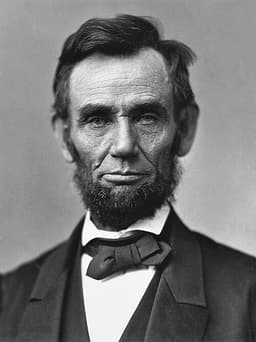
Abraham Lincoln
Politician · Modern
77.5Total
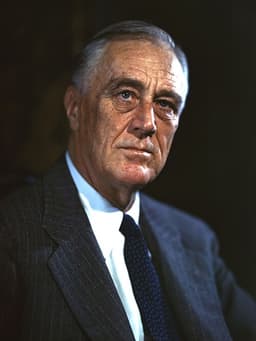
Franklin D. Roosevelt
Politician · Modern
71.0Total
Basic Information
Born
1809
1882
Died
1865
1945
Era
Modern
Modern
Nationality
United States
United States
Occupation
Politician
Politician
Civilization
Western
Western
Score Comparison
Military (10%)
50.0
45.0
Political (20%)
88.0
85.0
Influence (20%)
80.0
75.0
Legacy (20%)
82.0
65.0
Leadership (15%)
85.0
85.0
Strategy (15%)
60.0
60.0
TOTAL
77.5
71.0
Abraham Lincoln — Complete Timeline
1861 AD
Suspension of Habeas CorpusPolitical Action◆ Major
Lincoln suspended the writ of habeas corpus in parts of the Union, allowing the military to arrest and detain suspected Confederate sympathizers without trial. This action was controversial and challenged civil liberties during wartime.
Habeas CorpusCivil LibertiesCivil War
Impact: nationaldestructive
1862 AD
Signing of the Homestead ActPolitical Action◆ Major
Lincoln signed the Homestead Act, granting 160 acres of public land to settlers for a small fee. This encouraged westward expansion and agricultural development, but also displaced Native American tribes.
Homestead ActWestward ExpansionLand Policy
Impact: nationalconstructive
1863 AD
Emancipation ProclamationPolitical Action
Lincoln issued the Emancipation Proclamation, declaring slaves in Confederate states free. This shifted the Civil War's focus to ending slavery and allowed African Americans to join the Union Army.
EmancipationCivil WarSlavery
Impact: globalprogressive
Gettysburg AddressCultural◆ Major
Lincoln delivered the Gettysburg Address at the dedication of the Soldiers' National Cemetery. The speech redefined the Civil War as a struggle for national unity and equality, and became one of the most famous speeches in US history.
Gettysburg AddressCivil WarOratory
Impact: nationalconstructive
1865 AD
Assassination by John Wilkes BoothOther
Lincoln was shot by John Wilkes Booth at Ford's Theatre in Washington, D.C., and died the next day. His assassination occurred just days after the Civil War ended, plunging the nation into mourning and affecting Reconstruction.
AssassinationCivil WarReconstruction
Impact: nationaltragic
Franklin D. Roosevelt — Complete Timeline
1933 AD
Inaugurated as 32nd PresidentOther◆ Major
Franklin D. Roosevelt was inaugurated as President of the United States on March 4, 1933, during the Great Depression. His inaugural address declared 'the only thing we have to fear is fear itself,' and he immediately called Congress into special session to address the banking crisis.
Great DepressionPresidencyInauguration
Impact: national
Enacted the New DealOther◆ Major
Roosevelt launched the New Deal in 1933, a series of federal programs including the Civilian Conservation Corps, the Agricultural Adjustment Act, and the Tennessee Valley Authority. These measures aimed to provide relief, recovery, and reform during the Great Depression, fundamentally expanding the role of the federal government.
Great DepressionEconomic PolicySocial Reform
Impact: nationalconstructive
1935 AD
Signed the Social Security ActOther◆ Major
Roosevelt signed the Social Security Act into law on August 14, 1935, establishing a federal system of old-age pensions, unemployment insurance, and aid for dependent children. This created the modern American welfare state and provided a safety net for millions of citizens.
Social WelfareLegislationNew Deal
Impact: nationalconstructive
1941 AD
Lend-Lease ActOther◆ Major
Roosevelt signed the Lend-Lease Act on March 11, 1941, authorizing the transfer of military equipment and supplies to Allied nations, particularly Britain and the Soviet Union. This program provided critical material support to countries fighting the Axis powers before U.S. entry into World War II.
World War IIForeign PolicyMilitary Aid
Impact: globalconstructive
Declaration of War on JapanPolitical Action◆ Major
Following the Japanese attack on Pearl Harbor on December 7, 1941, Roosevelt delivered his 'Day of Infamy' speech to Congress the next day, requesting a declaration of war. Congress approved the declaration, bringing the United States into World War II.
World War IIPearl HarborDeclaration of War
Impact: globaldestructive
1942 AD
Executive Order 9066Other◆ Major
Roosevelt signed Executive Order 9066 on February 19, 1942, authorizing the forced relocation and internment of Japanese Americans living on the West Coast. Over 110,000 people, mostly U.S. citizens, were incarcerated in camps for the duration of the war, a decision later widely condemned as a violation of civil rights.
World War IICivil RightsInternment
Impact: nationaldestructive
1944 AD
Elected to Fourth TermOther◆ Major
Roosevelt was elected to an unprecedented fourth term as president in November 1944, defeating Republican Thomas E. Dewey. This election occurred during the final stages of World War II, and Roosevelt's continued leadership ensured stability in the war effort and post-war planning.
PresidencyElectionWorld War II
Impact: national
1945 AD
Yalta ConferenceOther◆ Major
Roosevelt met with Winston Churchill and Joseph Stalin at the Yalta Conference in February 1945 to discuss post-war Europe. Agreements included the division of Germany, Soviet entry into the war against Japan, and the creation of the United Nations, shaping the post-war world order.
World War IIDiplomacyPost-War Planning
Impact: global
Expert Analysis
Abraham Lincoln vs Franklin D. Roosevelt
**The Crossings of Destiny: Lincoln and Roosevelt**
On a raw March morning in 1933, as Franklin Delano Roosevelt stood before the Capitol to take the oath of office, the United States was a nation in freefall. Banks had collapsed, factories stood silent, and one in four men had no work. Sixty-eight years earlier, another president had faced a different kind of unraveling: Abraham Lincoln, staring into the abyss of a Union shattered by secession, had ridden a train through hostile territory to his own inauguration, his life threatened before he ever reached Washington. Both men inherited a country on the verge of extinction. Yet the crises they confronted—and the ways they met them—were as different as the ages that shaped them.
**Origins**
Lincoln was born in a one-room log cabin in rural Kentucky in 1809, the son of illiterate farmers. His formal schooling amounted to less than a year. He read by firelight, taught himself law, and emerged from the frontier with a mind forged in solitude and hardship. Roosevelt, born in 1882 to a wealthy New York family, grew up on a Hudson Valley estate, tutored by governesses, educated at Groton, Harvard, and Columbia Law School. He learned politics in the drawing rooms of the elite and the smoke-filled backrooms of New York’s Democratic machine. One was shaped by scarcity, the other by privilege. One learned to move slowly, reading men’s souls; the other learned to charm, reading their needs.
**Rise to Power**
Lincoln’s ascent was a study in perseverance. He lost his first bid for the Illinois legislature, lost a Senate race, lost a bid for the vice presidency. His great debates with Stephen Douglas in 1858 made him a national figure, but he won the presidency in 1860 with less than forty percent of the popular vote, his name not even on the ballot in most Southern states. Roosevelt’s rise was swifter and more conventionally brilliant. He served as Assistant Secretary of the Navy, ran for vice president in 1920, and was stricken with polio the following year. The disease paralyzed his legs but galvanized his will. By 1932, he had rebuilt himself into a candidate of buoyant optimism, winning the presidency in a landslide against a paralyzed Herbert Hoover.
**Leadership & Governance**
Their governing styles reflected their temperaments. Lincoln governed with a melancholy patience. He suffered fools, endured insubordinate generals, and wrote letters he never sent. He suspended habeas corpus to suppress dissent, but he did so with agonized deliberation. His Emancipation Proclamation of 1863 was a masterpiece of political timing—freeing slaves only in rebel territory, preserving the loyalty of border states while shifting the war’s moral ground. Roosevelt governed with restless energy. He tried dozens of programs in his first hundred days—the “alphabet agencies” of the New Deal—some successful, some failures, all animated by the conviction that action was better than paralysis. He created Social Security, regulated Wall Street, and built the modern welfare state. Where Lincoln moved with the weight of history, Roosevelt moved with the speed of crisis.
Their military leadership differed just as sharply. Lincoln, with no military experience, taught himself strategy by reading books and questioning generals. He found Grant only after a succession of failures, and then backed him unconditionally. Roosevelt, who had served as a civilian naval administrator, deferred more to his military chiefs—but he made the grand strategic calls: the “Germany First” decision, the demand for unconditional surrender, the commitment to build the atomic bomb. Lincoln won a war to preserve the Union; Roosevelt won a war to save the world from fascism.
**Triumph & Tragedy**
Lincoln’s greatest moment came at Gettysburg in November 1863, when he spoke for two minutes and redefined the meaning of the war—not as a struggle for Union, but as a “new birth of freedom.” His greatest tragedy was that he did not live to see the peace. On April 14, 1865, days after Lee’s surrender, John Wilkes Booth shot him in Ford’s Theatre. Roosevelt’s triumph was the defeat of Nazi Germany and Imperial Japan, a victory he engineered from his wheelchair in the White House and at conferences in Tehran and Yalta. His tragedy was that he, too, did not live to see the peace. He died of a cerebral hemorrhage on April 12, 1945, less than a month before Germany’s surrender.
**Character & Destiny**
Both men were shaped by suffering. Lincoln’s depression was a constant companion; he once wrote that he was “the most miserable man living.” Roosevelt’s polio gave him a hidden resilience, a refusal to acknowledge defeat. Lincoln’s character was introspective, his decisions weighed against an inner moral compass. Roosevelt’s was opaque, his motives often unreadable even to his closest aides. One led by moral clarity, the other by political instinct. Yet both understood that leadership in a democracy required not just power, but persuasion—the ability to speak to a people in their darkest hour and make them believe the dawn was coming.
**Legacy**
Lincoln freed the slaves and preserved the Union. Roosevelt saved capitalism from itself and led the free world to victory. Both expanded the power of the presidency, both were hated in their time, and both are remembered as giants. Lincoln’s legacy is enshrined in the marble temple on the National Mall; Roosevelt’s in the social safety net that still protects millions. One is the martyr, the other the architect.
**Conclusion**
Standing at the Lincoln Memorial in 1939, Marian Anderson sang “My Country, ’Tis of Thee” before a crowd of 75,000, a moment made possible by the Emancipator’s work. Twenty-four years later, Martin Luther King Jr. stood on the same steps and spoke of a dream. Roosevelt’s New Deal built the steps themselves, and the economic foundation that gave that dream a chance. In the end, Lincoln and Roosevelt were not so much rivals in greatness as partners across time—two men who took a broken nation, each in his own way, and held it together long enough for it to become what it promised to be.
Rankings
🥇
Abraham LincolnLeader
Mil: 50.0Pol: 88.0Inf: 80.0
77.5
🥈
Franklin D. Roosevelt
Mil: 45.0Pol: 85.0Inf: 75.0
71.0
+6.5 behind
How This Comparison Works
Algorithm
Each figure is scored on 6 dimensions (0—100 scale) based on structured historical data: Military (10%), Political (20%), Influence (20%), Legacy (20%), Leadership (15%), Strategy (15%). The weighted total produces the final ranking.
Data Sources
Scores are computed from structured sub-indicators in the database. Scale factors adjust for era (Ancient ×0.85, Modern ×1.0) and civilization size (Eastern ×1.05, Other ×0.80) to account for differences in population and military scale.
Maximum 3 Figures
Comparisons are limited to 2—3 figures to ensure readability and statistical meaningfulness.
Error Margins
±5 points per dimension — Sub-scores are derived from historical records with inherent uncertainty. Two figures within 5 points on a dimension should be considered roughly equivalent in that area.
Total Score Accuracy
±3 points overall — The weighted combination of 6 dimensions produces a total score with approximately ±3 points of uncertainty. Differences of less than 3 points are not statistically significant— the figures are effectively tied.
Known Limitations
- Historical records are incomplete and uneven across civilizations
- Figures from oral-tradition societies may be underrepresented
- Occupation labels can misclassify multi-role figures
- Scores measure capability and impact, not moral character
- Quantitative scoring is a comparison tool, not absolute truth
Capability Radar
Military (10%) — Battles & Warfare
Battles
15
10
Win Rate
20
10
Expansion
0
10
Political (20%) — Governance & Reform
Reform
95
95
Diplomacy
80
90
Economy
70
95
Influence (20%) — Cultural & Global Reach
Cultural
85
80
Global
85
90
Legacy (20%) — Historical Impact
Historical
95
90
Longevity
90
85
Leadership (15%) — Power & Stability
Tenure
65
90
Stability
55
75
Strategy (15%) — Tactics & Innovation
Strategy
55
65
Tactics
10
10
Reform
60
70
Similar Comparisons
Comments & Discussion
No comments yet. Be the first to share your thoughts!