Loading...
Abraham Lincoln vs Lazare Carnot
Abraham Lincoln leads by 9.3 pts · 2 figures compared
…
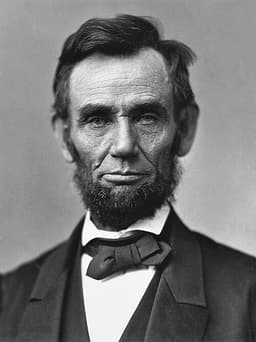
Abraham Lincoln
Politician · Modern
77.5Total
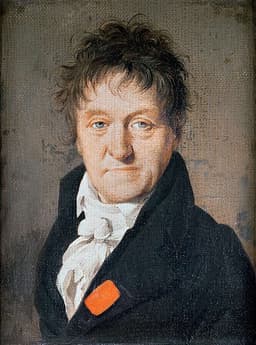
Lazare Carnot
Politician · Modern
68.2Total
Basic Information
Born
1809
1753
Died
1865
1823
Era
Modern
Modern
Nationality
United States
France
Occupation
Politician
Politician
Civilization
Western
Western
Score Comparison
Military (10%)
50.0
61.7
Political (20%)
88.0
72.0
Influence (20%)
80.0
68.0
Legacy (20%)
82.0
65.0
Leadership (15%)
85.0
72.0
Strategy (15%)
60.0
72.0
TOTAL
77.5
68.2
Abraham Lincoln — Complete Timeline
1861 AD
Suspension of Habeas CorpusPolitical Action◆ Major
Lincoln suspended the writ of habeas corpus in parts of the Union, allowing the military to arrest and detain suspected Confederate sympathizers without trial. This action was controversial and challenged civil liberties during wartime.
Habeas CorpusCivil LibertiesCivil War
Impact: nationaldestructive
1862 AD
Signing of the Homestead ActPolitical Action◆ Major
Lincoln signed the Homestead Act, granting 160 acres of public land to settlers for a small fee. This encouraged westward expansion and agricultural development, but also displaced Native American tribes.
Homestead ActWestward ExpansionLand Policy
Impact: nationalconstructive
1863 AD
Emancipation ProclamationPolitical Action
Lincoln issued the Emancipation Proclamation, declaring slaves in Confederate states free. This shifted the Civil War's focus to ending slavery and allowed African Americans to join the Union Army.
EmancipationCivil WarSlavery
Impact: globalprogressive
Gettysburg AddressCultural◆ Major
Lincoln delivered the Gettysburg Address at the dedication of the Soldiers' National Cemetery. The speech redefined the Civil War as a struggle for national unity and equality, and became one of the most famous speeches in US history.
Gettysburg AddressCivil WarOratory
Impact: nationalconstructive
1865 AD
Assassination by John Wilkes BoothOther
Lincoln was shot by John Wilkes Booth at Ford's Theatre in Washington, D.C., and died the next day. His assassination occurred just days after the Civil War ended, plunging the nation into mourning and affecting Reconstruction.
AssassinationCivil WarReconstruction
Impact: nationaltragic
Lazare Carnot — Complete Timeline
1793 AD
Directed the Victory at the Battle of WattigniesWar◆ Major
Carnot personally directed French forces at the Battle of Wattignies, a key victory that relieved the siege of Maubeuge. His strategic planning helped turn the tide against the Austrian army.
French RevolutionBattleVictory
Impact: regionalconstructive
Organized the Levée en MasseReform◆ Major
Carnot helped implement the lev
French RevolutionConscriptionMilitary Reform
Impact: globalconstructive
Appointed to the Committee of Public SafetyPolitical Action◆ Major
Carnot was appointed to the Committee of Public Safety, where he took charge of military organization. He reorganized the French army, introduced mass conscription, and coordinated the war effort against foreign coalitions.
French RevolutionCommittee of Public SafetyMilitary
Impact: nationalconstructive
1815 AD
Exiled as a RegicidePolitical Action
After the Bourbon restoration, Carnot was exiled as a regicide for having voted for the execution of Louis XVI. He spent his remaining years in Germany and died in Magdeburg.
ExileRegicideBourbon
Impact: nationaltragic
Expert Analysis
Abraham Lincoln vs Lazare Carnot
# The Organizer and the Emancipator
On a cold March morning in 1865, as Abraham Lincoln prepared to deliver his second inaugural address, he stood before a nation fractured by four years of civil war. Across the Atlantic, nearly seven decades earlier, another man—Lazare Carnot—had faced a similar crucible: a revolution under siege, armies collapsing, and the very survival of a new republic hanging in the balance. Both men rose to meet their moment, yet their paths diverged in ways that reveal the deepest currents of their ages. Lincoln would become America’s martyred saint; Carnot, France’s forgotten architect. Why did one man’s name echo through eternity while the other’s faded into the footnotes of history?
Origins
Abraham Lincoln was born in 1809 in a one-room log cabin in Kentucky, the son of illiterate farmers. His America was a sprawling, restless democracy still defining itself, where a self-taught boy could read Blackstone’s *Commentaries* by firelight and dream of the White House. Lincoln’s world was one of possibility, but also of deepening division over slavery—a moral wound that would define his life.
Lazare Carnot, born in 1753 in Burgundy, France, came of age under the ancien régime, a world of rigid hierarchy and inherited privilege. The son of a lawyer, Carnot was educated by the Jesuits and trained as a military engineer in the royal army. His France was a powder keg of Enlightenment ideas and feudal decay, where the old order’s collapse would demand a new kind of leadership. Where Lincoln’s genius lay in words and moral clarity, Carnot’s lay in systems and organization—a mind that could turn chaos into order on a battlefield.
Rise to Power
Lincoln’s ascent was slow, deliberate, and marked by defeat. He lost elections for the Illinois legislature, the U.S. Senate, and even a bid for the vice presidency. His 1860 presidential victory came only after the Democratic Party split, giving him a minority of the popular vote. Yet Lincoln understood that in a democracy, persistence was its own form of power.
Carnot’s rise was sudden and revolutionary. In 1793, as foreign armies closed in on revolutionary France and internal rebellion threatened to tear the Republic apart, he was appointed to the Committee of Public Safety. This was no electoral victory—it was a desperate gamble by a regime fighting for its life. Carnot, a military engineer with no political base, was given the task of saving France.
Leadership & Governance
Their governing styles could not have been more different. Lincoln led through persuasion, patience, and an almost Shakespearean understanding of human nature. He suspended habeas corpus in 1861—a deeply controversial act—but did so with a lawyer’s care, arguing that the Constitution allowed such measures during rebellion. He signed the Homestead Act in 1862, opening the West to settlers, and issued the Emancipation Proclamation in 1863, transforming the Civil War into a moral crusade. Lincoln’s political genius lay in his ability to hold together a coalition of abolitionists, moderates, and border-state loyalists, all while commanding a war he had never been trained to fight.
Carnot ruled through sheer logistical brilliance. As the “Organizer of Victory,” he reorganized the French army from the ground up, implementing the *levée en masse* in 1793—a mass conscription that mobilized hundreds of thousands of citizens. He personally directed the victory at Wattignies that same year, proving himself a capable battlefield commander. But Carnot’s leadership was cold, technical, and ruthless. He did not inspire; he calculated. Where Lincoln spoke of “the better angels of our nature,” Carnot spoke of troop movements and supply lines.
Triumph & Tragedy
Lincoln’s greatest moment came on a November afternoon in 1863 at Gettysburg, where he redefined the meaning of the war in 272 words. “We here highly resolve that these dead shall not have died in vain,” he said, “that this nation, under God, shall have a new birth of freedom.” It was the pinnacle of his moral leadership—a speech that transformed a battlefield cemetery into a testament to democracy itself.
His tragedy was swift and brutal. On April 14, 1865, just days after the Confederate surrender, John Wilkes Booth shot Lincoln at Ford’s Theatre. He died the next morning. The man who had preserved the Union was taken just as victory was secured, leaving a nation to mourn not just a president, but a symbol of what might have been.
Carnot’s triumph was the survival of revolutionary France. By 1794, his organizational genius had turned a ragtag army into a force that could defeat the combined powers of Europe. But his tragedy was political. After the fall of Robespierre, Carnot was marginalized, and when the Bourbon monarchy returned in 1815, he was exiled as a regicide for having voted to execute King Louis XVI. He died in 1823 in Magdeburg, a lonely exile far from the France he had saved.
Character & Destiny
Lincoln’s character was defined by a profound melancholy and an unshakeable moral compass. He carried the weight of the war on his shoulders, often waking his cabinet with nightmares of battlefields. Yet he never wavered in his belief that the Union was worth saving, and that slavery was an evil to be ended. His assassination ensured his martyrdom—a death that elevated him from politician to secular saint.
Carnot’s character was colder, more rational. He was a man of systems, not sentiment. He believed in the Republic, but he did not inspire love. His exile was a fitting end for a man who had served a revolution that eventually consumed its own children. Carnot’s tragedy was not that he died violently, but that he died forgotten—his contributions absorbed into the machinery of the state he had built.
Legacy
Lincoln’s legacy is immeasurable. He is the Great Emancipator, the savior of the Union, the face on the penny and the monument in Washington. His words are etched into the American soul. His political score of 88.0 and leadership score of 85.0 reflect a man who reshaped his nation’s destiny.
Carnot’s legacy is quieter, but no less profound. He is the father of modern military organization, the man who proved that citizen armies could defeat professional ones. His influence score of 71.4 and legacy score of 75.0 are respectable, but they do not capture the full measure of his achievement. Without Carnot, revolutionary France might have collapsed, and the course of European history would have been different.
Conclusion
Lincoln and Carnot both faced revolutions that demanded everything they had. Lincoln gave his life; Carnot gave his career. One became a martyr, the other an exile. Their differences are not just about skill or luck, but about the nature of the causes they served. Lincoln’s America was a democracy that could canonize its heroes; Carnot’s France was a revolution that devoured its own. In the end, Lincoln’s story is one of moral triumph; Carnot’s is one of cold, necessary sacrifice. Both are essential to understanding how leadership can shape—and be shaped by—the most turbulent moments in history.
Rankings
🥇
Abraham LincolnLeader
Mil: 50.0Pol: 88.0Inf: 80.0
77.5
🥈
Lazare Carnot
Mil: 61.7Pol: 72.0Inf: 68.0
68.2
+9.3 behind
How This Comparison Works
Algorithm
Each figure is scored on 6 dimensions (0—100 scale) based on structured historical data: Military (10%), Political (20%), Influence (20%), Legacy (20%), Leadership (15%), Strategy (15%). The weighted total produces the final ranking.
Data Sources
Scores are computed from structured sub-indicators in the database. Scale factors adjust for era (Ancient ×0.85, Modern ×1.0) and civilization size (Eastern ×1.05, Other ×0.80) to account for differences in population and military scale.
Maximum 3 Figures
Comparisons are limited to 2—3 figures to ensure readability and statistical meaningfulness.
Error Margins
±5 points per dimension — Sub-scores are derived from historical records with inherent uncertainty. Two figures within 5 points on a dimension should be considered roughly equivalent in that area.
Total Score Accuracy
±3 points overall — The weighted combination of 6 dimensions produces a total score with approximately ±3 points of uncertainty. Differences of less than 3 points are not statistically significant— the figures are effectively tied.
Known Limitations
- Historical records are incomplete and uneven across civilizations
- Figures from oral-tradition societies may be underrepresented
- Occupation labels can misclassify multi-role figures
- Scores measure capability and impact, not moral character
- Quantitative scoring is a comparison tool, not absolute truth
Capability Radar
Military (10%) — Battles & Warfare
Battles
15
60
Win Rate
20
65
Expansion
0
80
Political (20%) — Governance & Reform
Reform
95
90
Diplomacy
80
60
Economy
70
75
Influence (20%) — Cultural & Global Reach
Cultural
85
60
Global
85
75
Legacy (20%) — Historical Impact
Historical
95
85
Longevity
90
70
Leadership (15%) — Power & Stability
Tenure
65
70
Stability
55
50
Strategy (15%) — Tactics & Innovation
Strategy
55
85
Tactics
10
70
Reform
60
95
Similar Comparisons
Comments & Discussion
THE IRON ARCHITECT6/16/2026
Comparing Lincoln to Carnot is like comparing a folk poet to a draftsman. Yes, Carnot systematized the *levée en masse* and turned revolutionary chaos into a war machine capable of holding off Europe, but he never faced a nation actively tearing itself in half. Lincoln managed to preserve the Union while midwifing a moral revolution. Carnot was a brilliant technician; Lincoln was a statesman who fundamentally redefined what America meant. Carnot organized armies; Lincoln organized a soul.
历史烟云观察者6/16/2026
说句实话,拿卡诺和林肯比,是对战争复杂性的一种简化。卡诺在1793年面对的是入侵洪流和内部叛乱的烂摊子,他一手创建了十四支军团,把法国大革命从悬崖边拖了回来。是的,林肯解放了黑奴,但卡诺奠定了现代国家总动员的雏形。没有卡诺的"战争组织者"理念,拿破仑的帝国梦连地基都没有。历史对务实者的遗忘,真是让人愤愤不平。
THE LENS-BREAKER6/16/2026
I call shenanigans on the framing here. We're not comparing "organizer vs. emancipator"; we're comparing the outcomes of very different systems. Lincoln inherited an established constitutional framework and could appeal to a shared (if fractured) national identity. Carnot had to invent a state apparatus from revolutionary rubble while fighting off the Holy Roman Empire, Britain, and Spain simultaneously. Carnot's "forgotten" status isn't a measure of his impact—it's just that France has too many
工业时代的军魂6/16/2026
各位别忘了,卡诺在军事工程上的贡献才是真正的硬核遗产。他写的《论要塞的防御》和《战争原理》直接影响了几代军官,连克劳塞维茨都引用过他。林肯是伟大的政治家,但他在战略指挥上经常被麦克莱伦和格兰特牵着鼻子走。卡诺则是那个在战火中亲自骑马跑到前线,指导工兵修路架桥的人。一个是政治家指挥战争,一个是工程师打赢战争,层次完全不同。
THE ABSTRACT'S DOWNFALL6/16/2026
The real difference is that Lincoln's legacy crystallized around a single, universally acclaimed act—Emancipation. Carnot's contributions were structural, systemic, and therefore invisible to popular history. He didn't free a people or deliver a poetic speech; he optimized army corps rotations and standardized military supply chains. But ask any historian of the Napoleonic Wars: France's survival in 1793-94 was Carnot's doing. He's the ultimate proof that the most important historical figures ar