Loading...
Abraham Lincoln vs Chiang Kai-shek
Abraham Lincoln leads by 16.9 pts · 2 figures compared
…
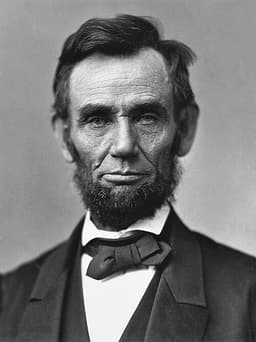
Abraham Lincoln
Politician · Modern
77.5Total
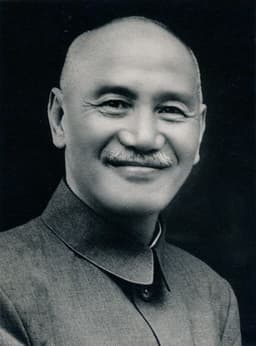
Chiang Kai-shek
Politician · Modern
60.6Total
Basic Information
Born
1809
1887
Died
1865
1975
Era
Modern
Modern
Nationality
United States
China
Occupation
Politician
Politician
Civilization
Western
Eastern
Score Comparison
Military (10%)
50.0
70.0
Political (20%)
88.0
62.7
Influence (20%)
80.0
65.0
Legacy (20%)
82.0
52.0
Leadership (15%)
85.0
66.0
Strategy (15%)
60.0
50.0
TOTAL
77.5
60.6
Abraham Lincoln — Complete Timeline
1861 AD
Suspension of Habeas CorpusPolitical Action◆ Major
Lincoln suspended the writ of habeas corpus in parts of the Union, allowing the military to arrest and detain suspected Confederate sympathizers without trial. This action was controversial and challenged civil liberties during wartime.
Habeas CorpusCivil LibertiesCivil War
Impact: nationaldestructive
1862 AD
Signing of the Homestead ActPolitical Action◆ Major
Lincoln signed the Homestead Act, granting 160 acres of public land to settlers for a small fee. This encouraged westward expansion and agricultural development, but also displaced Native American tribes.
Homestead ActWestward ExpansionLand Policy
Impact: nationalconstructive
1863 AD
Emancipation ProclamationPolitical Action
Lincoln issued the Emancipation Proclamation, declaring slaves in Confederate states free. This shifted the Civil War's focus to ending slavery and allowed African Americans to join the Union Army.
EmancipationCivil WarSlavery
Impact: globalprogressive
Gettysburg AddressCultural◆ Major
Lincoln delivered the Gettysburg Address at the dedication of the Soldiers' National Cemetery. The speech redefined the Civil War as a struggle for national unity and equality, and became one of the most famous speeches in US history.
Gettysburg AddressCivil WarOratory
Impact: nationalconstructive
1865 AD
Assassination by John Wilkes BoothOther
Lincoln was shot by John Wilkes Booth at Ford's Theatre in Washington, D.C., and died the next day. His assassination occurred just days after the Civil War ended, plunging the nation into mourning and affecting Reconstruction.
AssassinationCivil WarReconstruction
Impact: nationaltragic
Chiang Kai-shek — Complete Timeline
1926 AD
Northern ExpeditionWar◆ Major
Chiang Kai-shek led the National Revolutionary Army in the Northern Expedition to defeat warlords and unify China. The campaign succeeded in capturing Beijing and establishing Kuomintang control over most of the country.
UnificationMilitary campaign
Impact: national
1927 AD
Shanghai Massacre of 1927Political Action◆ Major
Chiang Kai-shek ordered the purge of communists and leftists in Shanghai, resulting in thousands of deaths. This event broke the First United Front between the Kuomintang and the Communist Party, leading to civil war.
PurgeCivil war
Impact: nationaldestructive
1937 AD
Leadership during the Second Sino-Japanese WarWar
Chiang Kai-shek, as leader of the Kuomintang, commanded Chinese forces during the Second Sino-Japanese War. He directed the defense of Shanghai and the relocation of the capital to Chongqing, maintaining resistance against Japan.
World War IIChinese resistance
Impact: global
1945 AD
Signing of the Sino-Soviet Treaty of 1945Political Action◆ Major
Chiang Kai-shek signed the Sino-Soviet Treaty of Friendship and Alliance, which recognized Soviet interests in Manchuria in exchange for Soviet support against Japan. The treaty later facilitated Communist gains in the civil war.
DiplomacySoviet Union
Impact: global
1949 AD
Retreat to TaiwanPolitical Action
After losing the Chinese Civil War to the Communists, Chiang Kai-shek retreated to Taiwan with the remnants of the Kuomintang government and military. He established the Republic of China on Taiwan, claiming legitimacy over all of China.
TaiwanExileCold War
Impact: globaltragic
Expert Analysis
Abraham Lincoln vs Chiang Kai-shek
# The Divided House and the Divided Nation: Chiang Kai-shek and Abraham Lincoln
On a cold January morning in 1863, Abraham Lincoln put his pen to the Emancipation Proclamation, a document that would redefine the American Civil War and the nation's soul. Eighty years later and half a world away, Chiang Kai-shek stood in the wartime capital of Chongqing, directing a desperate resistance against Japanese invasion while simultaneously plotting the destruction of his communist rivals. Both men led nations through existential crises. Both wielded immense power in times of war. Yet one is remembered as a martyr for freedom, the other as a tragic figure who lost his country. The difference lies not merely in outcomes, but in the kind of leadership each man embodied.
Origins
Abraham Lincoln was born in 1809 in a log cabin in Kentucky, the son of illiterate farmers. His rise was the stuff of American myth: self-taught, rail-splitter, frontier lawyer. He entered politics in the 1830s, a Whig in a young democracy still wrestling with its contradictions. The America of Lincoln’s youth was expanding, restless, and increasingly divided over slavery. His world was one of debate, compromise, and moral clarity slowly crystallizing.
Chiang Kai-shek, born in 1887 in Zhejiang Province, came of age in a China that had collapsed. The Qing Dynasty was in its death throes, foreign powers carved up spheres of influence, and warlords ruled the countryside. Chiang attended military academies in Japan and China, absorbing both Confucian discipline and modern nationalism. His China was not debating ideas—it was fighting for survival. Where Lincoln’s America was a house divided, Chiang’s China was a house already in flames.
Rise to Power
Lincoln’s path to power was democratic and incremental. He served in the Illinois legislature, lost a Senate race to Stephen Douglas in 1858, then won the presidency in 1860 with less than 40% of the popular vote. His election triggered secession. Lincoln did not seize power; he inherited a crisis.
Chiang’s rise was violent and opportunistic. After Sun Yat-sen’s death in 1925, Chiang maneuvered to lead the Kuomintang, then launched the Northern Expedition in 1926 to crush warlords and unify China. By 1927, he was strong enough to turn on his communist allies. The Shanghai Massacre of April 1927—where thousands of leftists were executed—cemented his authority through blood. He became China’s leader not through ballots, but through bullets and purges.
Leadership & Governance
Lincoln governed through words. His leadership was rhetorical, constitutional, and deeply moral. The Gettysburg Address in 1863 redefined the war as a struggle for “a new birth of freedom.” The Emancipation Proclamation was a military measure, but it transformed the Union cause into a crusade against slavery. He suspended habeas corpus—a controversial act—but did so with the aim of preserving the legal order. His political score of 88 reflects a man who understood that leadership requires persuasion, not just command.
Chiang governed through control. His military score of 68 and strategy score of 72 suggest competence, not genius. He directed Chinese forces during the Second Sino-Japanese War from 1937, but his strategy was often passive—preserving his army for the inevitable showdown with Mao Zedong’s Communists. He signed the Sino-Soviet Treaty of 1945, trading recognition of Soviet interests in Manchuria for support, a deal that later backfired. His political score of 66 reveals a leader who never built a broad coalition. He ruled through patronage, secret police, and a cult of personality.
Triumph & Tragedy
Lincoln’s greatest moment was his death. Assassinated in 1865 by John Wilkes Booth, he became a martyr for the Union and emancipation. His tragedy was that he did not live to see Reconstruction—a failure that would haunt America for another century.
Chiang’s greatest moment was leading China through eight years of war against Japan, a struggle that cost millions of lives but kept China in the fight. His tragedy was the Chinese Civil War. In 1949, after losing the mainland, he retreated to Taiwan with the remnants of the Kuomintang. He died in 1975 on an island he called “Free China,” a president without a country.
Character & Destiny
Lincoln was melancholic, patient, and self-doubting. He surrounded himself with rivals, listened to criticism, and changed his mind. His character allowed for growth: he entered the White House willing to tolerate slavery where it existed; he left it having issued the Emancipation Proclamation.
Chiang was rigid, suspicious, and convinced of his own destiny. He saw betrayal everywhere—and often found it. His character made compromise impossible. He could not share power with Mao, nor could he win the peace after defeating Japan. His leadership score of 80 is high, but it was leadership of a narrow, brittle sort.
Legacy
Lincoln’s legacy is America’s secular scripture. He is enshrined in marble, his words memorized by schoolchildren, his image on the penny and the five-dollar bill. His total score of 76.7 reflects a man who shaped a nation’s soul.
Chiang’s legacy is contested. In mainland China, he is a villain. In Taiwan, a founding father. His total score of 70.2 places him as a significant but flawed figure—a leader who fought for China but could not unite it.
Conclusion
Both men faced a nation divided. Lincoln’s division was about an idea—freedom versus slavery—and he chose a side, articulated it, and died for it. Chiang’s division was about power—who would rule China—and he fought for it, lost it, and died in exile. The difference between them is not just historical circumstance; it is the difference between a leader who expands the moral imagination of his people and one who merely commands their loyalty. Lincoln gave his nation a new birth of freedom. Chiang gave his nation a long, bitter war. In the end, the kind of leader you are is the kind of legacy you leave.
Rankings
🥇
Abraham LincolnLeader
Mil: 50.0Pol: 88.0Inf: 80.0
77.5
🥈
Chiang Kai-shek
Mil: 70.0Pol: 62.7Inf: 65.0
60.6
+16.9 behind
How This Comparison Works
Algorithm
Each figure is scored on 6 dimensions (0—100 scale) based on structured historical data: Military (10%), Political (20%), Influence (20%), Legacy (20%), Leadership (15%), Strategy (15%). The weighted total produces the final ranking.
Data Sources
Scores are computed from structured sub-indicators in the database. Scale factors adjust for era (Ancient ×0.85, Modern ×1.0) and civilization size (Eastern ×1.05, Other ×0.80) to account for differences in population and military scale.
Maximum 3 Figures
Comparisons are limited to 2—3 figures to ensure readability and statistical meaningfulness.
Error Margins
±5 points per dimension — Sub-scores are derived from historical records with inherent uncertainty. Two figures within 5 points on a dimension should be considered roughly equivalent in that area.
Total Score Accuracy
±3 points overall — The weighted combination of 6 dimensions produces a total score with approximately ±3 points of uncertainty. Differences of less than 3 points are not statistically significant— the figures are effectively tied.
Known Limitations
- Historical records are incomplete and uneven across civilizations
- Figures from oral-tradition societies may be underrepresented
- Occupation labels can misclassify multi-role figures
- Scores measure capability and impact, not moral character
- Quantitative scoring is a comparison tool, not absolute truth
Capability Radar
Military (10%) — Battles & Warfare
Battles
15
75
Win Rate
20
35
Expansion
0
65
Political (20%) — Governance & Reform
Reform
95
55
Diplomacy
80
60
Economy
70
40
Influence (20%) — Cultural & Global Reach
Cultural
85
60
Global
85
65
Legacy (20%) — Historical Impact
Historical
95
70
Longevity
90
55
Leadership (15%) — Power & Stability
Tenure
65
85
Stability
55
30
Strategy (15%) — Tactics & Innovation
Strategy
55
60
Tactics
10
55
Reform
60
50
Similar Comparisons
Comments & Discussion
RailSplitterRealist6/16/2026
Lincoln freed the slaves *de jure*, but let's be clear: the Emancipation Proclamation only applied to rebel states he didn't control. It was a military tactic, not pure morality. Chiang, meanwhile, actually implemented land reform in Taiwan—something Lincoln never dared touch in the South. One man ended chattel slavery with a calculated wartime measure; the other broke up feudal estates. Give me the practical revolutionary over the saintly politician any day.
腐烂的蜡烛6/16/2026
林肯是"诚实的亚伯",但他对印第安人政策就是种族清洗——1862年明尼苏达大屠杀后他下令绞死38名达科他战士,这算哪门子"统一者"?蒋介石确实丢了大陆,但他在台湾搞了成功的土地改革和国语普及,比林肯的"解放"实在多了。别用美国神话来踩一个在真正危难中挣扎的中国人。
Historiographer's Scalpel6/16/2026
The comparison is flawed: Lincoln presided over an industrializing nation with a functioning federal system; Chiang scrambled to hold together a premodern society gutted by opium wars and warlordism. Lincoln's "malice toward none" was possible because the Union's victory was certain by 1864—Chiang faced the Japanese army and Mao's guerillas simultaneously. Context isn't excuse, but it's explanation.
江浙老参谋6/16/2026
杨天石揭开档案:蒋介石在1945年后确实幻想"以德服人",但他对党内派系的清洗(比如1947年处理CC系)远不如林肯对共和党激进派的驾驭。林肯知道何时妥协(1861年暂缓废奴),何时强硬(1863年《解放宣言》)。蒋始终在"剿共"和"抗日"间首鼠两端——领袖的致命伤不是道德,是战略节奏。
Digital Cavalry6/16/2026
Data point: Lincoln's executive actions directly addressed 4 million enslaved persons; Chiang's governance impacted 450 million Chinese citizens across a civil war and total foreign invasion. Scale alone invalidates the comparison. Plus, Chiang's regime controlled only 25% of China's territory by 1944—Lincoln never lost the capital or commanded a refugee government. Apples and rotting oranges.