Loading...
This comparison has not been analyzed yet.
One-time AI generation (~1 minute). Scores and timeline are already available below.
Abiye Abebe vs Hideki Tojo
Hideki Tojo leads by 9.3 pts · 2 figures compared
…

Abiye Abebe
General · Modern
44.6Total
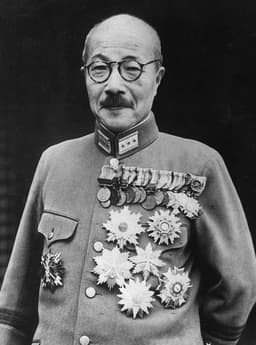
Hideki Tojo
General · Modern
53.9Total
Basic Information
Born
1917
1884
Died
1974
1948
Era
Modern
Modern
Nationality
Ethiopia
Japan
Occupation
General
General
Civilization
Other
Eastern
Score Comparison
Military (10%)
50.0
70.0
Political (20%)
32.2
48.0
Influence (20%)
52.5
55.0
Legacy (20%)
39.2
50.0
Leadership (15%)
51.9
53.2
Strategy (15%)
41.0
55.0
TOTAL
44.6
53.9
Abiye Abebe — Complete Timeline
1940 AD
Appointment as Governor of SidamoPolitical Action
Abiye Abebe was appointed Governor of Sidamo province by Emperor Haile Selassie. He administered the region during the post-liberation period, overseeing reconstruction and consolidation of imperial control.
GovernorshipSidamoPost-War
Impact: regionalconstructive
1960 AD
Role in the 1960 coup attemptPolitical Action◆ Major
During the 1960 coup attempt against Haile Selassie, Abiye Abebe remained loyal to the emperor. He helped organize loyalist forces to suppress the coup, which was led by the Imperial Bodyguard.
Coup AttemptLoyalistHaile Selassie
Impact: national
1974 AD
Execution during the Derg regimePolitical Action◆ Major
After the 1974 Ethiopian Revolution, Abiye Abebe was arrested by the Derg military junta. He was executed along with 60 other former officials of Haile Selassie's government, marking the violent end of the imperial era.
ExecutionDergRevolution
Impact: nationaltragic
Hideki Tojo — Complete Timeline
1941 AD
Attack on Pearl HarborWar
As Prime Minister, Hideki Tojo authorized the attack on the US naval base at Pearl Harbor, Hawaii. The surprise attack brought the United States into World War II. Tojo's decision was based on the belief that war with the US was inevitable due to resource embargoes and diplomatic failures.
World War IIPearl HarborUS-Japan War
Impact: globaldestructive
Appointment as Prime MinisterPolitical Action◆ Major
Hideki Tojo was appointed Prime Minister of Japan, replacing Fumimaro Konoe. He retained his position as Army Minister and later took on other portfolios, consolidating power. His appointment marked the ascendancy of the military faction in the Japanese government and the shift towards total war.
Prime MinisterMilitary GovernmentWorld War II
Impact: national
1942 AD
Fall of SingaporeWar◆ Major
Under Tojo's leadership, Japanese forces captured Singapore from the British in a swift campaign. The fall of Singapore was one of the worst British military defeats in history. It demonstrated Japanese military prowess and led to the occupation of a key strategic location in Southeast Asia.
World War IISingaporeJapanese Victory
Impact: global
1948 AD
Execution by the International Military Tribunal for the Far EastPolitical Action◆ Major
Hideki Tojo was found guilty of war crimes by the International Military Tribunal for the Far East and sentenced to death. He was executed by hanging on December 23, 1948. His trial and execution symbolized the Allied effort to hold Japanese leaders accountable for wartime atrocities.
War CrimesExecutionTokyo Trials
Impact: globaltragic
This comparison has not been analyzed yet.
One-time AI generation (~1 minute). Scores and timeline are already available below.
Rankings
🥇
Hideki TojoLeader
Mil: 70.0Pol: 48.0Inf: 55.0
53.9
🥈
Abiye Abebe
Mil: 50.0Pol: 32.2Inf: 52.5
44.6
+9.3 behind
How This Comparison Works
Algorithm
Each figure is scored on 6 dimensions (0—100 scale) based on structured historical data: Military (10%), Political (20%), Influence (20%), Legacy (20%), Leadership (15%), Strategy (15%). The weighted total produces the final ranking.
Data Sources
Scores are computed from structured sub-indicators in the database. Scale factors adjust for era (Ancient ×0.85, Modern ×1.0) and civilization size (Eastern ×1.05, Other ×0.80) to account for differences in population and military scale.
Maximum 3 Figures
Comparisons are limited to 2—3 figures to ensure readability and statistical meaningfulness.
Error Margins
±5 points per dimension — Sub-scores are derived from historical records with inherent uncertainty. Two figures within 5 points on a dimension should be considered roughly equivalent in that area.
Total Score Accuracy
±3 points overall — The weighted combination of 6 dimensions produces a total score with approximately ±3 points of uncertainty. Differences of less than 3 points are not statistically significant— the figures are effectively tied.
Known Limitations
- Historical records are incomplete and uneven across civilizations
- Figures from oral-tradition societies may be underrepresented
- Occupation labels can misclassify multi-role figures
- Scores measure capability and impact, not moral character
- Quantitative scoring is a comparison tool, not absolute truth
Capability Radar
Military (10%) — Battles & Warfare
Battles
20
65
Win Rate
25
40
Expansion
10
70
Political (20%) — Governance & Reform
Reform
15
30
Diplomacy
25
35
Economy
10
25
Influence (20%) — Cultural & Global Reach
Cultural
15
30
Global
10
55
Legacy (20%) — Historical Impact
Historical
15
55
Longevity
10
40
Leadership (15%) — Power & Stability
Tenure
30
60
Stability
15
20
Strategy (15%) — Tactics & Innovation
Strategy
20
50
Tactics
20
55
Reform
10
45
Similar Comparisons
Comments & Discussion
No comments yet. Be the first to share your thoughts!