Loading...
This comparison has not been analyzed yet.
One-time AI generation (~1 minute). Scores and timeline are already available below.
Abdul-Malik al-Houthi vs Gulbuddin Hekmatyar
Abdul-Malik al-Houthi leads by 4.9 pts · 2 figures compared
…

Abdul-Malik al-Houthi
Revolutionary · Modern
43.2Total
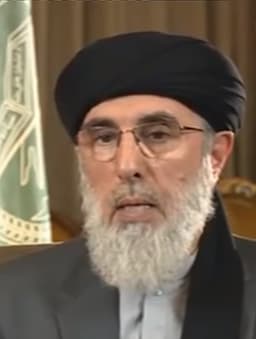
Gulbuddin Hekmatyar
Revolutionary · Modern
38.3Total
Basic Information
Born
1979
1947
Died
—
—
Era
Modern
Modern
Nationality
Yemen
Afghanistan
Occupation
Revolutionary
Revolutionary
Civilization
Middle Eastern
Middle Eastern
Score Comparison
Military (10%)
38.3
35.0
Political (20%)
29.3
26.4
Influence (20%)
50.2
47.1
Legacy (20%)
40.0
36.7
Leadership (15%)
54.2
40.4
Strategy (15%)
43.3
38.3
TOTAL
43.2
38.3
Abdul-Malik al-Houthi — Complete Timeline
1990 AD
Founded the Houthi movementPolitical Action
Abdul-Malik al-Houthi, along with his brother Hussein al-Houthi, founded the Houthi movement (Ansar Allah) in northern Yemen. The movement began as a religious revivalist group and later evolved into a political and military insurgency.
FoundingHouthi MovementYemen
Impact: regional
2004 AD
Led the Houthi insurgency against the Yemeni governmentWar◆ Major
After the death of his brother Hussein, Abdul-Malik al-Houthi assumed leadership of the Houthi insurgency. He led a series of rebellions against the Yemeni government, demanding greater autonomy and political representation for the Zaydi Shia community.
InsurgencyYemenZaydi
Impact: nationaldestructive
2014 AD
Captured Sanaa in a coupWar
Houthi forces under Abdul-Malik al-Houthi captured the Yemeni capital Sanaa in a swift military offensive. The takeover forced President Hadi to flee and led to the collapse of the transitional government, triggering a full-scale civil war.
CoupSanaaYemen Civil War
Impact: regionaldestructive
2015 AD
Launched missile and drone attacks on Saudi Arabia and UAEWar◆ Major
Under Abdul-Malik al-Houthi's leadership, the Houthis launched ballistic missiles and drones at targets in Saudi Arabia and the UAE, including airports and oil facilities. These attacks escalated the regional conflict and drew international condemnation.
Missile AttacksSaudi ArabiaUAE
Impact: regionaldestructive
Rejected UN peace efforts and continued warPolitical Action◆ Major
Abdul-Malik al-Houthi repeatedly rejected UN-brokered peace proposals, insisting on a military victory. His intransigence prolonged the Yemeni civil war, causing a severe humanitarian crisis with millions facing famine and disease.
Peace ProcessHumanitarian CrisisYemen
Impact: regionaldestructive
Gulbuddin Hekmatyar — Complete Timeline
1975 AD
Founding of Hezb-e Islami (1975)Political Action◆ Major
Gulbuddin Hekmatyar founded the Hezb-e Islami political party, an Islamist faction that became one of the most powerful mujahideen groups during the Soviet-Afghan War. The party received significant support from Pakistan's ISI and foreign Islamist donors.
MujahideenIslamist PartyCold War
Impact: national
1993 AD
Prime Minister during Civil War (1993-1994)Political Action◆ Major
Hekmatyar served as Prime Minister of Afghanistan from 1993 to 1994 under President Burhanuddin Rabbani. His tenure was marked by intense factional fighting, including rocket attacks on Kabul that caused thousands of civilian casualties, contributing to the devastation of the city.
Civil WarKabulRocket Attacks
Impact: nationaldestructive
1996 AD
Alliance with Taliban (1996-2001)Political Action
After the Taliban captured Kabul in 1996, Hekmatyar initially fled to Iran. He later aligned with the Taliban regime, though his influence waned. He remained in Afghanistan until the US-led invasion in 2001, after which he fled to Pakistan.
TalibanExileAlliance
Impact: national
2016 AD
Peace Agreement with Afghan Government (2016)Political Action◆ Major
Hekmatyar signed a peace agreement with the Afghan government of President Ashraf Ghani in 2016. The deal allowed him to return to Afghanistan from exile, with his party recognized as a political entity and his fighters integrated into state security forces.
Peace DealReconciliationGhani
Impact: nationalconstructive
This comparison has not been analyzed yet.
One-time AI generation (~1 minute). Scores and timeline are already available below.
Rankings
🥇
Abdul-Malik al-HouthiLeader
Mil: 38.3Pol: 29.3Inf: 50.2
43.2
🥈
Gulbuddin Hekmatyar
Mil: 35.0Pol: 26.4Inf: 47.1
38.3
+4.9 behind
How This Comparison Works
Algorithm
Each figure is scored on 6 dimensions (0—100 scale) based on structured historical data: Military (10%), Political (20%), Influence (20%), Legacy (20%), Leadership (15%), Strategy (15%). The weighted total produces the final ranking.
Data Sources
Scores are computed from structured sub-indicators in the database. Scale factors adjust for era (Ancient ×0.85, Modern ×1.0) and civilization size (Eastern ×1.05, Other ×0.80) to account for differences in population and military scale.
Maximum 3 Figures
Comparisons are limited to 2—3 figures to ensure readability and statistical meaningfulness.
Error Margins
±5 points per dimension — Sub-scores are derived from historical records with inherent uncertainty. Two figures within 5 points on a dimension should be considered roughly equivalent in that area.
Total Score Accuracy
±3 points overall — The weighted combination of 6 dimensions produces a total score with approximately ±3 points of uncertainty. Differences of less than 3 points are not statistically significant— the figures are effectively tied.
Known Limitations
- Historical records are incomplete and uneven across civilizations
- Figures from oral-tradition societies may be underrepresented
- Occupation labels can misclassify multi-role figures
- Scores measure capability and impact, not moral character
- Quantitative scoring is a comparison tool, not absolute truth
Capability Radar
Military (10%) — Battles & Warfare
Battles
45
45
Win Rate
40
30
Expansion
35
25
Political (20%) — Governance & Reform
Reform
25
15
Diplomacy
40
20
Economy
20
10
Influence (20%) — Cultural & Global Reach
Cultural
35
25
Global
35
25
Legacy (20%) — Historical Impact
Historical
40
30
Longevity
30
20
Leadership (15%) — Power & Stability
Tenure
60
30
Stability
15
5
Strategy (15%) — Tactics & Innovation
Strategy
55
35
Tactics
50
40
Reform
30
20
Similar Comparisons
Comments & Discussion
No comments yet. Be the first to share your thoughts!