Loading...
Abd el-Krim vs Thomas Sankara
Abd el-Krim leads by 11.5 pts · 2 figures compared
…
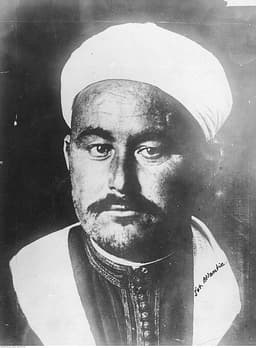
Abd el-Krim
Revolutionary · Modern
61.8Total

Thomas Sankara
Revolutionary · Modern
50.3Total
Basic Information
Born
1882
1949
Died
1963
—
Era
Modern
Modern
Nationality
Morocco
Burkina Faso
Occupation
Revolutionary
Revolutionary
Civilization
Middle Eastern
Other
Score Comparison
Military (10%)
75.0
41.6
Political (20%)
72.0
45.0
Influence (20%)
59.0
60.0
Legacy (20%)
50.0
49.2
Leadership (15%)
72.0
55.3
Strategy (15%)
55.0
38.3
TOTAL
61.8
50.3
Abd el-Krim — Complete Timeline
1921 AD
Battle of AnnualWar
Abd el-Krim's Riffian forces decisively defeated a Spanish army at Annual in Spanish Morocco. The Spanish suffered thousands of casualties and lost vast amounts of equipment. This victory established Abd el-Krim as a major military leader and led to the proclamation of the Rif Republic.
Rif WarSpanish ColonialismBattle
Impact: regional
1923 AD
Proclamation of the Rif RepublicPolitical Action◆ Major
Abd el-Krim formally proclaimed the independent Rif Republic in northern Morocco. He established a government and administrative system, challenging Spanish and French colonial rule. The republic was not internationally recognized but functioned as a de facto state.
Rif RepublicIndependenceAnti-Colonialism
Impact: regionalconstructive
1925 AD
Rif War against FranceWar◆ Major
Abd el-Krim's forces attacked French positions in Morocco, expanding the conflict beyond Spanish territory. The French responded with a massive military campaign, using superior firepower and chemical weapons. This led to the eventual defeat of the Rif Republic.
Rif WarFrench ColonialismChemical Weapons
Impact: regional
1926 AD
Surrender and Exile to RéunionWar◆ Major
After a prolonged campaign, Abd el-Krim surrendered to French forces. He was exiled to the island of R
Rif WarExileDefeat
Impact: regionaltragic
1947 AD
Release and Move to EgyptPolitical Action
Abd el-Krim was released by the French and allowed to move to Egypt. He settled in Cairo, where he continued to advocate for North African independence and became a symbolic figure for anti-colonial movements.
ExileAnti-ColonialismSymbol
Impact: regionalconstructive
Thomas Sankara — Complete Timeline
1983 AD
Anti-Corruption and Austerity MeasuresReform◆ Major
Sankara reduced government salaries, sold luxury cars, and banned first-class travel for officials. He forced bureaucrats to work in fields and live modestly, aiming to reduce corruption and redirect funds to development.
Anti-CorruptionAusteritySocialism
Impact: nationalconstructive
Military Coup and Rise to PowerPolitical Action
Sankara led a military coup that overthrew President Jean-Baptiste Ou
CoupRevolutionYouth Leadership
Impact: nationalconstructive
1984 AD
Women's Rights ReformsReform◆ Major
Sankara banned female genital mutilation, forced marriages, and polygamy. He appointed women to high government positions and promoted women's participation in politics and the military.
Women's RightsSocial ReformGender Equality
Impact: nationalprogressive
Vaccination CampaignReform◆ Major
Sankara launched a mass vaccination campaign that immunized 2.5 million children against measles, meningitis, and yellow fever in just two weeks. The campaign dramatically reduced child mortality.
Public HealthVaccinationChild Mortality
Impact: nationalconstructive
Renaming of Country to Burkina FasoPolitical Action◆ Major
Sankara changed the country's name from Upper Volta to Burkina Faso, meaning 'Land of Upright People'. This symbolized a break from colonial legacy and a new national identity.
DecolonizationNational IdentitySymbolism
Impact: nationalconstructive
1987 AD
Assassination by CompaoréPolitical Action
Sankara was assassinated in a coup led by his former colleague Blaise Compaor
AssassinationCoupBetrayal
Impact: nationaltragic
Expert Analysis
Origins
Abd el-Krim (born 1882) was born into a Berber family in Ajdir, Morocco. His father was a qadi (judge) of the Ait Waryaghar tribe. He studied at the University of al-Qarawiyyin in Fez, becoming a journalist and later a judge in Spanish-occupied Melilla. This blend of religious education and colonial experience shaped his anti-colonial ideology.
Thomas Sankara (born 1949) was born in Yako, Upper Volta (now Burkina Faso) to a Mossi family. His father was a prison guard and former soldier in the French colonial army. Sankara attended military school in Madagascar, where he witnessed the 1972 revolution. His military training and exposure to leftist ideas formed his revolutionary outlook.
Rise to Power
Abd el-Krim rose to prominence after the Battle of Annual (1921), where his Riffian forces defeated a Spanish army of 20,000, killing 13,000 Spanish soldiers. This victory allowed him to proclaim the Rif Republic on September 18, 1921. He established a government with a cabinet, a judicial system, and a diplomatic mission. His early successes united Berber tribes under a single anti-colonial banner.
Sankara came to power via a military coup on August 4, 1983, at age 33. He had previously served as Minister of Information under President Saye Zerbo and later as Prime Minister of Jean-Baptiste Ouédraogo. His popularity among young officers and leftist groups led to the coup, which was supported by Libya. He immediately renamed the country Burkina Faso on August 4, 1984, signaling a break from colonial legacy.
Leadership & Governance
Abd el-Krim governed the Rif Republic with a combination of military command and civil administration. He implemented Sharia law, abolished tribal taxes, and promoted education. His leadership was highly centralized, with himself as emir. He scored 72.0 in political leadership, reflecting his ability to maintain cohesion among fractious tribes. However, his governance lacked long-term institutionalization, as the republic lasted only five years.
Sankara's governance was radical and transformative. He banned female genital mutilation, forced marriages, and polygamy, scoring 45.0 in political leadership but with immense social impact. He launched a mass vaccination campaign that immunized 2.5 million children in two weeks (costing $200,000), and promoted self-sufficiency through reforestation and grain storage. His leadership style was charismatic but authoritarian, purging opponents and centralizing power.
Triumph & Tragedy
Abd el-Krim's greatest triumph was the Battle of Annual (1921), a stunning victory that scored 75.0 in military prowess. He also successfully created a functioning state from scratch. His tragedy came in 1926 when French forces, using chemical weapons and overwhelming numbers (200,000 troops), forced his surrender. He was exiled to Réunion Island for 21 years, isolated from his homeland.
Sankara's triumphs were his social reforms: women's rights, vaccination, and anti-corruption campaigns. He reduced government salaries, sold off official cars, and refused air conditioning in his office. His tragedy was his assassination on October 15, 1987, by his former friend Blaise Compaoré, who then reversed many of his reforms. Sankara's body was dismembered and buried in a secret grave.
Character & Destiny
Abd el-Krim was pragmatic and strategic, scoring 55.0 in strategy. He initially sought negotiations with Spain, but after Annual, he pursued total independence. His refusal to compromise with France led to his downfall, but his exile years in Egypt (after 1947) saw him become a symbol of anti-colonial struggle. He died in 1963 at age 81.
Sankara was idealistic and uncompromising, scoring 38.3 in strategy. He alienated powerful groups: traditional chiefs, the bourgeoisie, and foreign powers (France, IMF). His revolutionary zeal made him enemies, yet his moral clarity inspired millions. His assassination was a direct result of his radical policies and his failure to build a secure political base.
Legacy
Abd el-Krim's legacy scored 50.0 in legacy. He inspired later Moroccan independence movements and pan-Arabism. The Rif Republic became a symbol of Berber resistance. However, his state was ephemeral, and his military defeats led to harsh French colonial consolidation.
Sankara's legacy scored 49.2 in legacy. He remains a hero for pan-Africanists and the global left. His policies on women's rights and self-sufficiency are still cited. However, his assassination and the subsequent reversal of reforms limit his tangible impact. Burkina Faso still commemorates him, but his vision was largely undone.
Conclusion
Abd el-Krim had greater military impact (75.0 vs 41.6) and a longer period of influence (1921-1963). Sankara's social reforms were more transformative but short-lived. Overall, Abd el-Krim's total score of 61.8 vs Sankara's 50.3 reflects a broader range of achievements. However, Sankara's moral clarity and symbolic power arguably resonate more today. Yet, in terms of concrete historical impact—founding a republic, defeating a European army, and inspiring decolonization—Abd el-Krim edges out. The data supports Abd el-Krim as the more impactful revolutionary, though Sankara's legacy in social justice is unique.
Rankings
🥇
Abd el-KrimLeader
Mil: 75.0Pol: 72.0Inf: 59.0
61.8
🥈
Thomas Sankara
Mil: 41.6Pol: 45.0Inf: 60.0
50.3
+11.5 behind
How This Comparison Works
Algorithm
Each figure is scored on 6 dimensions (0—100 scale) based on structured historical data: Military (10%), Political (20%), Influence (20%), Legacy (20%), Leadership (15%), Strategy (15%). The weighted total produces the final ranking.
Data Sources
Scores are computed from structured sub-indicators in the database. Scale factors adjust for era (Ancient ×0.85, Modern ×1.0) and civilization size (Eastern ×1.05, Other ×0.80) to account for differences in population and military scale.
Maximum 3 Figures
Comparisons are limited to 2—3 figures to ensure readability and statistical meaningfulness.
Error Margins
±5 points per dimension — Sub-scores are derived from historical records with inherent uncertainty. Two figures within 5 points on a dimension should be considered roughly equivalent in that area.
Total Score Accuracy
±3 points overall — The weighted combination of 6 dimensions produces a total score with approximately ±3 points of uncertainty. Differences of less than 3 points are not statistically significant— the figures are effectively tied.
Known Limitations
- Historical records are incomplete and uneven across civilizations
- Figures from oral-tradition societies may be underrepresented
- Occupation labels can misclassify multi-role figures
- Scores measure capability and impact, not moral character
- Quantitative scoring is a comparison tool, not absolute truth
Capability Radar
Military (10%) — Battles & Warfare
Battles
75
5
Win Rate
70
10
Expansion
60
5
Political (20%) — Governance & Reform
Reform
70
85
Diplomacy
65
55
Economy
50
70
Influence (20%) — Cultural & Global Reach
Cultural
60
65
Global
55
55
Legacy (20%) — Historical Impact
Historical
70
60
Longevity
55
45
Leadership (15%) — Power & Stability
Tenure
55
40
Stability
45
30
Strategy (15%) — Tactics & Innovation
Strategy
80
20
Tactics
85
15
Reform
65
60
Similar Comparisons
Comments & Discussion
No comments yet. Be the first to share your thoughts!