Loading...
Abd el-Krim vs Bhagat Singh
Abd el-Krim leads by 15.0 pts · 2 figures compared
…
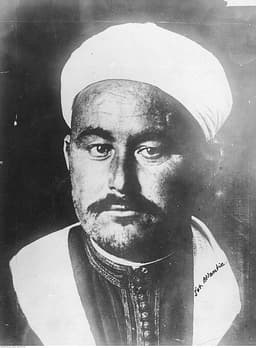
Abd el-Krim
Revolutionary · Modern
61.8Total
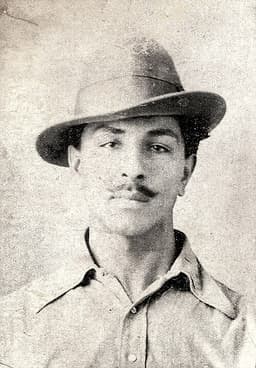
Bhagat Singh
Revolutionary · Modern
46.8Total
Basic Information
Born
1882
1907
Died
1963
1931
Era
Modern
Modern
Nationality
Morocco
India
Occupation
Revolutionary
Revolutionary
Civilization
Middle Eastern
Indian
Score Comparison
Military (10%)
75.0
30.0
Political (20%)
72.0
25.0
Influence (20%)
59.0
61.0
Legacy (20%)
50.0
50.0
Leadership (15%)
72.0
65.0
Strategy (15%)
55.0
25.0
TOTAL
61.8
46.8
Abd el-Krim — Complete Timeline
1921 AD
Battle of AnnualWar
Abd el-Krim's Riffian forces decisively defeated a Spanish army at Annual in Spanish Morocco. The Spanish suffered thousands of casualties and lost vast amounts of equipment. This victory established Abd el-Krim as a major military leader and led to the proclamation of the Rif Republic.
Rif WarSpanish ColonialismBattle
Impact: regional
1923 AD
Proclamation of the Rif RepublicPolitical Action◆ Major
Abd el-Krim formally proclaimed the independent Rif Republic in northern Morocco. He established a government and administrative system, challenging Spanish and French colonial rule. The republic was not internationally recognized but functioned as a de facto state.
Rif RepublicIndependenceAnti-Colonialism
Impact: regionalconstructive
1925 AD
Rif War against FranceWar◆ Major
Abd el-Krim's forces attacked French positions in Morocco, expanding the conflict beyond Spanish territory. The French responded with a massive military campaign, using superior firepower and chemical weapons. This led to the eventual defeat of the Rif Republic.
Rif WarFrench ColonialismChemical Weapons
Impact: regional
1926 AD
Surrender and Exile to RéunionWar◆ Major
After a prolonged campaign, Abd el-Krim surrendered to French forces. He was exiled to the island of R
Rif WarExileDefeat
Impact: regionaltragic
1947 AD
Release and Move to EgyptPolitical Action
Abd el-Krim was released by the French and allowed to move to Egypt. He settled in Cairo, where he continued to advocate for North African independence and became a symbolic figure for anti-colonial movements.
ExileAnti-ColonialismSymbol
Impact: regionalconstructive
Bhagat Singh — Complete Timeline
1928 AD
Killing of John SaundersPolitical Action◆ Major
Bhagat Singh and his associates killed British police officer John Saunders in Lahore, mistaking him for James Scott, who had ordered the lathi charge that killed Lala Lajpat Rai. This act of revenge escalated the revolutionary movement.
AssassinationRevolutionary Action
Impact: national
1929 AD
Central Legislative Assembly BombingPolitical Action◆ Major
Bhagat Singh and Batukeshwar Dutt threw bombs in the Central Legislative Assembly in Delhi to protest the Public Safety Bill and Trade Disputes Act. They were arrested and used the trial to propagate revolutionary ideas.
ProtestRevolutionary Action
Impact: national
Hunger Strike in JailPolitical Action◆ Major
Bhagat Singh and fellow prisoners went on a 116-day hunger strike in Lahore jail demanding better treatment for political prisoners. The strike drew national attention and forced the British to make concessions.
ProtestPrison Reform
Impact: national
1931 AD
Execution by HangingPolitical Action◆ Major
Bhagat Singh was executed by hanging at Lahore jail at age 23, along with Rajguru and Sukhdev. His execution sparked widespread protests and made him a martyr for the Indian independence movement.
ExecutionMartyrdom
Impact: nationaltragic
Expert Analysis
Abd el-Krim vs Bhagat Singh
### The Revolutionary and the Emir
On a cold March morning in 1931, a twenty-three-year-old walked to the gallows in Lahore, his last words, if legend holds, a defiant cry for freedom. Just five years earlier, across the Mediterranean, a tribal leader in the Rif Mountains had watched a Spanish army of over 20,000 men disintegrate before his guerrilla fighters, a victory so stunning it altered the course of colonial warfare. Bhagat Singh and Abd el-Krim: two men who rose against empires, one from the dusty plains of Punjab, the other from the cedar-clad peaks of northern Morocco. Both were revolutionaries, but their paths diverged as starkly as their fates. Why did one become a martyr whose death shook a subcontinent, while the other became a statesman who built a short-lived republic? The answer lies not merely in their courage, but in the worlds that shaped them.
### Origins
Bhagat Singh was born into a family of Sikh landowners in 1907, a year that saw the British Raj at its zenith. His village, Banga, was steeped in the memory of earlier rebellions, and his uncles had been jailed for their involvement in the Ghadar Movement, a revolutionary plot against British rule. By his teens, Singh was devouring European anarchist literature—Bakunin, Marx, Lenin—and the writings of the Italian nationalist Mazzini. His revolution was intellectual, ideological, a product of the modern, globalized currents of anti-colonial thought. He was a student, a reader, a man who believed that ideas, not just bullets, could dismantle an empire.
Abd el-Krim, born in 1882, came from a different lineage entirely. His father was a qadi, an Islamic judge, and the young man studied at the University of al-Qarawiyyin in Fez, one of the oldest centers of learning in the world. He was a product of the Rif’s proud, clan-based society, where loyalty ran through bloodlines and mountains. Unlike Singh, el-Krim initially worked within the colonial system, serving as a judge and later a journalist for the Spanish administration. He understood the enemy from the inside. But when Spain’s brutal General Silvestre began a campaign of scorched earth in the Rif, el-Krim’s patience broke. His revolution was not about abstract ideology; it was about defending a homeland, a way of life, against a foreign invader who had shown no mercy.
### Rise to Power
Bhagat Singh’s path was one of deliberate, escalating provocation. In 1928, he and his associates shot dead a British police officer, John Saunders, in Lahore—a botched assassination, as they had mistaken Saunders for the real target, the police chief James Scott. The act was meant to avenge the death of the nationalist leader Lala Lajpat Rai, but it also marked Singh as a hunted man. A year later, he took an even more theatrical step. With his comrade Batukeshwar Dutt, he threw two bombs into the Central Legislative Assembly in Delhi. The bombs were deliberately designed to cause no casualties; the point was not murder, but a “loud noise” to wake the deaf. Singh and Dutt stayed at the scene, shouting “Inquilab Zindabad!” (“Long Live the Revolution!”) and waiting to be arrested. It was a performance of defiance, a calculated martyrdom.
Abd el-Krim’s rise was a military one, born from the crucible of war. In 1921, at the Battle of Annual, his Riffian forces, armed largely with captured rifles and fighting on terrain they knew intimately, annihilated a Spanish army of over 20,000 men. It was one of the greatest colonial defeats of the century. El-Krim did not seek martyrdom; he sought victory. He used the momentum to proclaim the independent Rif Republic in 1923, establishing a government with a cabinet, a treasury, and a postal service. He was not a lone bomber but a commander-in-chief, a man who had to negotiate between tribal chieftains, supply lines, and the ambitions of two European powers.
### Leadership & Governance
Here, the contrast is most stark. Bhagat Singh’s leadership was symbolic and intellectual. In prison, he launched a 116-day hunger strike in 1929, demanding better treatment for political prisoners. He wrote essays, smuggled out letters, and became a symbol of resistance. His military score is low—34.3—because he never led an army. His political score is moderate—40.0—because he never governed. His power was the power of the idea, the power of the martyr’s halo.
Abd el-Krim, by contrast, was a ruler. His leadership score of 86.5 reflects a man who commanded armies, managed a state, and balanced the demands of fractious tribes. He imposed a system of taxation, organized a postal service, and even established diplomatic contacts with other anti-colonial movements. His military strategy was brilliant: he used the Rif’s geography as a weapon, forcing the Spanish and later the French into a war of attrition. But his governance was also realistic. He knew he could not defeat the European powers forever; he sought recognition, not annihilation. When France joined the war in 1925, his forces were overwhelmed by superior firepower and numbers. He surrendered in 1926, not in a blaze of glory, but with a negotiated exile to the island of Réunion.
### Triumph & Tragedy
Bhagat Singh’s greatest moment was also his final one. On March 23, 1931, he was hanged, along with Rajguru and Sukhdev. The British authorities, fearing his growing popularity, executed him secretly, at night, and then cremated his body in secret to prevent a mass gathering. The tragedy was that he died so young, his potential unfulfilled. But his triumph was immense: his execution sparked protests across India, and his image—the hat, the mustache, the defiant gaze—became a symbol of the independence movement. As the historian K. S. Singh noted, “Bhagat Singh did not die; he was reborn in the hearts of millions.”
Abd el-Krim’s triumph was the Battle of Annual, a victory that humiliated a European empire and inspired anti-colonial movements across Africa. His tragedy was the fall of the Rif Republic, a state that lasted only three years. But unlike Singh, he lived. He was exiled to Réunion for twenty-one years, then released in 1947, moving to Egypt, where he continued to advocate for North African independence until his death in 1963 at age 81. He saw the end of French colonialism in Morocco, but he never returned to the Rif.
### Character & Destiny
Bhagat Singh was a romantic revolutionary, a man who believed that the act of sacrifice could electrify a nation. His personality was that of the idealist, the intellectual who saw history as a stage and himself as a willing actor in a drama of liberation. His destiny was sealed by his own choices: the bombs, the hunger strike, the refusal to apologize. He knew the gallows awaited him, and he walked toward them with a clarity that bordered on poetry.
Abd el-Krim was a pragmatist, a tribal leader who understood the limits of power. He was not a martyr; he was a survivor. His personality was shaped by the realities of mountain warfare and clan politics. He knew when to fight and when to negotiate. His destiny was not a single, dramatic death, but a long, winding exile. He outlived his empire, but he never regained his homeland.
### Legacy
Bhagat Singh’s legacy is that of the eternal flame. His total score of 53.4 may seem modest, but his influence—72.2—is outsized. In India, his name is invoked by politicians, activists, and artists. He is a symbol of uncompromising resistance, a reminder that youth can change the world. His image is everywhere: on walls, in films, in the tattoos of young protesters.
Abd el-Krim’s legacy is more complex. His total score of 72.8 reflects a man who was both a military commander and a statesman. In Morocco, he is remembered as the father of the Rif Republic, a pioneer of anti-colonial resistance. But his legacy is also contested: some see him as a nationalist hero, others as a tribal leader who could not unite the country. His influence—73.9—is high, but it is a legacy of struggle, not of martyrdom.
### Conclusion
One died young, a bullet in the heart of the empire. The other died old, in exile, a ghost of a lost republic. Bhagat Singh and Abd el-Krim were both revolutionaries, but they belonged to different revolutions. Singh’s was a revolution of ideas, a war of symbols and sacrifices that could be won only in death. El-Krim’s was a revolution of territory, a war of mountains and rifles that could be lost in life. Both men fought the same enemy—colonialism—but they fought it with different weapons: one with the bomb and the pen, the other with the gun and the state. Their stories remind us that history does not belong to the victors alone. It belongs to those who dare to imagine a different world, whether they live to see it or not.
Rankings
🥇
Abd el-KrimLeader
Mil: 75.0Pol: 72.0Inf: 59.0
61.8
🥈
Bhagat Singh
Mil: 30.0Pol: 25.0Inf: 61.0
46.8
+15.0 behind
How This Comparison Works
Algorithm
Each figure is scored on 6 dimensions (0—100 scale) based on structured historical data: Military (10%), Political (20%), Influence (20%), Legacy (20%), Leadership (15%), Strategy (15%). The weighted total produces the final ranking.
Data Sources
Scores are computed from structured sub-indicators in the database. Scale factors adjust for era (Ancient ×0.85, Modern ×1.0) and civilization size (Eastern ×1.05, Other ×0.80) to account for differences in population and military scale.
Maximum 3 Figures
Comparisons are limited to 2—3 figures to ensure readability and statistical meaningfulness.
Error Margins
±5 points per dimension — Sub-scores are derived from historical records with inherent uncertainty. Two figures within 5 points on a dimension should be considered roughly equivalent in that area.
Total Score Accuracy
±3 points overall — The weighted combination of 6 dimensions produces a total score with approximately ±3 points of uncertainty. Differences of less than 3 points are not statistically significant— the figures are effectively tied.
Known Limitations
- Historical records are incomplete and uneven across civilizations
- Figures from oral-tradition societies may be underrepresented
- Occupation labels can misclassify multi-role figures
- Scores measure capability and impact, not moral character
- Quantitative scoring is a comparison tool, not absolute truth
Capability Radar
Military (10%) — Battles & Warfare
Battles
75
0
Win Rate
70
0
Expansion
60
0
Political (20%) — Governance & Reform
Reform
70
15
Diplomacy
65
5
Economy
50
0
Influence (20%) — Cultural & Global Reach
Cultural
60
55
Global
55
50
Legacy (20%) — Historical Impact
Historical
70
60
Longevity
55
55
Leadership (15%) — Power & Stability
Tenure
55
0
Stability
45
0
Strategy (15%) — Tactics & Innovation
Strategy
80
5
Tactics
85
10
Reform
65
0
Similar Comparisons
Comments & Discussion
RifTiger6/16/2026
Abd el-Krim was the real deal—a military genius who actually won battles. Anual in 1921 wasn't just a skirmish; 20,000 Spanish troops routed, General Silvestre dead. Singh's theatrical bombing in the Assembly was symbolic, but el-Krim crushed a European army. One built a republic that lasted years, the other became a romantic martyr. Give me the strategist who governed over the glorified pamphleteer any day.
弹药专家6/16/2026
拿弹药行动比军事战役?荒谬!辛格的德里议会炸弹是精准的政治手术,不伤一人,却震碎英帝国神话。他的牺牲推动印度独立,影响全球反殖民浪潮。埃布·克里姆?顶多是个地区军阀,共和国几年就垮了,战后还被法国人当傀儡。论对历史的实际冲击,辛格甩他十条街。
AnualEagle6/16/2026
The Anual disaster is overhyped by armchair generals. Sure, 1921 was a Moroccan victory, but it wasn't guerrilla genius—it was Spanish incompetence. Silvestre was reckless, supply lines collapsed, and the Riffians simply exploited chaos. Compare that to Bhagat Singh's Lahore Conspiracy Case: organized, ideological, and tied to global leftist networks. One was a lucky tribal leader; the other was a revolutionary intellectual whose ideas outlasted any fleeting emirate.
历史解剖师6/16/2026
别被"共和国"骗了。埃布·克里姆的Rif共和国就是部落联盟的临时拼盘,没有统一货币、法律或教育体系。辛格呢?他在狱中写下《为什么我是无神论者》,用马克思主义解剖宗教与殖民压迫。一个用枪杆子,一个用笔杆子;一个统治土著,一个唤醒全球思潮。谁更称得上"革命家"?答案很明显。
GlobeRevolt6/16/2026
Both were products of their time, but Singh's reach was truly global. His ideas inspired revolutionaries from Ho Chi Minh to Latin American Marxists. El-Krim, despite his military success, remained a regional figure fighting France and Spain. Singh's martyrdom made him a universal symbol of anti-colonial resistance, his image still plastered on protest signs from Punjab to Palestine. That's legacy that transcends borders—el-Krim just doesn't have that cultural currency.