Loading...
Abd el-Krim vs Miguel Hidalgo
Abd el-Krim leads by 14.8 pts · 2 figures compared
…
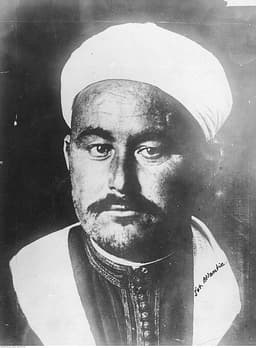
Abd el-Krim
Revolutionary · Modern
61.8Total
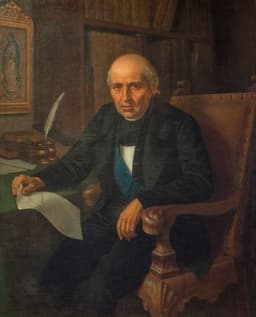
Miguel Hidalgo
Revolutionary · Modern
47.0Total
Basic Information
Born
1882
1753
Died
1963
1811
Era
Modern
Modern
Nationality
Morocco
Mexico
Occupation
Revolutionary
Revolutionary
Civilization
Middle Eastern
Western
Score Comparison
Military (10%)
75.0
50.0
Political (20%)
72.0
36.5
Influence (20%)
59.0
55.0
Legacy (20%)
50.0
52.0
Leadership (15%)
72.0
39.0
Strategy (15%)
55.0
39.6
TOTAL
61.8
47.0
Abd el-Krim — Complete Timeline
1921 AD
Battle of AnnualWar
Abd el-Krim's Riffian forces decisively defeated a Spanish army at Annual in Spanish Morocco. The Spanish suffered thousands of casualties and lost vast amounts of equipment. This victory established Abd el-Krim as a major military leader and led to the proclamation of the Rif Republic.
Rif WarSpanish ColonialismBattle
Impact: regional
1923 AD
Proclamation of the Rif RepublicPolitical Action◆ Major
Abd el-Krim formally proclaimed the independent Rif Republic in northern Morocco. He established a government and administrative system, challenging Spanish and French colonial rule. The republic was not internationally recognized but functioned as a de facto state.
Rif RepublicIndependenceAnti-Colonialism
Impact: regionalconstructive
1925 AD
Rif War against FranceWar◆ Major
Abd el-Krim's forces attacked French positions in Morocco, expanding the conflict beyond Spanish territory. The French responded with a massive military campaign, using superior firepower and chemical weapons. This led to the eventual defeat of the Rif Republic.
Rif WarFrench ColonialismChemical Weapons
Impact: regional
1926 AD
Surrender and Exile to RéunionWar◆ Major
After a prolonged campaign, Abd el-Krim surrendered to French forces. He was exiled to the island of R
Rif WarExileDefeat
Impact: regionaltragic
1947 AD
Release and Move to EgyptPolitical Action
Abd el-Krim was released by the French and allowed to move to Egypt. He settled in Cairo, where he continued to advocate for North African independence and became a symbolic figure for anti-colonial movements.
ExileAnti-ColonialismSymbol
Impact: regionalconstructive
Miguel Hidalgo — Complete Timeline
1810 AD
Captured Guanajuato and massacred SpaniardsWar◆ Major
Hidalgo's army of 80,000 captured the city of Guanajuato on September 28, 1810. After taking the Alh
BattleMassacreViolence
Impact: regionaldestructive
Issued the Grito de DoloresPolitical Action
On September 16, 1810, Father Miguel Hidalgo rang the church bell in Dolores and called for rebellion against Spanish colonial rule. His speech, known as the Grito de Dolores, urged Mexicans to rise up against the Spanish and marked the beginning of the Mexican War of Independence.
IndependenceRebellionGrito de Dolores
Impact: nationalconstructive
1811 AD
Defeated at the Battle of Calderón BridgeWar◆ Major
Hidalgo's poorly trained army was decisively defeated by a smaller Spanish royalist force at the Battle of Calder
DefeatSpanish RoyalistsTurning Point
Impact: regionaltragic
Executed by Spanish authoritiesPolitical Action◆ Major
Hidalgo was captured in Acatita de Baj
ExecutionMartyrdomIndependence Movement
Impact: nationaltragic
Expert Analysis
Miguel Hidalgo vs Abd el-Krim
# The Bell and the Banner
On a September morning in 1810, a sixty-year-old priest stepped out of a church in the small town of Dolores and rang its bell with a fury that would echo across centuries. On another September morning in 1921, in the rugged Rif Mountains of northern Morocco, a former schoolteacher and journalist watched from a hillside as twenty thousand Spanish soldiers fled in terror, leaving their dead by the thousands. Both men sought to break the grip of European empires. Both led uprisings that shook their worlds. But one became a national father, while the other became a forgotten footnote. The difference between Miguel Hidalgo and Abd el-Krim is not merely a matter of success or failure—it is a story of timing, strategy, and the cruel mathematics of empire.
Origins
Miguel Hidalgo was born in 1753 into a world of certainty. New Spain was the most stable colony in the Americas, a place where the Catholic Church and the Spanish Crown ruled together in a marriage that had lasted three centuries. Hidalgo was a creole—a Spaniard born in Mexico—educated in the finest seminaries, fluent in Latin and French, a man who read Voltaire and Rousseau in secret. He was, by all accounts, a brilliant but restless priest, more interested in Enlightenment ideas than in saying Mass. His world was one of words: sermons, pamphlets, philosophical debates in the parlors of Guanajuato.
Abd el-Krim was born in 1882 into a world of fracture. Morocco was not a colony—not yet—but it was a dying kingdom, squeezed between French Algeria and Spanish coastal enclaves. His father was a qadi, a Muslim judge, and young Muhammad ibn Abd el-Krim was educated in both the Quran and Spanish schools. He became a journalist, a teacher, and later a judge himself. He worked for the Spanish colonial administration in Melilla, translating documents and observing how Europeans governed. He knew his enemy from the inside. His world was one of wounds: the humiliation of watching Spanish troops burn villages, the bitterness of seeing his people disarmed and taxed by foreigners.
The priest and the journalist: one from the heart of the colonial system, the other from its bleeding edge. One raised on ideas, the other on insults.
Rise to Power
Hidalgo did not plan a revolution. In 1810, he was a fifty-seven-year-old priest in a small town, part of a conspiracy of creole intellectuals who wanted to overthrow Spanish rule. The conspiracy was discovered, and Hidalgo faced a choice: flee or fight. On September 16, he chose to fight. He rang the church bell, gathered his parishioners, and shouted what became known as the Grito de Dolores: a call for independence, for racial equality, for the expulsion of the Spanish. It was a political act born of desperation, not strategy.
Within weeks, Hidalgo had an army of eighty thousand. They were not soldiers—they were peasants, miners, and indigenous villagers armed with machetes, slings, and clubs. They marched on Guanajuato, the richest silver-mining city in the world, and on September 28, 1810, they captured it. What followed was a massacre. Hidalgo's followers broke into the Alhóndiga de Granaditas, the city's granary-fortress, and killed every Spaniard they found. The blood ran in the streets. Hidalgo had unleashed a force he could not control.
Abd el-Krim's rise was slower and more deliberate. In 1921, he was a tribal leader in the Rif Mountains, a region the Spanish had never fully conquered. The Spanish army was advancing into his territory, and he decided to ambush them. At the Battle of Annual, his forces—numbering perhaps three thousand, armed with captured rifles—annihilated a Spanish army of twenty thousand. It was the worst colonial defeat since the Battle of Isandlwana. The Spanish lost twelve thousand men, and their commander committed suicide.
Abd el-Krim did not massacre the survivors. He released them. He understood something Hidalgo did not: that war is politics by other means.
Leadership & Governance
Hidalgo was a prophet, not a politician. He gave speeches, not orders. His army was a mob—loyal to him personally, but undisciplined and brutal. He let his followers loot and kill, believing that rage would sustain the rebellion. He had no administrative structure, no supply lines, no plan beyond marching toward Mexico City. When his army finally reached the capital, he hesitated. He could have taken it—the city was undefended—but he turned back. He was afraid of what his own followers would do.
Abd el-Krim was a statesman in exile before he ever had a state. In 1923, he proclaimed the independent Rif Republic and built a government. He established a cabinet, a tax system, a postal service, and a diplomatic corps. He sent envoys to London and Paris, trying to win recognition. He trained his soldiers in modern tactics, using captured Spanish rifles and machine guns. He created a medical corps and a signals unit. He even banned the traditional practice of cutting off the heads of dead enemies—a small but significant gesture toward the kind of war he wanted to fight.
Hidalgo's political score of 63.2 reflects his failure to create institutions. Abd el-Krim's score of 75.6 reflects his understanding that a revolution must be more than a rebellion.
Triumph & Tragedy
Hidalgo's greatest moment was also his last. After turning back from Mexico City, his army was hunted down by Spanish royalist forces. At the Battle of Calderón Bridge on January 17, 1811, a smaller, better-trained Spanish army routed his eighty thousand men. Hidalgo fled north, hoping to reach the United States. He was betrayed, captured, and handed over to the Spanish Inquisition. On July 30, 1811, he was defrocked and executed by firing squad. His head was displayed in Guanajuato for ten years.
Abd el-Krim's tragedy unfolded more slowly. After defeating the Spanish, he made a fatal mistake: he attacked French Morocco in 1925, hoping to unite the entire country. The French responded with overwhelming force—hundreds of thousands of troops, aircraft, and poison gas. The Spanish joined them, and Abd el-Krim was squeezed between two empires. He surrendered in 1926, was exiled to the island of Réunion in the Indian Ocean, and spent twenty years in isolation. He was released in 1947 but never returned to Morocco. He died in Cairo in 1963, still in exile.
Character & Destiny
Hidalgo was a man of ideas in an age of action. He had read the Enlightenment philosophers, but he had never learned to command. He was generous, passionate, and reckless—the kind of man who could inspire a crowd but not manage a campaign. His military score of 42.0 and strategy score of 45.0 reflect his inability to translate charisma into victory.
Abd el-Krim was a man of action in an age of ideas. He had seen how modern armies fought, and he adapted. He was ruthless, patient, and meticulous—the kind of man who could win a battle and then write a constitution. His military score of 57.2 and strategy score of 72.0 show a commander who understood the limits of his own power.
But Abd el-Krim faced a harder world. Hidalgo fought a decaying empire—Spain in 1810 was already crippled by the Napoleonic Wars. Abd el-Krim fought two modern empires at their peak, backed by aircraft and chemical weapons. He could not win. He could only delay defeat.
Legacy
Hidalgo is the father of Mexico. Every year on September 16, the president of Mexico rings the bell of Dolores and repeats his cry. His face is on coins, his name on streets, his story in every schoolbook. He failed, but his failure became the foundation of a nation.
Abd el-Krim is a ghost. The Rif Republic is forgotten, its flag a curiosity in museums. In Morocco, he is remembered as a hero, but a tragic one—a man who fought for freedom and lost everything. His legacy score of 66.8, lower than Hidalgo's 75.0, reflects the difference between a founding father and a failed rebel.
Conclusion
The priest rang a bell. The journalist raised a banner. Both men believed that freedom was worth dying for. But Hidalgo's death became a symbol, while Abd el-Krim's death became an ending. The difference lies not in their courage—both had that in abundance—but in the world they inherited. Hidalgo's Mexico was ready to be born; Abd el-Krim's Morocco was not yet ready to be free. In the end, history does not reward the righteous. It rewards the fortunate.
Rankings
🥇
Abd el-KrimLeader
Mil: 75.0Pol: 72.0Inf: 59.0
61.8
🥈
Miguel Hidalgo
Mil: 50.0Pol: 36.5Inf: 55.0
47.0
+14.8 behind
How This Comparison Works
Algorithm
Each figure is scored on 6 dimensions (0—100 scale) based on structured historical data: Military (10%), Political (20%), Influence (20%), Legacy (20%), Leadership (15%), Strategy (15%). The weighted total produces the final ranking.
Data Sources
Scores are computed from structured sub-indicators in the database. Scale factors adjust for era (Ancient ×0.85, Modern ×1.0) and civilization size (Eastern ×1.05, Other ×0.80) to account for differences in population and military scale.
Maximum 3 Figures
Comparisons are limited to 2—3 figures to ensure readability and statistical meaningfulness.
Error Margins
±5 points per dimension — Sub-scores are derived from historical records with inherent uncertainty. Two figures within 5 points on a dimension should be considered roughly equivalent in that area.
Total Score Accuracy
±3 points overall — The weighted combination of 6 dimensions produces a total score with approximately ±3 points of uncertainty. Differences of less than 3 points are not statistically significant— the figures are effectively tied.
Known Limitations
- Historical records are incomplete and uneven across civilizations
- Figures from oral-tradition societies may be underrepresented
- Occupation labels can misclassify multi-role figures
- Scores measure capability and impact, not moral character
- Quantitative scoring is a comparison tool, not absolute truth
Capability Radar
Military (10%) — Battles & Warfare
Battles
75
30
Win Rate
70
25
Expansion
60
20
Political (20%) — Governance & Reform
Reform
70
60
Diplomacy
65
30
Economy
50
20
Influence (20%) — Cultural & Global Reach
Cultural
60
70
Global
55
60
Legacy (20%) — Historical Impact
Historical
70
75
Longevity
55
70
Leadership (15%) — Power & Stability
Tenure
55
15
Stability
45
10
Strategy (15%) — Tactics & Innovation
Strategy
80
25
Tactics
85
20
Reform
65
10
Similar Comparisons
Comments & Discussion
BELL-RINGER BOMBAST6/16/2026
Hidalgo had panache but zero strategic sense. Ringing a church bell and screaming about independence is great theater, but he led an untrained mob straight into slaughter at Calderón Bridge. Abd el-Krim annihilated a modern European army at Annual—20,000 Spanish casualties in days. Hidalgo's a symbol; Abd el-Krim was a tactician. Symbols don't win wars; tactics do.
残阳如血6/16/2026
阿卜杜勒·克里姆才是真正的硬汉。他用游击战把西班牙和法国联军打得找不着北,在里夫山建立了一个独立国家。希达尔戈呢?起义不到一年就被俘处决,所谓“国父”不过是因为西班牙人先把他杀了。结果论英雄,克里姆才是那个该被铭记的勇者。
DATA DEMOLITIONIST6/16/2026
Let's cut the sentiment—population sizes alone doom this comparison. 1810 Mexico had 6 million people; the Spanish garrison was maybe 10,000. Hidalgo had numerical advantage and still failed. Abd el-Krim faced 140,000 French and Spanish troops with 20,000 tribesmen and forced a chemical warfare response. Raw numbers don't lie: one was a barely organized riot, the other a proto-modern insurgency. Stop romanticizing failure.
半壶秋水6/16/2026
说希达尔戈是“国父”不过是胜利者书写的历史。他起义时高喊种族屠杀,洗劫瓜纳华托,屠戮平民。反而克里姆建立了一个尊重教育的里夫共和国,有正规行政体系。一个靠煽动仇恨,一个靠组织战争——这能一样吗?历史给脸罢了。
LEGACY LENS6/16/2026
Hidalgo became a myth because timing favored him: Mexico needed a founding father for its independence narrative. Abd el-Krim's tragedy was being too early for decolonization. By 1926, the great powers crushed him with poison gas and overwhelming force. Hidalgo got to be a martyr because Spain was collapsing anyway. Abd el-Krim was a footnote because empires still had teeth. Context is everything—and it's brutal.