Loading...
Abd el-Krim vs Napoleon Bonaparte
Napoleon Bonaparte leads by 9.1 pts · 2 figures compared
…
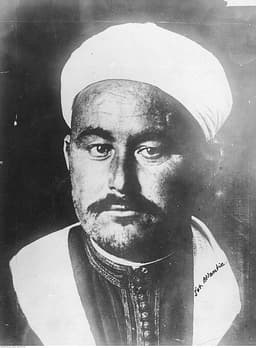
Abd el-Krim
Revolutionary · Modern
61.8Total

Napoleon Bonaparte
General · Modern
70.9Total
Basic Information
Born
1882
1769
Died
1963
1821
Era
Modern
Modern
Nationality
Morocco
France
Occupation
Revolutionary
General
Civilization
Middle Eastern
Western
Score Comparison
Military (10%)
75.0
94.0
Political (20%)
72.0
72.0
Influence (20%)
59.0
40.0
Legacy (20%)
50.0
80.0
Leadership (15%)
72.0
78.0
Strategy (15%)
55.0
90.0
TOTAL
61.8
70.9
Abd el-Krim — Complete Timeline
1921 AD
Battle of AnnualWar
Abd el-Krim's Riffian forces decisively defeated a Spanish army at Annual in Spanish Morocco. The Spanish suffered thousands of casualties and lost vast amounts of equipment. This victory established Abd el-Krim as a major military leader and led to the proclamation of the Rif Republic.
Rif WarSpanish ColonialismBattle
Impact: regional
1923 AD
Proclamation of the Rif RepublicPolitical Action◆ Major
Abd el-Krim formally proclaimed the independent Rif Republic in northern Morocco. He established a government and administrative system, challenging Spanish and French colonial rule. The republic was not internationally recognized but functioned as a de facto state.
Rif RepublicIndependenceAnti-Colonialism
Impact: regionalconstructive
1925 AD
Rif War against FranceWar◆ Major
Abd el-Krim's forces attacked French positions in Morocco, expanding the conflict beyond Spanish territory. The French responded with a massive military campaign, using superior firepower and chemical weapons. This led to the eventual defeat of the Rif Republic.
Rif WarFrench ColonialismChemical Weapons
Impact: regional
1926 AD
Surrender and Exile to RéunionWar◆ Major
After a prolonged campaign, Abd el-Krim surrendered to French forces. He was exiled to the island of R
Rif WarExileDefeat
Impact: regionaltragic
1947 AD
Release and Move to EgyptPolitical Action
Abd el-Krim was released by the French and allowed to move to Egypt. He settled in Cairo, where he continued to advocate for North African independence and became a symbolic figure for anti-colonial movements.
ExileAnti-ColonialismSymbol
Impact: regionalconstructive
Napoleon Bonaparte — Complete Timeline
1799 AD
Coup of 18 BrumaireOther◆ Major
Napoleon Bonaparte, with support from his brother Lucien and key political figures, overthrew the Directory in a bloodless coup. He established the Consulate with himself as First Consul, effectively becoming the ruler of France. This event ended the French Revolution's most unstable period.
French RevolutionCoupRise to Power
Impact: regional
1804 AD
Promulgation of the Napoleonic CodeOther◆ Major
Napoleon enacted the Civil Code of the French, known as the Napoleonic Code, a comprehensive set of laws that replaced the fragmented feudal legal systems. The code established legal equality, protected property rights, and secularized law. It became the basis for legal systems in many European and world countries.
Legal ReformNapoleonic CodeCivil Law
Impact: globalconstructive
1805 AD
Battle of AusterlitzWar◆ Major
Napoleon's Grande Arm
Napoleonic WarsBattleDecisive Victory
Impact: global
1812 AD
Invasion of RussiaWar◆ Major
Napoleon led the Grande Arm
Napoleonic WarsInvasionDisaster
Impact: globaldestructive
1815 AD
Battle of WaterlooWar◆ Major
Napoleon's French army was defeated by the combined forces of the Duke of Wellington's Anglo-Allied army and Gebhard Leberecht von Bl
Napoleonic WarsBattleFinal Defeat
Impact: globaldestructive
Expert Analysis
abd-el-krim-vs-napoleon-bonaparte
# The Emperor and the Emir: Two Visions of Power in a Transforming World
On a June morning in 1815, Napoleon Bonaparte stood on a muddy field near Waterloo, watching his Imperial Guard march into cannon fire for the last time. A hundred and ten years later, in the rugged mountains of northern Morocco, another commander—Abd el-Krim—watched Spanish columns flee in panic at the Battle of Annual, leaving behind thousands of rifles and a colonial empire in shock. One man had conquered Europe; the other had humiliated a European power on his own soil. Both were military geniuses. Both built states from ambition. But their fates could not have diverged more sharply—and the reasons tell us something profound about the age they lived in.
Origins
Napoleon Bonaparte was born in 1769 on Corsica, an island that had just become French. His family was minor nobility, poor but proud. He spoke French with an Italian accent, and his classmates mocked him for it. This outsider’s hunger drove him. He devoured military history, studied artillery, and believed from youth that he was destined for greatness. The French Revolution, which shattered the old order, gave him his chance. In a world where birth no longer guaranteed power, talent could.
Abd el-Krim was born in 1882 in Ajdir, a village in the Rif Mountains. His father was a qadi, a Muslim judge, and his family belonged to the learned elite. He studied at the University of al-Qarawiyyin in Fez, one of the oldest universities in the world, and later worked as a journalist and administrator for the Spanish colonial authorities. He knew the Europeans well—their language, their bureaucracy, their weapons. But he also knew his own people: fiercely independent Berber tribes who had never accepted foreign rule. Where Napoleon saw the Revolution as his ladder, Abd el-Krim saw colonialism as his enemy.
Rise to Power
Napoleon’s rise was meteoric. At twenty-four, he drove the British out of Toulon. At twenty-six, he crushed a royalist uprising in Paris with a “whiff of grapeshot.” At twenty-seven, he led a ragged army across the Alps into Italy and won six battles in a month. By thirty, he was First Consul of France; by thirty-five, Emperor. Each victory fed the next. He understood that in revolutionary France, glory was the only legitimate currency.
Abd el-Krim’s rise was slower and more painful. He was captured by the Spanish in 1917 and imprisoned for sedition. After his release, he watched his brother be executed by Spanish authorities. That personal tragedy turned him from reformer to revolutionary. In 1921, he gathered the Riffian tribes under a banner of holy war and independence. At the Battle of Annual, his forces—outnumbered and outgunned—destroyed a Spanish army of 20,000, killing some 12,000 soldiers. It was the greatest colonial defeat since Isandlwana. Abd el-Krim, now master of the Rif, proclaimed the independent Rif Republic in 1923.
Leadership & Governance
Napoleon governed through sheer force of will. He centralized France, created the Bank of France, and codified laws into the Napoleonic Code—a legal system that still shapes Europe today. He appointed generals based on merit, not birth, and rewarded talent ruthlessly. His military system was built on speed, surprise, and the concentration of force. March separately, strike together. He fought over sixty battles and lost only seven. But his political genius had limits: he could conquer, but he could not compromise. He demanded total loyalty, and when he didn’t get it, he removed or destroyed those who opposed him.
Abd el-Krim governed differently. He built a state from scratch, with a cabinet, a taxation system, and a diplomatic corps. He tried to unite the fractious tribes through persuasion and Islamic law, not force. His army fought a guerrilla war that frustrated two European powers simultaneously. He understood something Napoleon never did: that a small nation could defeat a large empire if it fought on its own terrain, for its own freedom. But he also faced a problem Napoleon never had: the Rif had no industrial base, no navy, no allies. Every bullet had to be captured from the enemy.
Triumph & Tragedy
Napoleon’s greatest moment was Austerlitz, 1805, where he destroyed the combined armies of Russia and Austria. His worst was the invasion of Russia in 1812—600,000 men marched east; fewer than 40,000 returned. The disaster broke his aura of invincibility. His final defeat at Waterloo in 1815 was less a military blunder than a political one: he had exhausted Europe’s patience.
Abd el-Krim’s greatest moment was Annual, 1921, where he proved that colonial armies were not invincible. His worst came in 1925, when France and Spain allied against him. They deployed 500,000 troops—the largest colonial force ever assembled—and used chemical weapons. Abd el-Krim surrendered in 1926 and was exiled to Réunion, a volcanic island in the Indian Ocean. He would spend twenty years there, far from the mountains he had defended.
Character & Destiny
Napoleon was driven by an insatiable ambition. “I am not a man,” he once said, “but a thing.” He saw himself as an instrument of destiny, and his personality—brilliant, arrogant, restless—shaped every decision. He could not stop. Victory demanded more victory. This is why he invaded Russia, why he refused peace offers, why he died alone on Saint Helena, a prisoner of the British.
Abd el-Krim was more patient, more calculating. He was a revolutionary, not a conqueror. He wanted independence, not empire. When he surrendered, he did so to save his people from annihilation. In exile, he lived quietly, studied, and waited. Released in 1947, he moved to Egypt, where he became a symbol for anti-colonial movements across Africa and Asia. He died in 1963, still in exile, still dreaming of a free Morocco.
Legacy
Napoleon’s legacy is written in stone and law. He reshaped Europe’s borders, its legal systems, its very idea of meritocracy. He is remembered as a military genius and a tyrant, a liberator and a conqueror. His scores—Military 94, Political 75, Influence 82—reflect a man who dominated his age but could not outlast it.
Abd el-Krim’s legacy is quieter but no less real. He proved that colonial empires could be beaten. He inspired Ho Chi Minh, Mao Zedong, and the Algerian FLN. His Scores—Leadership 86, Strategy 72, Influence 73—show a commander who fought with limited means but unlimited courage. He is remembered as a symbol of resistance, a father of decolonization. In Morocco, his face appears on stamps and his name on streets. In the West, he is almost forgotten.
Conclusion
Two men, two centuries, two worlds. Napoleon built an empire that collapsed under its own weight. Abd el-Krim built a republic that was crushed by superior force. Yet both understood something essential about power: that it comes not from birth or wealth, but from will. Napoleon’s will was for glory; Abd el-Krim’s was for freedom. One ended his life in exile, the other ended his life in exile. But the difference is this: Napoleon’s exile was the end of a story; Abd el-Krim’s exile was the beginning of many others. The emperor conquered; the emir inspired. In the long arc of history, inspiration often outlasts conquest.
Rankings
🥇
Napoleon BonaparteLeader
Mil: 94.0Pol: 72.0Inf: 40.0
70.9
🥈
Abd el-Krim
Mil: 75.0Pol: 72.0Inf: 59.0
61.8
+9.1 behind
How This Comparison Works
Algorithm
Each figure is scored on 6 dimensions (0—100 scale) based on structured historical data: Military (10%), Political (20%), Influence (20%), Legacy (20%), Leadership (15%), Strategy (15%). The weighted total produces the final ranking.
Data Sources
Scores are computed from structured sub-indicators in the database. Scale factors adjust for era (Ancient ×0.85, Modern ×1.0) and civilization size (Eastern ×1.05, Other ×0.80) to account for differences in population and military scale.
Maximum 3 Figures
Comparisons are limited to 2—3 figures to ensure readability and statistical meaningfulness.
Error Margins
±5 points per dimension — Sub-scores are derived from historical records with inherent uncertainty. Two figures within 5 points on a dimension should be considered roughly equivalent in that area.
Total Score Accuracy
±3 points overall — The weighted combination of 6 dimensions produces a total score with approximately ±3 points of uncertainty. Differences of less than 3 points are not statistically significant— the figures are effectively tied.
Known Limitations
- Historical records are incomplete and uneven across civilizations
- Figures from oral-tradition societies may be underrepresented
- Occupation labels can misclassify multi-role figures
- Scores measure capability and impact, not moral character
- Quantitative scoring is a comparison tool, not absolute truth
Capability Radar
Military (10%) — Battles & Warfare
Battles
75
95
Win Rate
70
90
Expansion
60
95
Political (20%) — Governance & Reform
Reform
70
95
Diplomacy
65
80
Economy
50
85
Influence (20%) — Cultural & Global Reach
Cultural
60
85
Global
55
90
Legacy (20%) — Historical Impact
Historical
70
95
Longevity
55
90
Leadership (15%) — Power & Stability
Tenure
55
85
Stability
45
70
Strategy (15%) — Tactics & Innovation
Strategy
80
95
Tactics
85
98
Reform
65
92
Similar Comparisons
Comments & Discussion
No comments yet. Be the first to share your thoughts!