Loading...
Abd el-Krim vs Julius Caesar
Julius Caesar leads by 21.0 pts · 2 figures compared
…
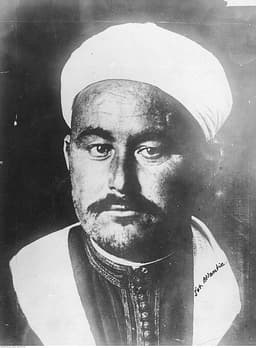
Abd el-Krim
Revolutionary · Modern
61.8Total

Julius Caesar
General · Ancient
82.8Total
Basic Information
Born
1882
-100
Died
1963
-44
Era
Modern
Ancient
Nationality
Morocco
Roman Republic
Occupation
Revolutionary
General
Civilization
Middle Eastern
Western
Score Comparison
Military (10%)
75.0
88.0
Political (20%)
72.0
78.0
Influence (20%)
59.0
85.0
Legacy (20%)
50.0
82.0
Leadership (15%)
72.0
80.0
Strategy (15%)
55.0
85.0
TOTAL
61.8
82.8
Abd el-Krim — Complete Timeline
1921 AD
Battle of AnnualWar
Abd el-Krim's Riffian forces decisively defeated a Spanish army at Annual in Spanish Morocco. The Spanish suffered thousands of casualties and lost vast amounts of equipment. This victory established Abd el-Krim as a major military leader and led to the proclamation of the Rif Republic.
Rif WarSpanish ColonialismBattle
Impact: regional
1923 AD
Proclamation of the Rif RepublicPolitical Action◆ Major
Abd el-Krim formally proclaimed the independent Rif Republic in northern Morocco. He established a government and administrative system, challenging Spanish and French colonial rule. The republic was not internationally recognized but functioned as a de facto state.
Rif RepublicIndependenceAnti-Colonialism
Impact: regionalconstructive
1925 AD
Rif War against FranceWar◆ Major
Abd el-Krim's forces attacked French positions in Morocco, expanding the conflict beyond Spanish territory. The French responded with a massive military campaign, using superior firepower and chemical weapons. This led to the eventual defeat of the Rif Republic.
Rif WarFrench ColonialismChemical Weapons
Impact: regional
1926 AD
Surrender and Exile to RéunionWar◆ Major
After a prolonged campaign, Abd el-Krim surrendered to French forces. He was exiled to the island of R
Rif WarExileDefeat
Impact: regionaltragic
1947 AD
Release and Move to EgyptPolitical Action
Abd el-Krim was released by the French and allowed to move to Egypt. He settled in Cairo, where he continued to advocate for North African independence and became a symbolic figure for anti-colonial movements.
ExileAnti-ColonialismSymbol
Impact: regionalconstructive
Julius Caesar — Complete Timeline
58 BC
Gallic WarsWar◆ Major
Caesar, as proconsul of Gaul, launched a series of campaigns that conquered all of Gaul (modern France, Belgium, and parts of Switzerland). He fought numerous battles, including against the Helvetii, the Belgae, and the Gallic chieftain Vercingetorix. The wars brought immense wealth and a loyal army to Caesar.
Gallic WarsConquestRoman Expansion
Impact: regional
49 BC
Crossing the RubiconPolitical Action◆ Major
Caesar led Legio XIII across the Rubicon River into Italy, defying the Roman Senate's order to disband his army. This act triggered a civil war against Pompey and the Optimates, ultimately leading to Caesar's dictatorship and the end of the Roman Republic.
Roman Civil WarEnd of RepublicPower Struggle
Impact: global
48 BC
Battle of PharsalusWar◆ Major
Caesar's outnumbered army defeated the larger forces of Pompey the Great at Pharsalus in Greece. Caesar's tactical use of a reserve line to counter Pompey's cavalry charge proved decisive. Pompey fled to Egypt, where he was assassinated, leaving Caesar as the undisputed master of the Roman world.
Roman Civil WarBattleDecisive Victory
Impact: regional
44 BC
Appointment as Dictator for LifePolitical Action◆ Major
The Roman Senate appointed Caesar dictator perpetuo (dictator for life), granting him unprecedented personal power. This move concentrated military, legislative, and judicial authority in one person, effectively ending the Roman Republic's traditional system of checks and balances and alarming many senators.
DictatorshipEnd of RepublicPower Consolidation
Impact: regionaldestructive
Assassination on the Ides of MarchPolitical Action◆ Major
A group of Roman senators, led by Marcus Junius Brutus and Gaius Cassius Longinus, stabbed Caesar to death at a meeting of the Senate in the Theatre of Pompey. The assassination was intended to restore the Republic, but instead triggered another civil war that led to the rise of the Roman Empire.
AssassinationRoman PoliticsEnd of Republic
Impact: globaldestructive
Expert Analysis
abd-el-krim-vs-julius-caesar
### The Dictator and the Rebel: Two Roads to Power
In the year 44 BCE, a man who had conquered the known world lay bleeding at the foot of a statue of his great rival, Pompey. His blood pooled on the marble floor of the Senate chamber, staining the toga of Rome’s most powerful citizen. Eighty-three years later, in 1926, another man, a Berber chieftain from the Rif Mountains, stood before a French general. He did not fall by the dagger, but by the logic of superior firepower. His surrender was not a death, but a sentence to exile on a tropical island. One man, Julius Caesar, built an empire that would define Western civilization for two millennia. The other, Abd el-Krim, built a republic that lasted barely three years and is now a footnote in the history of decolonization. Why did one become immortal, while the other became obscure? The answer lies not just in their different eras, but in the very nature of their ambition.
### Origins
Caesar was born into the chaos of the late Roman Republic, a world of patrician feuds, civil wars, and senatorial corruption. His family, the Julii, claimed descent from the goddess Venus, but they were politically vulnerable. He learned early that in Rome, reputation was currency, and debt was a tool. He was a gambler by instinct, a man who borrowed fortunes to buy influence and threw himself into the dangerous game of public office.
Abd el-Krim, born Muhammad ibn Abd al-Karim al-Khattabi in 1882, came from a very different world. His father was a qadi, a religious judge, in the Rif Mountains of northern Morocco. The region was a patchwork of fiercely independent Berber tribes, often at war with each other, and increasingly under the thumb of Spain and France. He was educated in both Islamic law and Spanish language, a bridge between two civilizations. He worked as a journalist and a judge in Spanish-occupied Melilla, witnessing firsthand the inefficiency and arrogance of colonial rule. His rebellion was not born of a desire for personal glory, but from a deep, pragmatic fury at a system that humiliated his people.
### Rise to Power
Caesar’s path to power was a masterpiece of political theater. He forged the First Triumvirate with Pompey and Crassus, using their wealth and military fame to secure command in Gaul. There, over eight years, he did not just conquer a territory; he created a legend. He wrote his own story, sending dispatches to Rome that were later compiled as *Commentarii de Bello Gallico*—a work of propaganda so brilliant that it is still read as literature. His crossing of the Rubicon River in 49 BCE was not a military necessity; it was a declaration of war against the Republic itself. He gambled that his personal loyalty from his legions outweighed the legitimacy of the Senate.
Abd el-Krim’s rise was more desperate. He was not a patrician general but a tribal leader. His power came not from a coup, but from a catastrophe. In 1921, at the Battle of Annual, his Riffian forces—armed with captured rifles and fighting on their own terrain—annihilated a Spanish army of over 10,000 men. It was one of the worst colonial defeats in history. The Spanish general, Manuel Fernández Silvestre, was killed. In the chaos, Abd el-Krim did not just win a battle; he created a state. In 1923, he proclaimed the Rif Republic, a modern, centralized government with a cabinet, a tax system, and a diplomatic policy. He was not a conqueror of worlds; he was a builder of a nation, a nation that the great powers refused to recognize.
### Leadership & Governance
Caesar’s governance was a paradox. He was a dictator who reformed the Republic from within. He overhauled the calendar, granted citizenship to provincials, and launched massive public works. But his rule was built on the sword. He centralized power in his own person, packing the Senate with his loyalists and reducing it to a rubber stamp. His political wisdom was that of a master tactician, not a philosopher-king. He understood that the old Republic was dead, but he could not conceive of a new system that did not revolve around him. His reforms were brilliant, but they were also the nails in the coffin of the Republic.
Abd el-Krim’s leadership was more collaborative and more fragile. His Leadership score of 86.5, higher than Caesar’s 82, reflects a different kind of command. He led not by divine right or military terror, but by tribal consensus and religious legitimacy. He was a strict administrator, banning corruption and enforcing Islamic law. He was a master of asymmetric warfare, using the mountains to neutralize Spanish artillery and French aircraft. But his state was a patchwork of tribes, and his authority was constantly tested by rival chieftains. His political score of 75.6, lower than Caesar’s 78, shows that while he could inspire, he could not institutionalize his power. The Rif Republic was a miracle of will, but it was built on sand.
### Triumph & Tragedy
Caesar’s greatest moment was his triumph over Gaul, a conquest that brought him immense wealth and a veteran army. His greatest tragedy was the Ides of March. In 44 BCE, a conspiracy of senators, many of whom he had pardoned, stabbed him to death. His tragedy was not that he fell, but that he fell for the very reason he rose: he believed his personal will could replace the law. He left no clear successor, and the result was a civil war that ended the Republic.
Abd el-Krim’s triumph was the Battle of Annual. His tragedy was the Rif War against France in 1925. Having defeated Spain, he made the fatal mistake of attacking French Morocco, believing that the French would negotiate. They did not. They deployed 160,000 troops, used chemical weapons, and employed a strategy of starvation. By 1926, his republic was crushed. He surrendered and was exiled to the island of Réunion. His tragedy was not assassination, but irrelevance. He lived until 1963, a ghost in Cairo, watching as the nations he inspired—Algeria, Vietnam—won their independence through wars far larger than his.
### Character & Destiny
Caesar was a man of boundless ambition and cold calculation. He forgave his enemies, but only to disarm them. He was charming, generous, and utterly ruthless. His character shaped his destiny: he believed that he alone could save Rome, and that belief made him a tyrant. His assassination was almost poetic—a reminder that in a society built on law, no man is above it, not even a god.
Abd el-Krim was a man of principle and pragmatism. He was not a megalomaniac. He did not call himself a king or a prophet. He was a judge who became a general out of necessity. His destiny was shaped by the limits of his world. He fought against two empires with a population of a few hundred thousand Berbers. He could win battles, but he could not win a war. His character was his tragedy: he was too rational to believe in victory against impossible odds, yet too proud to surrender on any terms but his own.
### Legacy
Caesar’s legacy is the Roman Empire. His name became a title: Kaiser, Tsar, Qaysar. He is the archetype of the military dictator, the man who bends history to his will. His reforms outlived him, and his adopted son, Octavian, built the empire he had envisioned. He is remembered as a genius, a tyrant, and a martyr.
Abd el-Krim’s legacy is more subtle. He is a hero of anti-colonialism, a symbol of resistance. His republic inspired movements across Africa and Asia. He is remembered in Morocco as a national icon, but his name is unknown to most of the world. His legacy score of 66.8, compared to Caesar’s 82, is a measure of his obscurity. But it also reflects a different kind of greatness: not the greatness of conquest, but the greatness of defiance.
### Conclusion
Standing at the edge of the Rif Mountains, looking out at the Mediterranean, one can almost feel the weight of history. Julius Caesar once sailed these same waters, dreaming of a world united under Roman law. Abd el-Krim fought on these same slopes, dreaming of a world where his people could rule themselves. One man’s dream became the foundation of Western civilization. The other’s dream became a memory, a spark that would ignite a fire in others. In the end, the difference between them is not talent or courage, but scale. Caesar had an empire to build. Abd el-Krim had a nation to defend. One died with a dagger in his back, the other died in a Cairo apartment, watching the world he had fought for finally come into being. Both were rebels. Only one won.
Rankings
🥇
Julius CaesarLeader
Mil: 88.0Pol: 78.0Inf: 85.0
82.8
🥈
Abd el-Krim
Mil: 75.0Pol: 72.0Inf: 59.0
61.8
+21.0 behind
How This Comparison Works
Algorithm
Each figure is scored on 6 dimensions (0—100 scale) based on structured historical data: Military (10%), Political (20%), Influence (20%), Legacy (20%), Leadership (15%), Strategy (15%). The weighted total produces the final ranking.
Data Sources
Scores are computed from structured sub-indicators in the database. Scale factors adjust for era (Ancient ×0.85, Modern ×1.0) and civilization size (Eastern ×1.05, Other ×0.80) to account for differences in population and military scale.
Maximum 3 Figures
Comparisons are limited to 2—3 figures to ensure readability and statistical meaningfulness.
Error Margins
±5 points per dimension — Sub-scores are derived from historical records with inherent uncertainty. Two figures within 5 points on a dimension should be considered roughly equivalent in that area.
Total Score Accuracy
±3 points overall — The weighted combination of 6 dimensions produces a total score with approximately ±3 points of uncertainty. Differences of less than 3 points are not statistically significant— the figures are effectively tied.
Known Limitations
- Historical records are incomplete and uneven across civilizations
- Figures from oral-tradition societies may be underrepresented
- Occupation labels can misclassify multi-role figures
- Scores measure capability and impact, not moral character
- Quantitative scoring is a comparison tool, not absolute truth
Capability Radar
Military (10%) — Battles & Warfare
Battles
75
95
Win Rate
70
92
Expansion
60
97
Political (20%) — Governance & Reform
Reform
70
90
Diplomacy
65
85
Economy
50
82
Influence (20%) — Cultural & Global Reach
Cultural
60
88
Global
55
94
Legacy (20%) — Historical Impact
Historical
70
95
Longevity
55
96
Leadership (15%) — Power & Stability
Tenure
55
75
Stability
45
60
Strategy (15%) — Tactics & Innovation
Strategy
80
94
Tactics
85
96
Reform
65
88
Similar Comparisons
Comments & Discussion
No comments yet. Be the first to share your thoughts!