Loading...
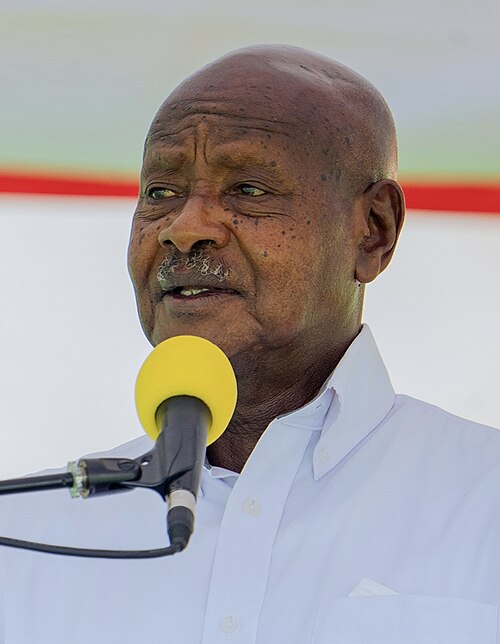
Yoweri Museveni
ModernPoliticianUganda1944 — ?
President of Uganda who came to power through guerrilla war.
Compare Yoweri Museveni with another historical figure:
Quick Facts
Born
1944
Country
Uganda
Era
Modern
Occupation
Politician
Score Overview
Military (10%)68
Political (20%)72
Influence (20%)61
Legacy (20%)50
Leadership (15%)80
Strategy (15%)66
Total Score63.9
Yoweri Museveni — Complete Timeline
1986 AD
Bush War Victory and Capture of KampalaWar
Museveni's National Resistance Army (NRA) captured Kampala, ending the Ugandan Bush War. He was sworn in as President on January 29, 1986, overthrowing the government of Tito Okello and beginning his long rule.
Ugandan Bush WarSeizure of PowerNRA
Impact: national
Introduction of the Movement SystemPolitical Action◆ Major
Museveni established a 'no-party' Movement system, banning political party activity. This system concentrated power in the National Resistance Movement (NRM) and was justified as necessary to prevent ethnic conflict, but was criticized as authoritarian.
Political SystemNRMAuthoritarianism
Impact: national
1998 AD
Invasion of the Democratic Republic of CongoWar◆ Major
Ugandan forces, allied with Rwanda, invaded the Democratic Republic of Congo (DRC) to overthrow Laurent Kabila. This intervention escalated the Second Congo War, drawing in multiple African nations and causing widespread devastation.
Second Congo WarRegional ConflictIntervention
Impact: regionaldestructive
2005 AD
Constitutional Amendment Removing Term LimitsPolitical Action◆ Major
Museveni's government pushed through a constitutional amendment removing presidential term limits. This allowed him to run for a third term in 2006 and subsequent elections, consolidating his hold on power and drawing domestic and international criticism.
Constitutional ChangeTerm LimitsPower Consolidation
Impact: nationaldestructive
2014 AD
Anti-Homosexuality ActPolitical Action◆ Major
Museveni signed the Anti-Homosexuality Act, which imposed life imprisonment for certain same-sex acts. The law was widely condemned internationally, leading to aid cuts from some Western nations, though it was later annulled by the Constitutional Court on procedural grounds.
LGBTQ RightsLegislationInternational Condemnation
Impact: nationaldestructive
Detailed Scores
▶View all detailed scores
Military
Strategy
7
Tactics
7
Battles
7
Army Scale
6
War Impact
7
Political
Governance
7
Reform
7
Stability
7
Policy
7
Power
8
Influence
History
9
Global
8
Culture
9
Ideology
9
Legacy
8
People often compare with
See how Yoweri Museveni stacks up against other historical figures
Popular Comparisons
Yoweri Museveni vs Mao Zedong
vs Mao Zedong79
Yoweri Museveni vs Abraham Lincoln
vs Abraham Lincoln78
Yoweri Museveni vs George Washington
vs George Washington77
Yoweri Museveni vs Winston Churchill
vs Winston Churchill72
Yoweri Museveni vs Franklin D. Roosevelt
vs Franklin D. Roosevelt71
Yoweri Museveni vs Joseph Stalin
vs Joseph Stalin69