Loading...
Abraham Lincoln vs Yoweri Museveni
Abraham Lincoln leads by 13.6 pts · 2 figures compared
…
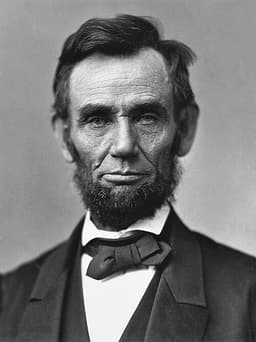
Abraham Lincoln
Politician · Modern
77.5Total
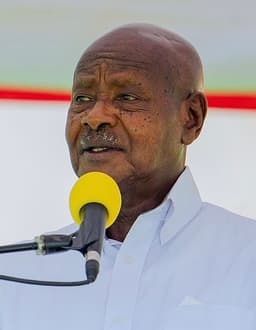
Yoweri Museveni
Politician · Modern
63.9Total
Basic Information
Born
1809
1944
Died
1865
—
Era
Modern
Modern
Nationality
United States
Uganda
Occupation
Politician
Politician
Civilization
Western
Other
Score Comparison
Military (10%)
50.0
67.5
Political (20%)
88.0
72.0
Influence (20%)
80.0
61.0
Legacy (20%)
82.0
50.0
Leadership (15%)
85.0
80.0
Strategy (15%)
60.0
66.3
TOTAL
77.5
63.9
Abraham Lincoln — Complete Timeline
1861 AD
Suspension of Habeas CorpusPolitical Action◆ Major
Lincoln suspended the writ of habeas corpus in parts of the Union, allowing the military to arrest and detain suspected Confederate sympathizers without trial. This action was controversial and challenged civil liberties during wartime.
Habeas CorpusCivil LibertiesCivil War
Impact: nationaldestructive
1862 AD
Signing of the Homestead ActPolitical Action◆ Major
Lincoln signed the Homestead Act, granting 160 acres of public land to settlers for a small fee. This encouraged westward expansion and agricultural development, but also displaced Native American tribes.
Homestead ActWestward ExpansionLand Policy
Impact: nationalconstructive
1863 AD
Emancipation ProclamationPolitical Action
Lincoln issued the Emancipation Proclamation, declaring slaves in Confederate states free. This shifted the Civil War's focus to ending slavery and allowed African Americans to join the Union Army.
EmancipationCivil WarSlavery
Impact: globalprogressive
Gettysburg AddressCultural◆ Major
Lincoln delivered the Gettysburg Address at the dedication of the Soldiers' National Cemetery. The speech redefined the Civil War as a struggle for national unity and equality, and became one of the most famous speeches in US history.
Gettysburg AddressCivil WarOratory
Impact: nationalconstructive
1865 AD
Assassination by John Wilkes BoothOther
Lincoln was shot by John Wilkes Booth at Ford's Theatre in Washington, D.C., and died the next day. His assassination occurred just days after the Civil War ended, plunging the nation into mourning and affecting Reconstruction.
AssassinationCivil WarReconstruction
Impact: nationaltragic
Yoweri Museveni — Complete Timeline
1986 AD
Bush War Victory and Capture of KampalaWar
Museveni's National Resistance Army (NRA) captured Kampala, ending the Ugandan Bush War. He was sworn in as President on January 29, 1986, overthrowing the government of Tito Okello and beginning his long rule.
Ugandan Bush WarSeizure of PowerNRA
Impact: national
Introduction of the Movement SystemPolitical Action◆ Major
Museveni established a 'no-party' Movement system, banning political party activity. This system concentrated power in the National Resistance Movement (NRM) and was justified as necessary to prevent ethnic conflict, but was criticized as authoritarian.
Political SystemNRMAuthoritarianism
Impact: national
1998 AD
Invasion of the Democratic Republic of CongoWar◆ Major
Ugandan forces, allied with Rwanda, invaded the Democratic Republic of Congo (DRC) to overthrow Laurent Kabila. This intervention escalated the Second Congo War, drawing in multiple African nations and causing widespread devastation.
Second Congo WarRegional ConflictIntervention
Impact: regionaldestructive
2005 AD
Constitutional Amendment Removing Term LimitsPolitical Action◆ Major
Museveni's government pushed through a constitutional amendment removing presidential term limits. This allowed him to run for a third term in 2006 and subsequent elections, consolidating his hold on power and drawing domestic and international criticism.
Constitutional ChangeTerm LimitsPower Consolidation
Impact: nationaldestructive
2014 AD
Anti-Homosexuality ActPolitical Action◆ Major
Museveni signed the Anti-Homosexuality Act, which imposed life imprisonment for certain same-sex acts. The law was widely condemned internationally, leading to aid cuts from some Western nations, though it was later annulled by the Constitutional Court on procedural grounds.
LGBTQ RightsLegislationInternational Condemnation
Impact: nationaldestructive
Expert Analysis
Abraham Lincoln vs Yoweri Museveni
### The Long Shadow of Power: Lincoln and Museveni
On a cold March morning in 1861, Abraham Lincoln stood before a divided nation, his voice carrying across the unfinished Capitol dome, pleading for the "better angels of our nature." Just over a century later, in the sweltering heat of the Ugandan bush, a young revolutionary named Yoweri Museveni assembled his ragged guerrilla fighters, convinced that only the barrel of a gun could redeem his country. Both men rose from obscurity to lead nations in crisis. One became a global icon of democratic redemption; the other, a cautionary figure of revolutionary promise curdled into autocratic endurance. Their stories, separated by a century and an ocean, reveal how the same raw ambition can forge radically different destinies.
### Origins
Lincoln was born in 1809 into a log cabin on the Kentucky frontier, a world of hardscrabble poverty and relentless labor. His formal schooling amounted to less than a year, yet he devoured books by firelight—the Bible, Shakespeare, Blackstone's *Commentaries*—teaching himself law and logic. The American frontier of the early 19th century was a place of fluid opportunity but also deep racial injustice, and Lincoln internalized both the self-made man's optimism and the moral weight of slavery as a national sin. His era was one of democratic expansion and sectional crisis, a crucible that forged a politician who thought in constitutional terms and spoke in biblical cadences.
Museveni, born in 1944 in western Uganda, grew up in a different Africa: one emerging from colonial rule into the chaos of independence. His family raised cattle, and he attended missionary schools before studying economics at the University of Dar es Salaam in Tanzania. There, he encountered Marxist theory and the writings of Frantz Fanon, absorbing the revolutionary idea that violence was a necessary cleansing force against neocolonial oppression. His formative years were shaped by the brutal regimes of Milton Obote and Idi Amin, where the state was a weapon of ethnic predation rather than law. For Museveni, the lesson was not about preserving a union, but about seizing power to remake it.
### Rise to Power
Lincoln’s path was institutional. He served eight years in the Illinois legislature, then a single term in Congress, before losing a Senate race to Stephen Douglas in 1858. But those Lincoln-Douglas debates made him a national figure. When the Republican Party nominated him in 1860, he was a compromise candidate—moderate on slavery's expansion, unthreatening to the North's business interests. His election itself triggered secession. Lincoln entered the White House not as a conqueror, but as a caretaker of a collapsing republic.
Museveni’s rise was the opposite. After a failed attempt at politics in Obote’s Uganda, he fled to Tanzania and formed the National Resistance Army (NRA) in 1981. For five years, he waged a guerrilla war from the Luwero Triangle, a campaign of ambushes, landmine attacks, and political indoctrination. His "Bush War" was brutal and intimate; he fought alongside his men, slept in the mud, and built a disciplined force that combined peasant fighters with educated cadres. In January 1986, the NRA captured Kampala. Museveni was sworn in as president at age 41, holding a rifle in one hand and a speech in the other.
### Leadership & Governance
Lincoln governed during a civil war that killed over 600,000 Americans. His leadership was defined by strategic patience and constitutional improvisation. He suspended habeas corpus in 1861 to suppress dissent, a controversial act that he justified as necessary for survival. He signed the Homestead Act in 1862, opening the West to settlement, and issued the Emancipation Proclamation in 1863, transforming the war into a fight for human freedom. His military strategy was often criticized—he cycled through generals until he found Ulysses S. Grant—but his political genius lay in holding together a fragile coalition of abolitionists, border-state unionists, and war Democrats. The Gettysburg Address, delivered in November 1863, reframed the war as a test of whether a nation "conceived in liberty" could endure.
Museveni’s early years were promising. He restored order after years of chaos, stabilized the economy, and won international praise for his AIDS prevention campaign. But his "Movement system," introduced in 1986, banned political parties, concentrating power in his own hands. He justified it as a uniquely African solution to ethnic division, but it was a one-party state in all but name. In 1998, he invaded the Democratic Republic of Congo, plunging his army into a regional war that killed millions. In 2005, he pushed through a constitutional amendment removing term limits, ensuring he could rule for life. In 2014, he signed the Anti-Homosexuality Act, a draconian law that drew global condemnation. Where Lincoln expanded liberty, Museveni contracted it.
### Triumph & Tragedy
Lincoln’s greatest triumph was the Union’s survival and slavery’s abolition. In April 1865, as the Civil War ended, he stood at the pinnacle of moral and political achievement. His tragedy came days later: assassination by John Wilkes Booth at Ford’s Theatre, on Good Friday. His death denied him the chance to oversee Reconstruction, leaving a bitter legacy of racial strife unresolved.
Museveni’s triumph was ending Uganda’s cycle of state collapse and becoming a regional power broker. His tragedy is that he has outlived his own ideals. Once hailed as part of a "new breed" of African leaders, he is now a symbol of the continent’s democratic backsliding. His long rule has seen corruption, repression, and a succession crisis that threatens to plunge Uganda back into chaos.
### Character & Destiny
Lincoln was melancholic, self-doubting, and deeply empathetic. He told stories to defuse tension, and he carried the weight of the war with visible anguish. His ambition was checked by a moral compass that pointed toward union and freedom. He believed in the Constitution as a sacred compact, even as he bent it.
Museveni is stoic, calculating, and ruthlessly pragmatic. He sees power as the only guarantee of security. His early idealism—land reform, anti-corruption, African self-reliance—gave way to a cold calculus of survival. He studies his enemies, co-opts his rivals, and never forgets a slight. Where Lincoln’s character invited trust, Museveni’s commands fear.
### Legacy
Lincoln is remembered as the Great Emancipator, the savior of the Union, a secular saint of democracy. His speeches are quoted by presidents and protesters alike. His legacy is a moral benchmark for American governance.
Museveni’s legacy is contested. To his supporters, he is a father of the nation who brought stability. To his critics, he is a dictator who betrayed the revolution. History will likely judge him as a figure of tragic irony: a man who began by liberating his country and ended by imprisoning its future.
### Conclusion
Lincoln and Museveni both stood at the crossroads of history, each holding a nation in their hands. One used power to expand the circle of freedom; the other used it to narrow the space for dissent. Their differences are not merely personal but structural—Lincoln operated within a constitutional tradition that ultimately checked him, even as he stretched it. Museveni inherited no such tradition; he built his own, and it was a cage. The lesson may be that power does not corrupt absolutely—it reveals what was always there. Lincoln’s humility and moral clarity were forged in the crucible of a self-governing republic. Museveni’s ambition was forged in the crucible of war. One gave his life for his country. The other has given his country for his life.
Rankings
🥇
Abraham LincolnLeader
Mil: 50.0Pol: 88.0Inf: 80.0
77.5
🥈
Yoweri Museveni
Mil: 67.5Pol: 72.0Inf: 61.0
63.9
+13.6 behind
How This Comparison Works
Algorithm
Each figure is scored on 6 dimensions (0—100 scale) based on structured historical data: Military (10%), Political (20%), Influence (20%), Legacy (20%), Leadership (15%), Strategy (15%). The weighted total produces the final ranking.
Data Sources
Scores are computed from structured sub-indicators in the database. Scale factors adjust for era (Ancient ×0.85, Modern ×1.0) and civilization size (Eastern ×1.05, Other ×0.80) to account for differences in population and military scale.
Maximum 3 Figures
Comparisons are limited to 2—3 figures to ensure readability and statistical meaningfulness.
Error Margins
±5 points per dimension — Sub-scores are derived from historical records with inherent uncertainty. Two figures within 5 points on a dimension should be considered roughly equivalent in that area.
Total Score Accuracy
±3 points overall — The weighted combination of 6 dimensions produces a total score with approximately ±3 points of uncertainty. Differences of less than 3 points are not statistically significant— the figures are effectively tied.
Known Limitations
- Historical records are incomplete and uneven across civilizations
- Figures from oral-tradition societies may be underrepresented
- Occupation labels can misclassify multi-role figures
- Scores measure capability and impact, not moral character
- Quantitative scoring is a comparison tool, not absolute truth
Capability Radar
Military (10%) — Battles & Warfare
Battles
15
65
Win Rate
20
70
Expansion
0
55
Political (20%) — Governance & Reform
Reform
95
60
Diplomacy
80
70
Economy
70
55
Influence (20%) — Cultural & Global Reach
Cultural
85
45
Global
85
50
Legacy (20%) — Historical Impact
Historical
95
55
Longevity
90
50
Leadership (15%) — Power & Stability
Tenure
65
85
Stability
55
50
Strategy (15%) — Tactics & Innovation
Strategy
55
80
Tactics
10
75
Reform
60
60
Similar Comparisons
Comments & Discussion
Abe's Ghost6/16/2026
Lincoln freed slaves then got martyred. Museveni? He's been in power since 1986, tweaking term limits like a mechanic with a busted carburetor. Lincoln fought one war to save the Union; Museveni fights his own soldiers in the streets of Kampala. Don't sugarcoat it—one died for democracy, the other's living off its corpse.
铁腕总统6/16/2026
林肯在1863年颁布《解放宣言》,那是历史的转折点。穆塞韦尼呢?1986年上台后,他发动“抵抗军”夺取政权,现在却成了非洲最长久的掌权者之一。别再扯“民主先驱”那套了,他根本就是个用革命当跳板的权力狂人。
Lincoln's Log Cabin6/16/2026
You can't compare a self-taught frontier lawyer to a guerrilla commander. Lincoln read Blackstone by candlelight to understand justice; Museveni read Mao's "Little Red Book" to master insurgency. Lincoln's legacy is the 13th Amendment, a legal foundation. Museveni's legacy is the 20-year civil war in northern Uganda—no constitutional permanence, just blood and chaos.
数据猎人6/16/2026
别被“抗埃博拉英雄”这标签骗了。穆塞韦尼统治期间,乌干达人均GDP只从1986年的200美元涨到现在的900美元,而林肯时代美国GDP翻了三倍。数据不撒谎:一个在建设中,一个在吃老本。穆塞韦尼的“进步”就是个统计上的冷笑话。
Classics Scholar6/16/2026
Like Plutarch's parallel lives: Lincoln died as Cincinnatus, returning to his plough after saving the republic—except he never got to. Museveni is like Caesar crossing the Rubicon, then staying. Lincoln’s Gettysburg Address echoes Pericles’ funeral oration; Museveni's speeches are hollow, nationalist filler. One immortal, one stuck in power.
红色记忆6/16/2026
穆塞韦尼搞“无党派民主”只是幌子,他1986年宪法刚通过,1995年就改掉任期限制。林肯倒知道《宪法》不是橡皮泥,连内战期间都坚持法律程序。一个是修正主义者,另一个是修正者加背叛者。别再拿“非洲林肯”这种名号侮辱历史了。