Loading...
George Washington vs Yoweri Museveni
George Washington leads by 12.9 pts · 2 figures compared
…
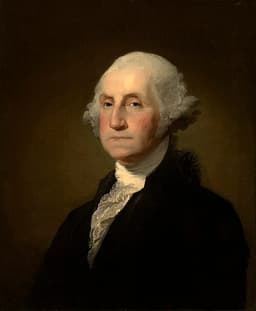
George Washington
Politician · Modern
76.8Total
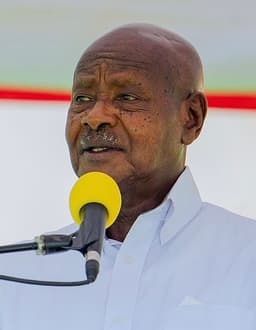
Yoweri Museveni
Politician · Modern
63.9Total
Basic Information
Born
1732
1944
Died
1799
—
Era
Modern
Modern
Nationality
United States
Uganda
Occupation
Politician
Politician
Civilization
Western
Other
Score Comparison
Military (10%)
75.0
67.5
Political (20%)
82.0
72.0
Influence (20%)
75.0
61.0
Legacy (20%)
80.0
50.0
Leadership (15%)
85.0
80.0
Strategy (15%)
55.0
66.3
TOTAL
76.8
63.9
George Washington — Complete Timeline
1775 AD
Appointed Commander-in-Chief of the Continental ArmyOther◆ Major
The Second Continental Congress appointed Washington as commander-in-chief of the Continental Army on June 15, 1775. He accepted the position without pay, taking command of the forces besieging Boston at the start of the American Revolutionary War.
American RevolutionMilitary Leadership
Impact: national
1776 AD
Crossed the Delaware RiverOther◆ Major
On the night of December 25-26, 1776, Washington led 2,400 troops across the ice-choked Delaware River. The surprise attack on Hessian forces at Trenton resulted in a decisive American victory, capturing nearly 1,000 prisoners and reviving Patriot morale after a series of defeats.
American RevolutionBattleTurning Point
Impact: nationalconstructive
1787 AD
Presided over the Constitutional ConventionPolitical Action◆ Major
Washington served as president of the Constitutional Convention in Philadelphia from May to September 1787. His presence lent legitimacy to the proceedings, and he formally signed the final draft of the U.S. Constitution, though he contributed little to the debates.
ConstitutionFounding Father
Impact: national
1789 AD
Inaugurated as First President of the United StatesPolitical Action◆ Major
Washington was unanimously elected by the Electoral College and inaugurated on April 30, 1789, at Federal Hall in New York City. He established numerous executive branch precedents, including the cabinet system, the inaugural address, and the title 'Mr. President'.
PresidencyFounding Father
Impact: national
1793 AD
Issued the Proclamation of NeutralityOther◆ Major
Washington issued the Proclamation of Neutrality on April 22, 1793, declaring the United States neutral in the conflict between France and Great Britain. This decision established the precedent of American isolationism and avoided entanglement in European wars.
Foreign PolicyNeutrality
Impact: national
1796 AD
Delivered the Farewell AddressOther◆ Major
Washington published his Farewell Address on September 19, 1796, announcing his decision not to seek a third term. The address warned against political factionalism, permanent foreign alliances, and the influence of the military in government, shaping American political culture.
PresidencyLegacy
Impact: national
Yoweri Museveni — Complete Timeline
1986 AD
Bush War Victory and Capture of KampalaWar
Museveni's National Resistance Army (NRA) captured Kampala, ending the Ugandan Bush War. He was sworn in as President on January 29, 1986, overthrowing the government of Tito Okello and beginning his long rule.
Ugandan Bush WarSeizure of PowerNRA
Impact: national
Introduction of the Movement SystemPolitical Action◆ Major
Museveni established a 'no-party' Movement system, banning political party activity. This system concentrated power in the National Resistance Movement (NRM) and was justified as necessary to prevent ethnic conflict, but was criticized as authoritarian.
Political SystemNRMAuthoritarianism
Impact: national
1998 AD
Invasion of the Democratic Republic of CongoWar◆ Major
Ugandan forces, allied with Rwanda, invaded the Democratic Republic of Congo (DRC) to overthrow Laurent Kabila. This intervention escalated the Second Congo War, drawing in multiple African nations and causing widespread devastation.
Second Congo WarRegional ConflictIntervention
Impact: regionaldestructive
2005 AD
Constitutional Amendment Removing Term LimitsPolitical Action◆ Major
Museveni's government pushed through a constitutional amendment removing presidential term limits. This allowed him to run for a third term in 2006 and subsequent elections, consolidating his hold on power and drawing domestic and international criticism.
Constitutional ChangeTerm LimitsPower Consolidation
Impact: nationaldestructive
2014 AD
Anti-Homosexuality ActPolitical Action◆ Major
Museveni signed the Anti-Homosexuality Act, which imposed life imprisonment for certain same-sex acts. The law was widely condemned internationally, leading to aid cuts from some Western nations, though it was later annulled by the Constitutional Court on procedural grounds.
LGBTQ RightsLegislationInternational Condemnation
Impact: nationaldestructive
Expert Analysis
George Washington vs Yoweri Museveni
### The General and the Guerrilla
On a sweltering June day in 1775, George Washington stood before the Second Continental Congress in Philadelphia, a tall, awkward figure in a blue uniform, accepting command of an army that barely existed. Two centuries later, in a very different world, Yoweri Museveni led his ragged National Resistance Army out of the forests of central Uganda, capturing Kampala in January 1986 after a five-year bush war. Both men took power at the head of armed forces. Both promised to reshape their nations. But their paths—and the worlds they built—could not have diverged more sharply. Washington, the reluctant revolutionary who became the father of his country, left behind a template for democratic governance. Museveni, the charismatic guerrilla who promised liberation, has become the very symbol of the entrenched African strongman. How did two men who both rose through war end up defining such opposite political legacies?
### Origins
Washington was born in 1732 into the Virginia planter aristocracy, a world of tobacco, slavery, and land speculation. His father died when he was eleven, forcing him to learn self-discipline and command early. He was no intellectual—he never attended college—but he was a meticulous surveyor and a man of immense physical courage. His era, the Age of Enlightenment, was saturated with ideas about natural rights, republican virtue, and the dangers of concentrated power. The American Revolution was not just a war; it was a conversation about liberty.
Museveni, born in 1944 in the Ankole region of British-ruled Uganda, came of age in a world of collapsing empires and postcolonial chaos. He studied political science at the University of Dar es Salaam in Tanzania, where he absorbed the revolutionary Marxism of Frantz Fanon and the anti-imperialist fervor of the 1960s. His Uganda had been brutalized by Idi Amin and Milton Obote; the state was not a guarantor of rights but a machine of predation. For Museveni, power was not something to be restrained but something to be seized, held, and used.
### Rise to Power
Washington’s rise was a study in patience and reputation. He fought in the French and Indian War, learning the brutal realities of frontier warfare, then returned to Virginia to manage his estate. When the revolutionary crisis came, he was chosen as commander-in-chief not for his brilliance—he lost more battles than he won—but because he was a Virginian, a man of standing who could unify the fractious colonies. His greatest achievement was simply holding the Continental Army together through eight years of deprivation and defeat.
Museveni’s rise was a study in armed patience. After failing to unseat Obote through electoral politics, he took to the bush in 1981 with twenty-seven men. His National Resistance Army grew by winning peasant support through disciplined behavior—no looting, no rape—and by exploiting the government’s brutality. When he captured Kampala in 1986, he was forty-one years old, a proven guerrilla commander who had fought his way to power. The path was violent, personal, and decisive.
### Leadership & Governance
Washington’s leadership was defined by restraint. As president, he could have become a monarch; his army had offered him a crown. Instead, he established norms: a cabinet, a two-term limit, a policy of neutrality in foreign wars. He suppressed the Whiskey Rebellion with a show of force, then pardoned the rebels. He was not a great military strategist—his score of 65 in strategy reflects his cautious, defensive style—but he was a master of political symbolism. He understood that the republic’s survival depended on the example he set, not the decrees he issued.
Museveni’s leadership was defined by control. His Movement system, introduced in 1986, banned political parties, concentrating power in his own hands. He restored stability to a shattered country—roads were rebuilt, AIDS rates dropped, the economy grew—but at the cost of democracy. When term limits threatened his hold on power, he removed them in 2005. When the Anti-Homosexuality Act of 2014 drew international condemnation, he signed it anyway, appealing to domestic religious sentiment. His political score of 72 is high, but it reflects raw political survival, not institutional building.
### Triumph & Tragedy
Washington’s triumph was Yorktown in 1781, the siege that effectively ended the Revolutionary War. His tragedy was his failure to confront slavery, which he knew was wrong but could not bring himself to dismantle. He freed his own slaves in his will, but the institution he left untouched would tear his nation apart eighty years later.
Museveni’s triumph was the capture of Kampala in 1986, ending years of chaos. His tragedy was the invasion of the Democratic Republic of Congo in 1998, a disastrous intervention that dragged Uganda into a regional war, destabilized the Great Lakes, and enriched his generals at the expense of ordinary soldiers. The liberator had become an interventionist.
### Character & Destiny
Washington was a man of immense self-control. He suppressed his fiery temper, cultivated an air of dignity, and worried constantly about his reputation. He was not a genius; he was a man who knew his limits and surrounded himself with better minds. His character made him the indispensable figure of the American founding.
Museveni is a man of immense self-confidence. He believes he knows what is best for Uganda, and he has been willing to bend the constitution, suppress opponents, and ignore international pressure to achieve it. His character has made him the indispensable figure of modern Uganda—but also its longest-serving ruler, a man who has outlived the idealism of his youth.
### Legacy
Washington’s legacy is the American presidency itself. He is remembered as the man who could have been king but chose to be a citizen. His scores in influence (72) and legacy (78) reflect his foundational role in creating a political system that has endured for over two centuries.
Museveni’s legacy is still being written. His score in legacy is 66.8, lower than Washington’s, but not low—he has brought stability to a country that knew only chaos. Yet he has also shown that stability can become stagnation, and that the guerrilla who fights for freedom can become the autocrat who denies it. His greatest achievement is that Uganda is no longer a failed state. His greatest failure is that it is not yet a successful democracy.
### Conclusion
Washington and Museveni both rose through war, but they chose different answers to the same question: what do you do when you have power? Washington answered by giving it away. Museveni has answered by holding on. The difference is not simply one of personality or culture; it is one of context. Washington built a republic in a world that had no modern democracies. Museveni inherited a failed state in a world that had many. But the lesson of their comparison is sobering: the path from guerrilla to statesman is not inevitable. It depends on a choice—a choice that only the leader can make. And history, as always, is watching.
Rankings
🥇
George WashingtonLeader
Mil: 75.0Pol: 82.0Inf: 75.0
76.8
🥈
Yoweri Museveni
Mil: 67.5Pol: 72.0Inf: 61.0
63.9
+12.9 behind
How This Comparison Works
Algorithm
Each figure is scored on 6 dimensions (0—100 scale) based on structured historical data: Military (10%), Political (20%), Influence (20%), Legacy (20%), Leadership (15%), Strategy (15%). The weighted total produces the final ranking.
Data Sources
Scores are computed from structured sub-indicators in the database. Scale factors adjust for era (Ancient ×0.85, Modern ×1.0) and civilization size (Eastern ×1.05, Other ×0.80) to account for differences in population and military scale.
Maximum 3 Figures
Comparisons are limited to 2—3 figures to ensure readability and statistical meaningfulness.
Error Margins
±5 points per dimension — Sub-scores are derived from historical records with inherent uncertainty. Two figures within 5 points on a dimension should be considered roughly equivalent in that area.
Total Score Accuracy
±3 points overall — The weighted combination of 6 dimensions produces a total score with approximately ±3 points of uncertainty. Differences of less than 3 points are not statistically significant— the figures are effectively tied.
Known Limitations
- Historical records are incomplete and uneven across civilizations
- Figures from oral-tradition societies may be underrepresented
- Occupation labels can misclassify multi-role figures
- Scores measure capability and impact, not moral character
- Quantitative scoring is a comparison tool, not absolute truth
Capability Radar
Military (10%) — Battles & Warfare
Battles
75
65
Win Rate
70
70
Expansion
60
55
Political (20%) — Governance & Reform
Reform
90
60
Diplomacy
85
70
Economy
65
55
Influence (20%) — Cultural & Global Reach
Cultural
85
45
Global
85
50
Legacy (20%) — Historical Impact
Historical
95
55
Longevity
90
50
Leadership (15%) — Power & Stability
Tenure
70
85
Stability
85
50
Strategy (15%) — Tactics & Innovation
Strategy
80
80
Tactics
65
75
Reform
85
60
Similar Comparisons
Comments & Discussion
AmericanSkeptic6/16/2026
This comparison is ahistorical nonsense. Washington led a 7-year war against the world's greatest empire with no guarantee of victory, then voluntarily surrendered power not once but twice. Museveni promised "no-party democracy" then changed the constitution to keep himself president since 1986. You can't compare a man who owned slaves within his era's norms to a modern autocrat who jailed Besigye and tortured street protestors. Different leagues entirely. The real story is how America's founder
大秦铁粉6/16/2026
把华盛顿和穆塞韦尼放一起比,这不就是侮辱美国国父吗?华盛顿1783年辞去总司令,穆塞韦尼39年后还在位;华盛顿推动了两党制,穆塞韦尼把反对派关起来。唯一共同点大概是都爱打仗——但华盛顿打完独立战争就没再搞扩张,穆塞韦尼却派兵去刚果抢钻石。别用"游击队长"给强人政治洗白,历史不是这样写的。
BushWarVet6/16/2026
Look, I respect Museveni's tactical brilliance in the Luwero Triangle - he turned starving peasants into a disciplined force that beat Obote's army with homemade weapons. But Washington's achievement was institutional, not just personal. The Continental Army became the foundation of a republic; Museveni's NRA became a patronage machine. Washington had the Virginia gentry class to back him; Museveni had to invent a state from scratch. Still, the gap between them isn't just character - it's the di
革命斗士6/16/2026
两位都是武装夺权的典范,但华盛顿懂得"功成身退",穆塞韦尼却把自己活成了第二任奥博特。看看数据吧:华盛顿执政8年就退休,穆塞韦尼执政38年还在加修总统任期限制。更讽刺的是,穆塞韦尼刚上台时写的《论游击战》还在谈民主改革,结果现在他的警察用同样的战术镇压学生。我个人觉得,华盛顿的遗产是制度,穆塞韦尼的遗产是个人崇拜。这俩人放一起,就是共和国和酋长国的对比。
EnglightenedCritic6/16/2026
Classics scholar here: the key difference is in how each man understood power's relationship to time. Washington consciously echoed Cincinnatus - returning to his farm after victory, knowing that republican virtue requires limiting one's own ambition. Museveni, by contrast, channels Machiavelli's prince: consolidate power, eliminate rivals, and never yield. Washington read Locke and Montesquieu; Museveni read Fanon and Nyerere. One believed in permanent institutions, the other in permanent leade