Loading...
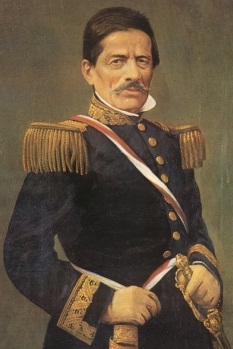
Ramon Castilla
ModernGeneralPeru1797 — 1867
Peruvian president who abolished slavery and modernized the country.
Compare Ramon Castilla with another historical figure:
Quick Facts
Born
1797
Died
1867
Country
Peru
Era
Modern
Occupation
General
Score Overview
Military (10%)40
Political (20%)72
Influence (20%)57
Legacy (20%)52
Leadership (15%)78
Strategy (15%)60
Total Score59.7
Ramon Castilla — Complete Timeline
1824 AD
Battle of AyacuchoWar
Castilla fought as a junior officer in the decisive Battle of Ayacucho, which ended Spanish rule in Peru. This victory secured Peruvian independence and marked the end of the Spanish Empire in South America, shaping Castilla's nationalist views.
Peruvian War of IndependenceBattleLiberation
Impact: regional
1845 AD
First Presidency of PeruPolitical Action◆ Major
Castilla was elected President of Peru in 1845, serving until 1851. His first term focused on economic development, including the guano boom, and infrastructure projects such as railroads and ports, modernizing the Peruvian state.
PresidencyEconomic DevelopmentGuano
Impact: nationalconstructive
1854 AD
Abolition of Slavery in PeruReform◆ Major
During his second presidency, Castilla issued a decree abolishing slavery in Peru on December 3, 1854. This reform freed approximately 25,000 slaves and was part of a broader liberal agenda, though it faced opposition from slave-owning elites.
AbolitionSlaveryHuman Rights
Impact: nationalprogressive
Abolition of Indigenous TributeReform◆ Major
Castilla also abolished the indigenous tribute tax in 1854, which had been a burden on native communities since colonial times. This measure aimed to integrate indigenous peoples into the Peruvian state as equal citizens, though its implementation was uneven.
Indigenous RightsTax ReformCitizenship
Impact: nationalprogressive
1855 AD
Second Presidency and Guano BoomPolitical Action◆ Major
Castilla served a second term from 1855 to 1862, during the peak of the guano export boom. He used guano revenues to fund public works, pay off foreign debt, and modernize the military, but also faced criticism for corruption and over-reliance on a single resource.
PresidencyGuanoModernization
Impact: nationalconstructive
1860 AD
Constitutional Reform of 1860Reform◆ Major
Castilla oversaw the adoption of a new constitution in 1860, which established a centralized republic with a strong executive. The constitution remained in effect until 1920 and shaped Peru's political structure, though it limited regional autonomy.
ConstitutionPolitical ReformCentralization
Impact: nationalconstructive
Detailed Scores
▶View all detailed scores
Military
Strategy
7
Tactics
7
Battles
7
Army Scale
7
War Impact
7
Political
Governance
8
Reform
8
Stability
8
Policy
8
Power
9
Influence
History
9
Global
9
Culture
9
Ideology
9
Legacy
9
People often compare with
See how Ramon Castilla stacks up against other historical figures
Popular Comparisons
Ramon Castilla vs Samori Toure
vs Samori Toure71
Ramon Castilla vs Joseph Gallieni
vs Joseph Gallieni67
Ramon Castilla vs Yitzhak Rabin
vs Yitzhak Rabin66
Ramon Castilla vs Tadeusz Kosciuszko
vs Tadeusz Kosciuszko64
Ramon Castilla vs Nicolas Soult
vs Nicolas Soult63
Ramon Castilla vs Louis Botha
vs Louis Botha61