Loading...
Louis Botha vs Ramon Castilla
Louis Botha leads by 1.4 pts · 2 figures compared
…
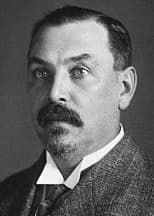
Louis Botha
General · Modern
61.1Total
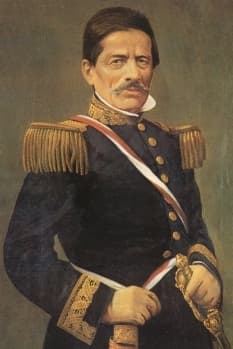
Ramon Castilla
General · Modern
59.7Total
Basic Information
Born
1862
1797
Died
1919
1867
Era
Modern
Modern
Nationality
South Africa
Peru
Occupation
General
General
Civilization
Other
Western
Score Comparison
Military (10%)
61.7
40.0
Political (20%)
70.0
72.0
Influence (20%)
56.7
56.7
Legacy (20%)
50.0
52.0
Leadership (15%)
79.8
78.0
Strategy (15%)
58.0
60.0
TOTAL
61.1
59.7
Louis Botha — Complete Timeline
1899 AD
Battle of ColensoWar◆ Major
Botha commanded Boer forces at the Battle of Colenso during the Second Boer War. His troops repelled a British attack under General Buller, inflicting heavy casualties and boosting Boer morale.
Second Boer WarBattleVictory
Impact: regional
1900 AD
Boer War Guerrilla CommanderWar◆ Major
After the British captured Pretoria, Botha led Boer guerrilla forces in the Transvaal. He conducted hit-and-run attacks against British columns, prolonging the war and becoming a symbol of Afrikaner resistance.
Second Boer WarGuerrillaResistance
Impact: regional
1902 AD
Signed the Treaty of VereenigingPolitical Action
Botha, as a leading Boer general, signed the Treaty of Vereeniging which ended the Second Boer War. The treaty granted the Boer republics self-government under British sovereignty and promised eventual self-rule.
TreatyPeaceSecond Boer War
Impact: regional
1910 AD
First Prime Minister of the Union of South AfricaPolitical Action
Botha became the first Prime Minister of the newly formed Union of South Africa. He led a coalition government that sought to reconcile Afrikaners and English-speaking whites, while implementing segregationist policies.
Prime MinisterUnion of South AfricaFounding
Impact: nationalconstructive
1914 AD
Suppressed the 1914 RebellionWar◆ Major
Botha personally led government forces to suppress the Maritz Rebellion, an Afrikaner uprising against South Africa's entry into World War I. He defeated the rebels, asserting state authority and maintaining support for the British Empire.
RebellionWorld War ISuppression
Impact: national
1915 AD
Conquered German South West AfricaWar◆ Major
Botha commanded South African forces in the invasion and conquest of German South West Africa. The campaign succeeded, and the territory was later administered by South Africa under a League of Nations mandate.
World War IConquestGerman South West Africa
Impact: regional
Ramon Castilla — Complete Timeline
1824 AD
Battle of AyacuchoWar
Castilla fought as a junior officer in the decisive Battle of Ayacucho, which ended Spanish rule in Peru. This victory secured Peruvian independence and marked the end of the Spanish Empire in South America, shaping Castilla's nationalist views.
Peruvian War of IndependenceBattleLiberation
Impact: regional
1845 AD
First Presidency of PeruPolitical Action◆ Major
Castilla was elected President of Peru in 1845, serving until 1851. His first term focused on economic development, including the guano boom, and infrastructure projects such as railroads and ports, modernizing the Peruvian state.
PresidencyEconomic DevelopmentGuano
Impact: nationalconstructive
1854 AD
Abolition of Slavery in PeruReform◆ Major
During his second presidency, Castilla issued a decree abolishing slavery in Peru on December 3, 1854. This reform freed approximately 25,000 slaves and was part of a broader liberal agenda, though it faced opposition from slave-owning elites.
AbolitionSlaveryHuman Rights
Impact: nationalprogressive
Abolition of Indigenous TributeReform◆ Major
Castilla also abolished the indigenous tribute tax in 1854, which had been a burden on native communities since colonial times. This measure aimed to integrate indigenous peoples into the Peruvian state as equal citizens, though its implementation was uneven.
Indigenous RightsTax ReformCitizenship
Impact: nationalprogressive
1855 AD
Second Presidency and Guano BoomPolitical Action◆ Major
Castilla served a second term from 1855 to 1862, during the peak of the guano export boom. He used guano revenues to fund public works, pay off foreign debt, and modernize the military, but also faced criticism for corruption and over-reliance on a single resource.
PresidencyGuanoModernization
Impact: nationalconstructive
1860 AD
Constitutional Reform of 1860Reform◆ Major
Castilla oversaw the adoption of a new constitution in 1860, which established a centralized republic with a strong executive. The constitution remained in effect until 1920 and shaped Peru's political structure, though it limited regional autonomy.
ConstitutionPolitical ReformCentralization
Impact: nationalconstructive
Expert Analysis
Louis Botha vs Ramon Castilla
# The General Who Built a Nation, and the General Who Built a Bridge
In 1914, two aging generals faced opposite fates. In Lima, Ramon Castilla had been dead for nearly half a century, his statue standing in the Plaza de la República, a silent witness to the nation he had forged. In Pretoria, Louis Botha, still very much alive, mounted his horse to lead troops against his own people—Afrikaners who saw him as a traitor for reconciling with the British. One man’s legacy was carved in marble; the other’s was written in blood and compromise. Both had fought wars of liberation. Both had become heads of state. But the paths they took from battlefield to presidential palace—and the choices they made once there—could not have been more different.
Origins
Ramon Castilla was born in 1797 in Tarapacá, then part of the Spanish Viceroyalty of Peru. His father was a Spanish miner, his mother a mestiza. He grew up in a world where colonial hierarchies were absolute: Spaniards ruled, Creoles managed, and indigenous peoples and African slaves toiled at the bottom. Castilla entered the Spanish army as a young man, but the winds of independence were blowing across South America. In 1821, he switched sides, joining the patriot forces of José de San Martín. He was 24 years old, a junior officer in a revolution that would define his life.
Louis Botha was born in 1862 in the Orange Free State, a Boer republic carved out of the South African veld by Dutch settlers who had fled British rule. His family were farmers, tough and independent, suspicious of any government—especially a British one. Botha grew up speaking Afrikaans, riding horses, and learning the land. He had little formal education, but he understood the veld like a sailor understands the sea. The Boers were a people who had already fought one war against the British in 1881 and won. Botha was only 37 when the Second Boer War erupted in 1899, but he was ready.
Rise to Power
Castilla’s rise was slow, methodical, and anchored in a single decisive moment. At the Battle of Ayacucho on December 9, 1824, he fought as a junior cavalry officer in the final battle of the Peruvian War of Independence. The Spanish army was shattered; four centuries of colonial rule ended in a few hours of blood-soaked chaos. Castilla emerged from that battle with a reputation for courage, but more importantly, with a network of military and political connections that would serve him for decades. He spent the next two decades climbing the ladder of the new republic—serving as a prefect, a minister, and eventually a senator. When he was elected president in 1845, he was 48 years old, a seasoned administrator who understood that Peru’s future depended not on glory but on stability.
Botha’s rise was explosive. In December 1899, at the Battle of Colenso, he commanded Boer forces that repelled a British attack under General Sir Redvers Buller. The British lost over 1,100 men; the Boers lost fewer than 40. It was a stunning victory, and Botha became a national hero overnight. When the British captured Pretoria in 1900, Botha transformed into a guerrilla commander, leading hit-and-run attacks across the Transvaal. He was relentless, elusive, and respected even by his enemies. But the war ended in defeat. In 1902, Botha signed the Treaty of Vereeniging, accepting British sovereignty in exchange for promises of self-government. He was 40 years old, a defeated general who had to decide whether to fight on or build something new.
Leadership & Governance
Castilla’s first presidency (1845–1851) was a masterclass in using luck wisely. Peru was entering the guano boom—bird droppings from coastal islands that proved to be one of the most valuable fertilizers in the world. Castilla nationalized the guano trade and used the revenues to pay off Peru’s foreign debt, build railroads, modernize the port of Callao, and expand education. He was not a visionary economist; he was a pragmatist who understood that money, properly spent, could buy peace and progress.
His second presidency (1855–1862) was even more transformative. On December 3, 1854, Castilla issued a decree abolishing slavery in Peru. Over 25,000 enslaved people were freed. That same year, he abolished the indigenous tribute tax—a colonial-era levy that had crushed native communities for three centuries. These were not acts of idealism alone; they were strategic moves to build a unified nation. Castilla needed the loyalty of black and indigenous Peruvians, and he bought it with freedom. In 1860, he oversaw the adoption of a new constitution that centralized power in the executive, weakened the church, and established a modern legal framework. He was building a state, brick by brick.
Botha faced a harder task. When he became the first Prime Minister of the Union of South Africa in 1910, he led a coalition of Boers and English-speaking South Africans who had been at war just eight years earlier. His goal was reconciliation—but reconciliation meant compromise. He had to reassure the British that South Africa would remain loyal to the Empire, while convincing Afrikaners that they had not sold out. He pursued policies that favored mining and agriculture, but he also introduced segregationist laws that laid the groundwork for apartheid. Where Castilla freed the oppressed, Botha managed the tensions between oppressors.
Triumph & Tragedy
Castilla’s greatest triumph was the abolition of slavery. It was a clean, decisive act that transformed Peruvian society. His tragedy was that the guano boom did not last. After his presidency, mismanagement and corruption squandered the wealth, leading to economic collapse and war with Chile in 1879. Castilla died in 1867, before the worst of it, but his legacy was tarnished by what came after.
Botha’s greatest triumph was the conquest of German South West Africa in 1915, a campaign he personally led. It was a brilliant military operation that secured South Africa’s borders and proved Botha’s loyalty to the British Empire. His tragedy came earlier, in 1914, when he suppressed the Maritz Rebellion—an uprising of Afrikaners who rejected South Africa’s entry into World War I on the British side. Botha led troops against his own people, many of them former comrades. He won, but the cost was immense. He died in 1919, exhausted and mourned by few.
Character & Destiny
Castilla was a builder. He saw the chaos of post-independence Peru and chose order. He was not a great military strategist—his Strategy score of 58.7 is the lowest of his metrics—but he was a great leader (84.0) and a shrewd politician (77.4). He understood that in a fractured society, the only way to govern was to give people a stake in the nation. He freed slaves not because he was a saint, but because he needed soldiers and citizens.
Botha was a reconciler. His Leadership score of 89.6 is the highest of his metrics, reflecting his ability to hold together a divided nation. But his Political score of 83.0 came at a cost. He chose peace over justice, unity over equality. Where Castilla abolished tribute, Botha entrenched racial hierarchy. Where Castilla built a constitution, Botha built a compromise that would eventually collapse into apartheid.
Legacy
Castilla is remembered as Peru’s greatest 19th-century president. His statue stands in Lima. His abolition decree is celebrated every December 3rd. His Legacy score of 75.0 reflects a nation that still honors him, even as it debates his flaws. He was a product of his time—a conservative reformer who believed in progress from above.
Botha is remembered ambivalently. Afrikaners see him as a pragmatist who saved what he could; black South Africans see him as a founder of white supremacy. His Legacy score of 66.8 is lower, and it is deserved. He was a man of courage who made terrible choices. He won the peace but lost the future.
Conclusion
Standing at the crossroads of independence and empire, Castilla and Botha faced the same question: How do you build a nation from the wreckage of war? Castilla answered with emancipation and centralization. Botha answered with reconciliation and segregation. One freed the enslaved; the other managed the enslavers. Their different outcomes were not accidents of fate but products of character—and of the worlds they inherited. Castilla’s Peru was a blank slate; Botha’s South Africa was a battlefield of entrenched interests. One general wrote a constitution; the other signed a treaty. Both were men of their times, but only one built a bridge to a better future.
Rankings
🥇
Louis BothaLeader
Mil: 61.7Pol: 70.0Inf: 56.7
61.1
🥈
Ramon Castilla
Mil: 40.0Pol: 72.0Inf: 56.7
59.7
+1.4 behind
How This Comparison Works
Algorithm
Each figure is scored on 6 dimensions (0—100 scale) based on structured historical data: Military (10%), Political (20%), Influence (20%), Legacy (20%), Leadership (15%), Strategy (15%). The weighted total produces the final ranking.
Data Sources
Scores are computed from structured sub-indicators in the database. Scale factors adjust for era (Ancient ×0.85, Modern ×1.0) and civilization size (Eastern ×1.05, Other ×0.80) to account for differences in population and military scale.
Maximum 3 Figures
Comparisons are limited to 2—3 figures to ensure readability and statistical meaningfulness.
Error Margins
±5 points per dimension — Sub-scores are derived from historical records with inherent uncertainty. Two figures within 5 points on a dimension should be considered roughly equivalent in that area.
Total Score Accuracy
±3 points overall — The weighted combination of 6 dimensions produces a total score with approximately ±3 points of uncertainty. Differences of less than 3 points are not statistically significant— the figures are effectively tied.
Known Limitations
- Historical records are incomplete and uneven across civilizations
- Figures from oral-tradition societies may be underrepresented
- Occupation labels can misclassify multi-role figures
- Scores measure capability and impact, not moral character
- Quantitative scoring is a comparison tool, not absolute truth
Capability Radar
Military (10%) — Battles & Warfare
Battles
65
45
Win Rate
70
50
Expansion
60
30
Political (20%) — Governance & Reform
Reform
65
85
Diplomacy
70
70
Economy
55
75
Influence (20%) — Cultural & Global Reach
Cultural
45
55
Global
50
50
Legacy (20%) — Historical Impact
Historical
55
65
Longevity
40
60
Leadership (15%) — Power & Stability
Tenure
60
65
Stability
50
60
Strategy (15%) — Tactics & Innovation
Strategy
72
45
Tactics
68
40
Reform
55
55
Similar Comparisons
Comments & Discussion
GRAVESTONE GENERAL6/16/2026
Castilla’s statue in Lima is a lie—he didn’t build a nation, he built a personal empire off guano. The man abolished slavery in 1854, sure, but only after using Indigenous conscripts to fight his own civil war. Botha at least had the decency to die in the saddle, trying to hold his people together. Marble doesn’t bleed; Botha did. Put me with the man who felt the cost.
石碑碎语6/16/2026
卡斯蒂利亚的铜像在利马广场站了近两百年,可那不过是粉饰太平的纪念碑。他在1854年废奴,却转头就卖了华工去挖鸟粪——自由只是生意。博塔呢?他1914年还在骑着马镇压自己的同胞,为英国人擦屁股。一个用花岗岩掩盖血迹,一个用鲜血涂抹妥协。南非的战场比秘鲁的广场诚实多了。