Loading...
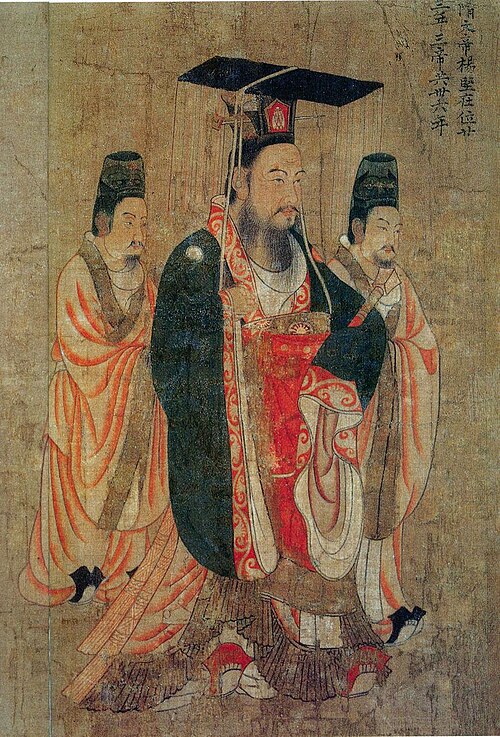
Emperor Wen of Sui
MedievalEmperorChina541 — 604
Reunified China after centuries of division, founder of Sui dynasty.
Compare Emperor Wen of Sui with another historical figure:
Quick Facts
Born
541
Died
604
Country
China
Era
Medieval
Occupation
Emperor
Score Overview
Military (10%)76
Political (20%)75
Influence (20%)88
Legacy (20%)80
Leadership (15%)80
Strategy (15%)75
Total Score80.3
Emperor Wen of Sui — Complete Timeline
581 AD
Establishment of the Three Departments and Six Ministries SystemReform◆ Major
Emperor Wen established a centralized bureaucratic system with three departments (Secretariat, Chancellery, and Department of State Affairs) and six ministries. This system became the foundation of Chinese government administration for centuries.
Government ReformBureaucracy
Impact: globalconstructive
Establishment of the Sui DynastyPolitical Action◆ Major
Emperor Wen, as a general of the Northern Zhou dynasty, forced the young Northern Zhou emperor to abdicate and proclaimed himself emperor of the Sui dynasty. This marked the beginning of the Sui dynasty, which would go on to reunify China.
Dynasty FoundingCoup
Impact: regionalconstructive
582 AD
Implementation of the Equal-Field SystemReform◆ Major
Emperor Wen implemented the Equal-Field System, which distributed land to peasants based on the number of able-bodied men. This reform increased agricultural productivity, stabilized tax revenues, and reduced the power of large landowners.
Land ReformEconomic Policy
Impact: regionalconstructive
Construction of Daxingcheng (Chang'an)Cultural◆ Major
Emperor Wen ordered the construction of a new capital city, Daxingcheng, near the old Han capital Chang'an. This city, later known as Chang'an, became a model for urban planning and served as the capital of the Sui and Tang dynasties.
Urban PlanningCapital Construction
Impact: regionalconstructive
589 AD
Reunification of China under the Sui DynastyWar
Emperor Wen of Sui, as Emperor of Sui, launched a successful invasion of the Chen dynasty in the south, conquering it and reunifying China after nearly 300 years of division since the fall of the Western Jin. This ended the Northern and Southern Dynasties period.
UnificationConquest
Impact: globalconstructive
Detailed Scores
▶View all detailed scores
Military
Strategy
7
Tactics
7
Battles
7
Army Scale
6
War Impact
7
Political
Governance
6
Reform
7
Stability
6
Policy
7
Power
7
Influence
History
10
Global
9
Culture
9
Ideology
10
Legacy
9
People often compare with
See how Emperor Wen of Sui stacks up against other historical figures
Popular Comparisons
Emperor Wen of Sui vs Rajendra Chola I
vs Rajendra Chola I82
Emperor Wen of Sui vs Genghis Khan
vs Genghis Khan81
Emperor Wen of Sui vs Emperor Taizong of Tang
vs Emperor Taizong of Tang79
Emperor Wen of Sui vs Suleiman I
vs Suleiman I79
Emperor Wen of Sui vs Alexios I Komnenos
vs Alexios I Komnenos78
Emperor Wen of Sui vs Babur
vs Babur78