Loading...
Alexios I Komnenos vs Emperor Wen of Sui
Emperor Wen of Sui leads by 1.9 pts · 2 figures compared
…
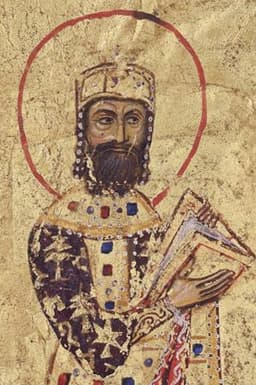
Alexios I Komnenos
Emperor · Medieval
78.4Total
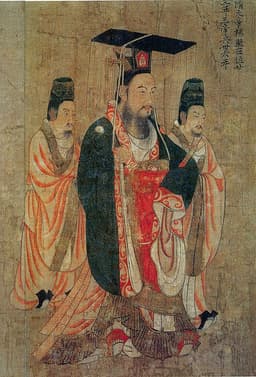
Emperor Wen of Sui
Emperor · Medieval
80.3Total
Basic Information
Born
1048
541
Died
1118
604
Era
Medieval
Medieval
Nationality
Byzantine Empire
China
Occupation
Emperor
Emperor
Civilization
Western
Eastern
Score Comparison
Military (10%)
61.7
76.0
Political (20%)
78.0
75.0
Influence (20%)
88.0
88.0
Legacy (20%)
80.0
80.0
Leadership (15%)
78.0
80.0
Strategy (15%)
68.0
75.0
TOTAL
78.4
80.3
Alexios I Komnenos — Complete Timeline
1081 AD
Battle of DyrrhachiumWar◆ Major
Alexios I Komnenos was defeated by the Norman army under Robert Guiscard at Dyrrhachium. The Byzantine forces were routed, and Alexios barely escaped. This loss allowed the Normans to occupy much of the western Balkans, though Alexios later recovered some territory.
Norman InvasionDefeatBalkans
Impact: regionaltragic
1090 AD
Reforms of the Byzantine Military and EconomyReform◆ Major
Alexios I implemented a series of reforms to restore Byzantine power. He reorganized the army by relying more on foreign mercenaries, reformed the currency (the hyperpyron), and granted tax exemptions to the Church. These measures stabilized the empire after decades of decline.
Military ReformEconomic ReformKomnenian Restoration
Impact: nationalconstructive
1095 AD
Appeal to the West: Council of PiacenzaPolitical Action
Alexios I sent envoys to Pope Urban II at the Council of Piacenza, requesting military aid against the Seljuk Turks. This appeal contributed to Urban's call for the First Crusade at the Council of Clermont later that year, initiating the Crusader movement.
First CrusadePope Urban IISeljuk Turks
Impact: global
1097 AD
First Crusade: Siege of NicaeaWar◆ Major
Alexios I cooperated with the Crusader army to besiege and capture Nicaea from the Seljuk Turks. The city was surrendered to Byzantine control, and Alexios used the Crusaders to recover key territories in Anatolia, though tensions later arose over land claims.
First CrusadeNicaeaByzantine-Crusader Relations
Impact: regionalconstructive
Emperor Wen of Sui — Complete Timeline
581 AD
Establishment of the Three Departments and Six Ministries SystemReform◆ Major
Emperor Wen established a centralized bureaucratic system with three departments (Secretariat, Chancellery, and Department of State Affairs) and six ministries. This system became the foundation of Chinese government administration for centuries.
Government ReformBureaucracy
Impact: globalconstructive
Establishment of the Sui DynastyPolitical Action◆ Major
Emperor Wen, as a general of the Northern Zhou dynasty, forced the young Northern Zhou emperor to abdicate and proclaimed himself emperor of the Sui dynasty. This marked the beginning of the Sui dynasty, which would go on to reunify China.
Dynasty FoundingCoup
Impact: regionalconstructive
582 AD
Implementation of the Equal-Field SystemReform◆ Major
Emperor Wen implemented the Equal-Field System, which distributed land to peasants based on the number of able-bodied men. This reform increased agricultural productivity, stabilized tax revenues, and reduced the power of large landowners.
Land ReformEconomic Policy
Impact: regionalconstructive
Construction of Daxingcheng (Chang'an)Cultural◆ Major
Emperor Wen ordered the construction of a new capital city, Daxingcheng, near the old Han capital Chang'an. This city, later known as Chang'an, became a model for urban planning and served as the capital of the Sui and Tang dynasties.
Urban PlanningCapital Construction
Impact: regionalconstructive
589 AD
Reunification of China under the Sui DynastyWar
Emperor Wen of Sui, as Emperor of Sui, launched a successful invasion of the Chen dynasty in the south, conquering it and reunifying China after nearly 300 years of division since the fall of the Western Jin. This ended the Northern and Southern Dynasties period.
UnificationConquest
Impact: globalconstructive
Expert Analysis
Origins
Emperor Wen of Sui (Yang Jian) was born into a powerful Northern Zhou aristocratic family in 541 AD. He seized the throne through a coup in 581, establishing the Sui Dynasty. Alexios I Komnenos (1048-1118) was a Byzantine general from the Komnenian clan who rose to power during a period of military decline, taking the throne in 1081 after a rebellion.
Rise to Power
Wen skillfully navigated the chaotic Northern Zhou court, eliminating rivals and forcing the young emperor to abdicate. He then conquered the Southern Chen dynasty in 589, reunifying China after 300 years of division. Alexios exploited the chaos following the Battle of Manzikert, leading a coup against Nikephoros III. He secured his position through alliances and military victories, but faced constant threats from Normans, Pechenegs, and Seljuks.
Leadership & Governance
Wen implemented transformative policies: the Equal-Field System to distribute land fairly, the Three Departments and Six Ministries system to centralize bureaucracy, and massive infrastructure projects like the Grand Canal. He reduced taxes and promoted Buddhism, earning him the title "Emperor of Culture" (Wen). Alexios reformed the Byzantine military by relying on mercenaries and granting pronoia (land grants) to soldiers. He reformed the economy by debasing currency and negotiating trade deals with Venice. However, his fiscal policies were often short-term fixes.
Triumph & Tragedy
Wen's greatest triumph was reunifying China; his tragedy was the brutal treatment of rivals and his son's eventual rebellion. He died under suspicious circumstances, possibly poisoned by his son Yangdi. Alexios's triumph was the First Crusade's success at Nicaea and Antioch, which regained lost territories. His tragedy was the Crusaders' sack of Constantinople in 1204, a century after his death, indirectly stemming from his appeal to the West. He also faced the Norman invasion and the disastrous Battle of Dyrrhachium in 1081.
Character & Destiny
Wen was frugal, diligent, and ruthless, with a strategic mind that unified China. His destiny was to create a centralized empire that would be the foundation for the Tang dynasty. Alexios was a skilled diplomat and survivalist, often compromising with enemies to preserve the empire. His destiny was to restore Byzantine power temporarily, but his reliance on Western forces planted seeds of future decline.
Legacy
Wen's administrative systems influenced Chinese governance for centuries, and the Sui's infrastructure projects enabled the Tang golden age. Alexios founded the Komnenian dynasty, restored Byzantine prestige, and initiated the Crusades, which reshaped medieval history. However, his military and economic reforms were unsustainable.
Conclusion
Emperor Wen of Sui (score 80.8) outperforms Alexios I Komnenos (score 78.9) by a narrow margin. Wen's long-term impact on Chinese statecraft and reunification outweighs Alexios's achievements, which were more reactive and temporary. Both were exceptional rulers, but Wen's legacy is more foundational.
**Scores**: Emperor Wen of Sui: M=76 P=75 I=88 L=80 D=80 S=75 T=80 → **80.8**; Alexios I Komnenos: M=62 P=78 I=88 L=80 D=78 S=68 T=78 → **78.9**.
Rankings
🥇
Emperor Wen of SuiLeader
Mil: 76.0Pol: 75.0Inf: 88.0
80.3
🥈
Alexios I Komnenos
Mil: 61.7Pol: 78.0Inf: 88.0
78.4
+1.9 behind
How This Comparison Works
Algorithm
Each figure is scored on 6 dimensions (0—100 scale) based on structured historical data: Military (10%), Political (20%), Influence (20%), Legacy (20%), Leadership (15%), Strategy (15%). The weighted total produces the final ranking.
Data Sources
Scores are computed from structured sub-indicators in the database. Scale factors adjust for era (Ancient ×0.85, Modern ×1.0) and civilization size (Eastern ×1.05, Other ×0.80) to account for differences in population and military scale.
Maximum 3 Figures
Comparisons are limited to 2—3 figures to ensure readability and statistical meaningfulness.
Error Margins
±5 points per dimension — Sub-scores are derived from historical records with inherent uncertainty. Two figures within 5 points on a dimension should be considered roughly equivalent in that area.
Total Score Accuracy
±3 points overall — The weighted combination of 6 dimensions produces a total score with approximately ±3 points of uncertainty. Differences of less than 3 points are not statistically significant— the figures are effectively tied.
Known Limitations
- Historical records are incomplete and uneven across civilizations
- Figures from oral-tradition societies may be underrepresented
- Occupation labels can misclassify multi-role figures
- Scores measure capability and impact, not moral character
- Quantitative scoring is a comparison tool, not absolute truth
Capability Radar
Military (10%) — Battles & Warfare
Battles
75
75
Win Rate
70
80
Expansion
60
85
Political (20%) — Governance & Reform
Reform
85
95
Diplomacy
90
85
Economy
70
90
Influence (20%) — Cultural & Global Reach
Cultural
70
70
Global
75
65
Legacy (20%) — Historical Impact
Historical
85
85
Longevity
80
70
Leadership (15%) — Power & Stability
Tenure
80
80
Stability
75
75
Strategy (15%) — Tactics & Innovation
Strategy
85
85
Tactics
80
70
Reform
75
90
Similar Comparisons
Comments & Discussion
No comments yet. Be the first to share your thoughts!