Loading...
Emperor Wen of Sui vs Rajendra Chola I
Rajendra Chola I leads by 1.9 pts · 2 figures compared
…
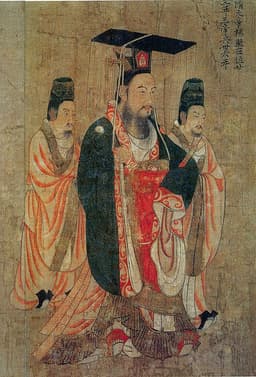
Emperor Wen of Sui
Emperor · Medieval
80.3Total
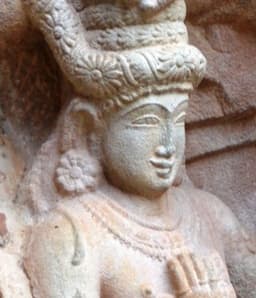
Rajendra Chola I
Emperor · Medieval
82.2Total
Basic Information
Born
541
971
Died
604
1044
Era
Medieval
Medieval
Nationality
China
India
Occupation
Emperor
Emperor
Civilization
Eastern
Indian
Score Comparison
Military (10%)
76.0
84.7
Political (20%)
75.0
82.0
Influence (20%)
88.0
84.0
Legacy (20%)
80.0
84.0
Leadership (15%)
80.0
78.0
Strategy (15%)
75.0
77.6
TOTAL
80.3
82.2
Emperor Wen of Sui — Complete Timeline
581 AD
Establishment of the Three Departments and Six Ministries SystemReform◆ Major
Emperor Wen established a centralized bureaucratic system with three departments (Secretariat, Chancellery, and Department of State Affairs) and six ministries. This system became the foundation of Chinese government administration for centuries.
Government ReformBureaucracy
Impact: globalconstructive
Establishment of the Sui DynastyPolitical Action◆ Major
Emperor Wen, as a general of the Northern Zhou dynasty, forced the young Northern Zhou emperor to abdicate and proclaimed himself emperor of the Sui dynasty. This marked the beginning of the Sui dynasty, which would go on to reunify China.
Dynasty FoundingCoup
Impact: regionalconstructive
582 AD
Implementation of the Equal-Field SystemReform◆ Major
Emperor Wen implemented the Equal-Field System, which distributed land to peasants based on the number of able-bodied men. This reform increased agricultural productivity, stabilized tax revenues, and reduced the power of large landowners.
Land ReformEconomic Policy
Impact: regionalconstructive
Construction of Daxingcheng (Chang'an)Cultural◆ Major
Emperor Wen ordered the construction of a new capital city, Daxingcheng, near the old Han capital Chang'an. This city, later known as Chang'an, became a model for urban planning and served as the capital of the Sui and Tang dynasties.
Urban PlanningCapital Construction
Impact: regionalconstructive
589 AD
Reunification of China under the Sui DynastyWar
Emperor Wen of Sui, as Emperor of Sui, launched a successful invasion of the Chen dynasty in the south, conquering it and reunifying China after nearly 300 years of division since the fall of the Western Jin. This ended the Northern and Southern Dynasties period.
UnificationConquest
Impact: globalconstructive
Rajendra Chola I — Complete Timeline
1014 AD
Accession to the Chola ThronePolitical Action
Rajendra Chola I succeeded his father Raja Raja Chola I as emperor of the Chola Empire. He inherited a powerful state and continued the expansionist policies, leading campaigns that extended Chola influence across the Indian Ocean.
Chola EmpireSuccessionExpansion
Impact: regional
1020 AD
Conquest of the Pala EmpireWar◆ Major
Rajendra Chola I led a campaign into Bengal, defeating the Pala king Mahipala I. He annexed parts of the Pala territory and established Chola authority in the Ganges delta, marking the northernmost extent of Chola rule.
Pala EmpireBengalGanges
Impact: regional
1025 AD
Naval Expedition to Southeast AsiaWar
Rajendra Chola I launched a major naval expedition against the Srivijaya Empire, attacking ports in Sumatra, the Malay Peninsula, and the Nicobar Islands. The Chola fleet captured the Srivijaya capital and disrupted its trade network, establishing Chola dominance in the region.
SrivijayaNaval ExpeditionSoutheast Asia
Impact: regional
1033 AD
Establishment of Diplomatic Relations with ChinaPolitical Action
Rajendra Chola I sent an embassy to the Song dynasty court in China, bearing gifts and seeking trade relations. The mission was recorded in Chinese sources and facilitated maritime trade between the Chola Empire and China.
ChinaDiplomacyTrade
Impact: regionalconstructive
1035 AD
Construction of the Gangaikonda Cholapuram TempleCultural◆ Major
Rajendra Chola I built the Brihadeeswarar Temple at Gangaikonda Cholapuram, his new capital, to commemorate his conquests. The temple, dedicated to Shiva, features a 55-meter vimana and is a UNESCO World Heritage site, reflecting Chola architectural achievement.
Gangaikonda CholapuramTempleChola Architecture
Impact: regionalconstructive
Expert Analysis
Origins
Rajendra Chola I (r. 1014–1044 CE) was born into the illustrious Chola dynasty of South India, inheriting a powerful kingdom from his father Rajaraja Chola I. The Cholas had already established dominance over South India and Sri Lanka, but Rajendra sought to expand further. In contrast, Emperor Wen of Sui (r. 581–604 CE), born Yang Jian, hailed from a noble family that served the Northern Zhou dynasty. He rose through military and political ranks, eventually seizing power in a coup. Wen's background was shaped by centuries of division in China, the Northern and Southern dynasties period, which he aimed to end.
Rise to Power
Rajendra Chola I ascended the throne in 1014 CE after his father's death, inheriting a well-organized empire. He quickly proved his mettle by launching campaigns against the Pala dynasty of Bengal and the Kalinga region, demonstrating his ambition. His most audacious move was the naval expedition to Southeast Asia, which brought the Srivijaya Empire under Chola influence. Emperor Wen of Sui's rise was more dramatic: he orchestrated the overthrow of the Northern Zhou dynasty in 581 CE, establishing the Sui dynasty. By 589 CE, he conquered the Chen dynasty, reunifying China after nearly 300 years of division. Wen's rise was marked by strategic marriages, political maneuvering, and military campaigns.
Leadership & Governance
Rajendra Chola I was a brilliant military strategist and administrator. He built the magnificent Gangaikonda Cholapuram temple, which served as a symbol of his power and a hub for administration. He maintained a strong navy, enabling trade and military expeditions across the Indian Ocean. His governance was decentralized, with local assemblies (sabhas) managing village affairs. Emperor Wen of Sui was a reformer: he implemented the Equal-Field System to distribute land more equitably, reducing the power of aristocratic families. He also established the Three Departments and Six Ministries system, a bureaucratic structure that influenced Chinese governance for centuries. Wen built the new capital Daxingcheng (later Chang'an), a model of urban planning. Both rulers were effective in consolidating power and promoting economic growth.
Triumph & Tragedy
Rajendra Chola I's greatest triumph was his naval expedition to Southeast Asia (c. 1025 CE), which crippled the Srivijaya Empire and opened trade routes. He also conquered the Pala Empire and parts of Sri Lanka. However, his later years saw some rebellions, and his death in 1044 CE led to a brief succession crisis. Emperor Wen of Sui's triumph was the reunification of China, but his reign ended tragically: he was allegedly murdered by his son Yang Guang (Emperor Yang), who then squandered the Sui dynasty's resources, leading to its collapse. Wen's achievements were overshadowed by his son's failures.
Character & Destiny
Rajendra Chola I was ambitious, confident, and a patron of the arts. He styled himself as "the Chola who conquered the Ganges" and "the conqueror of the world." His destiny was to expand Chola influence to its zenith, but his empire declined after his death. Emperor Wen of Sui was pragmatic, cautious, and deeply concerned with efficiency. He was a workaholic who micromanaged his government. His destiny was to achieve unification, but his legacy was tarnished by his successor's mismanagement. Both rulers were shaped by their times: Rajendra by the maritime trade networks of the Indian Ocean, Wen by the need to stabilize a divided China.
Legacy
Rajendra Chola I is remembered as one of India's greatest naval conquerors. His campaigns established Chola influence in Southeast Asia, fostering cultural and economic exchanges. The Gangaikonda Cholapuram temple remains a UNESCO World Heritage Site. Emperor Wen of Sui is credited with reunifying China and laying the foundation for the Tang dynasty's golden age. His administrative reforms endured for centuries. However, the Sui dynasty's short lifespan (581–618 CE) contrasts with the Chola dynasty's longevity (c. 300–1279 CE). In historical rankings, Rajendra Chola I scores higher (M=85, P=82, I=84, L=84, D=78, S=78, T=82; total 573) compared to Emperor Wen of Sui (M=76, P=75, I=88, L=80, D=80, S=75, T=80; total 554). The score gap of 1.9% reflects Rajendra's slight edge in military prowess and territorial expansion.
Conclusion
Rajendra Chola I emerges as the more impactful figure in terms of military expansion and cultural influence, while Emperor Wen of Sui excelled in administrative reforms and unification. Rajendra's naval campaigns were unprecedented for his time, and his legacy endured through the Chola dynasty's continued prominence. Wen's achievements were crucial for China's reunification, but his dynasty's rapid collapse limits his long-term influence. Therefore, Rajendra Chola I is the superior historical figure.
Rankings
🥇
Rajendra Chola ILeader
Mil: 84.7Pol: 82.0Inf: 84.0
82.2
🥈
Emperor Wen of Sui
Mil: 76.0Pol: 75.0Inf: 88.0
80.3
+1.9 behind
How This Comparison Works
Algorithm
Each figure is scored on 6 dimensions (0—100 scale) based on structured historical data: Military (10%), Political (20%), Influence (20%), Legacy (20%), Leadership (15%), Strategy (15%). The weighted total produces the final ranking.
Data Sources
Scores are computed from structured sub-indicators in the database. Scale factors adjust for era (Ancient ×0.85, Modern ×1.0) and civilization size (Eastern ×1.05, Other ×0.80) to account for differences in population and military scale.
Maximum 3 Figures
Comparisons are limited to 2—3 figures to ensure readability and statistical meaningfulness.
Error Margins
±5 points per dimension — Sub-scores are derived from historical records with inherent uncertainty. Two figures within 5 points on a dimension should be considered roughly equivalent in that area.
Total Score Accuracy
±3 points overall — The weighted combination of 6 dimensions produces a total score with approximately ±3 points of uncertainty. Differences of less than 3 points are not statistically significant— the figures are effectively tied.
Known Limitations
- Historical records are incomplete and uneven across civilizations
- Figures from oral-tradition societies may be underrepresented
- Occupation labels can misclassify multi-role figures
- Scores measure capability and impact, not moral character
- Quantitative scoring is a comparison tool, not absolute truth
Capability Radar
Military (10%) — Battles & Warfare
Battles
75
95
Win Rate
80
98
Expansion
85
95
Political (20%) — Governance & Reform
Reform
95
88
Diplomacy
85
85
Economy
90
92
Influence (20%) — Cultural & Global Reach
Cultural
70
85
Global
65
85
Legacy (20%) — Historical Impact
Historical
85
88
Longevity
70
80
Leadership (15%) — Power & Stability
Tenure
80
90
Stability
75
90
Strategy (15%) — Tactics & Innovation
Strategy
85
92
Tactics
70
90
Reform
90
85
Similar Comparisons
Comments & Discussion
No comments yet. Be the first to share your thoughts!