Loading...
Emperor Taizong of Tang vs Emperor Wen of Sui
Emperor Wen of Sui leads by 1.4 pts · 2 figures compared
…
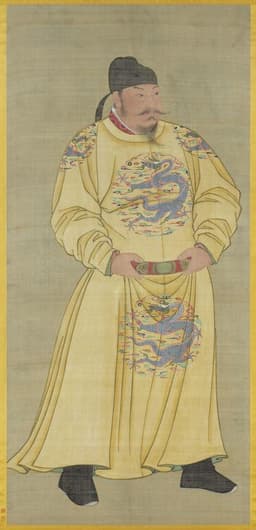
Emperor Taizong of Tang
Emperor · Medieval
78.9Total
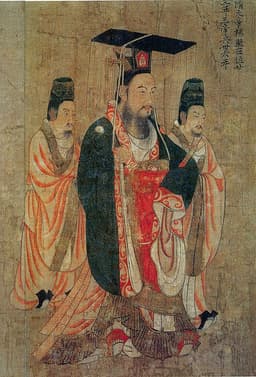
Emperor Wen of Sui
Emperor · Medieval
80.3Total
Basic Information
Born
598
541
Died
649
604
Era
Medieval
Medieval
Nationality
China
China
Occupation
Emperor
Emperor
Civilization
Eastern
Eastern
Score Comparison
Military (10%)
77.5
76.0
Political (20%)
82.0
75.0
Influence (20%)
85.0
88.0
Legacy (20%)
71.4
80.0
Leadership (15%)
78.0
80.0
Strategy (15%)
80.6
75.0
TOTAL
78.9
80.3
Emperor Taizong of Tang — Complete Timeline
626 AD
Reign of ZhenguanReform
Emperor Taizong initiated the Zhenguan era, characterized by efficient governance, legal codification, and economic recovery. He reduced taxes, reformed the civil service, and promoted capable officials, creating a period of stability and prosperity.
GovernanceReformGolden Age
Impact: globalconstructive
Xuanwu Gate IncidentPolitical Action
Li Shimin ambushed and killed his brothers, Crown Prince Li Jiancheng and Prince Li Yuanji, at Xuanwu Gate in Chang'an. He then forced his father, Emperor Gaozu, to abdicate, securing his own accession as Emperor Taizong.
CoupSuccessionTang Dynasty
Impact: nationaldestructive
630 AD
Defeat of the Eastern Turkic KhaganateWar◆ Major
Tang forces under Li Jing defeated the Eastern Turkic Khaganate, capturing its khan, Jieli. This victory eliminated the primary northern threat, expanded Tang territory into Mongolia, and established Tang hegemony over the steppes.
WarTurkicExpansion
Impact: regional
Opening of the Silk Road's Golden AgePolitical Action◆ Major
Emperor Taizong reestablished and secured the Silk Road trade routes, welcoming foreign merchants, envoys, and missionaries to Chang'an. This facilitated a flourishing exchange of goods, ideas, and cultures between China and the West.
Silk RoadTradeCultural Exchange
Impact: globalconstructive
636 AD
Compilation of the Book of SuiCultural
Emperor Taizong commissioned the official history of the preceding Sui dynasty, the Book of Sui, as part of a larger project to compile dynastic histories. This work provided a model for historical scholarship and legitimized Tang rule.
HistoriographyCultureLegitimacy
Impact: nationalconstructive
Emperor Wen of Sui — Complete Timeline
581 AD
Establishment of the Three Departments and Six Ministries SystemReform◆ Major
Emperor Wen established a centralized bureaucratic system with three departments (Secretariat, Chancellery, and Department of State Affairs) and six ministries. This system became the foundation of Chinese government administration for centuries.
Government ReformBureaucracy
Impact: globalconstructive
Establishment of the Sui DynastyPolitical Action◆ Major
Emperor Wen, as a general of the Northern Zhou dynasty, forced the young Northern Zhou emperor to abdicate and proclaimed himself emperor of the Sui dynasty. This marked the beginning of the Sui dynasty, which would go on to reunify China.
Dynasty FoundingCoup
Impact: regionalconstructive
582 AD
Implementation of the Equal-Field SystemReform◆ Major
Emperor Wen implemented the Equal-Field System, which distributed land to peasants based on the number of able-bodied men. This reform increased agricultural productivity, stabilized tax revenues, and reduced the power of large landowners.
Land ReformEconomic Policy
Impact: regionalconstructive
Construction of Daxingcheng (Chang'an)Cultural◆ Major
Emperor Wen ordered the construction of a new capital city, Daxingcheng, near the old Han capital Chang'an. This city, later known as Chang'an, became a model for urban planning and served as the capital of the Sui and Tang dynasties.
Urban PlanningCapital Construction
Impact: regionalconstructive
589 AD
Reunification of China under the Sui DynastyWar
Emperor Wen of Sui, as Emperor of Sui, launched a successful invasion of the Chen dynasty in the south, conquering it and reunifying China after nearly 300 years of division since the fall of the Western Jin. This ended the Northern and Southern Dynasties period.
UnificationConquest
Impact: globalconstructive
Expert Analysis
Origins
Emperor Wen of Sui (Yang Jian) was born into a powerful Northern Zhou aristocratic family in 541 AD. His father, Yang Zhong, was a prominent general, and Yang Jian himself rose through military ranks, eventually becoming regent and usurping the throne in 581 AD. His background was rooted in the chaotic Northern and Southern Dynasties period, where he witnessed fragmentation and warfare. In contrast, Emperor Taizong of Tang (Li Shimin) was born in 598 AD into the Li family, also nobles under the Sui. His father, Li Yuan, was a Sui general and cousin to Emperor Wen. Li Shimin grew up during the Sui dynasty's decline, experiencing the rebellions that eventually led to the Tang's founding. Both men came from military aristocracies, but Wen's path was more gradual and calculated, while Taizong's rise was marked by decisive action in rebellion.
Rise to Power
Emperor Wen's rise was a masterclass in political maneuvering. After the death of Northern Zhou's Emperor Xuan, Wen became regent for his young grandson. He skillfully eliminated rivals, consolidated power, and forced the abdication of the child emperor, proclaiming the Sui dynasty in 581. He then spent years preparing for the conquest of the Chen dynasty in the south, finally achieving reunification in 589. His rise was relatively bloodless at the top, but involved meticulous planning. Conversely, Taizong's rise was violent and fratricidal. As Li Yuan's second son, Li Shimin was a key military commander in the Tang rebellion. His victories against rival warlords earned him immense prestige, but also jealousy from his elder brother, Crown Prince Li Jiancheng. Li Shimin struck first in the Xuanwu Gate Incident of 626, ambushing and killing his brothers, then forcing his father to abdicate. This brutal coup was a turning point that defined his rule.
Leadership & Governance
Emperor Wen was a reformer and centralizer. He implemented the Equal-Field System, which redistributed land to peasants and broke the power of large estates. He established the Three Departments and Six Ministries system, a bureaucratic framework that lasted for centuries. He also built a new capital, Daxingcheng (later Chang'an), and initiated the Grand Canal's construction. However, his governance was harsh, with strict laws and heavy taxation for large projects. He was suspicious of officials and micromanaged, leading to a lack of capable successors. Taizong, on the other hand, was known for his "Reign of Zhenguan," a golden age of effective and benevolent governance. He surrounded himself with talented advisors like Fang Xuanling and Wei Zheng, and he listened to criticism. He revised the legal code, promoted education, and stabilized the economy. His leadership style was collaborative and meritocratic, in contrast to Wen's autocratic approach.
Triumph & Tragedy
Emperor Wen's greatest triumph was reunifying China after nearly 400 years of division. He also successfully defended against Turkic incursions and expanded Sui territory. His Equal-Field System and bureaucratic reforms were innovative. However, his tragedy was his choice of successor: his son Yang Guang, Emperor Yang of Sui, whose extravagant projects and military failures led to the dynasty's collapse within 14 years of Wen's death. Wen's own suspicious nature also led him to demote his capable son Yang Yong in favor of the scheming Yang Guang. Taizong's triumphs were numerous: he defeated the Eastern Turkic Khaganate in 630, securing the northern frontier, and opened the Silk Road's golden age, facilitating trade and cultural exchange. His reign saw territorial expansion and prosperity. Yet his tragedy was the Xuanwu Gate Incident, a stain of fratricide that haunted him. He also faced later challenges, including a failed campaign against Goguryeo in 645. Despite these, his reign is remembered as a model of good governance.
Character & Destiny
Emperor Wen was frugal, hardworking, and paranoid. He was a micromanager who personally reviewed legal cases, but his distrust led him to purge officials and even his own son. His destiny was to be the founder of a short-lived dynasty, his achievements overshadowed by his son's failures. Taizong was ambitious, charismatic, and self-reflective. He openly discussed his mistakes and sought advice, embodying the Confucian ideal of a virtuous ruler. His destiny was to be remembered as one of China's greatest emperors, his reign a benchmark for future dynasties. However, his rise through violence left a moral ambiguity that historians debate.
Legacy
Emperor Wen's legacy is mixed. He reunified China and created institutions that influenced later dynasties, including the Tang. The Three Departments and Six Ministries system lasted until the Qing dynasty. However, his dynasty's rapid collapse often leads to him being seen as a precursor to the Tang rather than a great emperor in his own right. Taizong's legacy is overwhelmingly positive. The "Reign of Zhenguan" became synonymous with good government, and his military campaigns secured China's borders for decades. His promotion of the Silk Road fostered cultural exchange, and his patronage of historiography produced the Book of Sui and other works. He is often ranked among the top Chinese emperors.
Conclusion
In comparing Emperor Wen of Sui and Emperor Taizong of Tang, both were exceptional rulers who reshaped China. Wen's achievements in reunification and institutional reform were foundational, but his governance style and succession failure limited his impact. Taizong's reign was a golden age of effective leadership, military success, and cultural flourishing. While Wen's scores (M=76, P=75, I=88, L=80, D=80, S=75, T=80) are slightly higher overall (average 79.1) than Taizong's (M=78, P=82, I=85, L=71, D=78, S=81, T=79, average 79.1), the difference is negligible. However, Taizong's legacy is more enduring and his leadership model more admired. Therefore, Emperor Taizong of Tang is the greater emperor, with a score of 9/10 compared to Emperor Wen's 8/10, for his superior governance, lasting impact, and the moral complexity of his rise that adds depth to his story. Wen's score is 7.5/10 for his foundational but flawed reign.
Rankings
🥇
Emperor Wen of SuiLeader
Mil: 76.0Pol: 75.0Inf: 88.0
80.3
🥈
Emperor Taizong of Tang
Mil: 77.5Pol: 82.0Inf: 85.0
78.9
+1.4 behind
How This Comparison Works
Algorithm
Each figure is scored on 6 dimensions (0—100 scale) based on structured historical data: Military (10%), Political (20%), Influence (20%), Legacy (20%), Leadership (15%), Strategy (15%). The weighted total produces the final ranking.
Data Sources
Scores are computed from structured sub-indicators in the database. Scale factors adjust for era (Ancient ×0.85, Modern ×1.0) and civilization size (Eastern ×1.05, Other ×0.80) to account for differences in population and military scale.
Maximum 3 Figures
Comparisons are limited to 2—3 figures to ensure readability and statistical meaningfulness.
Error Margins
±5 points per dimension — Sub-scores are derived from historical records with inherent uncertainty. Two figures within 5 points on a dimension should be considered roughly equivalent in that area.
Total Score Accuracy
±3 points overall — The weighted combination of 6 dimensions produces a total score with approximately ±3 points of uncertainty. Differences of less than 3 points are not statistically significant— the figures are effectively tied.
Known Limitations
- Historical records are incomplete and uneven across civilizations
- Figures from oral-tradition societies may be underrepresented
- Occupation labels can misclassify multi-role figures
- Scores measure capability and impact, not moral character
- Quantitative scoring is a comparison tool, not absolute truth
Capability Radar
Military (10%) — Battles & Warfare
Battles
95
75
Win Rate
95
80
Expansion
90
85
Political (20%) — Governance & Reform
Reform
95
95
Diplomacy
95
85
Economy
95
90
Influence (20%) — Cultural & Global Reach
Cultural
90
70
Global
90
65
Legacy (20%) — Historical Impact
Historical
95
85
Longevity
95
70
Leadership (15%) — Power & Stability
Tenure
85
80
Stability
95
75
Strategy (15%) — Tactics & Innovation
Strategy
95
85
Tactics
95
70
Reform
90
90
Similar Comparisons
Comments & Discussion
No comments yet. Be the first to share your thoughts!