Loading...
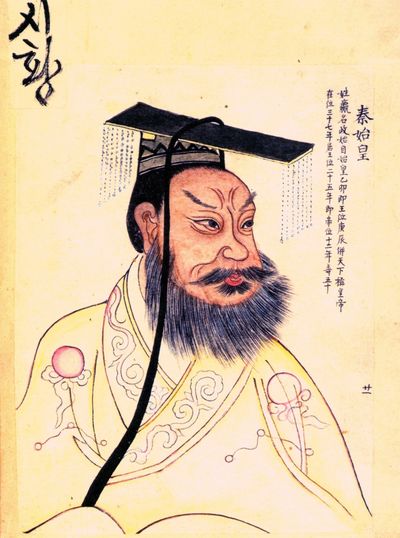
Qin Shi Huang
AncientEmperorChina-259 — -210
中国历史上第一个完成大一统的皇帝,建立秦朝,推行郡县制,统一文字、货币、度量衡,修筑万里长城。
Compare Qin Shi Huang with another historical figure:
Quick Facts
Born
259 BCE
Died
210 BCE
Country
China
Era
Ancient
Occupation
Emperor
Score Overview
Military (10%)80
Political (20%)90
Influence (20%)85
Legacy (20%)90
Leadership (15%)78
Strategy (15%)82
Total Score85.2
Qin Shi Huang — Complete Timeline
246 BC
Construction of the Mausoleum and Terracotta ArmyOther◆ Major
Qin Shi Huang commissioned a vast mausoleum complex near Xi'an, guarded by thousands of life-sized terracotta soldiers, horses, and chariots. The project employed hundreds of thousands of workers and reflected his obsession with immortality and imperial power.
Impact: global
230 BC
Conquest of the Six Warring StatesWar
From 230 to 221 BCE, Ying Zheng led the Qin state in a series of campaigns that conquered the Han, Zhao, Wei, Chu, Yan, and Qi states. This unified China under a single ruler for the first time, ending the Warring States period.
Impact: global
221 BC
Standardization of Writing, Currency, and MeasurementsReform◆ Major
Qin Shi Huang ordered the standardization of Chinese script, currency, and weights and measures across the unified empire. This facilitated administration, trade, and cultural integration, laying a foundation for future dynasties.
Impact: globalconstructive
Proclamation of the Qin DynastyPolitical Action
After conquering the last independent state, Ying Zheng declared himself Shi Huangdi (First Emperor), founding the Qin Dynasty. He adopted a new title to signify his supreme authority and initiated centralized imperial rule.
Impact: global
214 BC
Initiation of the Great Wall ConstructionOther◆ Major
Qin Shi Huang ordered the connection and extension of existing northern fortifications to create a unified defensive wall against nomadic Xiongnu raids. This project involved massive conscripted labor and became the precursor to the later Great Wall.
Impact: regional
213 BC
Burning of Books and Burying of ScholarsPolitical Action◆ Major
On the advice of Li Si, Qin Shi Huang ordered the burning of historical records and philosophical texts not aligned with Legalist doctrine. He also had 460 Confucian scholars buried alive to suppress dissent and consolidate ideological control.
Impact: nationaldestructive
Detailed Scores
▶View all detailed scores
Military
Strategy
7
Tactics
7
Battles
7
Army Scale
7
War Impact
8
Political
Governance
8
Reform
8
Stability
8
Policy
8
Power
8
Influence
History
8
Global
8
Culture
8
Ideology
9
Legacy
8
People often compare with
See how Qin Shi Huang stacks up against other historical figures
Popular Comparisons
Qin Shi Huang vs Augustus
vs Augustus86
Qin Shi Huang vs Cyrus the Great
vs Cyrus the Great84
Qin Shi Huang vs Ashoka the Great
vs Ashoka the Great76
Qin Shi Huang vs Theodosius I
vs Theodosius I76
Qin Shi Huang vs Trajan
vs Trajan76
Qin Shi Huang vs Ardashir I
vs Ardashir I76