Loading...
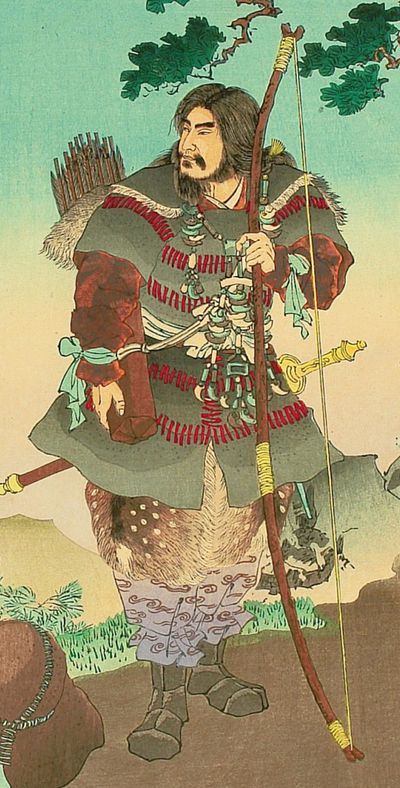
Emperor Jimmu
AncientEmperorJapan-711 — -585
Legendary first emperor of Japan.
Compare Emperor Jimmu with another historical figure:
Quick Facts
Born
711 BCE
Died
585 BCE
Country
Japan
Era
Ancient
Occupation
Emperor
Score Overview
Military (10%)50
Political (20%)28
Influence (20%)55
Legacy (20%)48
Leadership (15%)45
Strategy (15%)40
Total Score45.7
Emperor Jimmu — Complete Timeline
660 BC
The Eastern Expedition (Tōsei)War◆ Major
Jimmu led the Eastern Expedition from Hyuga (southern Kyushu) eastward, conquering territories through battles such as the Battle of Usa and the Battle of Takachiho. This campaign is described in the Nihon Shoki and Kojiki as the founding military conquest of Japan.
Military CampaignConquestMythology
Impact: national
Legendary founding of the Japanese imperial dynastyPolitical Action◆ Major
According to Japanese mythology, Emperor Jimmu became the first emperor of Japan in 660 BC after leading a military campaign from Kyushu to Yamato. He is said to have established the imperial dynasty at Kashihara, unifying the warring clans under his rule.
FoundingImperial DynastyMythology
Impact: national
Enthronement at KashiharaPolitical Action◆ Major
After his conquest, Jimmu was enthroned as emperor at the Kashihara Palace in Yamato (present-day Nara Prefecture) on the first day of the first month of 660 BC. This event is considered the traditional founding date of the Japanese imperial line.
EnthronementImperial LineMythology
Impact: national
Establishment of the Three Sacred TreasuresPolitical Action◆ Major
According to legend, Jimmu received the Three Sacred Treasures (the sword Kusanagi, the mirror Yata no Kagami, and the jewel Yasakani no Magatama) from the gods, which became the imperial regalia symbolizing the emperor's divine right to rule Japan.
Imperial RegaliaMythologySymbolism
Impact: national
585 BC
Death and deificationOther◆ Major
Emperor Jimmu died in 585 BC at the age of 126 according to traditional accounts. He was later deified as a kami (spirit) in Shinto, and his tomb is traditionally located in the Unebiyama area of Nara Prefecture. His legacy as the founder of Japan's imperial line continues to be celebrated.
DeathDeificationImperial Legacy
Impact: national
Detailed Scores
▶View all detailed scores
Military
Strategy
7
Tactics
7
Battles
7
Army Scale
7
War Impact
7
Political
Governance
7
Reform
8
Stability
7
Policy
8
Power
8
Influence
History
9
Global
8
Culture
8
Ideology
9
Legacy
8
People often compare with
See how Emperor Jimmu stacks up against other historical figures
Popular Comparisons
Emperor Jimmu vs Constantine IV
vs Constantine IV61
Emperor Jimmu vs John Hyrcanus
vs John Hyrcanus60
Emperor Jimmu vs Duke Zhuang of Zheng
vs Duke Zhuang of Zheng57
Emperor Jimmu vs Saloninus
vs Saloninus51
Emperor Jimmu vs Gundobad
vs Gundobad48
Emperor Jimmu vs Midas of Phrygia
vs Midas of Phrygia44