Loading...
Duke Zhuang of Zheng vs Emperor Jimmu
Duke Zhuang of Zheng leads by 11.4 pts · 2 figures compared
…
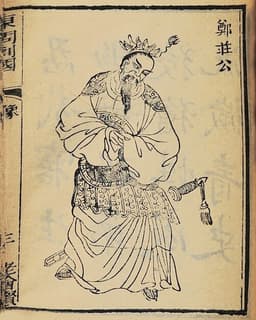
Duke Zhuang of Zheng
Emperor · Ancient
57.1Total
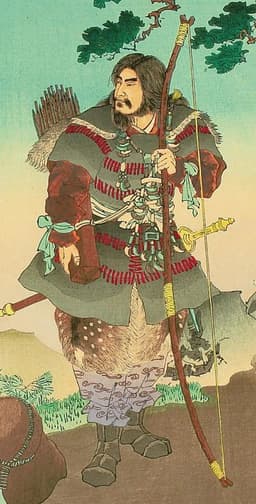
Emperor Jimmu
Emperor · Ancient
45.7Total
Basic Information
Born
-757
-711
Died
-701
-585
Era
Ancient
Ancient
Nationality
Zheng
Japan
Occupation
Emperor
Emperor
Civilization
Eastern
Eastern
Score Comparison
Military (10%)
74.7
50.0
Political (20%)
53.8
27.9
Influence (20%)
54.1
54.9
Legacy (20%)
48.3
48.3
Leadership (15%)
66.0
45.0
Strategy (15%)
60.7
39.6
TOTAL
57.1
45.7
Duke Zhuang of Zheng — Complete Timeline
707 BC
Battle of XugeWar
Duke Zhuang of Zheng defeated the Zhou royal army led by King Huan at Xuge. This battle shattered the prestige of the Zhou king, as a feudal lord openly defeated the Son of Heaven. Duke Zhuang became the first hegemon of the Spring and Autumn period.
Spring and AutumnZhengZhou Defeat
Impact: national
701 BC
Zheng succession crisisPolitical Action◆ Major
After Duke Zhuang's death, his sons fought over the succession, plunging Zheng into civil war. The state's power declined rapidly as internal strife allowed other states like Qi to rise as hegemons.
ZhengSuccession WarDecline
Impact: regionaldestructive
Emperor Jimmu — Complete Timeline
660 BC
The Eastern Expedition (Tōsei)War◆ Major
Jimmu led the Eastern Expedition from Hyuga (southern Kyushu) eastward, conquering territories through battles such as the Battle of Usa and the Battle of Takachiho. This campaign is described in the Nihon Shoki and Kojiki as the founding military conquest of Japan.
Military CampaignConquestMythology
Impact: national
Legendary founding of the Japanese imperial dynastyPolitical Action◆ Major
According to Japanese mythology, Emperor Jimmu became the first emperor of Japan in 660 BC after leading a military campaign from Kyushu to Yamato. He is said to have established the imperial dynasty at Kashihara, unifying the warring clans under his rule.
FoundingImperial DynastyMythology
Impact: national
Enthronement at KashiharaPolitical Action◆ Major
After his conquest, Jimmu was enthroned as emperor at the Kashihara Palace in Yamato (present-day Nara Prefecture) on the first day of the first month of 660 BC. This event is considered the traditional founding date of the Japanese imperial line.
EnthronementImperial LineMythology
Impact: national
Establishment of the Three Sacred TreasuresPolitical Action◆ Major
According to legend, Jimmu received the Three Sacred Treasures (the sword Kusanagi, the mirror Yata no Kagami, and the jewel Yasakani no Magatama) from the gods, which became the imperial regalia symbolizing the emperor's divine right to rule Japan.
Imperial RegaliaMythologySymbolism
Impact: national
585 BC
Death and deificationOther◆ Major
Emperor Jimmu died in 585 BC at the age of 126 according to traditional accounts. He was later deified as a kami (spirit) in Shinto, and his tomb is traditionally located in the Unebiyama area of Nara Prefecture. His legacy as the founder of Japan's imperial line continues to be celebrated.
DeathDeificationImperial Legacy
Impact: national
Expert Analysis
Origins
**Duke Zhuang of Zheng** (born 757 BC, reigned 743–701 BC) was the son of Duke Wu of Zheng, a vassal state of the Zhou dynasty. His family had been granted the territory of Zheng in 806 BC, and his father expanded its influence through strategic marriages and alliances. Duke Zhuang was educated in statecraft and military tactics from a young age, inheriting a stable but secondary state.
**Emperor Jimmu** (traditionally 711–585 BC) is a legendary figure, said to be a descendant of the sun goddess Amaterasu. According to the *Nihon Shoki* and *Kojiki*, he was born in Hyuga (southern Kyushu) and led an eastern expedition to conquer Yamato. His historicity is debated, but he remains central to Japanese imperial mythology.
Rise to Power
Duke Zhuang ascended the throne of Zheng in 743 BC. He quickly asserted independence from the Zhou king, who was weakening. In 719 BC, he allied with other states to defend against Song, but his key turning point came in 707 BC at the Battle of Xuge. There, Duke Zhuang defeated the Zhou royal army led by King Huan, wounding the king with an arrow. This victory shattered the Zhou king's military prestige and established Duke Zhuang as the first hegemon (ba) of the Spring and Autumn period.
Emperor Jimmu's rise is entirely mythical. At age 45, he decided to lead an eastern expedition from Hyuga, aiming to conquer the fertile Yamato region. His campaign, known as the Tōsei (Eastern Expedition), involved battles against local chieftains like Nagasunehiko. After a series of victories, including the Battle of Usa, Jimmu established his capital at Kashihara in 660 BC, becoming the first emperor of Japan.
Leadership & Governance
Duke Zhuang governed Zheng with a focus on military strength and strategic diplomacy. He formed alliances with states like Qi and Lu, but also used force to compel obedience. He reformed Zheng's administration, centralizing power and reducing noble influence. His leadership was pragmatic: he broke the Zhou taboo but did not overthrow the dynasty, instead exploiting its weakness for his own benefit.
Emperor Jimmu, as legend tells, established the imperial system, claiming divine ancestry. He introduced centralized rule and the Three Sacred Treasures as symbols of authority. His governance was based on conquest and assimilation of local tribes. However, his historical impact is more symbolic than administrative, as detailed records of his policies are absent.
Triumph & Tragedy
Duke Zhuang's greatest triumph was the Battle of Xuge, where he defeated the Zhou king and became the first hegemon. He also expanded Zheng's territory and influence. However, his greatest failure was the succession crisis after his death. His sons fought a civil war (701–680 BC), leading to Zheng's rapid decline. By the late 7th century BC, Zheng was a minor state, never recovering its former power.
Emperor Jimmu's triumph was the legendary founding of the Japanese imperial dynasty, which continues to the present day. His tragedy lies in the lack of historical evidence; many scholars consider him a mythical figure. His supposed reign (660–585 BC) is not corroborated by archaeology, and the actual unification of Japan occurred centuries later.
Character & Destiny
Duke Zhuang was decisive and ambitious, willing to challenge the Zhou order. He scored 74.7 in military and 66.0 in leadership, reflecting his strategic acumen. However, his political score of 53.8 indicates a failure to secure a lasting succession, leading to his state's downfall. His character—bold but short-sighted—shaped Zheng's fate.
Emperor Jimmu is portrayed as a divinely guided warrior-king. His military score of 50.0 and leadership of 45.0 are lower, but his influence score of 54.9 reflects his symbolic power. His destiny was to establish a dynasty that would claim unbroken rule for over 2,600 years. Yet, his legend obscures the actual historical development of Japan.
Legacy
Duke Zhuang's legacy is the concept of hegemon (ba) in Chinese history, where powerful lords dominated weaker states. His defeat of the Zhou king accelerated the decline of the Zhou dynasty, leading to the Warring States period. He scored 48.3 in legacy, as his state faded but his actions reshaped Chinese politics.
Emperor Jimmu's legacy is immense in Japan: he is revered as the first emperor and a kami in Shinto. His mythical reign provides legitimacy for the imperial line. His legacy score is also 48.3, tied with Duke Zhuang, but his influence on Japanese identity is profound. The current emperor, Naruhito, traces his lineage to Jimmu.
Conclusion
Duke Zhuang of Zheng had greater historical impact than Emperor Jimmu. While Jimmu's legend is culturally significant, Duke Zhuang's actions had verifiable, transformative effects on Chinese history. He scored a total of 57.1 against Jimmu's 45.7, with advantages in military (74.7 vs 50.0), political (53.8 vs 27.9), and leadership (66.0 vs 45.0). His defeat of the Zhou king at Xuge was a concrete event that changed the power structure of ancient China, whereas Jimmu's conquests are mythical and unsubstantiated. Therefore, Duke Zhuang of Zheng stands as the more impactful ruler.
Rankings
🥇
Duke Zhuang of ZhengLeader
Mil: 74.7Pol: 53.8Inf: 54.1
57.1
🥈
Emperor Jimmu
Mil: 50.0Pol: 27.9Inf: 54.9
45.7
+11.4 behind
How This Comparison Works
Algorithm
Each figure is scored on 6 dimensions (0—100 scale) based on structured historical data: Military (10%), Political (20%), Influence (20%), Legacy (20%), Leadership (15%), Strategy (15%). The weighted total produces the final ranking.
Data Sources
Scores are computed from structured sub-indicators in the database. Scale factors adjust for era (Ancient ×0.85, Modern ×1.0) and civilization size (Eastern ×1.05, Other ×0.80) to account for differences in population and military scale.
Maximum 3 Figures
Comparisons are limited to 2—3 figures to ensure readability and statistical meaningfulness.
Error Margins
±5 points per dimension — Sub-scores are derived from historical records with inherent uncertainty. Two figures within 5 points on a dimension should be considered roughly equivalent in that area.
Total Score Accuracy
±3 points overall — The weighted combination of 6 dimensions produces a total score with approximately ±3 points of uncertainty. Differences of less than 3 points are not statistically significant— the figures are effectively tied.
Known Limitations
- Historical records are incomplete and uneven across civilizations
- Figures from oral-tradition societies may be underrepresented
- Occupation labels can misclassify multi-role figures
- Scores measure capability and impact, not moral character
- Quantitative scoring is a comparison tool, not absolute truth
Capability Radar
Military (10%) — Battles & Warfare
Battles
65
10
Win Rate
70
10
Expansion
55
15
Political (20%) — Governance & Reform
Reform
55
15
Diplomacy
75
10
Economy
60
10
Influence (20%) — Cultural & Global Reach
Cultural
45
40
Global
40
30
Legacy (20%) — Historical Impact
Historical
60
40
Longevity
50
50
Leadership (15%) — Power & Stability
Tenure
70
20
Stability
65
15
Strategy (15%) — Tactics & Innovation
Strategy
65
10
Tactics
60
10
Reform
40
5
Similar Comparisons
Comments & Discussion
No comments yet. Be the first to share your thoughts!