Loading...
Constantine IV vs Emperor Jimmu
Constantine IV leads by 15.5 pts · 2 figures compared
…

Constantine IV
Emperor · Ancient
61.2Total
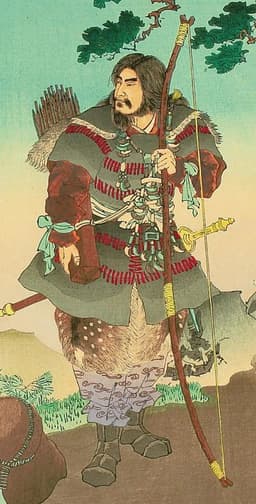
Emperor Jimmu
Emperor · Ancient
45.7Total
Basic Information
Born
-650
-711
Died
—
-585
Era
Ancient
Ancient
Nationality
Byzantine Empire
Japan
Occupation
Emperor
Emperor
Civilization
Western
Eastern
Score Comparison
Military (10%)
67.3
50.0
Political (20%)
62.7
27.9
Influence (20%)
58.0
54.9
Legacy (20%)
52.0
48.3
Leadership (15%)
72.0
45.0
Strategy (15%)
67.2
39.6
TOTAL
61.2
45.7
Constantine IV — Complete Timeline
678 AD
Defeated the Arab siege of ConstantinopleWar
Constantine IV successfully defended Constantinople against a massive Arab siege that lasted from 674 to 678. The Byzantine victory, aided by the use of Greek fire, forced the Umayyad Caliphate to sue for peace and pay tribute.
Arab-Byzantine WarsSiegeGreek Fire
Impact: globalconstructive
680 AD
Reorganized the Byzantine army into themesReform◆ Major
Constantine IV continued the reorganization of the Byzantine military into thematic provinces. This system, which combined civil and military authority, proved effective in defending the empire against external threats.
Military ReformAdministrationByzantine Empire
Impact: nationalconstructive
Convened the Third Council of ConstantinopleCultural◆ Major
Constantine IV convened the Third Council of Constantinople, which condemned Monothelitism as a heresy. The council restored religious unity between Constantinople and Rome, ending a long-standing theological dispute.
Ecumenical CouncilReligious UnityByzantine Empire
Impact: regionalconstructive
Emperor Jimmu — Complete Timeline
660 BC
The Eastern Expedition (Tōsei)War◆ Major
Jimmu led the Eastern Expedition from Hyuga (southern Kyushu) eastward, conquering territories through battles such as the Battle of Usa and the Battle of Takachiho. This campaign is described in the Nihon Shoki and Kojiki as the founding military conquest of Japan.
Military CampaignConquestMythology
Impact: national
Legendary founding of the Japanese imperial dynastyPolitical Action◆ Major
According to Japanese mythology, Emperor Jimmu became the first emperor of Japan in 660 BC after leading a military campaign from Kyushu to Yamato. He is said to have established the imperial dynasty at Kashihara, unifying the warring clans under his rule.
FoundingImperial DynastyMythology
Impact: national
Enthronement at KashiharaPolitical Action◆ Major
After his conquest, Jimmu was enthroned as emperor at the Kashihara Palace in Yamato (present-day Nara Prefecture) on the first day of the first month of 660 BC. This event is considered the traditional founding date of the Japanese imperial line.
EnthronementImperial LineMythology
Impact: national
Establishment of the Three Sacred TreasuresPolitical Action◆ Major
According to legend, Jimmu received the Three Sacred Treasures (the sword Kusanagi, the mirror Yata no Kagami, and the jewel Yasakani no Magatama) from the gods, which became the imperial regalia symbolizing the emperor's divine right to rule Japan.
Imperial RegaliaMythologySymbolism
Impact: national
585 BC
Death and deificationOther◆ Major
Emperor Jimmu died in 585 BC at the age of 126 according to traditional accounts. He was later deified as a kami (spirit) in Shinto, and his tomb is traditionally located in the Unebiyama area of Nara Prefecture. His legacy as the founder of Japan's imperial line continues to be celebrated.
DeathDeificationImperial Legacy
Impact: national
Expert Analysis
Origins
Constantine IV was born in 652 AD into the Heraclian dynasty of the Byzantine Empire. His father, Constans II, was emperor, and his mother, Fausta, was a daughter of the patrician Valentinus. Constantine received a traditional imperial education, learning military strategy, theology, and governance from a young age. He became co-emperor with his father in 654 and assumed full rule after Constans II's assassination in 668.
Emperor Jimmu, according to Japanese mythology, was born in 711 BC in Hyuga (southern Kyushu) as the son of Prince Hikohohodemi and Princess Tama-yori-hime. He was a descendant of the sun goddess Amaterasu through her grandson Ninigi. Traditional accounts place his birth in 711 BC and his reign from 660 to 585 BC. However, modern historians consider Jimmu a legendary figure, with the earliest written records appearing in the 8th-century chronicles Kojiki and Nihon Shoki. No archaeological evidence confirms his existence.
Rise to Power
Constantine IV became senior emperor at age 16 after his father's murder. He immediately faced threats from the Arabs, who had been pressing Byzantine territory for decades. In 674, the Arab fleet under Caliph Muawiyah I began a massive siege of Constantinople, blockading the city by sea and land. Constantine took personal command of the defense, coordinating the use of Greek fire, a flammable liquid that could burn on water. The siege lasted four years, with the Byzantines repelling repeated assaults. In 678, the Arab fleet was decisively defeated, and a 30-year peace treaty was signed. This victory solidified Constantine's authority and saved the Byzantine Empire from collapse.
Jimmu's rise is recounted in the Nihon Shoki as the Eastern Expedition (Tōsei). He led an army from Hyuga eastward, conquering local chieftains in battles such as the Battle of Usa and the Battle of Tomi. After several victories, he established his capital in Yamato (present-day Nara Prefecture). The legend states that he was guided by a divine crow (Yatagarasu) and received the Three Sacred Treasures from heaven. He was enthroned at Kashihara Palace on the first day of the first month of 660 BC, marking the traditional founding of the Japanese imperial dynasty.
Leadership & Governance
Constantine IV's leadership was pragmatic and focused on survival. He reorganized the Byzantine army into themes, a system where provinces were under the command of a strategos who held both military and civil authority. This decentralization allowed faster responses to invasions. He also convened the Third Council of Constantinople (680-681) to resolve the Monothelite controversy, which had divided the church. The council condemned Monothelitism and restored religious unity, strengthening the empire's internal cohesion. Constantine's governance scored 72.0 in leadership and 67.2 in strategy, reflecting his effective crisis management.
Jimmu's governance is primarily legendary. He is credited with establishing the imperial court and the Three Sacred Treasures (sword, mirror, jewel) as symbols of imperial authority. However, the historical accuracy of his reforms is unknown. His political score of 27.9 and leadership of 45.0 suggest limited tangible impact compared to historical figures. His rule is defined more by myth than by administrative achievements.
Triumph & Tragedy
Constantine IV's greatest triumph was the defense of Constantinople against the Arab siege, a turning point that prevented Islamic expansion into Europe. His use of Greek fire and strategic patience were decisive. He also successfully restored religious unity through the Third Council of Constantinople. His greatest failure was the loss of North Africa to the Arabs in 698, after his death, but during his reign he was unable to fully recover lost territories. He faced a revolt by his brothers, whom he had mutilated to secure his rule, a brutal act that tarnished his legacy.
Jimmu's triumph is the legendary founding of Japan's imperial line, which continues to this day. His Eastern Expedition is seen as the mythological origin of the Japanese state. However, as a historical figure, he has no verifiable achievements. His failures are inherent in the lack of evidence: he cannot be credited with any concrete reforms or lasting structures beyond myth. His influence score of 54.9 is largely due to his symbolic role.
Character & Destiny
Constantine IV was determined and decisive, taking personal command in crisis. He was also ruthless, as shown by mutilating his brothers to prevent usurpation. His character combined military competence with political calculation. His destiny was to be the emperor who saved Constantinople, but his early death at age 33 from dysentery cut short his potential.
Jimmu's character is idealized in myth: brave, pious, and divinely guided. His destiny was to be the first emperor, establishing a line that would rule for millennia. However, his historical character is unknowable.
Legacy
Constantine IV's legacy is tangible: he preserved the Byzantine Empire for another 800 years, influenced military organization through the theme system, and shaped Christian theology through the Third Council of Constantinople. His scores reflect moderate impact: military 67.3, political 62.7, legacy 52.0. He is remembered as a capable emperor who faced existential threats.
Jimmu's legacy is symbolic: he is the mythical ancestor of Japan's imperial family, which claims unbroken lineage. His reign date (660 BC) was used to calculate the Japanese calendar until 1945. However, his legacy score of 48.3 is lower because his existence is unproven. Modern historians regard him as a legendary figure, not a historical ruler.
Conclusion
Constantine IV had a greater impact on world history. His defense of Constantinople in 674-678 prevented the Arab conquest of Europe, altered the course of Christian-Islamic relations, and allowed the Byzantine Empire to survive. His administrative and religious reforms had lasting effects. Jimmu's impact is purely symbolic and unverifiable. While the Japanese imperial institution is historically significant, its foundation by Jimmu is legendary, not factual. Constantine IV's total score of 61.2 versus Jimmu's 45.7 reflects this disparity. Constantine IV was the more consequential figure.
Rankings
🥇
Constantine IVLeader
Mil: 67.3Pol: 62.7Inf: 58.0
61.2
🥈
Emperor Jimmu
Mil: 50.0Pol: 27.9Inf: 54.9
45.7
+15.5 behind
How This Comparison Works
Algorithm
Each figure is scored on 6 dimensions (0—100 scale) based on structured historical data: Military (10%), Political (20%), Influence (20%), Legacy (20%), Leadership (15%), Strategy (15%). The weighted total produces the final ranking.
Data Sources
Scores are computed from structured sub-indicators in the database. Scale factors adjust for era (Ancient ×0.85, Modern ×1.0) and civilization size (Eastern ×1.05, Other ×0.80) to account for differences in population and military scale.
Maximum 3 Figures
Comparisons are limited to 2—3 figures to ensure readability and statistical meaningfulness.
Error Margins
±5 points per dimension — Sub-scores are derived from historical records with inherent uncertainty. Two figures within 5 points on a dimension should be considered roughly equivalent in that area.
Total Score Accuracy
±3 points overall — The weighted combination of 6 dimensions produces a total score with approximately ±3 points of uncertainty. Differences of less than 3 points are not statistically significant— the figures are effectively tied.
Known Limitations
- Historical records are incomplete and uneven across civilizations
- Figures from oral-tradition societies may be underrepresented
- Occupation labels can misclassify multi-role figures
- Scores measure capability and impact, not moral character
- Quantitative scoring is a comparison tool, not absolute truth
Capability Radar
Military (10%) — Battles & Warfare
Battles
75
10
Win Rate
80
10
Expansion
40
15
Political (20%) — Governance & Reform
Reform
55
15
Diplomacy
70
10
Economy
60
10
Influence (20%) — Cultural & Global Reach
Cultural
50
40
Global
60
30
Legacy (20%) — Historical Impact
Historical
65
40
Longevity
55
50
Leadership (15%) — Power & Stability
Tenure
65
20
Stability
65
15
Strategy (15%) — Tactics & Innovation
Strategy
75
10
Tactics
70
10
Reform
60
5
Similar Comparisons
Comments & Discussion
No comments yet. Be the first to share your thoughts!