Loading...
This comparison has not been analyzed yet.
One-time AI generation (~1 minute). Scores and timeline are already available below.
Emperor Jimmu vs Saloninus
Saloninus leads by 5.6 pts · 2 figures compared
…
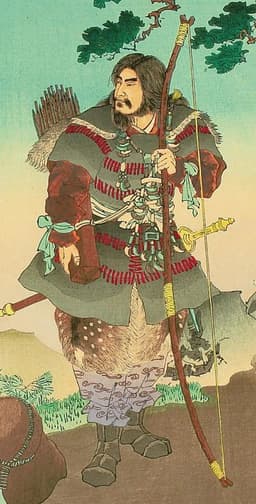
Emperor Jimmu
Emperor · Ancient
45.7Total
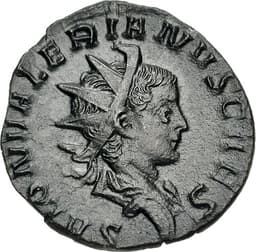
Saloninus
Emperor · Ancient
51.3Total
Basic Information
Born
-711
242
Died
-585
260
Era
Ancient
Ancient
Nationality
Japan
Roman Empire
Occupation
Emperor
Emperor
Civilization
Eastern
Western
Score Comparison
Military (10%)
50.0
16.7
Political (20%)
27.9
68.0
Influence (20%)
54.9
56.9
Legacy (20%)
48.3
57.3
Leadership (15%)
45.0
45.0
Strategy (15%)
39.6
41.4
TOTAL
45.7
51.3
Emperor Jimmu — Complete Timeline
660 BC
The Eastern Expedition (Tōsei)War◆ Major
Jimmu led the Eastern Expedition from Hyuga (southern Kyushu) eastward, conquering territories through battles such as the Battle of Usa and the Battle of Takachiho. This campaign is described in the Nihon Shoki and Kojiki as the founding military conquest of Japan.
Military CampaignConquestMythology
Impact: national
Legendary founding of the Japanese imperial dynastyPolitical Action◆ Major
According to Japanese mythology, Emperor Jimmu became the first emperor of Japan in 660 BC after leading a military campaign from Kyushu to Yamato. He is said to have established the imperial dynasty at Kashihara, unifying the warring clans under his rule.
FoundingImperial DynastyMythology
Impact: national
Enthronement at KashiharaPolitical Action◆ Major
After his conquest, Jimmu was enthroned as emperor at the Kashihara Palace in Yamato (present-day Nara Prefecture) on the first day of the first month of 660 BC. This event is considered the traditional founding date of the Japanese imperial line.
EnthronementImperial LineMythology
Impact: national
Establishment of the Three Sacred TreasuresPolitical Action◆ Major
According to legend, Jimmu received the Three Sacred Treasures (the sword Kusanagi, the mirror Yata no Kagami, and the jewel Yasakani no Magatama) from the gods, which became the imperial regalia symbolizing the emperor's divine right to rule Japan.
Imperial RegaliaMythologySymbolism
Impact: national
585 BC
Death and deificationOther◆ Major
Emperor Jimmu died in 585 BC at the age of 126 according to traditional accounts. He was later deified as a kami (spirit) in Shinto, and his tomb is traditionally located in the Unebiyama area of Nara Prefecture. His legacy as the founder of Japan's imperial line continues to be celebrated.
DeathDeificationImperial Legacy
Impact: national
Saloninus — Complete Timeline
258 AD
Appointed co-emperor by GallienusPolitical Action◆ Major
Saloninus was appointed as Caesar (junior emperor) by his father Gallienus, who ruled the western provinces. This elevated Saloninus to the imperial succession and placed him in charge of Gaul under the supervision of the praetorian prefect Silvanus.
Imperial SuccessionRoman Empire
Impact: regional
260 AD
Besieged in Colonia Agrippina by PostumusWar◆ Major
After Postumus rebelled and killed the co-emperor's guardian Silvanus, Saloninus was besieged in Colonia Agrippina (Cologne). The city fell to Postumus's forces after a short siege.
Gallic EmpireSiegeUsurpation
Impact: regionaltragic
Executed by Postumus's forcesPolitical Action◆ Major
Following the capture of Colonia Agrippina, Saloninus was executed on the orders of Postumus, the Gallic usurper. His death ended the legitimate imperial presence in Gaul and solidified Postumus's control over the breakaway Gallic Empire.
ExecutionGallic EmpireCrisis of the Third Century
Impact: regionaltragic
This comparison has not been analyzed yet.
One-time AI generation (~1 minute). Scores and timeline are already available below.
Rankings
🥇
SaloninusLeader
Mil: 16.7Pol: 68.0Inf: 56.9
51.3
🥈
Emperor Jimmu
Mil: 50.0Pol: 27.9Inf: 54.9
45.7
+5.6 behind
How This Comparison Works
Algorithm
Each figure is scored on 6 dimensions (0—100 scale) based on structured historical data: Military (10%), Political (20%), Influence (20%), Legacy (20%), Leadership (15%), Strategy (15%). The weighted total produces the final ranking.
Data Sources
Scores are computed from structured sub-indicators in the database. Scale factors adjust for era (Ancient ×0.85, Modern ×1.0) and civilization size (Eastern ×1.05, Other ×0.80) to account for differences in population and military scale.
Maximum 3 Figures
Comparisons are limited to 2—3 figures to ensure readability and statistical meaningfulness.
Error Margins
±5 points per dimension — Sub-scores are derived from historical records with inherent uncertainty. Two figures within 5 points on a dimension should be considered roughly equivalent in that area.
Total Score Accuracy
±3 points overall — The weighted combination of 6 dimensions produces a total score with approximately ±3 points of uncertainty. Differences of less than 3 points are not statistically significant— the figures are effectively tied.
Known Limitations
- Historical records are incomplete and uneven across civilizations
- Figures from oral-tradition societies may be underrepresented
- Occupation labels can misclassify multi-role figures
- Scores measure capability and impact, not moral character
- Quantitative scoring is a comparison tool, not absolute truth
Capability Radar
Military (10%) — Battles & Warfare
Battles
10
7
Win Rate
10
7
Expansion
15
14
Political (20%) — Governance & Reform
Reform
15
0
Diplomacy
10
0
Economy
10
0
Influence (20%) — Cultural & Global Reach
Cultural
40
65
Global
30
79
Legacy (20%) — Historical Impact
Historical
40
68
Longevity
50
75
Leadership (15%) — Power & Stability
Tenure
20
5
Stability
15
0
Strategy (15%) — Tactics & Innovation
Strategy
10
12
Tactics
10
20
Reform
5
19
Similar Comparisons
Comments & Discussion
No comments yet. Be the first to share your thoughts!