Loading...
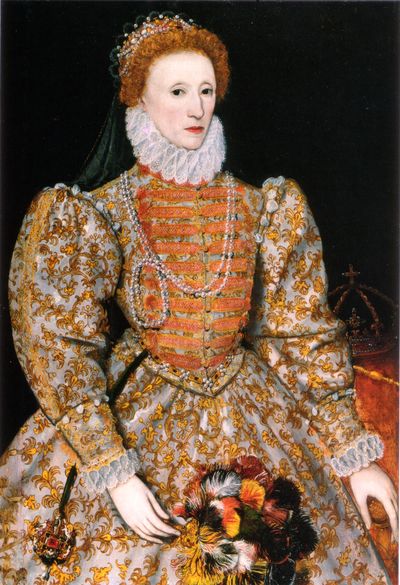
Elizabeth I
ModernPoliticianEngland1533 — 1603
英格兰女王,开创伊丽莎白时代。击败西班牙无敌舰队,推动文艺复兴。
Compare Elizabeth I with another historical figure:
Quick Facts
Born
1533
Died
1603
Country
England
Era
Modern
Occupation
Politician
Score Overview
Military (10%)45
Political (20%)78
Influence (20%)65
Legacy (20%)68
Leadership (15%)75
Strategy (15%)50
Total Score65.7
Elizabeth I — Complete Timeline
1559 AD
Act of Supremacy 1559Political Action◆ Major
Elizabeth I re-established the Church of England's independence from Rome, declaring herself Supreme Governor. This act, part of the Elizabethan Religious Settlement, restored Protestantism while maintaining some Catholic traditions, creating a via media that aimed to unify the nation.
Religious SettlementProtestantismChurch of England
Impact: nationalconstructive
1587 AD
Execution of Mary, Queen of ScotsPolitical Action◆ Major
After years of imprisonment, Elizabeth I signed the death warrant for Mary, Queen of Scots, who had been implicated in the Babington Plot to assassinate Elizabeth and claim the English throne. Mary's execution removed a major Catholic rival and solidified Elizabeth's position.
ExecutionCatholic RivalPlot
Impact: nationaltragic
1588 AD
Defeat of the Spanish ArmadaWar
The English navy under Lord Howard and Sir Francis Drake defeated the Spanish Armada, a massive invasion fleet sent by Philip II. Storms and English fireships scattered the Spanish fleet, preventing the invasion and establishing England as a major naval power.
Naval BattleSpainProtestantism
Impact: globalconstructive
1600 AD
Chartering of the East India CompanyPolitical Action◆ Major
Elizabeth I granted a royal charter to the East India Company, giving it a monopoly on English trade with Asia. This company would become a powerful instrument of British imperialism, eventually controlling large parts of India and shaping global trade.
TradeColonialismCharter
Impact: globalconstructive
1601 AD
Golden SpeechPolitical Action
In her final address to Parliament, Elizabeth I delivered the 'Golden Speech,' expressing her love for her subjects and her dedication to the realm. She addressed grievances over monopolies, promising reform, and cemented her image as a beloved monarch devoted to her people.
SpeechParliamentMonarchy
Impact: nationalconstructive
Detailed Scores
▶View all detailed scores
Military
Strategy
6
Tactics
6
Battles
6
Army Scale
6
War Impact
6
Political
Governance
7
Reform
7
Stability
7
Policy
7
Power
8
Influence
History
8
Global
8
Culture
8
Ideology
8
Legacy
8
People often compare with
See how Elizabeth I stacks up against other historical figures
Popular Comparisons
Elizabeth I vs Mustafa Kemal Ataturk
vs Mustafa Kemal Ataturk80
Elizabeth I vs Mao Zedong
vs Mao Zedong79
Elizabeth I vs Abraham Lincoln
vs Abraham Lincoln78
Elizabeth I vs George Washington
vs George Washington77
Elizabeth I vs Winston Churchill
vs Winston Churchill72
Elizabeth I vs Franklin D. Roosevelt
vs Franklin D. Roosevelt71