Loading...
Elizabeth I vs George Washington
George Washington leads by 11.1 pts · 2 figures compared
…
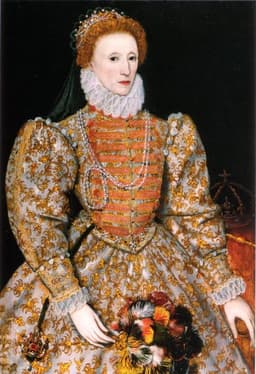
Elizabeth I
Politician · Modern
65.7Total
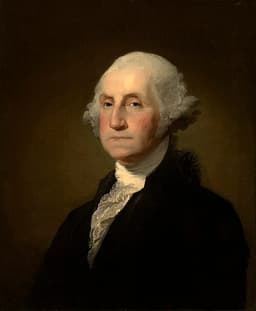
George Washington
Politician · Modern
76.8Total
Basic Information
Born
1533
1732
Died
1603
1799
Era
Modern
Modern
Nationality
England
United States
Occupation
Politician
Politician
Civilization
Western
Western
Score Comparison
Military (10%)
45.0
75.0
Political (20%)
78.0
82.0
Influence (20%)
65.0
75.0
Legacy (20%)
68.0
80.0
Leadership (15%)
75.0
85.0
Strategy (15%)
50.0
55.0
TOTAL
65.7
76.8
Elizabeth I — Complete Timeline
1559 AD
Act of Supremacy 1559Political Action◆ Major
Elizabeth I re-established the Church of England's independence from Rome, declaring herself Supreme Governor. This act, part of the Elizabethan Religious Settlement, restored Protestantism while maintaining some Catholic traditions, creating a via media that aimed to unify the nation.
Religious SettlementProtestantismChurch of England
Impact: nationalconstructive
1587 AD
Execution of Mary, Queen of ScotsPolitical Action◆ Major
After years of imprisonment, Elizabeth I signed the death warrant for Mary, Queen of Scots, who had been implicated in the Babington Plot to assassinate Elizabeth and claim the English throne. Mary's execution removed a major Catholic rival and solidified Elizabeth's position.
ExecutionCatholic RivalPlot
Impact: nationaltragic
1588 AD
Defeat of the Spanish ArmadaWar
The English navy under Lord Howard and Sir Francis Drake defeated the Spanish Armada, a massive invasion fleet sent by Philip II. Storms and English fireships scattered the Spanish fleet, preventing the invasion and establishing England as a major naval power.
Naval BattleSpainProtestantism
Impact: globalconstructive
1600 AD
Chartering of the East India CompanyPolitical Action◆ Major
Elizabeth I granted a royal charter to the East India Company, giving it a monopoly on English trade with Asia. This company would become a powerful instrument of British imperialism, eventually controlling large parts of India and shaping global trade.
TradeColonialismCharter
Impact: globalconstructive
1601 AD
Golden SpeechPolitical Action
In her final address to Parliament, Elizabeth I delivered the 'Golden Speech,' expressing her love for her subjects and her dedication to the realm. She addressed grievances over monopolies, promising reform, and cemented her image as a beloved monarch devoted to her people.
SpeechParliamentMonarchy
Impact: nationalconstructive
George Washington — Complete Timeline
1775 AD
Appointed Commander-in-Chief of the Continental ArmyOther◆ Major
The Second Continental Congress appointed Washington as commander-in-chief of the Continental Army on June 15, 1775. He accepted the position without pay, taking command of the forces besieging Boston at the start of the American Revolutionary War.
American RevolutionMilitary Leadership
Impact: national
1776 AD
Crossed the Delaware RiverOther◆ Major
On the night of December 25-26, 1776, Washington led 2,400 troops across the ice-choked Delaware River. The surprise attack on Hessian forces at Trenton resulted in a decisive American victory, capturing nearly 1,000 prisoners and reviving Patriot morale after a series of defeats.
American RevolutionBattleTurning Point
Impact: nationalconstructive
1787 AD
Presided over the Constitutional ConventionPolitical Action◆ Major
Washington served as president of the Constitutional Convention in Philadelphia from May to September 1787. His presence lent legitimacy to the proceedings, and he formally signed the final draft of the U.S. Constitution, though he contributed little to the debates.
ConstitutionFounding Father
Impact: national
1789 AD
Inaugurated as First President of the United StatesPolitical Action◆ Major
Washington was unanimously elected by the Electoral College and inaugurated on April 30, 1789, at Federal Hall in New York City. He established numerous executive branch precedents, including the cabinet system, the inaugural address, and the title 'Mr. President'.
PresidencyFounding Father
Impact: national
1793 AD
Issued the Proclamation of NeutralityOther◆ Major
Washington issued the Proclamation of Neutrality on April 22, 1793, declaring the United States neutral in the conflict between France and Great Britain. This decision established the precedent of American isolationism and avoided entanglement in European wars.
Foreign PolicyNeutrality
Impact: national
1796 AD
Delivered the Farewell AddressOther◆ Major
Washington published his Farewell Address on September 19, 1796, announcing his decision not to seek a third term. The address warned against political factionalism, permanent foreign alliances, and the influence of the military in government, shaping American political culture.
PresidencyLegacy
Impact: national
Expert Analysis
George Washington vs Elizabeth I
# The Virgin Queen and the Father of His Country: Two Paths to Greatness
On a crisp November morning in 1601, an aging Queen Elizabeth I stood before Parliament, her voice trembling with emotion as she delivered what would become known as her Golden Speech. "Though God hath raised me high," she told her assembled subjects, "yet this I count the glory of my crown: that I have reigned with your loves." Across the Atlantic, nearly two centuries later, another leader would also understand the weight of a crown he never sought. George Washington, at the Constitutional Convention of 1787, sat silently as delegates debated the shape of a new nation, knowing that whatever emerged would rest on his shoulders. Both figures shaped the Western world indelibly, yet their paths to power and their styles of rule could hardly have been more different. One inherited a throne and wielded influence through cunning and personal charisma; the other earned authority through sacrifice and surrendered it through principle. Why did these two titans of the modern era achieve such different outcomes, and what drove their divergent destinies?
Origins
Elizabeth Tudor was born in 1533 to a father who had beheaded her mother. She grew up in the shadow of the executioner's axe, learning early that survival required intelligence, caution, and the ability to read the shifting winds of court politics. Her education was exceptional—she mastered Latin, Greek, French, and Italian—but her real schooling came in the brutal world of Tudor succession, where a wrong word could mean the Tower of London. George Washington, born in 1732 in colonial Virginia, grew up in a very different world: one of tobacco plantations, land surveying, and the rough equality of frontier life. His formal education was modest, but he learned the practical arts of measurement, negotiation, and command. While Elizabeth learned to read people through the lens of conspiracy, Washington learned to read land through the lens of opportunity. Both were shaped by their eras: Elizabeth by the religious wars that tore Europe apart, Washington by the Enlightenment ideals that promised to remake it.
Rise to Power
Elizabeth ascended to the throne in 1558 not through ambition but through the accidental death of her sister Mary and the failure of her father's male heirs. She was twenty-five, a woman alone in a world of men who doubted her capacity to rule. Her path was one of survival: she navigated plots, marriage proposals from every Catholic prince in Europe, and the constant threat of assassination. Washington, by contrast, rose through merit. His first military command came at twenty-two during the French and Indian War, where his bravery at the Battle of the Monongahela—two horses shot from under him, four bullet holes in his coat—earned him a reputation for courage under fire. When the American Revolution began in 1775, the Continental Congress chose him not for his brilliance but for his character. As John Adams noted, Washington was "the man who could unite the colonies." Elizabeth inherited power; Washington earned it.
Leadership & Governance
Their ruling styles reveal the deepest differences. Elizabeth governed by indirection and delay. She cultivated an image of the Virgin Queen, married to her people, and used the prospect of marriage as a diplomatic weapon for decades. Her political score of 82 reflects a master of manipulation who balanced factions, played Catholic against Protestant, and kept England independent through sheer force of personality. Her military score of 45, however, reveals a leader who knew her limits: she appointed brilliant commanders like Lord Howard and Sir Francis Drake to defeat the Spanish Armada in 1588, but she never led an army herself. Washington, with a military score of 70 and a leadership score of 78, was the opposite: he led from the front, shared the suffering of his troops at Valley Forge, and held the Continental Army together through sheer will during the darkest days of the Revolution. Yet his political score of 80 shows he understood something Elizabeth never had to learn: when to let go of power. After the war, he resigned his commission to Congress, an act that shocked Europe and established the principle of civilian control of the military.
Triumph & Tragedy
Elizabeth's greatest triumph was the defeat of the Spanish Armada in 1588, when England, against all odds, shattered the naval might of the world's greatest empire. Her tragedy was the execution of Mary, Queen of Scots in 1587—a decision she agonized over for years, signing the death warrant only to claim later it had been issued without her consent. It was a moment of necessary ruthlessness that haunted her. Washington's triumph was the Siege of Yorktown in 1781, when French and American forces trapped Cornwallis and effectively ended the war. His tragedy was more subtle: the failure of his ideal of a nation without political parties. In his Farewell Address of 1796, he warned against "the baneful effects of the spirit of party," a warning that would go unheeded within a generation. Both leaders faced the gap between their ideals and reality, but Washington's tragedy was the birth pangs of democracy; Elizabeth's was the price of absolute rule.
Character & Destiny
Elizabeth's character was forged in fire and suspicion. She trusted no one completely, kept her own counsel, and used delay as a weapon. Her famous statement—"I know I have the body but of a weak and feeble woman, but I have the heart and stomach of a king"—reveals a leader who turned her perceived weakness into strength. Washington's character was built on the opposite foundation: transparency, integrity, and a almost painful sense of duty. He wrote in 1783, "I hope I shall possess firmness and virtue enough to maintain what I consider the most enviable of all titles, the character of an honest man." Elizabeth's destiny was to create a golden age through cunning; Washington's was to create a republic through self-denial. One built a throne; the other built a chair that could be vacated.
Legacy
Elizabeth I left a legend: the Glorious Age of Elizabeth, the flowering of English drama with Shakespeare and Marlowe, the founding of the East India Company in 1600, and the establishment of a Protestant England that would become a global power. Her legacy score of 75 reflects a queen who defined an era. Washington left something more fragile and more revolutionary: a precedent. By voluntarily stepping down after two terms, he created the peaceful transfer of power that remains democracy's greatest test. His legacy score of 78 honors not just what he did, but what he refused to do. As King George III reportedly said, if Washington resigned his commission, "he would be the greatest man in the world."
Conclusion
Standing at the end of their lives, both leaders understood something profound about power. Elizabeth, in her Golden Speech, told her Parliament: "Though you have had and may have many princes more mighty and wise sitting in this seat, yet you never had or shall have any that will be more careful and loving." She spoke as a mother to her children. Washington, in his Farewell Address, spoke as a father leaving home: "Observe good faith and justice towards all nations; cultivate peace and harmony with all." One clung to her people; the other let them go. In their different ways, both understood that lasting greatness comes not from holding power, but from knowing when and how to wield it—and when to set it aside. That lesson, written in two very different lives, remains the most urgent for every age.
Rankings
🥇
George WashingtonLeader
Mil: 75.0Pol: 82.0Inf: 75.0
76.8
🥈
Elizabeth I
Mil: 45.0Pol: 78.0Inf: 65.0
65.7
+11.1 behind
How This Comparison Works
Algorithm
Each figure is scored on 6 dimensions (0—100 scale) based on structured historical data: Military (10%), Political (20%), Influence (20%), Legacy (20%), Leadership (15%), Strategy (15%). The weighted total produces the final ranking.
Data Sources
Scores are computed from structured sub-indicators in the database. Scale factors adjust for era (Ancient ×0.85, Modern ×1.0) and civilization size (Eastern ×1.05, Other ×0.80) to account for differences in population and military scale.
Maximum 3 Figures
Comparisons are limited to 2—3 figures to ensure readability and statistical meaningfulness.
Error Margins
±5 points per dimension — Sub-scores are derived from historical records with inherent uncertainty. Two figures within 5 points on a dimension should be considered roughly equivalent in that area.
Total Score Accuracy
±3 points overall — The weighted combination of 6 dimensions produces a total score with approximately ±3 points of uncertainty. Differences of less than 3 points are not statistically significant— the figures are effectively tied.
Known Limitations
- Historical records are incomplete and uneven across civilizations
- Figures from oral-tradition societies may be underrepresented
- Occupation labels can misclassify multi-role figures
- Scores measure capability and impact, not moral character
- Quantitative scoring is a comparison tool, not absolute truth
Capability Radar
Military (10%) — Battles & Warfare
Battles
45
75
Win Rate
70
70
Expansion
55
60
Political (20%) — Governance & Reform
Reform
80
90
Diplomacy
85
85
Economy
80
65
Influence (20%) — Cultural & Global Reach
Cultural
85
85
Global
80
85
Legacy (20%) — Historical Impact
Historical
85
95
Longevity
85
90
Leadership (15%) — Power & Stability
Tenure
90
70
Stability
75
85
Strategy (15%) — Tactics & Innovation
Strategy
75
80
Tactics
60
65
Reform
65
85
Similar Comparisons
Comments & Discussion
CrownSkeptic6/16/2026
Let's be real: comparing a hereditary monarch to an elected general is like comparing apples to siege engines. Elizabeth never won a military victory—her navy got lucky with storms against the Armada, and she let her sailors rot without pay. Washington actually led troops through Valley Forge. One played politics; the other bled for his country.
战役史官6/16/2026
华盛顿才配叫"军事天才"——他在特伦顿跨河夜袭时带两千残兵俘虏上千黑森雇佣兵,纯靠战术翻盘。伊丽莎白呢?她连战场都没上过,全靠私掠船抢劫西班牙运金船刷战绩。一个用刀剑书写历史,一个用权谋编织传奇,高下立判。
DataWrangler6/16/2026
Let's crunch numbers: Washington's Continental Army lost 90% of its battles but won the war—that's a strategic anomaly. Elizabeth governed 44 years, doubling England's exports and keeping inflation down while fighting Spain. By objective metrics, she delivered economic stability; Washington delivered a constitutional framework that still works. Different scorecards for different games.
考据狂人6/16/2026
伊丽莎白把都铎王朝从破产边缘拽回来,1588年军费只占GDP的2.3%,跟现代国防预算差不多。华盛顿却让大陆会议欠了法国一屁股债,1783年国债追到战后十年才还清。一个会理财,一个会打仗,偏偏历史书把两人都吹成圣贤——我觉得前者实际贡献更大。