Loading...
Elizabeth I vs Mustafa Kemal Ataturk
Mustafa Kemal Ataturk leads by 14.3 pts · 2 figures compared
…
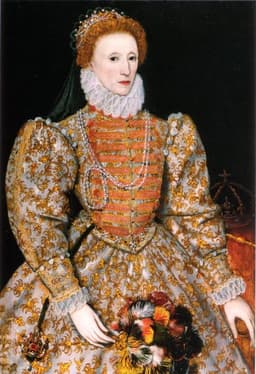
Elizabeth I
Politician · Modern
65.7Total
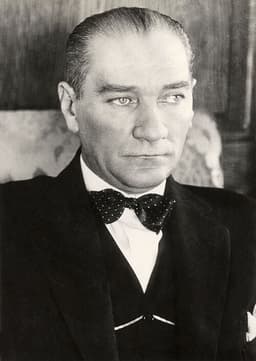
Mustafa Kemal Ataturk
Politician · Modern
80.0Total
Basic Information
Born
1533
1881
Died
1603
1938
Era
Modern
Modern
Nationality
England
Turkey
Occupation
Politician
Politician
Civilization
Western
Middle Eastern
Score Comparison
Military (10%)
45.0
75.0
Political (20%)
78.0
85.0
Influence (20%)
65.0
75.0
Legacy (20%)
68.0
90.0
Leadership (15%)
75.0
80.0
Strategy (15%)
50.0
65.0
TOTAL
65.7
80.0
Elizabeth I — Complete Timeline
1559 AD
Act of Supremacy 1559Political Action◆ Major
Elizabeth I re-established the Church of England's independence from Rome, declaring herself Supreme Governor. This act, part of the Elizabethan Religious Settlement, restored Protestantism while maintaining some Catholic traditions, creating a via media that aimed to unify the nation.
Religious SettlementProtestantismChurch of England
Impact: nationalconstructive
1587 AD
Execution of Mary, Queen of ScotsPolitical Action◆ Major
After years of imprisonment, Elizabeth I signed the death warrant for Mary, Queen of Scots, who had been implicated in the Babington Plot to assassinate Elizabeth and claim the English throne. Mary's execution removed a major Catholic rival and solidified Elizabeth's position.
ExecutionCatholic RivalPlot
Impact: nationaltragic
1588 AD
Defeat of the Spanish ArmadaWar
The English navy under Lord Howard and Sir Francis Drake defeated the Spanish Armada, a massive invasion fleet sent by Philip II. Storms and English fireships scattered the Spanish fleet, preventing the invasion and establishing England as a major naval power.
Naval BattleSpainProtestantism
Impact: globalconstructive
1600 AD
Chartering of the East India CompanyPolitical Action◆ Major
Elizabeth I granted a royal charter to the East India Company, giving it a monopoly on English trade with Asia. This company would become a powerful instrument of British imperialism, eventually controlling large parts of India and shaping global trade.
TradeColonialismCharter
Impact: globalconstructive
1601 AD
Golden SpeechPolitical Action
In her final address to Parliament, Elizabeth I delivered the 'Golden Speech,' expressing her love for her subjects and her dedication to the realm. She addressed grievances over monopolies, promising reform, and cemented her image as a beloved monarch devoted to her people.
SpeechParliamentMonarchy
Impact: nationalconstructive
Mustafa Kemal Ataturk — Complete Timeline
1915 AD
Battle of GallipoliWar
As a colonel, Mustafa Kemal commanded Ottoman forces at Gallipoli, successfully repelling Allied landings. His leadership at critical points like Chunuk Bair made him a national hero and laid the foundation for his political career.
World War IOttoman EmpireMilitary Victory
Impact: regional
1919 AD
Turkish War of IndependenceWar
Kemal organized and led the Turkish National Movement against the Allied occupation of Anatolia and the Treaty of S
Independence WarNational MovementAnkara
Impact: nationalconstructive
1922 AD
Abolition of the SultanatePolitical Action◆ Major
The Grand National Assembly of Turkey, under Kemal's leadership, abolished the Ottoman Sultanate, ending 600 years of imperial rule. This severed the link with the old regime and paved the way for the proclamation of the Republic.
SultanateRepublicPolitical Reform
Impact: nationalprogressive
1923 AD
Proclamation of the Republic of TurkeyPolitical Action
Kemal declared Turkey a republic, becoming its first president. He moved the capital to Ankara and initiated a series of radical reforms to modernize and secularize the state, including the adoption of a new legal code and the Latin alphabet.
RepublicModernizationSecularism
Impact: globalprogressive
1925 AD
Adoption of the Hat LawReform◆ Major
Kemal introduced the Hat Law, banning the fez and encouraging Western-style hats. This was part of his broader cultural revolution to secularize and Westernize Turkish society, symbolizing the break with Ottoman traditions.
Cultural ReformSecularismWesternization
Impact: nationalprogressive
1934 AD
Granting of Women's SuffrageReform◆ Major
Kemal's government granted women the right to vote and stand for election in national elections, ahead of many European countries. This reform was part of his commitment to gender equality and modernization of Turkish society.
Women's RightsSuffrageModernization
Impact: nationalprogressive
Expert Analysis
Elizabeth I vs Mustafa Kemal Ataturk
# The Virgin Queen and the Father of Turks: Two Paths to National Awakening
On a grey November morning in 1558, a twenty-five-year-old woman learned she was queen of a realm torn by religious strife, bankrupt from war, and dismissed by the great powers of Europe as a backwater. Four centuries later, in the dusty Anatolian summer of 1919, a battle-hardened general stepped ashore at Samsun, knowing that the empire he served was dying and that he carried the fate of a nation in his tunic. Elizabeth Tudor and Mustafa Kemal Atatürk never met, never corresponded, yet their stories echo each other across the centuries—two leaders who took broken, humiliated nations and forged them into something new. But their methods, their visions, and their legacies tell us as much about the weight of history as they do about the force of individual will.
Origins
Elizabeth was born into privilege poisoned by peril. Her father, Henry VIII, had beheaded her mother, Anne Boleyn, when Elizabeth was not yet three years old. She spent her childhood oscillating between favor and disgrace, learning early that survival meant masking her thoughts and mastering the art of ambiguity. Her education was extraordinary—she read Latin, Greek, French, and Italian, studied rhetoric and theology, and absorbed the humanist learning of the Renaissance. But she also learned the darker lessons of the Tudor court: that trust was a weapon turned against the unwary.
Atatürk came from a very different world. Born Mustafa Kemal in 1881 in Salonika, then a cosmopolitan Ottoman city, he grew up in the twilight of an empire that had been shrinking for two centuries. His father, a minor customs official, died when Mustafa was young, and his mother wanted him to become a religious scholar. He chose the military instead, entering the Ottoman War Academy in Istanbul. There, he absorbed not only the science of war but the forbidden ideas of the Enlightenment—nationalism, secularism, positivism—that were already corroding the old imperial order. Where Elizabeth learned to navigate a world of absolute power, Atatürk learned to imagine a world without it.
Rise to Power
Elizabeth’s ascent was a slow, agonizing crawl through a minefield of conspiracies. Her half-sister Mary I, a devout Catholic, had imprisoned her in the Tower of London, and Elizabeth survived only because she kept silent and feigned compliance. When Mary died in 1558 and Elizabeth inherited the crown, she inherited a kingdom bleeding from religious persecution, its treasury empty, its borders threatened by France and Spain. She was a woman in a world that believed women unfit to rule, and she knew that every courtier, every ambassador, every rival was watching for a sign of weakness.
Atatürk’s rise was forged in fire. At Gallipoli in 1915, Colonel Mustafa Kemal held the line against the Allied invasion with a cold, calculating courage that turned the tide of battle. His famous order to his troops—“I am not ordering you to attack, I am ordering you to die”—captured something essential about his leadership: he demanded everything, but he gave everything first. When the Ottoman Empire collapsed after World War I, and the Allies carved up Anatolia under the Treaty of Sèvres, Atatürk refused to accept defeat. He rallied a ragged army of nationalists, defied the Sultan in Istanbul, and launched the Turkish War of Independence in 1919. Within four years, he had expelled the Greek, French, and Italian armies from Anatolia and stood ready to remake his nation.
Leadership & Governance
Elizabeth governed through indirection. She never married, using the prospect of marriage as a diplomatic tool to dangle before suitors from France, Spain, and the Holy Roman Empire. She cultivated an image of herself as the Virgin Queen, wedded to her people, a mother to her nation. Her political genius lay in her ability to delay, to equivocate, to keep her options open. She re-established the Church of England with the Act of Supremacy in 1559, but she framed it as a compromise, a middle way between Catholic and Protestant extremes that could hold her fractious kingdom together.
Atatürk governed through revolution. He saw no virtue in compromise with the old order. In 1922, he abolished the Sultanate; in 1924, he abolished the Caliphate. He replaced Islamic law with Swiss civil law, Italian penal law, and German commercial law. He banned the fez, encouraged Western dress, adopted the Latin alphabet, and gave women the right to vote in 1934—a full decade before France. Where Elizabeth navigated the currents of history, Atatürk tried to redirect the river itself. His reforms were not gradual; they were a flood.
Triumph & Tragedy
Elizabeth’s greatest moment came in 1588, when the Spanish Armada—the largest invasion fleet Europe had ever seen—sailed against England. She rode to Tilbury in armor, her hair loose, her voice carrying across the ranks of her soldiers: “I know I have the body but of a weak and feeble woman, but I have the heart and stomach of a king.” The Armada’s defeat was a miracle of weather and seamanship, but Elizabeth made it a myth, a founding story of English greatness. Her tragedy was the execution of Mary, Queen of Scots in 1587—a decision she resisted for years, knowing that killing an anointed monarch set a dangerous precedent. When she finally signed the death warrant, she wept.
Atatürk’s triumph was the creation of the Republic of Turkey in 1923, a nation born from the ashes of an empire. His tragedy was that his revolution remained incomplete. He died in 1938 at the age of fifty-seven, worn out by a life of war and reform, leaving behind a country that had changed more in fifteen years than in the previous three centuries. But he also left a system that depended on his personal authority, a vacuum that would be filled by less enlightened successors.
Character & Destiny
Elizabeth was a master of performance. She understood that monarchy was theater, and she played her role with a virtuosity that left even her enemies uncertain. She was vain, indecisive, and capable of breathtaking cruelty—she sent her favorite, the Earl of Essex, to the block when he betrayed her. But she was also genuinely devoted to her kingdom, and her Golden Speech of 1601, delivered in the twilight of her reign, moved her listeners to tears: “Though God hath raised me high, yet this I count the glory of my crown: that I have reigned with your loves.”
Atatürk was a man of iron certainty. He had no patience for ambiguity, no tolerance for opposition. He drank heavily, worked obsessively, and drove himself and his subordinates without mercy. His famous maxim—“Peace at home, peace in the world”—reflected a pragmatic realism, but his domestic policies were anything but peaceful. He suppressed religious expression, crushed Kurdish uprisings, and imposed secularism with the force of law. He believed that the only way to save Turkey was to tear out its Ottoman soul and replace it with a European one.
Legacy
Elizabeth left behind a golden age. The defeat of the Armada, the chartering of the East India Company in 1600, the flowering of Shakespeare and Marlowe—these were the fruits of her reign. But she also left behind a succession crisis, a treasury drained by war, and a Parliament that had begun to assert its power against the crown. Her legacy was ambiguous: she had saved England, but she had also sowed the seeds of the civil war that would consume her Stuart successors.
Atatürk left behind a nation that still bears his imprint. His face stares from every banknote, his statues stand in every town square, his name is spoken with reverence in schools and barracks. But his legacy is contested. To his admirers, he saved Turkey from backwardness and gave it a place among modern nations. To his critics, he severed the country from its history and imposed a Western identity that still sits uneasily on its people.
Conclusion
What separates these two figures is not their achievements but their relationship to time. Elizabeth worked within the framework of her age, bending tradition to her purposes without breaking it. Atatürk tried to smash the framework entirely and build a new one from scratch. One preserved a kingdom and made it great; the other destroyed an empire and made a nation. Both succeeded, and both paid the price of their success. In the end, they remind us that leadership is never a matter of pure will or pure circumstance, but of the mysterious alchemy between a person, a people, and a moment that will not come again.
Rankings
🥇
Mustafa Kemal AtaturkLeader
Mil: 75.0Pol: 85.0Inf: 75.0
80.0
🥈
Elizabeth I
Mil: 45.0Pol: 78.0Inf: 65.0
65.7
+14.3 behind
How This Comparison Works
Algorithm
Each figure is scored on 6 dimensions (0—100 scale) based on structured historical data: Military (10%), Political (20%), Influence (20%), Legacy (20%), Leadership (15%), Strategy (15%). The weighted total produces the final ranking.
Data Sources
Scores are computed from structured sub-indicators in the database. Scale factors adjust for era (Ancient ×0.85, Modern ×1.0) and civilization size (Eastern ×1.05, Other ×0.80) to account for differences in population and military scale.
Maximum 3 Figures
Comparisons are limited to 2—3 figures to ensure readability and statistical meaningfulness.
Error Margins
±5 points per dimension — Sub-scores are derived from historical records with inherent uncertainty. Two figures within 5 points on a dimension should be considered roughly equivalent in that area.
Total Score Accuracy
±3 points overall — The weighted combination of 6 dimensions produces a total score with approximately ±3 points of uncertainty. Differences of less than 3 points are not statistically significant— the figures are effectively tied.
Known Limitations
- Historical records are incomplete and uneven across civilizations
- Figures from oral-tradition societies may be underrepresented
- Occupation labels can misclassify multi-role figures
- Scores measure capability and impact, not moral character
- Quantitative scoring is a comparison tool, not absolute truth
Capability Radar
Military (10%) — Battles & Warfare
Battles
45
85
Win Rate
70
90
Expansion
55
60
Political (20%) — Governance & Reform
Reform
80
98
Diplomacy
85
85
Economy
80
75
Influence (20%) — Cultural & Global Reach
Cultural
85
90
Global
80
80
Legacy (20%) — Historical Impact
Historical
85
95
Longevity
85
85
Leadership (15%) — Power & Stability
Tenure
90
85
Stability
75
70
Strategy (15%) — Tactics & Innovation
Strategy
75
85
Tactics
60
88
Reform
65
80
Similar Comparisons
Comments & Discussion
TudorReformer6/16/2026
Elizabeth wasn't some lonely genius—she was a masterful political survivor who understood that appearing weak (the "Virgin Queen" myth) gave her actual power. Meanwhile, Atatürk was a revolutionary who burned bridges to build a nation. Both succeeded, but Elizabeth's legacy is about managed decline disguised as golden age, while Atatürk's is about violent rebirth. Different strategies for different eras, but Atatürk's transformation is objectively more radical—he didn't just reform, he erased.
奥斯曼之剑6/16/2026
拿伊丽莎白跟凯末尔比,就像拿蕾丝扇子对比军刀。伊丽莎白用婚姻外交拖延时间,凯末尔用刺刀直接改写历史。别忘了,凯末尔在萨卡里亚河战役中亲自冲锋,而伊丽莎白连苏格兰边界的战场都不敢踏足。一个是宫廷里算概率的赌徒,一个是战壕里流血的领袖。史评家最爱美化女王,却忘了帝国晚期的富贵病正是她埋下的种子。
ScepticalSam6/16/2026
Let's be real: Elizabeth's "golden age" was built on piracy (Drake's "privateering" was state-sponsored robbery) and a narrow escape from Spanish invasion. Meanwhile, Atatürk's reforms actually lifted literacy from 10% to 50% in his lifetime. The Virgin Queen myth is mostly Tudor propaganda—she was indecisive, nearly lost Ireland, and left a bankrupt treasury. Atatürk's legacy has concrete metrics: women voting in the 1930s, while Elizabeth was still calling women "weak vessels."
凯末尔的门徒6/16/2026
最讽刺的是,伊丽莎白的英国靠宗教妥协稳定,而凯末尔的土耳其直接废除哈里发制——一个修修补补,一个连根拔起。你们吹捧伊丽莎白的"明智",不过是老狐狸的保守主义。凯末尔知道,面对垂死的奥斯曼帝国,温和改革就是慢性自杀。他六年内改变了文字、服装、法律、政体,伊丽莎白六十年都没敢动教会体制。革新者与守成者的区别,就在这里。
HellenicReader6/16/2026
Both understood the theater of power beautifully. Elizabeth's Tilbury speech ("I know I have the body of a weak and feeble woman") and Atatürk's Nutuk address—two different stages, but identical purpose: to transform personal authority into national myth. But here's the catch: Elizabeth's charisma was defensive, protecting an old order. Atatürk's was generative, inventing a new one. One preserved a crown; the other created a people. That's not a comparison—that's a contrast in the meaning of lea