Loading...
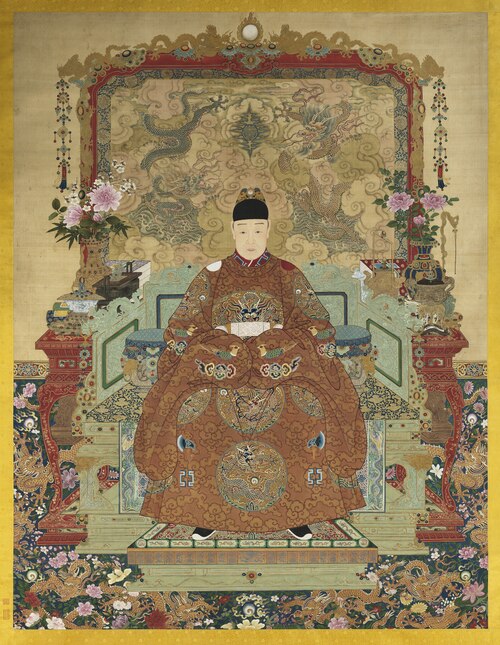
Chongzhen Emperor
MedievalEmperorChina1611 — 1644
Last Ming emperor, committed suicide as Beijing fell to Li Zicheng.
Compare Chongzhen Emperor with another historical figure:
Quick Facts
Born
1611
Died
1644
Country
China
Era
Medieval
Occupation
Emperor
Score Overview
Military (10%)21
Political (20%)26
Influence (20%)53
Legacy (20%)45
Leadership (15%)42
Strategy (15%)36
Total Score40.5
Chongzhen Emperor — Complete Timeline
1627 AD
Accession to the thronePolitical Action◆ Major
Chongzhen became emperor after the death of his brother Tianqi. He inherited a Ming dynasty plagued by fiscal crisis, peasant rebellions, and the growing threat of the Manchu Qing in the northeast.
Imperial successionMing dynastyCrisis
Impact: national
Execution of Wei ZhongxianPolitical Action◆ Major
Chongzhen ordered the execution of the powerful eunuch Wei Zhongxian, who had dominated the court under Tianqi. He also purged Wei's faction, attempting to restore Confucian bureaucratic control.
Eunuch purgeCourt reformWei Zhongxian
Impact: nationalconstructive
1640 AD
Li Zicheng's rebellionWar◆ Major
The peasant rebel Li Zicheng led a massive uprising in northern China. Chongzhen's government failed to suppress the rebellion due to fiscal shortages and military defeats, allowing Li to capture Beijing.
Peasant rebellionLi ZichengMing collapse
Impact: nationaldestructive
1644 AD
Fall of Beijing and suicidePolitical Action
As Li Zicheng's forces breached Beijing, Chongzhen committed suicide by hanging himself on a tree in Jingshan Park. His death marked the end of the Ming dynasty after 276 years.
Dynasty fallImperial suicideMing-Qing transition
Impact: nationaltragic
Refusal to flee southPolitical Action◆ Major
Chongzhen rejected proposals to relocate the Ming court to Nanjing. He chose to remain in Beijing, believing that abandoning the capital would undermine his legitimacy and the dynasty's claim to rule.
Decision-makingCapital defenseMing loyalty
Impact: nationaltragic
Detailed Scores
▶View all detailed scores
Military
Strategy
7
Tactics
7
Battles
7
Army Scale
6
War Impact
7
Political
Governance
6
Reform
7
Stability
6
Policy
7
Power
7
Influence
History
9
Global
8
Culture
9
Ideology
9
Legacy
8
People often compare with
See how Chongzhen Emperor stacks up against other historical figures
Popular Comparisons
Chongzhen Emperor vs King Hyeonjong of Goryeo
vs King Hyeonjong of Goryeo57
Chongzhen Emperor vs Wanyan Jing
vs Wanyan Jing49
Chongzhen Emperor vs Anacaona
vs Anacaona47
Chongzhen Emperor vs Ntare I Rushatsi
vs Ntare I Rushatsi46
Chongzhen Emperor vs Al-Muttaqi
vs Al-Muttaqi38
Chongzhen Emperor vs Al-Mustanjid
vs Al-Mustanjid37