Loading...
Al-Muttaqi vs Chongzhen Emperor
Chongzhen Emperor leads by 3.0 pts · 2 figures compared
…
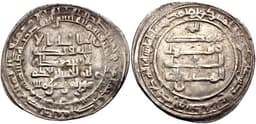
Al-Muttaqi
Emperor · Medieval
37.5Total

Chongzhen Emperor
Emperor · Medieval
40.5Total
Basic Information
Born
908
1611
Died
968
1644
Era
Medieval
Medieval
Nationality
Abbasid Caliphate
China
Occupation
Emperor
Emperor
Civilization
Middle Eastern
Eastern
Score Comparison
Military (10%)
20.0
21.2
Political (20%)
32.1
26.4
Influence (20%)
45.5
53.3
Legacy (20%)
35.8
45.0
Leadership (15%)
39.0
41.5
Strategy (15%)
45.0
35.7
TOTAL
37.5
40.5
Al-Muttaqi — Complete Timeline
940 AD
Accession of Al-MuttaqiPolitical Action◆ Major
Al-Muttaqi became caliph after the death of Al-Radi. His reign was dominated by the struggle between the Hamdanids and the Buyids for control of Baghdad and the caliphate.
AccessionPower StruggleHamdanids
Impact: national
944 AD
Deposition and Blinding by the BuyidsPolitical Action◆ Major
Al-Muttaqi was deposed by the Buyid emir Mu'izz al-Dawla, who had taken control of Baghdad. He was blinded and imprisoned, becoming a puppet of the Buyids. This event solidified Buyid dominance over the caliphate.
DepositionBlindingBuyid Control
Impact: nationaltragic
968 AD
Death of Al-MuttaqiPolitical Action
Al-Muttaqi died in captivity, having been blinded and imprisoned for over two decades. His long imprisonment symbolized the complete subjugation of the Abbasid caliphs to the Buyid dynasty.
DeathImprisonmentBuyid
Impact: nationaltragic
Chongzhen Emperor — Complete Timeline
1627 AD
Accession to the thronePolitical Action◆ Major
Chongzhen became emperor after the death of his brother Tianqi. He inherited a Ming dynasty plagued by fiscal crisis, peasant rebellions, and the growing threat of the Manchu Qing in the northeast.
Imperial successionMing dynastyCrisis
Impact: national
Execution of Wei ZhongxianPolitical Action◆ Major
Chongzhen ordered the execution of the powerful eunuch Wei Zhongxian, who had dominated the court under Tianqi. He also purged Wei's faction, attempting to restore Confucian bureaucratic control.
Eunuch purgeCourt reformWei Zhongxian
Impact: nationalconstructive
1640 AD
Li Zicheng's rebellionWar◆ Major
The peasant rebel Li Zicheng led a massive uprising in northern China. Chongzhen's government failed to suppress the rebellion due to fiscal shortages and military defeats, allowing Li to capture Beijing.
Peasant rebellionLi ZichengMing collapse
Impact: nationaldestructive
1644 AD
Fall of Beijing and suicidePolitical Action
As Li Zicheng's forces breached Beijing, Chongzhen committed suicide by hanging himself on a tree in Jingshan Park. His death marked the end of the Ming dynasty after 276 years.
Dynasty fallImperial suicideMing-Qing transition
Impact: nationaltragic
Refusal to flee southPolitical Action◆ Major
Chongzhen rejected proposals to relocate the Ming court to Nanjing. He chose to remain in Beijing, believing that abandoning the capital would undermine his legitimacy and the dynasty's claim to rule.
Decision-makingCapital defenseMing loyalty
Impact: nationaltragic
Expert Analysis
Origins
Al-Muttaqi (born 908 CE) was an Abbasid caliph from the Arab lineage descending from al-Mutawakkil. His early life was spent in the shadow of powerful regents and military commanders who controlled the caliphate. He received a traditional Islamic education but had no military or administrative experience before his accession. The Abbasid Caliphate by then had lost effective control over its provinces, with local dynasties like the Hamdanids and Buyids wielding real power.
Chongzhen Emperor (born 1611 CE), personal name Zhu Youjian, was the 16th and last emperor of the Ming dynasty. He was a son of the Taichang Emperor and brother of the Tianqi Emperor. His upbringing in the Forbidden City was marked by the dominance of eunuch factions, especially Wei Zhongxian. Chongzhen was known for his diligence and frugality but lacked the political connections and experience to navigate the court's deep factionalism.
Rise to Power
Al-Muttaqi became caliph in 940 CE after the death of his half-brother al-Radi. His accession was arranged by the powerful amir Bajkam, who controlled Baghdad. Al-Muttaqi's reign was immediately contested by the Hamdanid ruler Nasir al-Dawla and the Buyid emir Mu'izz al-Dawla. His position was purely ceremonial, with real military power held by these regional warlords.
Chongzhen ascended the throne in 1627 CE at age 16 after his brother Tianqi died. His first major act was to purge the eunuch Wei Zhongxian and his faction, executing Wei and exiling his allies. This earned him initial popularity but also created a power vacuum that allowed other court factions to vie for influence. Chongzhen tried to centralize authority but lacked a reliable base of officials or generals.
Leadership & Governance
Al-Muttaqi's governance was largely reactive. He attempted to play Hamdanid and Buyid forces against each other, but without an army or treasury, his decisions were ineffective. In 944 CE, he briefly allied with the Hamdanid Nasir al-Dawla to enter Baghdad, but the Buyids soon regained control. His political score of 32.1 reflects his inability to assert authority. He issued decrees but they were ignored beyond the city walls.
Chongzhen was a micromanager who personally reviewed memorials and dismissed officials frequently—he executed or replaced seven supreme commanders during the peasant rebellions. He tried to reform the tax system but failed to alleviate the burden on peasants, leading to widespread revolt. His military score of 21.2 is low because he could not suppress Li Zicheng's rebellion nor defend against Manchu incursions. His leadership score of 41.5 indicates some personal dedication but poor strategic decisions.
Triumph & Tragedy
Al-Muttaqi's reign saw no major triumphs; his only achievement was surviving for four years before being deposed. The tragedy came in 944 CE when the Buyid emir Mu'izz al-Dawla deposed him, blinded him with a hot iron, and imprisoned him for 22 years until his death. This act symbolized the complete subjugation of the Abbasid caliphate to Persian military rule.
Chongzhen's triumph was the execution of Wei Zhongxian, which removed a corrupt eunuch regime. However, his tragedy was the fall of the Ming dynasty. In 1644, as Li Zicheng's forces breached Beijing, Chongzhen wrote a final edict blaming his officials, then hanged himself on a tree in Jingshan Park. He refused to flee south, believing it would betray his mandate. His death ended 276 years of Ming rule.
Character & Destiny
Al-Muttaqi was described as weak-willed and indecisive. He trusted promises from Hamdanid and Buyid leaders, only to be betrayed repeatedly. His character score of 39.0 reflects a passive ruler who could not adapt to the militarized politics of his time. His destiny was to be a puppet and then a blind prisoner.
Chongzhen was known for his hardworking but suspicious nature. He dismissed capable generals like Sun Chuanting and executed others, such as Yuan Chonghuan (wrongly). His leadership score of 41.5 shows he was more active than Al-Muttaqi but his paranoia undermined his efforts. His destiny was to be the last Ming emperor, a symbol of a dynasty undone by internal decay.
Legacy
Al-Muttaqi's legacy is minimal; he is a footnote in Abbasid history. His blinding and imprisonment became a cautionary tale of caliphal impotence. His influence score of 45.5 is primarily due to his position as caliph, not his actions. The Abbasid caliphate continued as a religious figurehead under Buyid and later Seljuk control.
Chongzhen's legacy is far greater. He is remembered as a tragic figure who tried to save a collapsing dynasty but failed due to forces beyond his control. His suicide is seen as an act of honor in Chinese culture. The Ming dynasty's fall led to the Qing dynasty, which ruled for nearly 300 years. His legacy score of 45.0 reflects his symbolic importance as the last Ming emperor.
Conclusion
Comparing total scores—Chongzhen (40.5) vs. Al-Muttaqi (37.5)—the difference is only 3.0 points, but the impact gap is wider. Chongzhen's political score of 26.4 is lower than Al-Muttaqi's 32.1, but Chongzhen faced a more complex crisis: a collapsing fiscal system, massive rebellions, and foreign invasion. His actions (executing Wei Zhongxian, refusing to flee) had lasting consequences for Chinese history. Al-Muttaqi was a passive victim of already established warlord dominance. Chongzhen had greater influence and legacy because his death marked the end of a major dynasty, while Al-Muttaqi's blinding was just one event in the Abbasid decline. Therefore, Chongzhen Emperor had a greater historical impact.
Rankings
🥇
Chongzhen EmperorLeader
Mil: 21.2Pol: 26.4Inf: 53.3
40.5
🥈
Al-Muttaqi
Mil: 20.0Pol: 32.1Inf: 45.5
37.5
+3.0 behind
How This Comparison Works
Algorithm
Each figure is scored on 6 dimensions (0—100 scale) based on structured historical data: Military (10%), Political (20%), Influence (20%), Legacy (20%), Leadership (15%), Strategy (15%). The weighted total produces the final ranking.
Data Sources
Scores are computed from structured sub-indicators in the database. Scale factors adjust for era (Ancient ×0.85, Modern ×1.0) and civilization size (Eastern ×1.05, Other ×0.80) to account for differences in population and military scale.
Maximum 3 Figures
Comparisons are limited to 2—3 figures to ensure readability and statistical meaningfulness.
Error Margins
±5 points per dimension — Sub-scores are derived from historical records with inherent uncertainty. Two figures within 5 points on a dimension should be considered roughly equivalent in that area.
Total Score Accuracy
±3 points overall — The weighted combination of 6 dimensions produces a total score with approximately ±3 points of uncertainty. Differences of less than 3 points are not statistically significant— the figures are effectively tied.
Known Limitations
- Historical records are incomplete and uneven across civilizations
- Figures from oral-tradition societies may be underrepresented
- Occupation labels can misclassify multi-role figures
- Scores measure capability and impact, not moral character
- Quantitative scoring is a comparison tool, not absolute truth
Capability Radar
Military (10%) — Battles & Warfare
Battles
5
15
Win Rate
5
10
Expansion
5
5
Political (20%) — Governance & Reform
Reform
10
25
Diplomacy
10
20
Economy
10
15
Influence (20%) — Cultural & Global Reach
Cultural
5
30
Global
5
20
Legacy (20%) — Historical Impact
Historical
10
40
Longevity
5
30
Leadership (15%) — Power & Stability
Tenure
20
40
Stability
5
10
Strategy (15%) — Tactics & Innovation
Strategy
5
15
Tactics
5
20
Reform
5
10
Similar Comparisons
Comments & Discussion
No comments yet. Be the first to share your thoughts!