Loading...
Chongzhen Emperor vs Wanyan Jing
Wanyan Jing leads by 8.8 pts · 2 figures compared
…
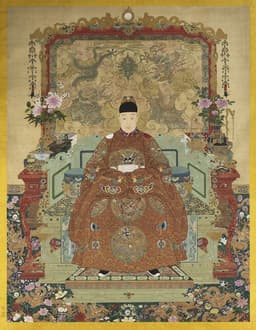
Chongzhen Emperor
Emperor · Medieval
40.5Total

Wanyan Jing
Emperor · Medieval
49.3Total
Basic Information
Born
1611
1168
Died
1644
1208
Era
Medieval
Medieval
Nationality
China
Jin dynasty
Occupation
Emperor
Emperor
Civilization
Eastern
Eastern
Score Comparison
Military (10%)
21.2
50.0
Political (20%)
26.4
43.7
Influence (20%)
53.3
51.0
Legacy (20%)
45.0
41.7
Leadership (15%)
41.5
67.0
Strategy (15%)
35.7
45.0
TOTAL
40.5
49.3
Chongzhen Emperor — Complete Timeline
1627 AD
Accession to the thronePolitical Action◆ Major
Chongzhen became emperor after the death of his brother Tianqi. He inherited a Ming dynasty plagued by fiscal crisis, peasant rebellions, and the growing threat of the Manchu Qing in the northeast.
Imperial successionMing dynastyCrisis
Impact: national
Execution of Wei ZhongxianPolitical Action◆ Major
Chongzhen ordered the execution of the powerful eunuch Wei Zhongxian, who had dominated the court under Tianqi. He also purged Wei's faction, attempting to restore Confucian bureaucratic control.
Eunuch purgeCourt reformWei Zhongxian
Impact: nationalconstructive
1640 AD
Li Zicheng's rebellionWar◆ Major
The peasant rebel Li Zicheng led a massive uprising in northern China. Chongzhen's government failed to suppress the rebellion due to fiscal shortages and military defeats, allowing Li to capture Beijing.
Peasant rebellionLi ZichengMing collapse
Impact: nationaldestructive
1644 AD
Fall of Beijing and suicidePolitical Action
As Li Zicheng's forces breached Beijing, Chongzhen committed suicide by hanging himself on a tree in Jingshan Park. His death marked the end of the Ming dynasty after 276 years.
Dynasty fallImperial suicideMing-Qing transition
Impact: nationaltragic
Refusal to flee southPolitical Action◆ Major
Chongzhen rejected proposals to relocate the Ming court to Nanjing. He chose to remain in Beijing, believing that abandoning the capital would undermine his legitimacy and the dynasty's claim to rule.
Decision-makingCapital defenseMing loyalty
Impact: nationaltragic
Wanyan Jing — Complete Timeline
1206 AD
Rise of the Mongols under Genghis KhanWar
During Wanyan Jing's reign, Temujin united the Mongol tribes and was proclaimed Genghis Khan. The Mongols began raiding Jin territory, marking the beginning of a long conflict that would eventually destroy the Jin dynasty.
Mongol riseGenghis KhanThreat
Impact: global
Expert Analysis
Origins
**Chongzhen Emperor** (born 1611) was the 16th son of the Ming emperor Taichang. He ascended the throne in 1627 at age 16 after his brother Tianqi died. His education emphasized Confucian classics, but he lacked practical experience in governance or military affairs. The Ming dynasty he inherited was already in severe decline, with fiscal deficits, a corrupt eunuch-led bureaucracy, and peasant unrest in the northwest.
**Wanyan Jing** (born 1168) was a Jurchen prince of the Jin dynasty. He became emperor in 1209 after the death of his uncle, Emperor Zhangzong. The Jin dynasty controlled northern China, but faced internal corruption and the rising Mongol threat. Wanyan Jing was known for his physical strength and interest in military affairs, but his reign was plagued by Mongol invasions and court intrigue.
Rise to Power
Chongzhen came to power abruptly after Tianqi's death. He immediately acted against the powerful eunuch Wei Zhongxian, executing him and purging his faction. This earned him initial popularity but also alienated many court officials. He tried to restore fiscal discipline but failed to address the underlying tax evasion by large landowners, leading to continued revenue shortfalls. By 1630, peasant rebellions under Li Zicheng and Zhang Xianzhong were spreading.
Wanyan Jing became emperor in 1209, just as Temujin was uniting the Mongol tribes. In 1210, the Mongols began demanding tribute from the Jin, which Wanyan Jing refused. He ordered a preemptive strike against the Mongols in 1211, but the Jin army was decisively defeated at the Battle of Yehuling. This defeat exposed the weakness of the Jin military and led to Mongol invasions of Jin territory.
Leadership & Governance
Chongzhen's leadership was characterized by micromanagement and suspicion. He dismissed capable officials like Yuan Chonghuan (executed in 1630) and frequently changed his top generals. He attempted to raise funds through increased taxes and forced donations from the wealthy, but these measures were insufficient and unpopular. His refusal to negotiate with rebels or relocate the capital to Nanjing showed rigid adherence to Confucian principles over practical survival. His political score of 26.4 reflects his failure to build consensus or implement effective reforms.
Wanyan Jing pursued a more pragmatic approach. After the defeat at Yehuling, he moved the capital south from Zhongdu to Kaifeng in 1214, abandoning the northern territories to the Mongols. He attempted to strengthen defenses along the Yellow River and sought peace through tribute payments. However, his leadership score of 67.0 indicates he maintained control over the court and military despite the crisis. He also faced rebellions from Khitan and other groups, which he suppressed with some success.
Triumph & Tragedy
Chongzhen's greatest success was the removal of Wei Zhongxian's eunuch faction, which temporarily restored imperial authority. However, his greatest failure was his inability to suppress Li Zicheng's rebellion. By 1644, Li Zicheng's forces captured Beijing. Chongzhen's refusal to flee led to his suicide on Jingshan Hill, ending the Ming dynasty. His military score of 21.2 is the lowest among the compared figures, indicating his complete failure to defend the realm.
Wanyan Jing's triumph was his survival of the initial Mongol onslaught. He managed to keep the Jin dynasty alive for a decade after the loss of Zhongdu. His greatest tragedy was the destruction of the Jin heartland and the eventual siege of Kaifeng in 1233, which occurred after his death. He died in 1223, likely from illness, before the final Jin collapse. His military score of 50.0 reflects a mixed record: he lost battles but preserved the state for a time.
Character & Destiny
Chongzhen was a conscientious but indecisive ruler. He worked tirelessly, often reviewing memorials late into the night, but lacked the strategic vision to prioritize threats. His character—proud, suspicious, and inflexible—made him unable to delegate or adapt. Historical assessments note his personal integrity but condemn his political ineptitude. His total score of 40.5 reflects a ruler overwhelmed by circumstances he partly created.
Wanyan Jing was more pragmatic and physically courageous. He personally led troops in some engagements and was willing to negotiate with the Mongols. However, he was also criticized for abandoning the northern capital and for failing to unite the Jurchen tribes against the common enemy. His total score of 49.3 is higher than Chongzhen's, but still below average for medieval rulers.
Legacy
Chongzhen's legacy is that of a tragic figure who died with his dynasty. The Ming dynasty's fall led to the Qing conquest of China, which lasted until 1912. His death is often seen as a symbol of dynastic collapse due to corruption and poor governance. His influence score of 53.3 reflects the historical significance of his reign as the end of an era.
Wanyan Jing's legacy is more ambiguous. The Jin dynasty continued for another decade after his death, but its decline was irreversible. The Mongols eventually conquered the Jin in 1234. His reign is remembered for the beginning of the Mongol-Jin wars that reshaped East Asia. His influence score of 51.0 is similar to Chongzhen's, but his legacy score of 41.7 is slightly lower, as the Jin dynasty is less studied than the Ming.
Conclusion
Wanyan Jing had a greater impact as a ruler than Chongzhen, as evidenced by his higher total score (49.3 vs 40.5). While both faced existential threats, Wanyan Jing managed to keep his state intact for over a decade, whereas Chongzhen's reign ended in total collapse within 17 years. Wanyan Jing's pragmatic decisions—moving the capital, negotiating peace, and maintaining military resistance—were more effective than Chongzhen's rigid adherence to protocol. Chongzhen's failure to adapt cost him his dynasty and his life. Therefore, Wanyan Jing emerges as the more capable emperor, despite both being ultimately unsuccessful against their respective foes.
Rankings
🥇
Wanyan JingLeader
Mil: 50.0Pol: 43.7Inf: 51.0
49.3
🥈
Chongzhen Emperor
Mil: 21.2Pol: 26.4Inf: 53.3
40.5
+8.8 behind
How This Comparison Works
Algorithm
Each figure is scored on 6 dimensions (0—100 scale) based on structured historical data: Military (10%), Political (20%), Influence (20%), Legacy (20%), Leadership (15%), Strategy (15%). The weighted total produces the final ranking.
Data Sources
Scores are computed from structured sub-indicators in the database. Scale factors adjust for era (Ancient ×0.85, Modern ×1.0) and civilization size (Eastern ×1.05, Other ×0.80) to account for differences in population and military scale.
Maximum 3 Figures
Comparisons are limited to 2—3 figures to ensure readability and statistical meaningfulness.
Error Margins
±5 points per dimension — Sub-scores are derived from historical records with inherent uncertainty. Two figures within 5 points on a dimension should be considered roughly equivalent in that area.
Total Score Accuracy
±3 points overall — The weighted combination of 6 dimensions produces a total score with approximately ±3 points of uncertainty. Differences of less than 3 points are not statistically significant— the figures are effectively tied.
Known Limitations
- Historical records are incomplete and uneven across civilizations
- Figures from oral-tradition societies may be underrepresented
- Occupation labels can misclassify multi-role figures
- Scores measure capability and impact, not moral character
- Quantitative scoring is a comparison tool, not absolute truth
Capability Radar
Military (10%) — Battles & Warfare
Battles
15
30
Win Rate
10
25
Expansion
5
10
Political (20%) — Governance & Reform
Reform
25
40
Diplomacy
20
35
Economy
15
45
Influence (20%) — Cultural & Global Reach
Cultural
30
20
Global
20
15
Legacy (20%) — Historical Impact
Historical
40
30
Longevity
30
20
Leadership (15%) — Power & Stability
Tenure
40
60
Stability
10
30
Strategy (15%) — Tactics & Innovation
Strategy
15
35
Tactics
20
30
Reform
10
20
Similar Comparisons
Comments & Discussion
No comments yet. Be the first to share your thoughts!