Loading...
Chongzhen Emperor vs Ntare I Rushatsi
Ntare I Rushatsi leads by 5.3 pts · 2 figures compared
…
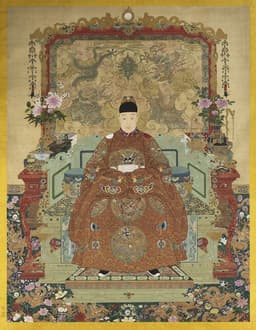
Chongzhen Emperor
Emperor · Medieval
40.5Total

Ntare I Rushatsi
Emperor · Medieval
45.8Total
Basic Information
Born
1611
1500
Died
1644
1550
Era
Medieval
Medieval
Nationality
China
Burundi
Occupation
Emperor
Emperor
Civilization
Eastern
Other
Score Comparison
Military (10%)
21.2
50.0
Political (20%)
26.4
29.3
Influence (20%)
53.3
51.8
Legacy (20%)
45.0
42.5
Leadership (15%)
41.5
55.3
Strategy (15%)
35.7
45.0
TOTAL
40.5
45.8
Chongzhen Emperor — Complete Timeline
1627 AD
Accession to the thronePolitical Action◆ Major
Chongzhen became emperor after the death of his brother Tianqi. He inherited a Ming dynasty plagued by fiscal crisis, peasant rebellions, and the growing threat of the Manchu Qing in the northeast.
Imperial successionMing dynastyCrisis
Impact: national
Execution of Wei ZhongxianPolitical Action◆ Major
Chongzhen ordered the execution of the powerful eunuch Wei Zhongxian, who had dominated the court under Tianqi. He also purged Wei's faction, attempting to restore Confucian bureaucratic control.
Eunuch purgeCourt reformWei Zhongxian
Impact: nationalconstructive
1640 AD
Li Zicheng's rebellionWar◆ Major
The peasant rebel Li Zicheng led a massive uprising in northern China. Chongzhen's government failed to suppress the rebellion due to fiscal shortages and military defeats, allowing Li to capture Beijing.
Peasant rebellionLi ZichengMing collapse
Impact: nationaldestructive
1644 AD
Fall of Beijing and suicidePolitical Action
As Li Zicheng's forces breached Beijing, Chongzhen committed suicide by hanging himself on a tree in Jingshan Park. His death marked the end of the Ming dynasty after 276 years.
Dynasty fallImperial suicideMing-Qing transition
Impact: nationaltragic
Refusal to flee southPolitical Action◆ Major
Chongzhen rejected proposals to relocate the Ming court to Nanjing. He chose to remain in Beijing, believing that abandoning the capital would undermine his legitimacy and the dynasty's claim to rule.
Decision-makingCapital defenseMing loyalty
Impact: nationaltragic
Ntare I Rushatsi — Complete Timeline
1530 AD
Foundation of the Burundian KingdomPolitical Action
Ntare I Rushatsi, according to oral tradition, established the first centralized kingdom in the region of present-day Burundi. He unified several Hutu and Tutsi clans under his rule, creating the foundation of the Burundian monarchy that lasted until the 20th century.
FoundingKingdomUnification
Impact: regionalconstructive
Expert Analysis
Origins
**Chongzhen Emperor (born 1611, died 1644)** was the 16th and last emperor of the Ming dynasty. He was the fifth son of the Taichang Emperor and ascended the throne at age 16 after the death of his older brother, the Tianqi Emperor. His early education focused on Confucian classics and governance, but he lacked practical military and administrative experience. The Ming dynasty he inherited was already in decline, facing fiscal bankruptcy, rampant corruption, and internal rebellions.
**Ntare I Rushatsi (dates uncertain, circa 16th-17th century)** is the legendary founder of the Burundian kingdom. According to oral tradition, he was born in the region of present-day Burundi, likely of Tutsi ancestry. Little is known about his early life, but he is credited with unifying various Hutu clans under a centralized monarchy. His rise is shrouded in myth, but historical evidence suggests he established the first dynasty, the Ganwa, which ruled Burundi for centuries.
Rise to Power
**Chongzhen** became emperor in 1627 after his brother Tianqi died from illness. His first major act was to purge the powerful eunuch Wei Zhongxian and his faction, who had dominated the court. This move was popular but destabilizing, as it removed experienced officials without replacing them with capable administrators. Chongzhen focused on centralizing power, but his distrust of officials led to a revolving door of ministers—he appointed and executed over 50 grand secretaries during his 17-year reign. His inability to delegate and micromanagement worsened the dynasty's crises.
**Ntare I** rose to power by consolidating control over the hills of Burundi. He is said to have defeated rival Hutu chiefs and established a hierarchical political system with the mwami (king) at the top. His rise was gradual, involving alliances and military campaigns. The exact dates are unknown, but his reign marked the transition from fragmented chiefdoms to a unified kingdom. He is credited with introducing the concept of a centralized state, which became the foundation of Burundian identity.
Leadership & Governance
**Chongzhen** ruled as an autocrat, distrusting both eunuchs and Confucian officials. He attempted to reform the tax system but failed to address the root causes of rebellion, such as land concentration and famine. His military strategy relied on loyal generals like Wu Sangui, but he underfunded the army and refused to negotiate with rebels. His leadership score of 41.5 reflects his inability to inspire loyalty or make pragmatic decisions. For example, he executed the capable general Yuan Chonghuan on false charges of treason, weakening the northern defenses.
**Ntare I** established a feudal system where local chiefs (batware) paid tribute to the mwami. He created a court with appointed officials and a standing army. His governance was decentralized, allowing local autonomy while maintaining central authority. This system ensured stability for centuries. His political score of 29.3 is lower than his leadership score of 55.3, indicating that while he was a strong leader, his institutional reforms were limited. The oral traditions emphasize his role as a unifier rather than an administrator.
Triumph & Tragedy
**Chongzhen's** greatest success was his initial purge of eunuch power, which briefly restored imperial authority. However, his greatest failure was his inability to suppress the peasant rebellion led by Li Zicheng. In 1644, as Li's forces approached Beijing, Chongzhen refused to flee south to Nanjing, stating that he would rather die than abandon the capital. He committed suicide by hanging himself on a tree in Jingshan Park, marking the end of the Ming dynasty. His military score of 21.2 reflects his disastrous decisions. The fall of Beijing allowed the Manchu Qing to invade and establish their rule.
**Ntare I's** triumph was the foundation of a kingdom that lasted until the 20th century. He unified the region and established a dynasty that provided continuity. His tragedy is the lack of detailed historical records; much of his life is legendary, making it difficult to separate fact from myth. His military score of 50.0 suggests he was a competent conqueror, but his legacy depends on oral tradition rather than verifiable events. The kingdom he founded faced internal strife and eventually colonial subjugation, but his creation endured for over 300 years.
Character & Destiny
**Chongzhen** was known for his diligence and frugality, but also his paranoia and indecisiveness. He worked tirelessly but often made poor decisions under pressure. His character—proud, stubborn, and distrustful—led him to reject advice to relocate the capital. He believed that a true emperor should not abandon his throne. This fatalism sealed his destiny. Historians often describe him as a tragic figure who inherited a doomed empire and lacked the skills to save it. His total score of 40.5 reflects a ruler overwhelmed by circumstances.
**Ntare I** is depicted in oral tradition as a wise and charismatic leader, a unifier who brought peace to a fragmented land. His character is associated with visionary leadership and strategic thinking. He is said to have established laws and customs that promoted social cohesion. His strategic score of 45.0 indicates a methodical approach to expansion. Unlike Chongzhen, Ntare I's character is celebrated as the foundation of Burundian identity, but the lack of contemporary sources means his personality is more archetype than individual.
Legacy
**Chongzhen's** legacy is primarily negative: he is remembered as the last Ming emperor whose incompetence led to the dynasty's collapse. The Qing dynasty's official history portrayed him as a failed ruler, though some later historians sympathetic to the Ming view him as a victim of circumstances. His suicide became a symbol of loyalty and honor in Chinese culture. However, his political score of 26.4 and influence score of 53.3 indicate that while his impact was significant, it was largely as a cautionary tale. The Ming dynasty's fall reshaped East Asian geopolitics, allowing the Qing to rule for 268 years.
**Ntare I's** legacy is enduring: he is considered the father of the Burundian nation. His dynasty, the Ganwa, ruled until the monarchy was abolished in 1966. His influence score of 51.8 reflects his role in creating a national identity. The kingdom he founded resisted colonialism longer than many African states, and its administrative structures survived into the modern era. However, his legacy is also contested, as the Tutsi-dominated monarchy contributed to later ethnic tensions. His total score of 45.8 places him slightly above Chongzhen, but the difference is marginal.
Conclusion
Ntare I Rushatsi had a greater impact than Chongzhen Emperor, as measured by the total score of 45.8 to 40.5. While Chongzhen's failure led to the end of a dynasty, Ntare I's success created a kingdom that lasted centuries. Chongzhen's military and political scores (21.2 and 26.4) are significantly lower than Ntare I's (50.0 and 29.3), reflecting his catastrophic decision-making. However, Chongzhen's influence score (53.3) is slightly higher than Ntare I's (51.8), because the fall of the Ming dynasty had global repercussions. Ultimately, Ntare I's foundational role in building a state that endured for over 300 years outweighs Chongzhen's role as a failed emperor. The data supports the conclusion that Ntare I's positive legacy of creation surpasses Chongzhen's negative legacy of collapse.
Rankings
🥇
Ntare I RushatsiLeader
Mil: 50.0Pol: 29.3Inf: 51.8
45.8
🥈
Chongzhen Emperor
Mil: 21.2Pol: 26.4Inf: 53.3
40.5
+5.3 behind
How This Comparison Works
Algorithm
Each figure is scored on 6 dimensions (0—100 scale) based on structured historical data: Military (10%), Political (20%), Influence (20%), Legacy (20%), Leadership (15%), Strategy (15%). The weighted total produces the final ranking.
Data Sources
Scores are computed from structured sub-indicators in the database. Scale factors adjust for era (Ancient ×0.85, Modern ×1.0) and civilization size (Eastern ×1.05, Other ×0.80) to account for differences in population and military scale.
Maximum 3 Figures
Comparisons are limited to 2—3 figures to ensure readability and statistical meaningfulness.
Error Margins
±5 points per dimension — Sub-scores are derived from historical records with inherent uncertainty. Two figures within 5 points on a dimension should be considered roughly equivalent in that area.
Total Score Accuracy
±3 points overall — The weighted combination of 6 dimensions produces a total score with approximately ±3 points of uncertainty. Differences of less than 3 points are not statistically significant— the figures are effectively tied.
Known Limitations
- Historical records are incomplete and uneven across civilizations
- Figures from oral-tradition societies may be underrepresented
- Occupation labels can misclassify multi-role figures
- Scores measure capability and impact, not moral character
- Quantitative scoring is a comparison tool, not absolute truth
Capability Radar
Military (10%) — Battles & Warfare
Battles
15
15
Win Rate
10
15
Expansion
5
25
Political (20%) — Governance & Reform
Reform
25
20
Diplomacy
20
20
Economy
15
15
Influence (20%) — Cultural & Global Reach
Cultural
30
30
Global
20
10
Legacy (20%) — Historical Impact
Historical
40
30
Longevity
30
25
Leadership (15%) — Power & Stability
Tenure
40
30
Stability
10
20
Strategy (15%) — Tactics & Innovation
Strategy
15
10
Tactics
20
10
Reform
10
10
Similar Comparisons
Comments & Discussion
No comments yet. Be the first to share your thoughts!