Loading...
Al-Mustanjid vs Chongzhen Emperor
Chongzhen Emperor leads by 3.5 pts · 2 figures compared
…
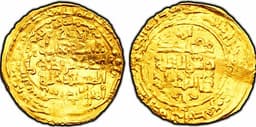
Al-Mustanjid
Emperor · Medieval
37.0Total

Chongzhen Emperor
Emperor · Medieval
40.5Total
Basic Information
Born
1124
1611
Died
1170
1644
Era
Medieval
Medieval
Nationality
Abbasid Caliphate
China
Occupation
Emperor
Emperor
Civilization
Middle Eastern
Eastern
Score Comparison
Military (10%)
20.0
21.2
Political (20%)
30.7
26.4
Influence (20%)
46.3
53.3
Legacy (20%)
35.0
45.0
Leadership (15%)
31.2
41.5
Strategy (15%)
54.3
35.7
TOTAL
37.0
40.5
Al-Mustanjid — Complete Timeline
1164 AD
Conflict with the FatimidsWar◆ Major
Al-Mustanjid sent military aid to the Zengid ruler Nur al-Din against the Fatimid caliphate in Egypt. This intervention contributed to the weakening of Fatimid power and the eventual rise of Saladin.
Fatimid DeclineZengid AllianceEgypt
Impact: regional
1168 AD
Assassination of VizierPolitical Action
Al-Mustanjid ordered the assassination of his powerful vizier, Ibn Hubayra, who had become too influential. This act demonstrated the caliph's desire to control his administration but also created instability.
AssassinationVizierPower Struggle
destructive
1170 AD
Death During CampaignOther
Al-Mustanjid died while on a military campaign against the Seljuks. His death was sudden and possibly due to illness or poisoning, ending his brief reign without major achievements.
DeathCampaignSeljuk War
tragic
Chongzhen Emperor — Complete Timeline
1627 AD
Accession to the thronePolitical Action◆ Major
Chongzhen became emperor after the death of his brother Tianqi. He inherited a Ming dynasty plagued by fiscal crisis, peasant rebellions, and the growing threat of the Manchu Qing in the northeast.
Imperial successionMing dynastyCrisis
Impact: national
Execution of Wei ZhongxianPolitical Action◆ Major
Chongzhen ordered the execution of the powerful eunuch Wei Zhongxian, who had dominated the court under Tianqi. He also purged Wei's faction, attempting to restore Confucian bureaucratic control.
Eunuch purgeCourt reformWei Zhongxian
Impact: nationalconstructive
1640 AD
Li Zicheng's rebellionWar◆ Major
The peasant rebel Li Zicheng led a massive uprising in northern China. Chongzhen's government failed to suppress the rebellion due to fiscal shortages and military defeats, allowing Li to capture Beijing.
Peasant rebellionLi ZichengMing collapse
Impact: nationaldestructive
1644 AD
Fall of Beijing and suicidePolitical Action
As Li Zicheng's forces breached Beijing, Chongzhen committed suicide by hanging himself on a tree in Jingshan Park. His death marked the end of the Ming dynasty after 276 years.
Dynasty fallImperial suicideMing-Qing transition
Impact: nationaltragic
Refusal to flee southPolitical Action◆ Major
Chongzhen rejected proposals to relocate the Ming court to Nanjing. He chose to remain in Beijing, believing that abandoning the capital would undermine his legitimacy and the dynasty's claim to rule.
Decision-makingCapital defenseMing loyalty
Impact: nationaltragic
Expert Analysis
Origins
Al-Mustanjid (born 1124 CE) was an Abbasid caliph in Baghdad, part of a long line of caliphs who had lost temporal power to the Seljuks. His father, Al-Muqtafi, had struggled to restore caliphal authority. Al-Mustanjid received a traditional Islamic education but had limited experience in governance before his accession. He ascended to the caliphate in 1160 CE at age 36, inheriting a realm where real power was contested between the caliph, the Seljuk sultan, and various local rulers.
Chongzhen Emperor (born 1611 CE), personal name Zhu Youjian, was the 16th and last emperor of the Ming dynasty. He was the fifth son of the Taichang Emperor and succeeded his older brother, the Tianqi Emperor, in 1627 CE at age 16. His early life was marked by the dominance of eunuchs and factionalism at court. He received a Confucian education focused on moral governance but lacked military training. The Ming dynasty was already in decline due to fiscal crisis, corruption, and peasant unrest.
Rise to Power
Al-Mustanjid became caliph after the death of his father Al-Muqtafi in 1160 CE. His rise was smooth as he was the designated heir. However, his authority was initially limited by the powerful vizier Ibn Hubayra, who had served his father. Al-Mustanjid sought to assert independence by building alliances with other Sunni rulers, particularly Nur al-Din, the Zengid sultan, who was fighting the Crusaders and Fatimids. In 1164 CE, he sent military aid to Nur al-Din against the Fatimid caliphate in Egypt, a move that weakened the rival Shia caliphate.
Chongzhen's rise was sudden. His brother Tianqi died in 1627 CE without an heir, so Zhu Youjian, then 16, was chosen as emperor. He immediately faced a court dominated by the eunuch Wei Zhongxian, who had terrorized officials. Chongzhen moved swiftly: within months of his accession, he ordered Wei's execution and purged his faction. This act earned him popular support but also alienated many officials. He then attempted to reform the government by promoting Confucian scholars, but the fiscal crisis worsened as tax revenues dwindled.
Leadership & Governance
Al-Mustanjid's leadership was characterized by a desire to restore caliphal authority. He personally led military campaigns, unusual for an Abbasid caliph. In 1168 CE, he marched against the Seljuks, but his campaign ended abruptly when he died, possibly assassinated. His governance relied on the vizier Ibn Hubayra for administration, but he later had him assassinated, showing a ruthless streak. Al-Mustanjid's political score of 30.7 reflects his limited success in centralizing power.
Chongzhen's governance was marked by micromanagement and indecision. He dismissed capable generals and officials due to suspicion, often executing them after failed campaigns. He refused to raise taxes to fund the military, fearing popular revolt, but this led to unpaid soldiers. His political score of 26.4 is lower than his military score of 21.2, indicating poor strategic choices. He attempted to suppress corruption but failed to address the root causes of the dynasty's decline.
Triumph & Tragedy
Al-Mustanjid's greatest success was his intervention in Egypt, which contributed to the fall of the Fatimid caliphate in 1171 CE. This strengthened Sunni Islam and expanded the influence of the Abbasids. His greatest failure was his inability to consolidate power against the Seljuks; his death during a campaign left the caliphate weakened. His strategy score of 54.3 is his highest, reflecting his diplomatic and military moves.
Chongzhen's triumph was his decisive action against Wei Zhongxian, which briefly restored imperial authority. He also attempted to revive the Ming economy through austerity. However, his tragedy was total: the fall of Beijing in 1644 CE, his suicide, and the end of the Ming dynasty. He failed to suppress Li Zicheng's rebellion due to fiscal shortages and poor military leadership. His leadership score of 41.5 is undermined by his inflexibility.
Character & Destiny
Al-Mustanjid was ambitious but impetuous. His assassination of Ibn Hubayra alienated his administration, and his sudden death cut short his plans. He scored 31.2 in leadership, indicating a mix of determination and poor judgment. His destiny was to be a brief footnote in Abbasid history.
Chongzhen was conscientious but paranoid. He worked tirelessly but lacked trust in his officials, often overriding their advice. His refusal to flee south was a principled but fatal decision. His leadership score of 41.5 reflects his dedication but also his rigidity. He is often seen as a tragic figure who inherited an impossible situation.
Legacy
Al-Mustanjid's legacy is minor. He is remembered for his role in the end of the Fatimid caliphate, but his brief reign had little lasting impact. His total score of 37.0 places him as a mediocre ruler. He is not widely studied outside Islamic history.
Chongzhen's legacy is profound. As the last Ming emperor, he symbolizes the fall of a dynasty. His suicide is a powerful image of loyalty and failure. The Ming dynasty's collapse led to the Qing conquest, shaping Chinese history for centuries. His influence score of 53.3 reflects this. However, his legacy is negative: he is criticized for incompetence and stubbornness.
Conclusion
Chongzhen Emperor had greater impact than Al-Mustanjid, despite both scoring low. Chongzhen's total score of 40.5 is only 3.5 points higher, but his role in the fall of the Ming dynasty had vast historical consequences. Al-Mustanjid's actions contributed to the decline of the Fatimids, but the Abbasid caliphate itself was already in terminal decline. Chongzhen's decisions directly led to the end of a major dynasty, while Al-Mustanjid's death left his realm unchanged. Therefore, Chongzhen is historically more significant.
Rankings
🥇
Chongzhen EmperorLeader
Mil: 21.2Pol: 26.4Inf: 53.3
40.5
🥈
Al-Mustanjid
Mil: 20.0Pol: 30.7Inf: 46.3
37.0
+3.5 behind
How This Comparison Works
Algorithm
Each figure is scored on 6 dimensions (0—100 scale) based on structured historical data: Military (10%), Political (20%), Influence (20%), Legacy (20%), Leadership (15%), Strategy (15%). The weighted total produces the final ranking.
Data Sources
Scores are computed from structured sub-indicators in the database. Scale factors adjust for era (Ancient ×0.85, Modern ×1.0) and civilization size (Eastern ×1.05, Other ×0.80) to account for differences in population and military scale.
Maximum 3 Figures
Comparisons are limited to 2—3 figures to ensure readability and statistical meaningfulness.
Error Margins
±5 points per dimension — Sub-scores are derived from historical records with inherent uncertainty. Two figures within 5 points on a dimension should be considered roughly equivalent in that area.
Total Score Accuracy
±3 points overall — The weighted combination of 6 dimensions produces a total score with approximately ±3 points of uncertainty. Differences of less than 3 points are not statistically significant— the figures are effectively tied.
Known Limitations
- Historical records are incomplete and uneven across civilizations
- Figures from oral-tradition societies may be underrepresented
- Occupation labels can misclassify multi-role figures
- Scores measure capability and impact, not moral character
- Quantitative scoring is a comparison tool, not absolute truth
Capability Radar
Military (10%) — Battles & Warfare
Battles
5
15
Win Rate
5
10
Expansion
5
5
Political (20%) — Governance & Reform
Reform
10
25
Diplomacy
15
20
Economy
10
15
Influence (20%) — Cultural & Global Reach
Cultural
10
30
Global
5
20
Legacy (20%) — Historical Impact
Historical
10
40
Longevity
10
30
Leadership (15%) — Power & Stability
Tenure
20
40
Stability
15
10
Strategy (15%) — Tactics & Innovation
Strategy
5
15
Tactics
5
20
Reform
5
10
Similar Comparisons
Comments & Discussion
No comments yet. Be the first to share your thoughts!