Loading...
Yuwen Yong vs Zhu Wen
Yuwen Yong leads by 16.9 pts · 2 figures compared
…
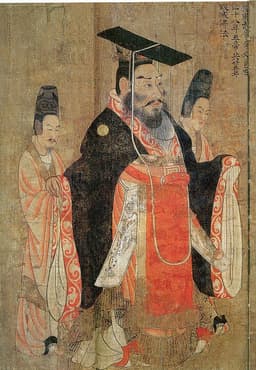
Yuwen Yong
Emperor · Medieval
67.2Total
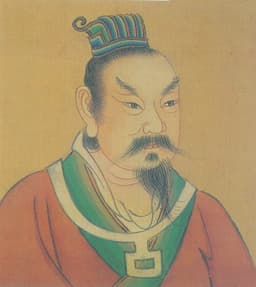
Zhu Wen
Emperor · Medieval
50.3Total
Basic Information
Born
543
852
Died
578
912
Era
Medieval
Medieval
Nationality
China
China
Occupation
Emperor
Emperor
Civilization
Eastern
Eastern
Score Comparison
Military (10%)
78.0
72.5
Political (20%)
78.0
35.1
Influence (20%)
58.0
53.3
Legacy (20%)
54.0
45.8
Leadership (15%)
85.0
48.4
Strategy (15%)
69.1
57.5
TOTAL
67.2
50.3
Yuwen Yong — Complete Timeline
574 AD
Suppression of Buddhism in Northern ZhouReform◆ Major
Emperor Wu of Northern Zhou (Yuwen Yong) ordered the suppression of Buddhism, confiscating monastic lands, forcing monks and nuns to return to lay life, and destroying temples. He aimed to increase state revenue and military manpower, strengthening the state.
Northern ZhouBuddhist PersecutionReform
Impact: nationaldestructive
577 AD
Conquest of Northern QiWar
Emperor Wu led a successful campaign against the rival Northern Qi dynasty, conquering its territory and unifying northern China under Northern Zhou. This victory ended the division of the north and set the stage for the Sui dynasty's unification of all China.
Northern ZhouUnificationNorthern Qi
Impact: regionalconstructive
578 AD
Death during campaign against the TurksWar◆ Major
Emperor Wu died of illness while leading a campaign against the G
Northern ZhouMilitary CampaignDeath
Impact: regionaltragic
Zhu Wen — Complete Timeline
881 AD
Rebellion against TangWar◆ Major
Zhu Wen, originally a rebel under Huang Chao, defected to the Tang dynasty in 882. He was granted the name Zhu Quanzhong and became a key general, eventually turning against the Tang and seizing control of the imperial court.
Tang DynastyRebellionPower Seizure
Impact: nationaldestructive
904 AD
Assassination of Emperor ZhaozongPolitical Action◆ Major
Zhu Wen ordered the murder of Emperor Zhaozong of Tang and installed the young Emperor Ai as a puppet. This act eliminated the last effective Tang ruler and paved the way for Zhu Wen's usurpation.
Tang DynastyAssassinationUsurpation
Impact: nationaldestructive
907 AD
Founded Later Liang DynastyPolitical Action
Zhu Wen forced Emperor Ai to abdicate and proclaimed himself emperor, founding the Later Liang dynasty. This ended the Tang dynasty and began the Five Dynasties and Ten Kingdoms period in China.
Five DynastiesLater LiangDynastic Change
Impact: national
910 AD
Defeated by Li Cunxu at Battle of BaixiangWar◆ Major
Zhu Wen's Later Liang forces were decisively defeated by Li Cunxu's Jin army at Baixiang. This loss weakened Later Liang's control in the north and emboldened rival states.
Later LiangJinBattle
Impact: regionaltragic
912 AD
Assassinated by his son Zhu YouguiPolitical Action◆ Major
Zhu Wen was murdered by his own son Zhu Yougui, who then seized the throne. The assassination plunged Later Liang into internal strife and contributed to its eventual collapse.
Later LiangAssassinationDynastic Crisis
Impact: nationaltragic
Expert Analysis
Yuwen Yong vs Zhu Wen
### The Emperor and the Warlord: Two Paths from Chaos
In the year 907, the Tang dynasty—once the dazzling center of the world—ended not with a heroic last stand, but with a whimper. The man who extinguished it, Zhu Wen, was a former rebel turned general turned usurper. Just seventy-one years earlier, in 536, another man, Yuwen Yong, had been born into a world of similar chaos, yet he would die in 578 as a revered unifier, not a reviled destroyer. Both men seized power in an age of fragmentation, yet their outcomes could not be more different. Why did one become a founding emperor remembered for his reforms, and the other a usurper remembered for his treachery? The answer lies not in their times, but in their souls.
### Origins
Zhu Wen began life as a poor peasant in 852, when the Tang dynasty was already rotting from within. He joined the great rebellion of Huang Chao in 881, a desperate act of a desperate man. But when the tide turned, he defected in 882, betraying his rebel comrades for a Tang general’s commission and a new name: Zhu Quanzhong. His rise was built on a talent for survival, not principle. He learned that loyalty was a currency to be spent, not a creed to be kept.
Yuwen Yong, born in 543, was a prince of the Xianbei-ruled Western Wei, a child of the military aristocracy. His youth was spent in the shadow of his cousin Yuwen Hu, a regent who murdered two emperors before Yuwen Yong himself took the throne. Unlike Zhu Wen, Yuwen Yong was raised in a world where honor and clan loyalty were the foundations of power. He learned patience, not expediency. When he finally eliminated Yuwen Hu in a coup, it was a calculated act of state, not a raw betrayal.
### Rise to Power
Zhu Wen’s path to the throne was a staircase built from corpses. After defecting to the Tang, he became a key general, crushing rebel remnants and rival warlords. His political genius lay in manipulation: in 904, he ordered the assassination of Emperor Zhaozong, then installed the child Emperor Ai as a puppet. Finally, in 907, he forced the boy to abdicate and declared himself emperor of the Later Liang. It was a brutal, efficient seizure—but it left him surrounded by enemies who knew his methods.
Yuwen Yong’s rise was slower, more deliberate. He endured years as a figurehead under his cousin’s tyranny, learning statecraft in silence. When he struck in 572, he did so personally, ambushing Yuwen Hu in the palace. He then consolidated power not by purging rivals, but by winning over the bureaucracy and the army. He understood that a throne seized by force must be legitimized by justice.
### Leadership & Governance
As emperor, Zhu Wen proved a competent military commander—his score of 73.4 reflects genuine skill—but his political wisdom was shallow. He taxed heavily, alienated the old Tang elite, and trusted no one. His own son would betray him, a fitting end for a man who built his empire on betrayal. The Battle of Baixiang in 910, where he was decisively defeated by Li Cunxu, exposed the fragility of his realm.
Yuwen Yong, by contrast, was a reformer. In 574, he ordered the suppression of Buddhism, a radical move that confiscated monastic lands, forced monks into the army, and centralized wealth for the state. It was harsh, but it strengthened his kingdom. His military genius shone in 577, when he conquered the rival Northern Qi, unifying northern China after decades of division. His strategy score of 81.8 indicates a master of grand campaigns, not just battlefield tactics.
### Triumph & Tragedy
Zhu Wen’s greatest moment was also his most damning: the founding of the Later Liang in 907. It was a triumph of ambition, but it destroyed the Tang without building anything lasting. His tragedy was personal: in 912, his son Zhu Yougui stabbed him to death in the palace, a mirror of his own betrayals. The Later Liang collapsed within a decade.
Yuwen Yong’s triumph was the conquest of Northern Qi in 577, a campaign that showcased his strategic brilliance and unified the north. His tragedy came in 578: he died of illness while leading a campaign against the Göktürks, at the age of 35. His death cut short a dynasty that might have reunited all of China. He left behind a strong state, but no time to complete his vision.
### Character & Destiny
Zhu Wen’s character was shaped by insecurity. A peasant who clawed his way to power, he could never trust or be trusted. He ruled through fear, and fear consumed him. His son’s assassination was not an accident; it was the logical conclusion of a life lived without honor.
Yuwen Yong’s character was forged by discipline. He endured years of humiliation, then struck with precision. He suppressed Buddhism not out of malice, but for the state’s survival. His death at the height of his power was a cruel twist of fate, but it was not a failure of character. He died as he lived: in command.
### Legacy
Zhu Wen is remembered as a usurper who ended the Tang but founded nothing stable. His legacy score of 62.1 reflects a historical verdict that is almost universally negative. He is a cautionary tale, not a model.
Yuwen Yong is remembered as a unifier and reformer. His suppression of Buddhism was controversial, but his conquest of Northern Qi paved the way for the Sui and Tang dynasties to reunite China. His legacy score of 68.6 is modest, but his influence—73.2—is profound. He is a king who prepared the ground for greater builders.
### Conclusion
Two men, born into the same chaos, took the same throne—and left opposite marks on history. Zhu Wen extinguished a dynasty and was forgotten; Yuwen Yong built a foundation and was honored. The difference was not in their circumstances, but in their choices. One ruled by fear, the other by purpose. One trusted no one, the other earned trust. In the end, history is not a record of who wins, but of who builds. And the builders, even when they die young, outlast the destroyers.
Rankings
🥇
Yuwen YongLeader
Mil: 78.0Pol: 78.0Inf: 58.0
67.2
🥈
Zhu Wen
Mil: 72.5Pol: 35.1Inf: 53.3
50.3
+16.9 behind
How This Comparison Works
Algorithm
Each figure is scored on 6 dimensions (0—100 scale) based on structured historical data: Military (10%), Political (20%), Influence (20%), Legacy (20%), Leadership (15%), Strategy (15%). The weighted total produces the final ranking.
Data Sources
Scores are computed from structured sub-indicators in the database. Scale factors adjust for era (Ancient ×0.85, Modern ×1.0) and civilization size (Eastern ×1.05, Other ×0.80) to account for differences in population and military scale.
Maximum 3 Figures
Comparisons are limited to 2—3 figures to ensure readability and statistical meaningfulness.
Error Margins
±5 points per dimension — Sub-scores are derived from historical records with inherent uncertainty. Two figures within 5 points on a dimension should be considered roughly equivalent in that area.
Total Score Accuracy
±3 points overall — The weighted combination of 6 dimensions produces a total score with approximately ±3 points of uncertainty. Differences of less than 3 points are not statistically significant— the figures are effectively tied.
Known Limitations
- Historical records are incomplete and uneven across civilizations
- Figures from oral-tradition societies may be underrepresented
- Occupation labels can misclassify multi-role figures
- Scores measure capability and impact, not moral character
- Quantitative scoring is a comparison tool, not absolute truth
Capability Radar
Military (10%) — Battles & Warfare
Battles
75
65
Win Rate
80
60
Expansion
80
55
Political (20%) — Governance & Reform
Reform
85
25
Diplomacy
70
35
Economy
75
30
Influence (20%) — Cultural & Global Reach
Cultural
40
25
Global
40
15
Legacy (20%) — Historical Impact
Historical
65
45
Longevity
50
20
Leadership (15%) — Power & Stability
Tenure
60
40
Stability
70
20
Strategy (15%) — Tactics & Innovation
Strategy
75
60
Tactics
70
55
Reform
85
30
Similar Comparisons
Comments & Discussion
NICKNAME: The Lance of Chang'a6/16/2026
Yuwen Yong was the real deal—a unifier who actually understood that conquest without civil reform is just organized banditry. While Zhu Wen was busy backstabbing his way through the Tang corpse, Yuwen Yong was abolishing hereditary military households, standardizing weights and measures, and rooting out Buddhist tax shelters. That's why Northern Zhou crushed the Northern Qi in 577. Zhu Wen couldn't even hold Kaifeng for a decade. One built an empire; the other just stole a throne.
铁面史官6/16/2026
别拿朱温跟宇文邕比,这简直是拿蟑螂比麒麟。朱温这人渣杀了唐昭宗还不够,连自己的老部下都坑,最后被亲儿子宰了真是报应。宇文邕灭北齐时手段雷霆,可人家对降将宽容,对百姓减税。你查查北周的人口增长,再看看朱温治下河南多少白骨。乱世出枭雄,但枭雄和明君差着一百个朱温呢。
NUMBERSMITH6/16/2026
I'm not buying the "noble unifier" narrative. Yuwen Yong's reign lasted 18 years; Zhu Wen's was 6. Survival bias is a hell of a drug. If Zhu Wen had lived longer, historians would be praising his reforms too—he did cut taxes and promote agriculture when he had the chance. The real difference? Yuwen Yong died naturally in bed at 35, while Zhu Wen was murdered by his own son at 61. Longevity doesn't equal virtue; it just gives propagandists more time.
锈剑书生6/16/2026
宇文邕更像是被后世文人美化的悲剧英雄。他灭佛没错,但那主要是为了抢寺庙的铜和土地充军费,跟什么文化复兴没关系。灭北齐后他搞的"均田令"根本没落地,史书里写得漂亮,可老百姓该逃荒还是逃荒。反观朱温,虽然手段脏,但他终结了唐朝这个烂摊子,给后梁开了个务实的新局。历史只记胜者的粉饰,败者的龌龊罢了。