Loading...
Charles de Gaulle vs Yuwen Yong
Charles de Gaulle leads by 1.0 pts · 2 figures compared
…
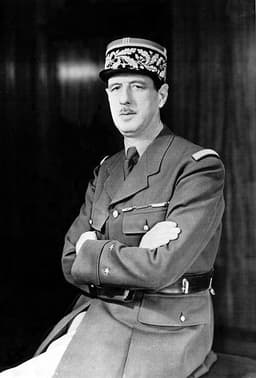
Charles de Gaulle
Politician · Modern
68.2Total
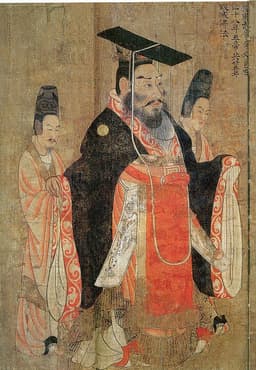
Yuwen Yong
Emperor · Medieval
67.2Total
Basic Information
Born
1890
543
Died
1970
578
Era
Modern
Medieval
Nationality
France
China
Occupation
Politician
Emperor
Civilization
Western
Eastern
Score Comparison
Military (10%)
55.0
78.0
Political (20%)
75.0
78.0
Influence (20%)
65.0
58.0
Legacy (20%)
68.0
54.0
Leadership (15%)
78.0
85.0
Strategy (15%)
65.0
69.1
TOTAL
68.2
67.2
Charles de Gaulle — Complete Timeline
1940 AD
Appeal of 18 June 1940Political Action
From London, de Gaulle broadcast a radio appeal urging French resistance against Nazi occupation. He called on French soldiers and citizens to continue the fight, founding the Free French Forces and becoming the symbol of French defiance.
World War IIResistanceLeadership
Impact: nationalconstructive
1958 AD
Founding of the Fifth RepublicPolitical Action
De Gaulle returned to power during the Algerian crisis and oversaw the drafting of a new constitution. The Fifth Republic established a strong executive presidency, replacing the unstable parliamentary system of the Fourth Republic.
ConstitutionGovernment ReformPolitical System
Impact: nationalconstructive
1962 AD
End of the Algerian WarPolitical Action◆ Major
De Gaulle negotiated the
DecolonizationPeace TreatyAlgeria
Impact: regionalconstructive
1968 AD
May 1968 CrisisPolitical Action◆ Major
Mass student protests and general strikes paralyzed France, challenging de Gaulle's government. De Gaulle briefly fled to Germany, then returned to dissolve the National Assembly and call elections, which his party won, but his authority was weakened.
ProtestPolitical CrisisSocial Unrest
Impact: nationaldestructive
1969 AD
Resignation as PresidentPolitical Action
De Gaulle resigned after losing a referendum on regional reform and Senate restructuring. The defeat marked the end of his political career, as he withdrew from public life and died the following year.
ResignationPolitical DefeatReferendum
Impact: nationaltragic
Yuwen Yong — Complete Timeline
574 AD
Suppression of Buddhism in Northern ZhouReform◆ Major
Emperor Wu of Northern Zhou (Yuwen Yong) ordered the suppression of Buddhism, confiscating monastic lands, forcing monks and nuns to return to lay life, and destroying temples. He aimed to increase state revenue and military manpower, strengthening the state.
Northern ZhouBuddhist PersecutionReform
Impact: nationaldestructive
577 AD
Conquest of Northern QiWar
Emperor Wu led a successful campaign against the rival Northern Qi dynasty, conquering its territory and unifying northern China under Northern Zhou. This victory ended the division of the north and set the stage for the Sui dynasty's unification of all China.
Northern ZhouUnificationNorthern Qi
Impact: regionalconstructive
578 AD
Death during campaign against the TurksWar◆ Major
Emperor Wu died of illness while leading a campaign against the G
Northern ZhouMilitary CampaignDeath
Impact: regionaltragic
Expert Analysis
Charles de Gaulle vs Yuwen Yong
# The Unlikely Parallels: De Gaulle and the Emperor Who Defied History
On a June evening in 1940, a towering French general stood before a BBC microphone in London and told his countrymen that a battle had been lost, but the war had not. Fourteen centuries earlier and half a world away, a Chinese emperor named Yuwen Yong rode at the head of his cavalry toward the walls of a rival kingdom, convinced that only through conquest could his people survive. Both men faced moments of existential crisis. Both would reshape their nations. Yet one remains a household name, while the other is all but forgotten in the West. What drove these two leaders—and what separates a legend from a footnote?
Origins
Charles de Gaulle was born into a devoutly Catholic, nationalist family in Lille, in the industrial north of France. His father taught philosophy and history, instilling in young Charles a sense of France’s eternal greatness. The humiliation of France’s defeat in the Franco-Prussian War (1870–71) haunted his childhood; he would later write that he had “a certain idea of France”—one of grandeur, independence, and destiny. The rigid discipline of Saint-Cyr military academy and the horrors of World War I, where he was wounded and captured at Verdun, forged a man of iron will and icy intellect.
Yuwen Yong came from a world of warring clans. Born in 543, he was the fourth son of a Xianbei chieftain who had carved out a small kingdom amid the chaos of China’s Northern and Southern Dynasties period. His family was not Chinese but nomadic, and his people—the Yuwen clan—ruled through military force over a mixed population of Han Chinese and steppe warriors. Young Yuwen grew up in a court rife with assassinations and betrayals; his elder brothers were murdered by rivals. Survival required cunning, ruthlessness, and an intimate understanding of power’s raw mechanics.
Rise to Power
De Gaulle’s ascent was improbable. A mid-ranking colonel in 1940, he had no political base, no party, no army of his own. His 1940 Appeal of 18 June was an act of pure audacity—a single voice claiming to speak for a defeated nation. For four years, he lived in exile, battling both the Nazis and Allied leaders who dismissed him as a pretentious upstart. His breakthrough came in 1944, when he marched into liberated Paris as the undisputed leader of Free France. Yet his real power was fragile; the Fourth Republic’s parliamentary squabbling drove him into retirement in 1946.
Yuwen Yong’s path was bloodier but more direct. In 560, at age seventeen, he seized power in a coup against a corrupt regent, executing his rivals with cold precision. Unlike de Gaulle, he inherited a functioning military machine and a kingdom—Northern Zhou—that already controlled much of western China. His challenge was not building a movement from scratch, but consolidating control over a fractious court and preparing for war against the rival Northern Qi dynasty in the east.
Leadership & Governance
De Gaulle governed through sheer force of personality and a constitution designed around him. When the Algerian War threatened to tear France apart in 1958, he returned from retirement to found the Fifth Republic, crafting a presidency with sweeping executive powers. He ended the Algerian conflict in 1962 through the Évian Accords—a masterstroke of political courage that enraged the military that had brought him to power. He pursued an independent foreign policy, withdrawing France from NATO’s integrated command and vetoing British entry into the European Economic Community. Yet his style was aloof, almost monarchical. The May 1968 crisis revealed his detachment: student protests and a general strike paralyzed France, and de Gaulle’s first instinct was to flee to West Germany, seeking reassurance from the French army commander there.
Yuwen Yong’s governance was more brutal but no less visionary. In 574, he ordered the suppression of Buddhism across Northern Zhou, confiscating monastic lands and forcing hundreds of thousands of monks and nuns back into secular life. It was not religious bigotry but state-building: Buddhist monasteries had become vast, tax-exempt economic empires that rivaled the throne. By breaking their power, Yuwen Yong centralized resources for his military campaigns. He also reformed the army, blending Xianbei cavalry traditions with Chinese infantry tactics. In 577, he personally led the conquest of Northern Qi, unifying northern China for the first time in decades. His strategy was methodical: he avoided pitched battles, preferring to cut supply lines and isolate enemy cities.
Triumph & Tragedy
De Gaulle’s greatest triumph was the Fifth Republic itself. He gave France stable institutions that outlasted him, and he restored national pride after the shame of occupation and colonial defeats. His greatest tragedy was the 1968 revolt, which exposed the gap between his vision of France and the aspirations of a new generation. When he lost a referendum on regional reform in 1969, he resigned immediately and died a year later, a lonely figure in his village home.
Yuwen Yong’s triumph was the unification of the north. At age thirty-four, he had accomplished what his ancestors could not. His tragedy came in 578, while leading a campaign against the Göktürks—the nomadic confederation threatening his northern border. He fell ill and died in the field, his empire barely consolidated. His son, a teenager, proved weak; within three years, a general named Yang Jian usurped the throne, founded the Sui dynasty, and went on to reunify all of China. Yuwen Yong’s work became the foundation for another man’s glory.
Character & Destiny
De Gaulle was a man of words and symbols. He understood that France needed myths to survive. His famous phrase, “France has no friends, only interests,” reflected a cold realism, but his actions were driven by an almost mystical faith in his nation’s destiny. He was stubborn, proud, and often wrong—he misjudged the depth of the 1968 crisis—but his stubbornness also saved France in 1940 and 1958.
Yuwen Yong was a man of action and silence. He left no famous speeches, only campaigns and edicts. His suppression of Buddhism was pragmatic, not ideological; he allowed Taoism and Confucianism to flourish. He trusted no one, executed rivals without hesitation, and died with his boots on. If de Gaulle was a prophet, Yuwen Yong was a soldier-king.
Legacy
De Gaulle’s legacy is everywhere in modern France: the presidency, the nuclear deterrent, the foreign policy of independence. He is remembered as the man who said “no” to Hitler, to the American-dominated NATO, and to the easy path of colonial retreat. His scores—Political 82, Leadership 78—reflect a statesman who shaped institutions, though his military and strategic ratings (65 and 55) remind us that his genius was political, not tactical.
Yuwen Yong’s legacy is less visible but no less real. The Sui and Tang dynasties that followed him built on his military reforms, his destruction of Buddhist economic power, and his unification of the north. Yet his scores—Military 74.6, Strategy 81.8—are higher than de Gaulle’s in many categories, suggesting a more effective warrior-king. Why, then, is he obscure? Because his empire died with him. He built a machine, not a myth.
Conclusion
The difference between these two men is not ability but narrative. De Gaulle had history on his side—the drama of exile, the radio appeal, the grand return. Yuwen Yong had only conquest, and conquest alone does not create a lasting story. One founded a republic that still stands; the other built an empire that crumbled. Yet both faced the same fundamental question: how do you lead a people through crisis? De Gaulle answered with words and institutions. Yuwen Yong answered with the sword. In the end, the sword wins battles, but the word wins centuries.
Rankings
🥇
Charles de GaulleLeader
Mil: 55.0Pol: 75.0Inf: 65.0
68.2
🥈
Yuwen Yong
Mil: 78.0Pol: 78.0Inf: 58.0
67.2
+1.0 behind
How This Comparison Works
Algorithm
Each figure is scored on 6 dimensions (0—100 scale) based on structured historical data: Military (10%), Political (20%), Influence (20%), Legacy (20%), Leadership (15%), Strategy (15%). The weighted total produces the final ranking.
Data Sources
Scores are computed from structured sub-indicators in the database. Scale factors adjust for era (Ancient ×0.85, Modern ×1.0) and civilization size (Eastern ×1.05, Other ×0.80) to account for differences in population and military scale.
Maximum 3 Figures
Comparisons are limited to 2—3 figures to ensure readability and statistical meaningfulness.
Error Margins
±5 points per dimension — Sub-scores are derived from historical records with inherent uncertainty. Two figures within 5 points on a dimension should be considered roughly equivalent in that area.
Total Score Accuracy
±3 points overall — The weighted combination of 6 dimensions produces a total score with approximately ±3 points of uncertainty. Differences of less than 3 points are not statistically significant— the figures are effectively tied.
Known Limitations
- Historical records are incomplete and uneven across civilizations
- Figures from oral-tradition societies may be underrepresented
- Occupation labels can misclassify multi-role figures
- Scores measure capability and impact, not moral character
- Quantitative scoring is a comparison tool, not absolute truth
Capability Radar
Military (10%) — Battles & Warfare
Battles
60
75
Win Rate
55
80
Expansion
20
80
Political (20%) — Governance & Reform
Reform
95
85
Diplomacy
90
70
Economy
70
75
Influence (20%) — Cultural & Global Reach
Cultural
70
40
Global
80
40
Legacy (20%) — Historical Impact
Historical
85
65
Longevity
75
50
Leadership (15%) — Power & Stability
Tenure
85
60
Stability
75
70
Strategy (15%) — Tactics & Innovation
Strategy
85
75
Tactics
70
70
Reform
80
85
Similar Comparisons
Comments & Discussion
IRON LEGION6/16/2026
Military historian here: De Gaulle's Free French had at most 50,000 men in 1940, yet he rebuilt France's military into a nuclear power. Yuwen Yong raised a cavalry army of 70,000 in five years and conquered Northern Qi—both faced collapse and forged weapons from ashes. De Gaulle's advantage? Modern media. Yuwen Yong's horseback empire lacked Twitter; otherwise, he'd be a household name too. Give me the man who beats plowshares into swords without a camera.
历史破壁者6/16/2026
数据党报道:Yuwen Yong在位12年统一北方,人口从2000万增到5000万,GDP翻倍;De Gaulle战后重建法国,经济年均增长5%,但靠马歇尔计划输血。差距在时间尺度—Yuwen Yong是冷兵器拼效率,De Gaulle是核弹撑门面。别吹谁更伟大,事实是Yuwen Yong的骑兵日行80里,De Gaulle的坦克跑不了那么快,历史不等输家。
CLASSICS SCHOLAR6/16/2026
Read Livy, study De Gaulle: he weaponized narrative. His "certain idea of France" reframed collapse into destiny, like Scipio at Zama. Yuwen Yong's legacy is stuck in the Book of Zhou—dry annals of taxes and battles. One manipulated myth to immortalize himself; the other trusted history's clerks. De Gaulle's genius was in the *telling*, not just the doing. Yuwen Yong's cavalry charges are forgotten because no one wrote an epic.
红色铁幕评论家6/16/2026
修正主义角度:别把De Gaulle神化,他1958年回锅靠政变威胁,压榨阿尔及利亚殖民利益。Yuwen Yong至少改革均田制、废胡汉分治,阶级冲突靠制度调和。De Gaulle嘴上“自由法国”,实际用专政手段镇压学生运动。Yuwen Yong更实在,他杀人少、治百姓多,像个古代实干家。把De Gaulle比作Yuwen Yong是抬举了拿破仑,贬低了隋文帝。
HISTORY BUFF6/16/2026
I'm biased toward Yuwen Yong: he personally led 3,000 cavalry through blizzards to surprise the Qi army in 576—crazy audacity. De Gaulle's finest moment? That BBC speech, sitting safe in London. Yuwen Yong died on campaign at 36, consumed by his ambition. De Gaulle lived to 79, retired, and watched himself become a statue. Give me the man who burned out young, not the one who posed for busts.