Loading...
Pachacuti vs Yuwen Yong
Pachacuti leads by 2.2 pts · 2 figures compared
…
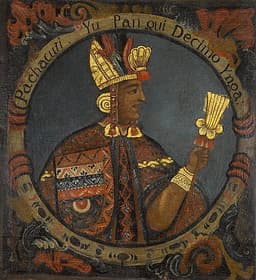
Pachacuti
Emperor · Medieval
69.4Total
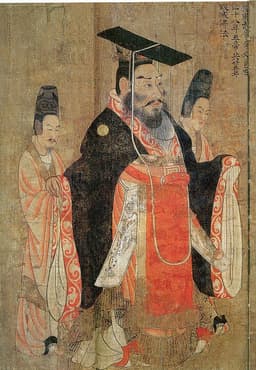
Yuwen Yong
Emperor · Medieval
67.2Total
Basic Information
Born
1418
543
Died
1472
578
Era
Medieval
Medieval
Nationality
Inca Empire
China
Occupation
Emperor
Emperor
Civilization
Other
Eastern
Score Comparison
Military (10%)
78.5
78.0
Political (20%)
58.1
78.0
Influence (20%)
65.0
58.0
Legacy (20%)
72.0
54.0
Leadership (15%)
78.0
85.0
Strategy (15%)
69.2
69.1
TOTAL
69.4
67.2
Pachacuti — Complete Timeline
1438 AD
Conquest of the Chanka KingdomWar
Pachacuti led the Inca army to defeat the Chanka, a powerful rival, in a decisive battle near Cusco. This victory secured his position as Sapa Inca and initiated a period of rapid expansion, transforming the Inca from a small kingdom into a vast empire.
ConquestInca ExpansionChanka
Impact: regional
1440 AD
Reconstruction of CuscoCultural◆ Major
Pachacuti rebuilt Cusco as the imperial capital, designing it in the shape of a puma and constructing massive stone structures like Sacsayhuam
Urban PlanningArchitectureInca Empire
Impact: regionalconstructive
1450 AD
Initiation of Machu Picchu's ConstructionCultural◆ Major
Pachacuti ordered the construction of Machu Picchu, a royal estate and ceremonial site high in the Andes. The complex featured sophisticated dry-stone masonry and terraced agriculture, serving as a symbol of Inca engineering and a retreat for the emperor.
ArchitectureRoyal EstateInca Engineering
Impact: regionalconstructive
Yuwen Yong — Complete Timeline
574 AD
Suppression of Buddhism in Northern ZhouReform◆ Major
Emperor Wu of Northern Zhou (Yuwen Yong) ordered the suppression of Buddhism, confiscating monastic lands, forcing monks and nuns to return to lay life, and destroying temples. He aimed to increase state revenue and military manpower, strengthening the state.
Northern ZhouBuddhist PersecutionReform
Impact: nationaldestructive
577 AD
Conquest of Northern QiWar
Emperor Wu led a successful campaign against the rival Northern Qi dynasty, conquering its territory and unifying northern China under Northern Zhou. This victory ended the division of the north and set the stage for the Sui dynasty's unification of all China.
Northern ZhouUnificationNorthern Qi
Impact: regionalconstructive
578 AD
Death during campaign against the TurksWar◆ Major
Emperor Wu died of illness while leading a campaign against the G
Northern ZhouMilitary CampaignDeath
Impact: regionaltragic
Expert Analysis
Pachacuti vs Yuwen Yong
### The Mountain and the Plain
On a high Andean ridge, a king ordered stone to be fitted to stone with a precision that would baffle the ages, creating a sanctuary in the clouds. On the dusty plains of northern China, another emperor ordered temples to be emptied and monks to return to the fields, reshaping a civilization with a single edict. One built a wonder for the gods; the other tore down the houses of gods to build a state. Pachacuti and Yuwen Yong, born a world apart, each forged an empire from chaos. Yet their paths—and their ends—could not have been more different. What drove one to raise monuments to the sky, and the other to level the spiritual foundations of his realm?
### Origins
Pachacuti was born around 1418 into a world of high valleys and constant warfare. The Inca were then merely one of many petty kingdoms in the Cusco region, jostling for supremacy. His father, Viracocha Inca, was a capable ruler, but the kingdom faced a mortal threat from the Chanka people. Young Yupanqui—who would later take the name Pachacuti, meaning "Cataclysm" or "He Who Shakes the Earth"—was not the favored heir. He was a prince who had to prove himself in battle, and his proving ground would be the very survival of his people.
Yuwen Yong, born in 543, entered a world of equal turmoil but different texture. China was fractured into the Northern and Southern Dynasties, a period of constant war and shifting alliances. His family, the Yuwen clan, were military aristocrats of Xianbei (steppe nomad) descent who had seized power in the north, founding the Northern Zhou dynasty. Yuwen Yong was raised in a court of ruthless intrigue, where uncles and cousins were purged, and the throne was a prize won by blood. He learned early that power was not inherited; it was taken and held by the sword.
### Rise to Power
Pachacuti’s rise was forged in a single, desperate battle. In 1438, the Chanka army descended on Cusco. His father fled the capital in fear. It was the young prince who rallied the city’s defenders, donned the war regalia, and led a counterattack that shattered the Chanka. The victory was so total that the Chanka kingdom ceased to exist. Pachacuti returned not as a prince, but as the new Sapa Inca. He had saved his people and, in doing so, earned the right to remake them.
Yuwen Yong’s ascent was a slower, more calculated affair. He became emperor in 560 at the age of seventeen, but he was a puppet. Real power lay with his cousin Yuwen Hu, a regent who had already murdered two previous emperors. For twelve years, Yuwen Yong played the part of a docile, even foolish, ruler, biding his time. Then, in 572, he struck. In a carefully planned ambush during a routine meeting, he personally killed his cousin with a blow from a jade scepter. It was an act of cold-blooded patience and sudden violence. He was now the true master of Northern Zhou.
### Leadership & Governance
As rulers, they were mirror opposites in method. Pachacuti was a builder. After securing his borders, he turned to administration. He rebuilt Cusco from 1440 onwards, laying it out in the shape of a sacred puma, with massive stone walls that still stand without mortar. He initiated the construction of Machu Picchu around 1450, a royal estate that was also a statement of divine power. His genius was in integration: he imposed the Inca language, religion, and road system on conquered peoples, but he also allowed local lords to retain power if they submitted. He created a state where loyalty was rewarded and rebellion was crushed with terrifying efficiency.
Yuwen Yong was a destroyer—in the service of unification. He inherited a state riven by the immense wealth and influence of Buddhist monasteries, which held vast lands and tax-exempt populations. In 574, he issued his most radical decree: the suppression of Buddhism. He confiscated monastic lands, forced hundreds of thousands of monks and nuns back into secular life, and melted down statues for coin. It was a brutal act of economic and political centralization. He was not an atheist; he was a pragmatist. He needed soldiers and taxes, not monks and prayers. This single reform doubled his tax base and filled his armies.
### Triumph & Tragedy
Their greatest triumphs came on the battlefield. For Pachacuti, the defeat of the Chanka in 1438 was the pivot of his life. It was not just a victory; it was a transformation. He went on to conquer the entire Andean region, from Lake Titicaca to the central coast, forging an empire that stretched 2,500 miles. He was a military innovator, using terror, diplomacy, and resettlement to pacify his new domains.
Yuwen Yong’s crowning military achievement was the conquest of the Northern Qi dynasty in 577. For decades, the two northern states had been locked in a stalemate. Yuwen Yong broke it with a lightning campaign, personally leading his armies to capture the enemy capital. He unified northern China under a single rule for the first time in nearly half a century. It was a feat of strategy and will that set the stage for the later Sui and Tang dynasties.
But tragedy struck both men. For Yuwen Yong, it came in 578, at the height of his power. While leading a campaign against the Göktürks, he fell ill and died. He was only 35. His empire was left in the hands of a young, incompetent son, who squandered the inheritance within three years. The Northern Zhou fell, replaced by the Sui. Yuwen Yong’s life was a masterpiece cut short. For Pachacuti, the tragedy was different: he lived long enough to see his empire expand beyond his ability to control it. He died around 1472, passing a vast, complex state to his son. The machinery he built would hold for another sixty years, but the seeds of overreach were already sown.
### Character & Destiny
Their characters shaped their fates. Pachacuti was a visionary, a man who saw the world as clay to be molded. He believed in the divine right of the Inca, and his building projects—the roads, the terraces, the cities—were acts of faith as much as governance. He was confident, even arrogant, but his arrogance was matched by his competence.
Yuwen Yong was a survivor. He learned in the shadows of a murderous court. He was patient, calculating, and ruthless. He did not build cathedrals; he built a bureaucracy. He did not seek glory; he sought order. His suppression of Buddhism was not an act of religious zealotry but of cold statecraft. He understood that to unify China, he had to break the power of any institution that rivaled the state. His short life was a testament to the power of focused, unsentimental ambition.
### Legacy
Their legacies are as different as their lives. Pachacuti is remembered as the "Napoleon of the Andes," the man who built the Inca Empire. His name is synonymous with Machu Picchu, with the great road system, with the very idea of Inca civilization. Yet his empire was ephemeral, swept away by a handful of Spanish horsemen within a generation of his death. His legacy is a ruin—but a magnificent one.
Yuwen Yong is less famous but arguably more consequential. His unification of northern China made possible the later Sui and Tang dynasties, which would create one of the golden ages of Chinese civilization. His anti-Buddhist policies were reversed, but the principle of state supremacy over religious institutions remained a pillar of Chinese governance. He is remembered as a harsh but effective ruler, a man who did what was necessary. His legacy is not a monument of stone, but a foundation of power.
### Conclusion
One built a city in the sky; the other tore down the temples on the plain. Pachacuti sought to create a world that would awe the gods; Yuwen Yong sought to create a world that would serve the state. In the end, both succeeded, and both failed. The mountain retreat still stands, a ghost of a lost empire. The unified north became the seed of a civilization that endures. Perhaps the difference is not in what they built, but in what they believed. Pachacuti believed in the power of the sacred. Yuwen Yong believed in the power of the sword. And in the long arc of history, it is often the believers who leave the deepest marks—even if those marks are only ruins.
Rankings
🥇
PachacutiLeader
Mil: 78.5Pol: 58.1Inf: 65.0
69.4
🥈
Yuwen Yong
Mil: 78.0Pol: 78.0Inf: 58.0
67.2
+2.2 behind
How This Comparison Works
Algorithm
Each figure is scored on 6 dimensions (0—100 scale) based on structured historical data: Military (10%), Political (20%), Influence (20%), Legacy (20%), Leadership (15%), Strategy (15%). The weighted total produces the final ranking.
Data Sources
Scores are computed from structured sub-indicators in the database. Scale factors adjust for era (Ancient ×0.85, Modern ×1.0) and civilization size (Eastern ×1.05, Other ×0.80) to account for differences in population and military scale.
Maximum 3 Figures
Comparisons are limited to 2—3 figures to ensure readability and statistical meaningfulness.
Error Margins
±5 points per dimension — Sub-scores are derived from historical records with inherent uncertainty. Two figures within 5 points on a dimension should be considered roughly equivalent in that area.
Total Score Accuracy
±3 points overall — The weighted combination of 6 dimensions produces a total score with approximately ±3 points of uncertainty. Differences of less than 3 points are not statistically significant— the figures are effectively tied.
Known Limitations
- Historical records are incomplete and uneven across civilizations
- Figures from oral-tradition societies may be underrepresented
- Occupation labels can misclassify multi-role figures
- Scores measure capability and impact, not moral character
- Quantitative scoring is a comparison tool, not absolute truth
Capability Radar
Military (10%) — Battles & Warfare
Battles
85
75
Win Rate
90
80
Expansion
90
80
Political (20%) — Governance & Reform
Reform
92
85
Diplomacy
75
70
Economy
80
75
Influence (20%) — Cultural & Global Reach
Cultural
85
40
Global
65
40
Legacy (20%) — Historical Impact
Historical
80
65
Longevity
70
50
Leadership (15%) — Power & Stability
Tenure
85
60
Stability
82
70
Strategy (15%) — Tactics & Innovation
Strategy
88
75
Tactics
80
70
Reform
85
85
Similar Comparisons
Comments & Discussion
No comments yet. Be the first to share your thoughts!