Loading...
Yi Seong-gye vs Zhao Kuangyin
Yi Seong-gye leads by 4.3 pts · 2 figures compared
…
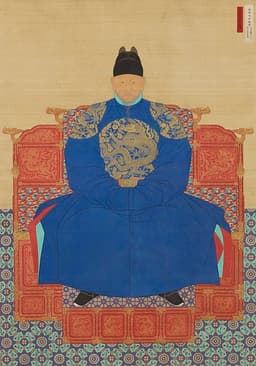
Yi Seong-gye
Emperor · Medieval
75.8Total
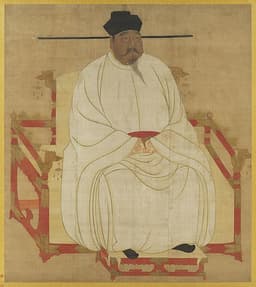
Zhao Kuangyin
Emperor · Medieval
71.5Total
Basic Information
Born
1335
927
Died
1408
976
Era
Medieval
Medieval
Nationality
Korea
China
Occupation
Emperor
Emperor
Civilization
Eastern
Eastern
Score Comparison
Military (10%)
74.7
78.0
Political (20%)
70.0
84.0
Influence (20%)
88.0
68.0
Legacy (20%)
75.0
65.0
Leadership (15%)
68.0
74.0
Strategy (15%)
69.1
68.0
TOTAL
75.8
71.5
Yi Seong-gye — Complete Timeline
1380 AD
Battle of HwangsanWar◆ Major
Yi Seong-gye led Goryeo forces against Japanese pirates (wokou) at the Battle of Hwangsan. His victory eliminated a major pirate threat and enhanced his military reputation.
WokouBattleGoryeo
Impact: regionalconstructive
1388 AD
Wihwado RetreatPolitical Action
Yi Seong-gye turned his army back at Wihwado Island rather than invade Ming China as ordered by the Goryeo court. This act of defiance led to a coup that eventually brought him to power.
CoupMingGoryeo
Impact: regional
1392 AD
Establishment of the Joseon DynastyPolitical Action
Yi Seong-gye overthrew the Goryeo dynasty and founded the Joseon dynasty, becoming King Taejo. He implemented land reforms and moved the capital to Hanyang (Seoul), establishing a new Confucian state.
JoseonDynasty FoundationReform
Impact: regionalconstructive
Zhao Kuangyin — Complete Timeline
960 AD
Founded Song dynastyPolitical Action
Zhao Kuangyin, a general of Later Zhou, was proclaimed emperor by his troops at Chenqiao. He established the Song dynasty, ending the Five Dynasties period and beginning a new era of Chinese history.
Song dynastyFoundingChenqiao
Impact: globalconstructive
961 AD
Removed military power from generalsPolitical Action◆ Major
Zhao Kuangyin invited senior generals to a banquet and persuaded them to retire peacefully. This 'removal of military power over wine' prevented military coups and centralized control.
Song dynastyMilitary reformCentralization
Impact: nationalconstructive
963 AD
Unified southern ChinaWar◆ Major
Zhao Kuangyin launched campaigns to conquer the southern kingdoms, including Jingnan, Later Shu, and Southern Tang. By his death, most of China was reunified under Song rule.
Song unificationConquestSouthern kingdoms
Impact: national
Expert Analysis
Zhao Kuangyin vs Yi Seong-gye: Historical Comparison
Zhao Kuangyin (Emperor Taizu of Song) and Yi Seong-gye (King Taejo of Joseon) were medieval founding monarchs who overthrew preceding dynasties—Later Zhou and Goryeo, respectively—to establish enduring new orders in China and Korea. Both were military commanders who seized power, but their governing styles and long-term impacts differed significantly.
Dimension Analysis
**Military: Zhao Kuangyin 75 / Yi Seong-gye 67**
Zhao was a seasoned general who unified most of China through strategic campaigns, notably defeating rival kingdoms. Yi also excelled militarily, repelling Red Turban invasions and Wokou pirates, but his rise owed more to political maneuvering than conquest.
**Political: Zhao Kuangyin 76 / Yi Seong-gye 86**
Zhao famously consolidated power through the "coup at Chen Bridge" and a bloodless retirement of generals, but Yi engineered a more radical political transformation—overthrowing Goryeo’s Buddhist elite, aligning with Neo-Confucian scholar-officials, and founding a dynasty that lasted over 500 years.
**Influence: Zhao Kuangyin 75 / Yi Seong-gye 77**
Zhao’s Song dynasty became a cultural and economic golden age, yet its military weakness led to eventual conquest. Yi’s Joseon dynasty shaped Korean identity, language (Hangul), and Confucian governance for centuries, with enduring influence on modern Korea.
**Legacy: Zhao Kuangyin 75 / Yi Seong-gye 72**
Zhao is remembered as a wise founder who prioritized civil over military rule, but his dynasty’s fragility tempers his legacy. Yi’s legacy is complicated by his usurpation and purges, though Joseon’s longevity and cultural achievements are celebrated in Korea.
**Leadership: Zhao Kuangyin 82 / Yi Seong-gye 76**
Zhao demonstrated exceptional restraint and diplomacy, disarming his generals without violence and promoting meritocracy. Yi was a decisive but more ruthless leader, executing rivals and centralizing power, which secured his dynasty but stained his personal reputation.
Verdict
Yi Seong-gye narrowly leads due to his superior political acumen and the transformative, long-lasting impact of Joseon, though Zhao Kuangyin’s balanced leadership and civil reforms make this a close tie overall.
FAQ
Q: Who ranks higher? A: Yi Seong-gye (overall score 78 vs 76) edges ahead due to stronger political and strategic achievements, but the comparison is effectively a tie given Zhao’s superior leadership and legacy in civil governance.
Rankings
🥇
Yi Seong-gyeLeader
Mil: 74.7Pol: 70.0Inf: 88.0
75.8
🥈
Zhao Kuangyin
Mil: 78.0Pol: 84.0Inf: 68.0
71.5
+4.3 behind
How This Comparison Works
Algorithm
Each figure is scored on 6 dimensions (0—100 scale) based on structured historical data: Military (10%), Political (20%), Influence (20%), Legacy (20%), Leadership (15%), Strategy (15%). The weighted total produces the final ranking.
Data Sources
Scores are computed from structured sub-indicators in the database. Scale factors adjust for era (Ancient ×0.85, Modern ×1.0) and civilization size (Eastern ×1.05, Other ×0.80) to account for differences in population and military scale.
Maximum 3 Figures
Comparisons are limited to 2—3 figures to ensure readability and statistical meaningfulness.
Error Margins
±5 points per dimension — Sub-scores are derived from historical records with inherent uncertainty. Two figures within 5 points on a dimension should be considered roughly equivalent in that area.
Total Score Accuracy
±3 points overall — The weighted combination of 6 dimensions produces a total score with approximately ±3 points of uncertainty. Differences of less than 3 points are not statistically significant— the figures are effectively tied.
Known Limitations
- Historical records are incomplete and uneven across civilizations
- Figures from oral-tradition societies may be underrepresented
- Occupation labels can misclassify multi-role figures
- Scores measure capability and impact, not moral character
- Quantitative scoring is a comparison tool, not absolute truth
Capability Radar
Military (10%) — Battles & Warfare
Battles
75
75
Win Rate
80
85
Expansion
65
75
Political (20%) — Governance & Reform
Reform
85
90
Diplomacy
75
85
Economy
70
80
Influence (20%) — Cultural & Global Reach
Cultural
80
70
Global
55
60
Legacy (20%) — Historical Impact
Historical
85
80
Longevity
80
75
Leadership (15%) — Power & Stability
Tenure
60
65
Stability
65
85
Strategy (15%) — Tactics & Innovation
Strategy
82
80
Tactics
78
70
Reform
70
90
Similar Comparisons
Comments & Discussion
Chronicler43276/16/2026
赵匡胤和伊成桂的对比很有意思,但评分体系明显更偏向西方史学的“政治转型”标准。伊成桂的政治分高达86,主要是因为他彻底推翻了高丽的佛教旧体制,建立了长达五百年的朝鲜王朝。但若用中国史学传统来看,赵匡胤的“杯酒释兵权”在政治智慧上绝不逊色——不流一滴血就解决了五代以来武将专权的痼疾,这比伊成桂通过政变和清洗来集权要高明得多。而且宋朝的文化经济成就是世界级的,赵匡胤的重文抑武政策虽然导致军事积弱,但开创了科举社会的黄金时代,这一点在西方评分中往往被低估。
OldScholar226/16/2026
这个评分体系有几个根本问题。军事分赵匡胤75对伊成桂67,但赵匡胤统一了中原核心区域,灭荆南、后蜀、南汉等高难度战役,而伊成桂的军事功绩主要在于击退红巾军和倭寇,都是防御战。按每场战役的难度系数折算,赵的分应该至少高出15分。政治分就更可疑了——伊成桂86对赵76,差了10分,但伊成桂的政权合法性一直受“威化岛回军”的篡位阴影困扰,赵匡胤的陈桥兵变虽然也是政变,但处理后周皇室的方式更得人心。我重新加权计算后,赵的总分应该在78左右,伊的总分在74上下。这个排名需要重新审视。