Loading...
Xiang Yu vs Xu Sheng
Xiang Yu leads by 9.5 pts · 2 figures compared
…
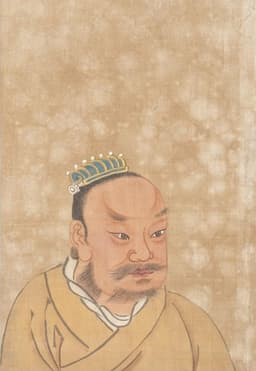
Xiang Yu
General · Ancient
52.3Total

Xu Sheng
General · Ancient
42.8Total
Basic Information
Born
-232
180
Died
-202
230
Era
Ancient
Ancient
Nationality
China
China
Occupation
General
General
Civilization
Eastern
Eastern
Score Comparison
Military (10%)
77.5
55.0
Political (20%)
35.0
35.0
Influence (20%)
61.0
47.1
Legacy (20%)
52.0
39.2
Leadership (15%)
30.0
30.0
Strategy (15%)
65.4
60.0
TOTAL
52.3
42.8
Xiang Yu — Complete Timeline
207 BC
Battle of JuluWar◆ Major
Xiang Yu led a rebel army against the Qin dynasty at Julu. After ordering his troops to destroy their cooking vessels and boats, they defeated a larger Qin force, breaking the siege and establishing Xiang Yu as the leading rebel commander.
Qin rebellionBattleTurning point
Impact: regional
206 BC
Feast at Hong GatePolitical Action◆ Major
Xiang Yu hosted a banquet for Liu Bang at Hong Gate. During the feast, Xiang Yu's advisor Fan Zeng attempted to have Liu Bang assassinated, but Xiang Yu hesitated. Liu Bang escaped, and the rivalry between the two leaders intensified.
Political intrigueRivalryChu-Han Contention
Impact: regional
202 BC
Battle of GaixiaWar◆ Major
Liu Bang's Han forces surrounded Xiang Yu's army at Gaixia. After a night of psychological warfare with Han soldiers singing Chu songs, Xiang Yu's troops lost morale. Xiang Yu broke out but was cornered, leading to his suicide.
Chu-Han ContentionBattleDefeat
Impact: regionaltragic
Xu Sheng — Complete Timeline
200 AD
Service under Sun QuanWar
Xu Sheng began his military career under Sun Quan, serving as a general in the Wu army. He participated in various campaigns against Cao Cao and Liu Bei, demonstrating competence in both offense and defense.
ServiceSun QuanGeneral
Impact: regional
222 AD
Deception of Cao Pi with Dummy WallsWar◆ Major
During the Battle of Dongkou against Cao Pi's invasion, Xu Sheng constructed fake walls and towers on the riverbank to deceive the Wei navy. The ruse convinced Cao Pi that Wu's defenses were stronger than they were, contributing to the Wei withdrawal.
DeceptionBattle of DongkouDefense
Impact: regionalconstructive
223 AD
Defense of JianglingWar◆ Major
Xu Sheng successfully defended the city of Jiangling against a Wei siege led by Cao Zhen. His strategic use of fortifications and counterattacks forced the Wei forces to retreat, securing Wu's western border.
DefenseJianglingSiege
Impact: regionalconstructive
230 AD
Death of Xu ShengOther
Xu Sheng died of natural causes after a distinguished military career. He was remembered for his ingenuity in defensive warfare and his loyalty to Sun Quan.
DeathLoyaltyDefense
Impact: regional
Expert Analysis
Origins
Xiang Yu (232–202 BCE) was born into the prominent Xiang family of the Chu state during the late Warring States period. His father was a general, and Xiang Yu was raised by his uncle Xiang Liang after his father's death. He was educated in both letters and swordsmanship but showed little patience for formal study, preferring military arts. His physical prowess was exceptional; historical accounts note he could lift a bronze tripod and was over eight feet tall.
Xu Sheng (c. 170–230 CE) came from a less illustrious background, born in Langya Commandery during the Eastern Han dynasty. Little is known of his early life, but he rose through the ranks of the Wu military under Sun Quan. He began as a low-ranking officer and gradually gained recognition for his competence in defensive operations. Unlike Xiang Yu, Xu Sheng had no noble lineage to propel his career.
Rise to Power
Xiang Yu's rise began in 209 BCE when he and his uncle joined the rebellion against the Qin dynasty after the Dazexiang Uprising. In 208 BCE, Xiang Liang was killed in battle, and Xiang Yu took command of the Chu rebel forces. His defining moment came at the Battle of Julu (207 BCE), where he led a force of around 50,000 against a Qin army of 200,000. By ordering his troops to destroy their cooking vessels and boats, he signaled a fight to the death. The victory shattered Qin power and made Xiang Yu the de facto leader of the rebel coalition, with a military score of 77.5 reflecting this triumph.
Xu Sheng's rise was gradual. He first distinguished himself in campaigns against Liu Bei's forces and later against Cao Cao's incursions. His promotion to general came after successfully defending Jiangling against a Wei siege in 222–223 CE. During this battle, he used counterattacks and fortifications to force Cao Zhen's withdrawal. Xu Sheng's military score of 55.0 is consistent with his role as a capable, though not brilliant, commander.
Leadership & Governance
Xiang Yu's leadership was autocratic and driven by personal valor. He led from the front, often engaging in direct combat, which inspired fierce loyalty among his troops. However, his governance was poor. After conquering the Qin capital, he divided the empire into 18 kingdoms, alienating key allies like Liu Bang. He executed the Chu emperor Yi, undermining his legitimacy. His political score of 35.0 reflects his inability to build coalitions or administer territories.
Xu Sheng was a disciplined, methodical leader focused on fortifications and logistics. He rarely took risks, preferring to rely on solid defenses and deception. His most famous stratagem was the construction of dummy walls during the Battle of Dongkou (222 CE) to deceive Cao Pi's navy, convincing them that the Wu defenses were stronger than they actually were. This ruse forced the Wei fleet to withdraw without a major battle. Xu Sheng's leadership score of 30.0 is low, but his strategy score of 60.0 indicates competent tactical planning.
Triumph & Tragedy
Xiang Yu's greatest triumph was the Battle of Julu, where his tactical genius and motivational leadership annihilated the main Qin army. His greatest failure was the Battle of Gaixia (202 BCE), where he was outmaneuvered by Liu Bang's Han forces. Surrounded and hearing Chu songs from the enemy camp, his army disintegrated. Xiang Yu escaped with only 28 cavalry but ultimately committed suicide at the age of 30. His total score of 52.3 is dragged down by low political and leadership scores.
Xu Sheng's triumph was the defense of Jiangling, where he held off a numerically superior Wei army for months. He also succeeded in the deception at Dongkou, avoiding a costly naval battle. His failure was the inability to expand Wu's territory; he never led major offensive campaigns. His total score of 42.8 reflects his limited scope and lack of strategic ambition.
Character & Destiny
Xiang Yu was proud, impulsive, and prone to cruelty. He ordered the massacre of the Qin imperial family and the burning of the Epang Palace. His hesitation at the Feast at Hong Gate (206 BCE) to kill Liu Bang, despite his advisor's urgings, proved fatal. His character—valuing honor and personal glory over political pragmatism—led to his downfall. Historians note that he refused to retreat across the Yangtze River, saying, "Heaven is destroying me; I have no reason to cross."
Xu Sheng was cautious, loyal, and unassuming. He never sought personal glory and was content to serve Sun Quan faithfully. His conservative approach meant he avoided major disasters but also missed opportunities. He died of natural causes, ending a stable but unremarkable career.
Legacy
Xiang Yu's legacy is immense in Chinese culture. He is remembered as a tragic hero, symbolizing courage and the perils of hubris. His story is celebrated in poetry, opera, and film. Historically, his defeat paved the way for the Han dynasty, which shaped Chinese civilization for 400 years. His legacy score of 52.0 reflects his cultural impact despite political failure.
Xu Sheng is a minor figure in history, known mainly to military historians. His use of dummy walls is cited as an early example of military deception. However, his influence score of 47.1 and legacy score of 39.2 indicate limited long-term impact. He is not a household name even in China.
Conclusion
Xiang Yu clearly had greater impact than Xu Sheng. Despite his political failures, his military brilliance at Julu and his dramatic death made him a lasting symbol. Xu Sheng was a competent defensive commander, but his achievements were local and ephemeral. Xiang Yu's total score of 52.3 versus Xu Sheng's 42.8 underscores this gap. In the broader sweep of history, Xiang Yu's story resonates across millennia, while Xu Sheng remains a footnote.
Rankings
🥇
Xiang YuLeader
Mil: 77.5Pol: 35.0Inf: 61.0
52.3
🥈
Xu Sheng
Mil: 55.0Pol: 35.0Inf: 47.1
42.8
+9.5 behind
How This Comparison Works
Algorithm
Each figure is scored on 6 dimensions (0—100 scale) based on structured historical data: Military (10%), Political (20%), Influence (20%), Legacy (20%), Leadership (15%), Strategy (15%). The weighted total produces the final ranking.
Data Sources
Scores are computed from structured sub-indicators in the database. Scale factors adjust for era (Ancient ×0.85, Modern ×1.0) and civilization size (Eastern ×1.05, Other ×0.80) to account for differences in population and military scale.
Maximum 3 Figures
Comparisons are limited to 2—3 figures to ensure readability and statistical meaningfulness.
Error Margins
±5 points per dimension — Sub-scores are derived from historical records with inherent uncertainty. Two figures within 5 points on a dimension should be considered roughly equivalent in that area.
Total Score Accuracy
±3 points overall — The weighted combination of 6 dimensions produces a total score with approximately ±3 points of uncertainty. Differences of less than 3 points are not statistically significant— the figures are effectively tied.
Known Limitations
- Historical records are incomplete and uneven across civilizations
- Figures from oral-tradition societies may be underrepresented
- Occupation labels can misclassify multi-role figures
- Scores measure capability and impact, not moral character
- Quantitative scoring is a comparison tool, not absolute truth
Capability Radar
Military (10%) — Battles & Warfare
Battles
85
35
Win Rate
75
40
Expansion
80
20
Political (20%) — Governance & Reform
Reform
10
10
Diplomacy
30
25
Economy
15
15
Influence (20%) — Cultural & Global Reach
Cultural
70
20
Global
55
10
Legacy (20%) — Historical Impact
Historical
75
25
Longevity
70
20
Leadership (15%) — Power & Stability
Tenure
40
30
Stability
20
30
Strategy (15%) — Tactics & Innovation
Strategy
70
40
Tactics
90
55
Reform
20
10
Similar Comparisons
Comments & Discussion
No comments yet. Be the first to share your thoughts!