Loading...
Xiang Yu vs Zhang Fei
Zhang Fei leads by 0.6 pts · 2 figures compared
…
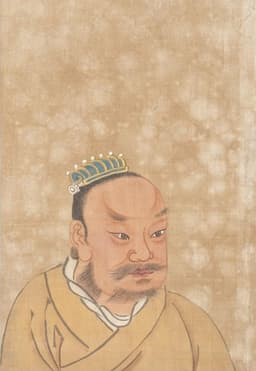
Xiang Yu
General · Ancient
52.3Total
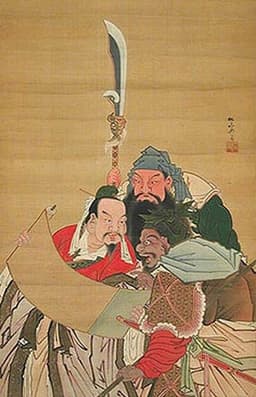
Zhang Fei
General · Ancient
52.9Total
Basic Information
Born
-232
167
Died
-202
221
Era
Ancient
Ancient
Nationality
China
China
Occupation
General
General
Civilization
Eastern
Eastern
Score Comparison
Military (10%)
77.5
61.7
Political (20%)
35.0
35.0
Influence (20%)
61.0
57.2
Legacy (20%)
52.0
50.0
Leadership (15%)
30.0
62.6
Strategy (15%)
65.4
52.5
TOTAL
52.3
52.9
Xiang Yu — Complete Timeline
207 BC
Battle of JuluWar◆ Major
Xiang Yu led a rebel army against the Qin dynasty at Julu. After ordering his troops to destroy their cooking vessels and boats, they defeated a larger Qin force, breaking the siege and establishing Xiang Yu as the leading rebel commander.
Qin rebellionBattleTurning point
Impact: regional
206 BC
Feast at Hong GatePolitical Action◆ Major
Xiang Yu hosted a banquet for Liu Bang at Hong Gate. During the feast, Xiang Yu's advisor Fan Zeng attempted to have Liu Bang assassinated, but Xiang Yu hesitated. Liu Bang escaped, and the rivalry between the two leaders intensified.
Political intrigueRivalryChu-Han Contention
Impact: regional
202 BC
Battle of GaixiaWar◆ Major
Liu Bang's Han forces surrounded Xiang Yu's army at Gaixia. After a night of psychological warfare with Han soldiers singing Chu songs, Xiang Yu's troops lost morale. Xiang Yu broke out but was cornered, leading to his suicide.
Chu-Han ContentionBattleDefeat
Impact: regionaltragic
Zhang Fei — Complete Timeline
208 AD
Zhang Fei's Defense of Changban BridgeWar◆ Major
After Cao Cao's cavalry caught up with Liu Bei's fleeing army at Changban, Zhang Fei held the bridge with only 20 horsemen. He shouted a challenge to the enemy, and fearing an ambush, Cao Cao's forces did not advance, allowing Liu Bei to escape.
BattleRearguard ActionEscape
Impact: regional
214 AD
Zhang Fei's Capture of Yan YanWar
During Liu Bei's invasion of Yi Province, Zhang Fei captured the enemy general Yan Yan. Impressed by Yan Yan's defiance, Zhang Fei released him and treated him as an honored guest, a rare act of mercy that helped win over local support.
CaptureMercyYi Province
Impact: regionalconstructive
221 AD
Zhang Fei's AssassinationOther◆ Major
While preparing for Liu Bei's campaign against Wu, Zhang Fei was murdered in his sleep by his own subordinates, Fan Jiang and Zhang Da. They cut off his head and delivered it to Sun Quan. His death was a severe blow to Shu Han.
AssassinationBetrayalDeath
Impact: nationaltragic
Expert Analysis
Origins
Xiang Yu (232–202 BCE) was born into the aristocratic Xiang family of Chu, one of the six major states conquered by Qin. His father died early, and he was raised by his uncle Xiang Liang, a Chu general. Xiang Yu was trained in military arts and calligraphy, but he abandoned the latter, stating it was only useful for recording names. From a young age, he displayed immense physical strength and ambition, famously declaring that he could replace the First Emperor. His early life was shaped by the anti-Qin sentiment of the Chu nobility.
Zhang Fei (c. 166–221 CE) was born in Zhuojun (present-day Hebei) during the late Eastern Han dynasty. He came from a wealthy family, owning a vineyard and a meat shop. He met Liu Bei and Guan Yu in a chance encounter and became a sworn brother in the Peach Garden Oath, dedicating his life to restoring the Han dynasty. Unlike Xiang Yu's noble birth, Zhang Fei was a commoner, but his loyalty and ferocity earned him a place among the most famous generals of the Three Kingdoms.
Rise to Power
Xiang Yu rose to prominence during the rebellions against the Qin dynasty. In 209 BCE, he and his uncle Xiang Liang raised an army in response to Chen Sheng's uprising. His first major victory came in 208 BCE at the Battle of Julu, where he defeated a large Qin army after ordering his troops to destroy their cooking vessels and boats, signaling a fight to the death. This victory made him the de facto leader of the rebel forces. He then entered the Qin capital Xianyang, executing the last Qin emperor and burning the Epang Palace.
Zhang Fei's rise was tied to Liu Bei's fortunes. He participated in the campaign against the Yellow Turban rebels (184 CE) and later served under various warlords. His breakthrough came during the Battle of Changban (208 CE), where he held off Cao Cao's pursuing cavalry with only 20 horsemen, shouting a challenge that reportedly caused a Cao soldier to die of fright. This act allowed Liu Bei's forces to escape, cementing Zhang Fei's reputation as a fearless warrior.
Leadership & Governance
Xiang Yu's leadership was characterized by personal bravery and tactical brilliance but political ineptitude. He scored 30.0 in leadership and 35.0 in political skills. He relied on brute force and failed to build alliances. After conquering Xianyang, he divided the empire into 18 kingdoms, alienating many allies, including Liu Bang. He also killed the Chu emperor Huai II, losing legitimacy. His governance was harsh; he often massacred conquered cities, such as Chengqiong.
Zhang Fei, with a leadership score of 62.6, was more effective as a subordinate general. He was loyal to Liu Bei and carried out orders, but his governance was marred by cruelty. He often beat his soldiers, which led to resentment. His strategic score of 52.5 reflects his role as a tactical commander rather than a strategist. He was known for his drinking and impulsive behavior, which ultimately led to his downfall.
Triumph & Tragedy
Xiang Yu's greatest triumph was the Battle of Julu, where he defeated the main Qin army and ended Qin control. He scored 77.5 in military, reflecting his tactical genius. His tragedy was the Battle of Gaixia (202 BCE), where Liu Bang's forces surrounded him. After a night of psychological warfare, his troops heard Chu songs and believed their homeland had fallen. Xiang Yu broke out but then committed suicide at the Wu River, refusing to cross to safety. His failure to consolidate power and his mistreatment of allies led to his downfall.
Zhang Fei's triumph was the defense of Changban Bridge, where his boldness saved Liu Bei's family. He also captured Yan Yan during the campaign for Yi Province (214 CE), and his magnanimous release of Yan Yan won him respect. His tragedy was his assassination in 221 CE by his own subordinates, Fan Jiang and Zhang Da, who cut off his head and delivered it to Sun Quan. He was killed while preparing for Liu Bei's campaign against Wu, a campaign that ended disastrously at the Battle of Yiling.
Character & Destiny
Xiang Yu was proud, brave, and impulsive. He famously refused to learn calligraphy, saying it was only good for recording names. His decision at the Feast at Hong Gate (206 BCE) not to kill Liu Bang, despite advice from his advisor Fan Zeng, showed his fatal hesitation. He valued personal honor over political expediency, saying "It is not that I am incapable of ruling, but that Heaven is destroying me." His character led to his isolation and defeat.
Zhang Fei was hot-tempered and cruel, often beating his soldiers. He also had a strong sense of loyalty to Liu Bei and Guan Yu. His drinking and harsh treatment of subordinates led to his murder. His destiny was sealed by his own brutality; he ignored Liu Bei's warnings to be lenient with his men. His death deprived Liu Bei of a key general and contributed to the failure of the Wu campaign.
Legacy
Xiang Yu's legacy is as a tragic hero in Chinese culture. He is remembered for his military prowess and his dramatic suicide, immortalized in poetry and opera. His score of 52.0 in legacy reflects his enduring cultural impact. However, his political failure meant he did not establish a dynasty; instead, Liu Bang founded the Han dynasty, which lasted over 400 years.
Zhang Fei's legacy is as one of the three legendary brothers of the Three Kingdoms. He is a popular figure in the novel "Romance of the Three Kingdoms" and is worshipped as a god of door gods. His legacy score of 50.0 is slightly lower than Xiang Yu's, but his influence on Chinese folklore is significant. He is remembered for his bravery and loyalty, but also as a cautionary tale about temper.
Conclusion
While Xiang Yu and Zhang Fei both score similarly in overall total (52.3 vs 52.9), Xiang Yu had a greater historical impact. He fought to overthrow the Qin dynasty, a pivotal event that reshaped China. His military score of 77.5 is significantly higher than Zhang Fei's 61.7, and his actions at Julu were decisive. Zhang Fei, though a capable general, was a secondary figure in the larger Three Kingdoms conflict. Therefore, Xiang Yu's role in ending the Qin and his enduring legend give him a more significant place in Chinese history.
Rankings
🥇
Zhang FeiLeader
Mil: 61.7Pol: 35.0Inf: 57.2
52.9
🥈
Xiang Yu
Mil: 77.5Pol: 35.0Inf: 61.0
52.3
+0.6 behind
How This Comparison Works
Algorithm
Each figure is scored on 6 dimensions (0—100 scale) based on structured historical data: Military (10%), Political (20%), Influence (20%), Legacy (20%), Leadership (15%), Strategy (15%). The weighted total produces the final ranking.
Data Sources
Scores are computed from structured sub-indicators in the database. Scale factors adjust for era (Ancient ×0.85, Modern ×1.0) and civilization size (Eastern ×1.05, Other ×0.80) to account for differences in population and military scale.
Maximum 3 Figures
Comparisons are limited to 2—3 figures to ensure readability and statistical meaningfulness.
Error Margins
±5 points per dimension — Sub-scores are derived from historical records with inherent uncertainty. Two figures within 5 points on a dimension should be considered roughly equivalent in that area.
Total Score Accuracy
±3 points overall — The weighted combination of 6 dimensions produces a total score with approximately ±3 points of uncertainty. Differences of less than 3 points are not statistically significant— the figures are effectively tied.
Known Limitations
- Historical records are incomplete and uneven across civilizations
- Figures from oral-tradition societies may be underrepresented
- Occupation labels can misclassify multi-role figures
- Scores measure capability and impact, not moral character
- Quantitative scoring is a comparison tool, not absolute truth
Capability Radar
Military (10%) — Battles & Warfare
Battles
85
65
Win Rate
75
60
Expansion
80
40
Political (20%) — Governance & Reform
Reform
10
5
Diplomacy
30
15
Economy
15
5
Influence (20%) — Cultural & Global Reach
Cultural
70
55
Global
55
40
Legacy (20%) — Historical Impact
Historical
75
60
Longevity
70
55
Leadership (15%) — Power & Stability
Tenure
40
20
Stability
20
10
Strategy (15%) — Tactics & Innovation
Strategy
70
45
Tactics
90
70
Reform
20
10
Similar Comparisons
Comments & Discussion
No comments yet. Be the first to share your thoughts!